Warehouse costs rise quickly as travel time increases. Small delays stack up across every shift. Missed picks create rework, credits, and late trucks. Leaders feel it first in labor and freight spend. Most sites do not need a full rebuild. They need clear warehouse optimization tips that cut waste now. Start with the work that repeats all day. Fix the steps that slow pickers and lift drivers.
Why warehouse optimization matters when volume stays flat
Order counts can hold steady while costs still rise. Extra touches drive that increase. Long walks, double handling, and poor slotting add minutes. Minutes turn into overtime by week’s end.
Teams also lose time when rules change from person to person. New hires guess and make errors. Supervisors then chase fires rather than manage flow. Clear standards keep output steady under pressure.
Where warehouse flow optimization and warehouse logistics optimization break down first
Flow breaks when the product moves in circles. Receiving dump pallets in an open space. Putaway then fights, picking from the same aisles. Dock doors jam, and trailers wait longer.
Shipping suffers when packing runs short on supplies. Missed carton sizes force last-minute swaps. Labels print late, and loads miss cutoffs. Carriers charge more when trucks sit idle.
What good warehousing optimization looks like on the floor
- Pickers walk fewer steps per line.
- Replenishment runs on set paths and times.
- Putaway follows clear rules by item type.
- Supervisors track a short list of daily numbers.
Optimizing warehouse operations starts with facts, not opinions. Watch ten picks and time each step. Count touches from the dock to the shelf. Use those findings to guide warehouse location optimization choices.
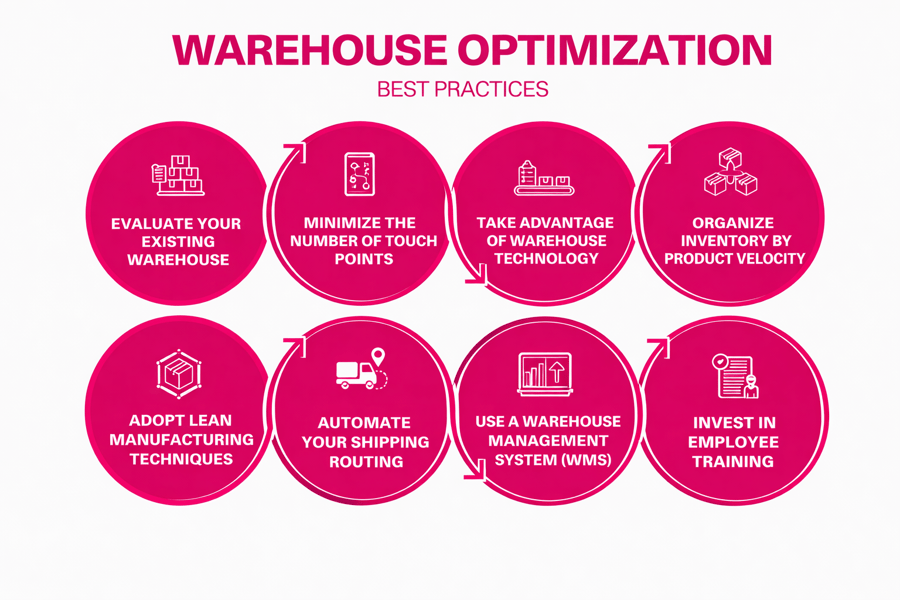
Warehouse Optimization Tips: What to Fix First for Fast Wins
Start with problems that waste time every hour. Fix daily friction before big projects. These warehouse optimization tips focus on fast, low-risk wins.
Clean up data and labels first
Bad location labels create wrong picks and extra walks. Replace missing signs and faded barcodes this week. Match item IDs across WMS, labels, and cartons.
Fix units of measure on top movers. Stop case-to-each conversion errors at receiving. Fewer errors cut rework and short-ship claims.
Remove travel traps on main paths
Walk the pick path during peak hours. Mark the top five choke points. Move pallets, trash bins, and empty carts off aisles.
Keep fast movers near pack-out and replen lanes. Store slow movers farther from shipping doors. Shorter walks raise picks per hour fast.
Tighten receiving and putaway rules
Set one clear staging zone per inbound door. Sort by temperature, hazmat, or ship method. Putaway starts faster with less reshuffling.
Use simple putaway rules for the top 200 SKUs. Send them to fixed, labeled homes. Stop “temporary” drops that become permanent clutter.
Fix pack stations and shipping handoffs
Stock pack stations with the same supplies every shift. Set a two-bin system for tape and labels. Remove hunting time from every order.
Set a clear handoff point to shipping. Use one lane per carrier and service level. Cut missed pickups and last-minute resorting.
Standard work and daily checks
Write one-page steps for pick, pack, and replenish. Train on the steps on the floor. Hold a ten-minute start-of-shift huddle.
Track three numbers daily: picks per hour, errors, and dock-to-stock time. Post results where teams work. Fix one root cause per day.
Re-slot only what drives most volume
Re-slot the top 20% of SKUs by lines. Move them to waist-high, easy-reach slots. Save deep re-slotting for later cycles.
Tag every empty slot and every “no home” pallet. Assign owners and due dates. Cleaner locations speed audits and cycle counts.
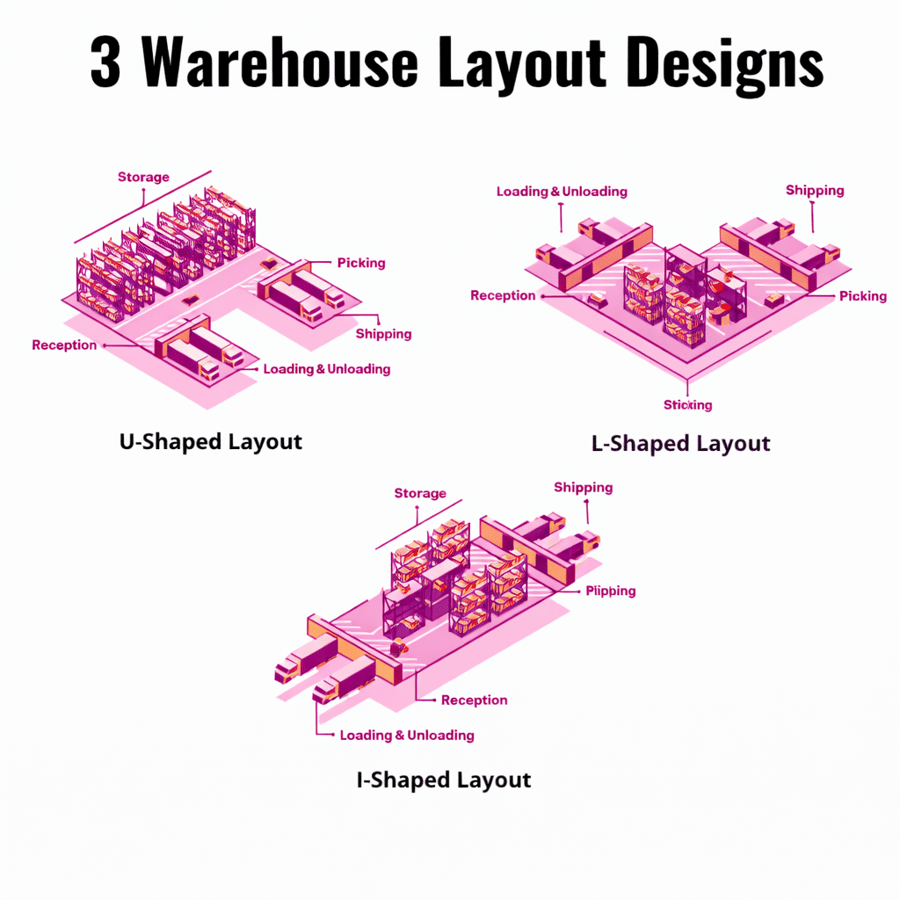
Warehouse Flow Optimization: Designing a Layout That Reduces Travel Time
Travel time eats labor fast, even in small buildings. Start with a simple walk study on busy shifts. Track steps, touches, and backtracks for each order.
Warehouse flow optimization starts with the fastest movers
Place top sellers close to pack stations and shipping. Keep wide, clear paths between pick faces and docks. Cut cross-traffic by giving pickers one-way aisles.
Group items that ship together in the same zone. Keep heavy or bulky items near ground-level staging. For more ideas, see 5 Warehouse Optimization Techniques to Your Fulfillment.
Warehouse location optimization for docks, staging, and returns
Set inbound staging next to receiving and putaway lanes. Put outbound staging beside the doors you load most. Keep returns away from outbound lanes to prevent jams.
Mark floor zones with clear labels and fixed boundaries. Give each zone a single owner per shift. That cuts handoffs and speeds problem fixes.
Layout rules that support optimizing warehouse operations
- Keep pack benches near dunnage, labels, and printers.
- Place replenishment stock behind or above pick faces.
- Build a fast lane for small parcel orders.
- Separate forklifts from foot traffic where you can.
Check the flow weekly and move one rack row at a time. Tie layout changes to fewer steps per line. Strong warehouse optimization also needs clean data from warehouse inventory tracking.
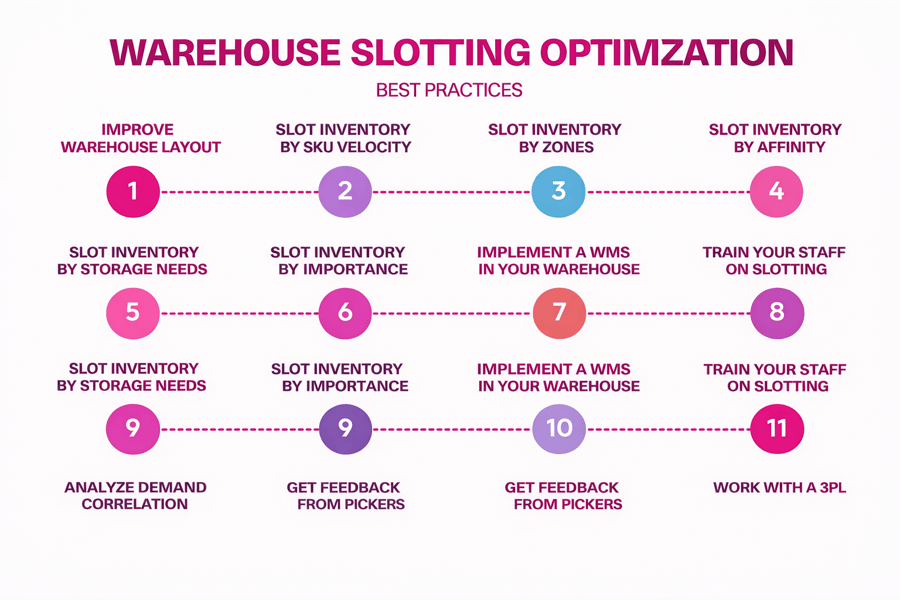
Warehousing Optimization Through Slotting and Inventory Strategy
Slotting decides where items live and how fast pickers move. Treat it as a weekly habit, not a one-time setup. Strong slotting ranks among the best warehouse optimization tips for quick wins.
Use demand data to drive warehousing optimization
Start with order lines, not units shipped. Count picks per SKU and per location. Then group SKUs by velocity, size, and handling needs.
Put the fastest movers in the golden zone. Keep them between knee and shoulder height. Reserve floor slots for heavy or bulky cases.
Slot for travel reduction and warehouse flow optimization
Place items that sell together near each other. Build small “family” zones for common bundles. That cuts zig-zag paths and shortens pick tours.
Use one-way aisles where it fits your layout. Keep high-traffic slots away from tight corners.
Control replenishment to support optimizing warehouse operations
Set min and max levels for each forward pick slot. Trigger replenishment before pick faces go empty. Schedule top-offs during slow hours to avoid aisle blocks.
Assign clear owners for slot audits and cycle counts. Fix wrong labels the same day. Those habits support warehouse logistics optimization at the dock.
Match zones to demand with warehouse location optimization
Split storage into reserve, forward pick, and returns. Keep returns close to inspection and restock. Move seasonal items as demand shifts each month.
- Re-slot the top 50 SKUs every week.
- Audit pick faces for empty slots every shift.
- Track short picks and re-slot the worst offenders.
- Limit forward pick depth to reduce stale stock.
Good slotting cuts steps, errors, and emergency replenishment runs. It also keeps inventory counts closer to reality. Tie the rules to data with inventory software for the warehouse.
Optimizing Warehouse Operations with Standard Work, Labor Planning, and Training
Standard work cuts guesswork and keeps output steady. It also makes problems easy to spot. These warehouse optimization tips start with clear, repeatable tasks.
Standard work that supports optimizing warehouse operations
Write the best-known method for each core task. Keep it short and visual. Post it at the point of use.
Set a clear “done” definition for every step. Use photos for labels, pallet builds, and scans. Tie the steps to safety and quality checks.
Labor planning for warehouse optimization and daily control
Plan labor from expected orders, not last week’s headcount. Build a simple forecast by hour. Match breaks to peak waves.
Track planned versus actual labor each shift. Fix gaps the same day. Move people before queues form at packing or docks.
Training that holds up under warehouse flow optimization
Train to a standard, then certify skills on the floor. Use a short checklist for each role. Refresh training after errors or process changes.
Cross-train for putaway, picking, and packing. Rotate roles to reduce fatigue. Keep a skills matrix for fast staffing moves.
Link people’s routines to warehousing optimization and warehouse logistics optimization
Run a ten-minute start-up huddle with clear targets. Review misses from yesterday. Assign one owner per issue.
Use a simple escalation path for blocked pallets. Keep radios for urgent exceptions only. Protect flow with clear aisle rules and staging limits.
Keep standards aligned with warehouse location optimization
Update work steps when you change zones or slotting. Train pickers on new paths the same day. Audit the top ten locations each week.
Strong standards, smart labor plans, and fast training keep service steady in a pick-and-pack fulfillment center.
Warehouse Logistics Optimization: Picking, Packing, Shipping, and Dock Management
Warehouse logistics optimization starts with tight handoffs between teams. Small delays stack up fast at the dock. Track time from pick release to trailer close. Fix the longest gap first.
Picking rules that support warehouse flow optimization
Set one pick method per zone and stick to it. Batch small orders to cut steps. Use cart limits so pickers avoid mid-run drops. Keep fast movers near the main aisle for speed.
Give pickers clear instructions and fast help. Route damaged, short, or wrong items to one desk. Keep that desk near packing, not in receiving. Those choices support optimizing warehouse operations without extra labor.
Packing stations that reduce rework in warehousing optimization
Build packing around a simple standard kit. Stock the top box sizes at arm’s reach. Place dunnage and tape within one step. Print labels at the station, not across the aisle.
Force a scan before seal and label. That scan stops wrong items and wrong addresses. Use a short checklist for hazmat and lithium rules. Fewer exceptions mean fewer dock holds.
Shipping and dock control with warehouse optimization
Schedule pickups in tight windows and enforce them. Stage by carrier and cutoff time, not by order number. Mark lanes with large signs that drivers can read. Keep one clear path for pallet jacks and carts.
Run a dock board each hour and clear aging freight. Assign one owner to trailer status and seal control. Use warehouse location optimization for returns near inspection and restock. Close the loop with simple checks and ecommerce fulfillment automation.
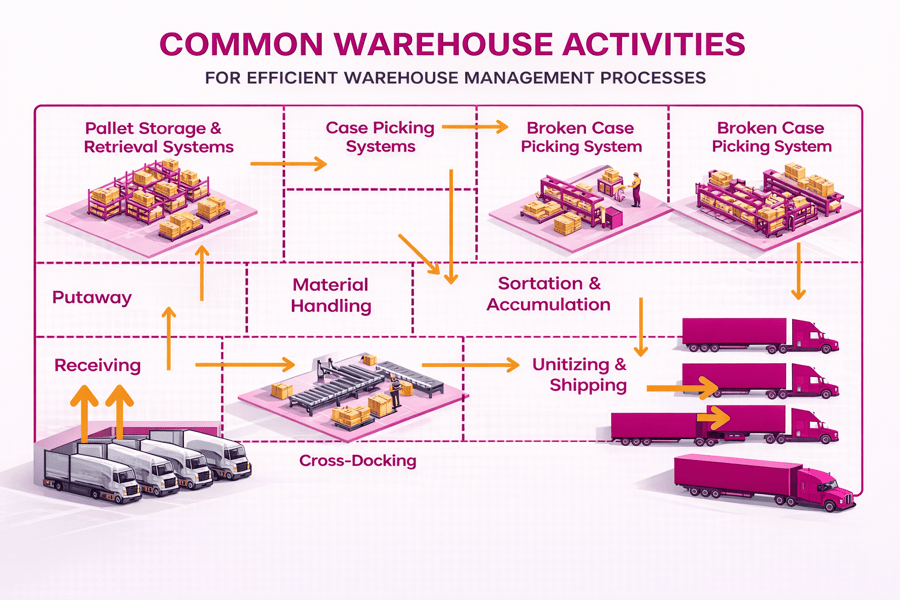
Storage Zones, Putaway Rules, and Replenishment Paths
Warehouse location optimization starts with clear zones and simple rules. Bad locations create long walks and missed picks. Good locations cut steps and speed up putaway.
Storage zones that match demand
Group inventory by how fast it moves. Keep fast movers near pick faces and pack. Place slow movers higher, deeper, or farther back.
Build zones that match how work happens each day. Use separate areas for returns, kitting, and value-add. Keep odd-size items out of standard pick aisles.
Putaway rules people follow
Write putaway rules that fit real behavior. Keep them short and easy to scan. Train to the rule, not the exception.
Set a clear default location, then set a backup. Block random empty slots in prime areas. Reserve those slots for top sellers and promos.
- Put the same SKU in the same zone.
- Store heavy items between knee and chest height.
- Keep full-case stock away from each-pick locations.
- Send overstock to a marked reserve area.
Smart replenishment paths
Replenishment should avoid the main pick traffic. Route lift work on the outer aisles. Schedule top-ups before peak pick waves start.
Trigger replenishment from a simple min and max. Tie mins to daily demand and lead time. Raise mins before big sales and season spikes.
Docks and shipping
Place staging lanes by carrier and service level. Keep rush orders closest to the dock door. Mark lanes on the floor and enforce them.
Link locations to how cartons leave the building. That step supports warehouse logistics optimization and reduces rework. Strong warehouse optimization tips work best when you track locations in order fulfillment software.
WMS, Automation, and Scanning Without Overbuying
Technology should cut down on touches, errors, and travel time. Start with the pain that costs you money. Good tech choices support warehouse optimization without new headaches.
Optimizing warehouse operations with a WMS that fits
A WMS should fix real gaps, not add screens. Look for clean receiving, directed putaway, and easy cycle counts. Make sure it supports your labels and pack rules.
Ask vendors to run your top five workflows live. Time each task and count clicks. If the demo drags, your team will drag too.
Warehouse logistics optimization with scanning and label standards
Scanning pays off when labels stay consistent. Set one label format for bins, pallets, and cartons. Use check digits or scan rules to block bad picks.
Track mispicks by zone and by picker. Fix the label or the process first. Buy new devices only after you prove the cause.
Warehouse flow optimization with the right level of automation
Automation works best on repeat work with stable volume. Start with print-and-apply, carton weight checks, or simple conveyors. Avoid robots until you control slotting and replenishment.
Run a small pilot in one aisle or one shift. Measure picks per hour and dock dwell time. Expand only when results hold for four weeks.
Warehouse location optimization and data you can trust
Bad location data breaks every system fast. Lock down naming rules for aisles, bays, and levels. Keep one owner for location changes and audits.
These warehouse optimization tips keep tech spend tied to results. Choose tools that match your volume and labor skills. Connect warehouse data to order promises with order management software.
KPIs, Audits, and Continuous Improvement Cadence
Track results, or you will chase the wrong fixes. Good measures turn warehouse optimization into repeatable gains. Keep the scorecard small and easy to read.
KPIs that prove warehousing optimization works
Pick KPIs that tie to cost, speed, and accuracy. Use daily numbers for action and weekly numbers for trend. Set targets that match your service promise.
- Order cycle time: minutes from release to ship confirmation
- Lines picked per labor hour: real output per paid hour
- Pick accuracy: mispicks per 1,000 lines
- Dock to stock time: receipt to putaway completion
- Inventory record accuracy: count variance by location
- Cost per order: labor, supplies, and freight touch time
Audits that catch drift in optimizing operations
Run short audits on a fixed schedule. Check the work, not the people. Note the gap, the cause, and the next action.
Audit travel paths to confirm warehouse flow optimization. Walk pick routes during peak waves. Flag blocked aisles, dead zones, and extra touches.
Cadence for warehouse logistics optimization and layout checks
- Hold a 15-minute review each day. Look at misses, then assign one owner. Close actions within five working days.
- Run a weekly slotting and zone review. Tie issues to warehouse location optimization rules. Move only the SKUs that drive most travel.
- Keep a simple log of tests and results. Fold proven warehouse optimization tips into standard work. Share the same numbers with your order management system.
Conclusion
Cutting costs starts with removing wasted steps. Faster fulfillment starts with shorter travel and fewer touches. Strong warehouse optimization tips focus on work that repeats daily.
Start with layout and travel paths. Tight warehouse flow optimization reduces walking and cart congestion. Clear aisles and clean pick faces prevent small delays.
Then fix slotting and replenishment rules. Smart warehousing optimization keeps fast movers close to pickers. Simple putaway rules stop random storage and lost time.
Standard work keeps results from drifting. Clear roles and short training speed up ramp time. Strongly optimizing warehouse operations also cuts rework and mispicks.
Picking and shipping deserve daily attention. Good labels and staged lanes reduce dock confusion. Tight warehouse logistics optimization shortens truck turns and late orders.
Storage zones should match demand and handling needs. Put bulky items near doors and wide aisles. Solid warehouse location optimization lowers damage and double handling.
Next Step
Pick one area with clear pain and high volume. Set a baseline for travel time and pick rate. Make one change per week and track results.
- Walk the floor and map the top three travel paths.
- Re-slot the top 50 SKUs and lock the rules.
- Write a one-page standard work for picking and packing.
- Audit docks daily for staging, labels, and lane discipline.
Hold a 15-minute review at shift end. Keep what works and drop what fails fast. Repeat the sprint and build steady gains.
Frequently Asked Questions
What are the most effective warehouse optimization tips to improve productivity quickly?
Start with measurable, low-cost changes: slot fast-moving items closer to packing, standardize picking paths, and reduce touchpoints. Use simple KPIs like pick rate, travel time, and order accuracy to find bottlenecks. These warehouse optimization tips often deliver fast gains without major system changes.
How do I optimize warehouse layout and picking routes?
Map your current travel paths and group products by order frequency and affinity. Place high-velocity SKUs in forward pick locations, keep wide aisles where traffic is heavy, and set one-way routes to reduce congestion. Warehouse flow optimization works best when layout decisions are based on actual order data, not assumptions.
What KPIs should I track for warehousing optimization?
Track order cycle time, lines picked per hour, dock-to-stock time, inventory accuracy, space utilization, and on-time ship rate. Add error metrics such as mis-picks and returns to pinpoint quality issues. Consistent reporting helps prioritize warehousing optimization projects and prove ROI to stakeholders.
How can warehouse logistics optimization reduce shipping delays?
Improve coordination between receiving, storage, picking, and shipping by balancing labor to demand peaks and smoothing handoffs. Use appointment scheduling for inbound loads, stage outbound orders by carrier cutoff times, and standardize packing workflows. Warehouse logistics optimization reduces dwell time and helps avoid missed dispatch windows.
How do I approach warehouse location optimization for storage and replenishment?
Use ABC analysis to assign storage locations based on velocity, size, and handling needs. Set minimum/maximum levels for forward pick faces and replenish during low-traffic periods to avoid disrupting pickers. Warehouse location optimization also benefits from clear labeling and consistent bin numbering to reduce search time.
What technology supports optimizing warehouse operations without overcomplicating processes?
Start with tools that enforce standard work: a WMS for directed picking and cycle counting, barcode scanning for accuracy, and basic labor planning for staffing. Add automation only where volume justifies it, such as conveyors or pick-to-light. These warehouse optimization tips help optimize warehouse operations while keeping change manageable.