Warehouse efficiency improves when teams cut travel and reduce search time. Better flow keeps pickers moving and limits avoidable stops. Strong warehouse efficiency management gives supervisors more time to prevent issues rather than chase them.
How to improve warehouse productivity often starts with waste already on the floor. Rework in receiving and picking creates early bottlenecks that soon affect packing and dock flow. Clear labels, clean slot locations, and simple pack checks help contain errors before they spread.
Warehouse efficiency tips matter most when speed and accuracy stay aligned. Fast work adds little value when teams must re-pick orders or reship cartons. Daily feedback helps crews adjust pace, spot trouble early, and protect output.
Shorter routes can lift pick rates without adding labor. Tight packing checks often reduce returns and reships. WMS data on travel, pick rate, and errors shows where small fixes can deliver the fastest gains.
Warehouse Efficiency Tips: Quick Wins You Can Implement This Week
Small process fixes often remove friction faster than major system changes. These warehouse efficiency tips need little setup and can show results within days. They also create cleaner data, which supports faster decisions later.
A 30-minute floor walk with a supervisor often reveals hidden delays
Tape marks can flag problem spots, and teams can fix the worst three that shift. Clear labels and readable signs cut search time in fast-moving zones. Fresh barcodes and bin IDs strengthen warehouse efficiency and reduce picking errors the same day.
Returns create disorder when exception rules vary by person or shift. One clear rule, one cart, and one staging area support stronger warehouse efficiency management during busy periods. That structure keeps loose product contained and prevents pileups near receiving and packing.
A ten-minute daily huddle keeps attention on misses, risks, and labor gaps
Short reviews help teams see how to improve warehouse productivity without adding long meetings. Travel time also drops when top SKUs move closer to packing. Standard carts help workers finish more lines each hour.
Scan accuracy shapes inventory trust more than many teams expect. One aisle check each day quickly exposes “scan later” habits before they spread. Clean scans reduce rework, short shipments, and stock errors across the shift. For more ideas on process control, see warehouse layout planning best practices.
Warehouse Efficiency Management: Set Clear KPIs, Baselines, and Daily Routines
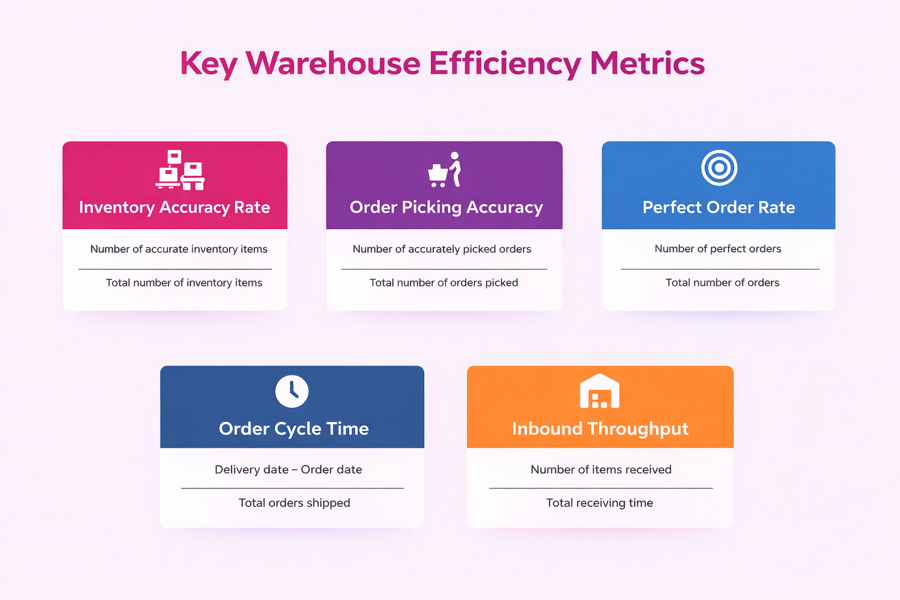
Warehouse efficiency management works best with a short KPI list. Five measures often give enough detail without noise. Lines per labor hour, dock-to-stock time, pick accuracy, order cycle time, and inventory record accuracy show where work slows and where errors start.
Four weeks of normal data usually create a fair baseline. Matching shift mix and order profile keeps each comparison honest. Clear task definitions matter just as much, since teams need one shared meaning for every number.
Daily visibility turns metrics into action. Posted results help crews see progress during the shift, not days later. A single owner for each metric keeps follow-up steady and removes confusion when targets slip.
A brief start-of-shift huddle often reveals misses, volume changes, and blockers. End-of-shift checks show whether the fix worked that same day. This rhythm supports warehouse efficiency during busy periods and gives leaders a simple form of control.
Documented steps for receiving, putaway, picking, and packing reduce variation. Timed tasks often expose extra walking, waiting, and rework. These warehouse efficiency tips create a practical system for teams focused on how to improve warehouse productivity.
Late trailers, short picks, and rework often expose waste fast. Weekly reviews with team leads help teams fix the largest cause first. That steady method keeps progress clear inside warehouse management.
How to Improve Warehouse Productivity with Smarter Layout and Slotting
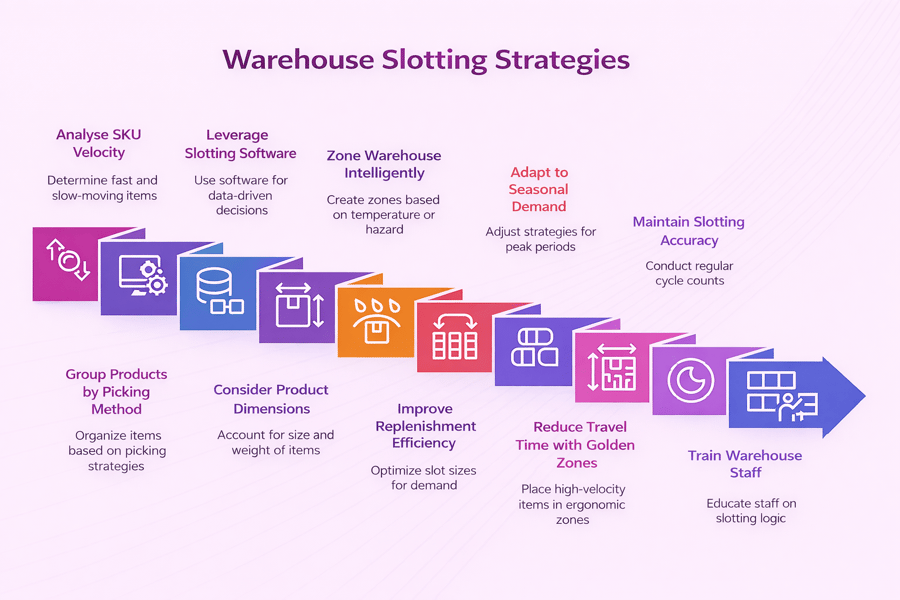
Layout decisions shape travel time, labor cost, and daily output. A map of real pick paths often reveals dead ends, cross-traffic, and long walks. Those patterns surface practical warehouse efficiency tips that remove wasted motion.
Fast-mover placement has a direct effect on speed
High-volume items near packing and shipping lanes cut repeat travel. Heavy products work better in floor slots and lift zones, which lowers strain during busy shifts.
Zone design works best when it reflects order patterns
Items that often ship together belong in the same area. Similar carton sizes also store well nearby, which reduces search time and supports stronger warehouse efficiency.
Slotting rules need to reflect velocity, cube, weight, and handling needs
Weekly exception reviews show which SKUs sit in poor locations. That discipline strengthens warehouse efficiency management and keeps space aligned with demand.
Traffic flow often changes results faster than new equipment
Eye-level labels, aisle signs, and clear bin IDs help workers decide quickly. One-way travel in main aisles reduces cart conflicts, a proven answer to how to improve warehouse productivity.
A monthly reset for the top 20% of SKUs keeps locations current. Picks per hour before and after each move show what changed. Results usually last longer when teams pair slotting updates with clean warehouse inventory tracking.
Warehouse Efficiency in Receiving and Putaway: Prevent Bottlenecks Early
Receiving sets the pace for the shift and shapes downstream flow. A late trailer can block aisles, delay picks, and create avoidable congestion. Strong warehouse efficiency management starts with firm dock appointments and one open door for unexpected arrivals.
Quick checks at the dock keep freight moving. Teams that count, inspect, and label pallets before putaway avoid rework later. Clean labels also reduce search time and support warehouse efficiency during storage moves.
Staging lanes work best as short-term buffers, not overflow space. Time limits keep pallets from sitting too long and tighten handoffs between teams. That discipline supports how to improve warehouse efficiency when inbound volume spikes.
Slotting decisions have a direct effect on travel time. Fast movers stored near receiving need fewer touches before they reach active pick zones. A hot zone for urgent inbound loads often shows how to improve warehouse productivity without adding labor.
Exception control matters just as much as speed. Marked areas for holds, damages, and shorts keep problems visible and easier to resolve. One daily owner per zone turns small issues into fast decisions, which is one of the most practical warehouse efficiency tips.
Dock-to-stock time, putaway accuracy, and touches per pallet reveal where time slips away. When faster decisions matter, connect receiving data to the inventory software for the warehouse.
How to Improve Warehouse Productivity in Picking: Methods, Batch Strategies, and Accuracy
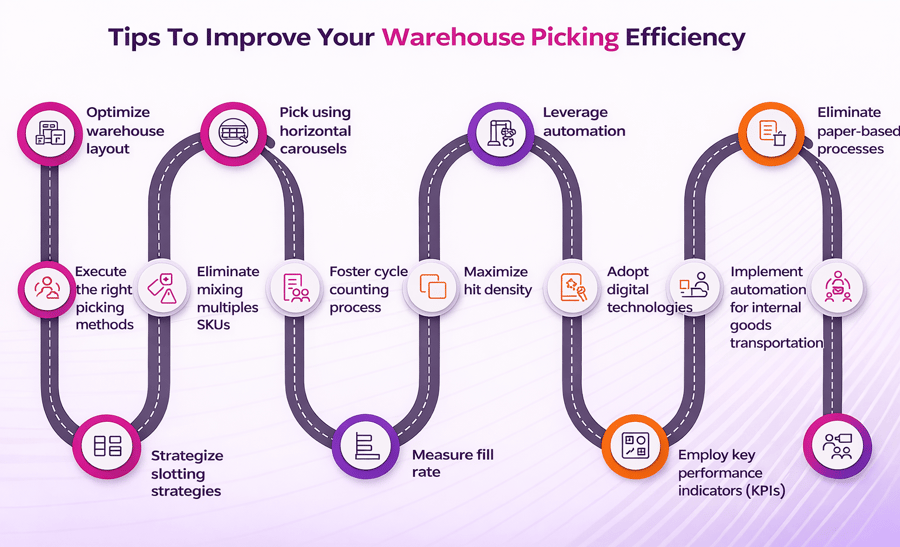
- Picking drives labor cost, so small changes often pay back fast. In many sites, travel time limits output more than hand speed. The best warehouse efficiency tips focus on route design, aisle flow, and wasted steps.
- Method choice shapes results. Discrete picking fits lower volume and simpler order mixes. Batch picking works well when many small orders share the same SKUs. Zone picking cuts long walks in larger layouts and supports steadier warehouse efficiency.
- Batch rules matter just as much as method choice. Clear limits keep carts manageable and reduce missed items. Release timing works best when it matches carrier cutoffs, staffing levels, and order priority. That steady rhythm strengthens warehouse efficiency management during peaks and shift changes.
- Pick paths that need to reflect real movement, not a map alone. Fast movers near the main pick face and packing area save time all day. Heavy items stored at waist height reduce strain and trim seconds from each task.
- Accuracy improves when checks happen early, not at packing. Scan-to-pick confirms the item and location before it moves. A second scan at the tote close or cart drop catches errors sooner. Teams that track mispicks by picker, zone, and SKU gain clear insight into how to improve warehouse productivity.
Shorts create bigger delays when teams find them late. Shelf-level flags keep problem orders out of the normal flow. A small fix station protects throughput and keeps pack stations clear. Daily scorecards then show where action matters most, even before new tools like order management software.
Warehouse Efficiency in Packing and Shipping: Standardization, QC, and Cutoff Discipline
Fast picking loses value when pack methods change by shift. A steady process protects output and supports warehouse efficiency. Station photos, sample packs, and clear visual cues help teams follow the same steps every time.
Standard work matters most when order volume rises. One method for each order type cuts hesitation, speeds decisions, and reduces packing errors. Fixed carton, mailer, and dunnage rules also lower material waste at the bench.
Quality checks catch problems before they reach the dock. Item and order scans before sealing stop many errors early. A quick weight check can flag missing items, wrong quantities, and high-risk SKUs.
Damage prevention depends on short, repeatable checks. Teams can spot weak boxes, poor seals, hazmat issues, and fragile orders before shipment. That consistency supports warehouse efficiency management during spikes, shift changes, and tight labor coverage.
Shipping handoffs stay smoother when staging matches the carrier and service level. Label waves tied to truck schedules reduce late orders and dock congestion. These warehouse efficiency tips also show how to improve warehouse productivity without adding extra labor.
Floor control keeps small delays from turning into missed cutoffs. Hourly reviews of pack rate, error rate, and late carts reveal the main blocker quickly. Timely supply refills and live status updates through order fulfillment software help sustain a reliable outbound flow.
Warehouse Efficiency Management for Labor Planning, Training, and Incentives
Strong warehouse efficiency management starts with labor plans tied to real demand. Hourly forecasts reveal the strain that daily totals often hide. Carrier cutoffs, wave times, and inbound delays show where coverage should move.
Experienced pickers often perform best in peak zones during rush periods. New hires usually learn faster in slower aisles with close coaching. Cross-trained floaters give supervisors a fast way to relieve rising queues and protect warehouse efficiency.
- Training works best in a steady rhythm, not in long sessions. One-page task guides keep work consistent across shifts and roles. Floor coaching builds scan discipline first, while short job rotations reduce fatigue and error rates.
- Performance checks should stay brief and frequent. Fast audits catch missed scans, damage, and pick errors before they spread. A five-minute huddle can turn findings into same-day fixes, which makes improving warehouse productivity easier to manage.
- Incentives work when they feel fair and visible. Teams respond better when plans reward accuracy before speed and set targets by zone. Daily scoreboards build trust, and rewards tied to safe moves, clean putaway, and quality output reflect practical warehouse efficiency tips.
Real-time labor moves help service stay steady as volume shifts. Packing may need support for one hour, while receiving needs help the next. As operations grow, stronger systems and ecommerce fulfillment automation help teams scale with less disruption.
Warehouse Efficiency Tips for Technology: WMS, Scanning, Automation, and Data Visibility
A WMS gives supervisors and teams one clear view of floor activity. That shared view reduces errors in receiving, picking, and shipping. Clean item data also supports warehouse efficiency, since bad dimensions, weights, and slot details create delays quickly.
- Scanning works best when every move follows the same rule. One scan at each handoff confirms location, quantity, and status before travel begins. That discipline cuts keying mistakes and builds cleaner records for warehouse efficiency management.
- Right-fit automation removes repeat touches but keeps human judgment where it matters. Print-and-apply systems, conveyor merges, and put walls often reduce handling time. Poor tool fit creates jams, rework, and idle labor that weaken flow instead of helping it.
- Live data visibility matters most when dashboards reflect the last hour. Picks per hour, dock-to-stock time, and misships show where work starts to slow. Clear ownership behind each metric helps managers act faster and with less debate.
- Connected systems keep data moving between the WMS, order platform, and carrier tools. One item ID across systems prevents duplicate records and shipping mistakes. These warehouse efficiency tips show how to improve warehouse productivity through fewer touches, cleaner data, and faster decisions.
- Small pilots make new technology easier to judge. Teams often see useful results within days when they track time, errors, and rework. Keep a fallback process ready, then lock proven gains into SOPs and labels for any pick and pack fulfillment center.
Conclusion
Strong warehouse efficiency management starts with visible daily control. Clear KPIs for speed, accuracy, and rework expose drift early. Short huddles help supervisors solve small issues before they affect the next shift.
Travel time often hides the biggest losses in warehouse efficiency. Fast-moving items stored near pack stations cut walking and shorten cycle time. Clear labels, scan points, and staging lanes also reduce handoff errors.
Picking and packing shape daily output more than most teams expect. Batch picking works well when orders share items or zones. Packing checks catch wrong items before they reach the dock and create returns.
Good systems remove extra steps and support faster decisions. A WMS, barcode scans, and clean item data reduce manual fixes. These are practical warehouse efficiency tips because they improve control without adding complexity.
Small trials reveal how to improve warehouse productivity with less risk. Two weeks of data can show gains in lines per hour, pick accuracy, and dock flow. Keep changes that hold results, then add them to training and standard work.