Customers expect fast shipping, clean items, and clear updates. When any step slips, refunds rise. Support tickets follow. Repeat sales drop. A strong fulfillment business process matters as much as your product. Get it right. It turns every order into a steady, trackable outcome.
This article shows how to design a solid fulfillment business process. It stays solid as order volume grows. We break down the daily work of fulfillment ops. Every step from order in to the buyer’s door is covered. No gaps. Small workflow choices can cut errors and speed up shipping. As a result, you can scale without chaos.
Fulfillment starts with stock. Bad data costs you. If your inventory fulfillment data is wrong, every other step slows down. We also cover fulfillment inventory management basics. View, restock, and clean location data are all included. These ideas connect to inventory management and order fulfillment. Your systems stay in sync.
Next, we map the flow of fulfillment processing. We highlight where automation helps most. Types of fulfillment are compared to. Choose the right fulfillment method for your products and channels. Finally, we cover goods in fulfillment and delays. Keeping buyers informed is also included.
What Is the Fulfillment Business Process and Why Does It Matter?
The fulfillment business process is the set of steps you use to move an order from “paid” to “shipped.” It connects your store, your warehouse, and your carrier into one repeatable flow. As a result, buyers get their orders faster and with fewer mistakes.
This process matters because small delays add up quickly. Tighter fulfillment ops reduce costs. Refunds drop. Reviews hold. Trust grows. So does the repeat rate. Also, you gain the trust to scale during peaks without chaos.
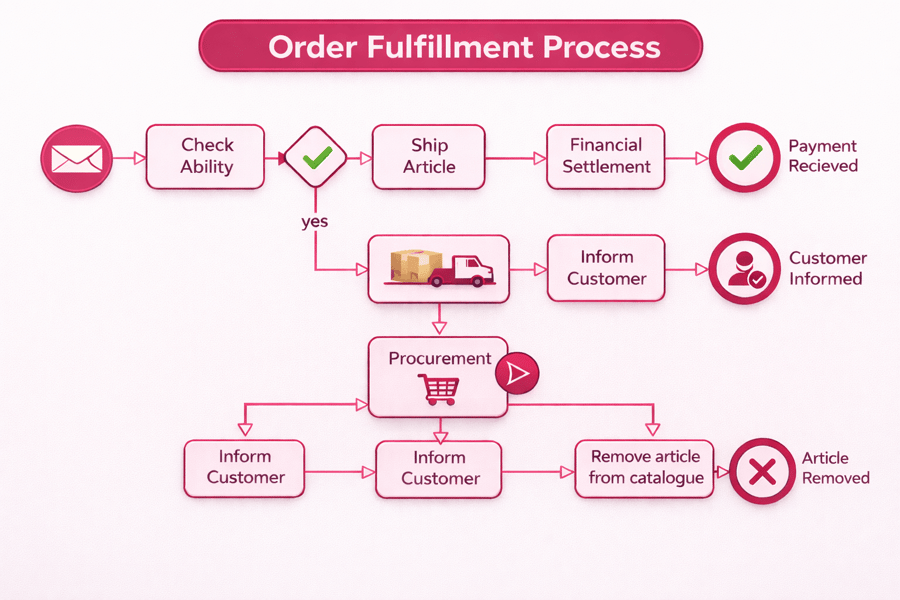
What this article will help you build
First, you’ll learn the core stages of fulfillment processing, from order capture to shipping. Then you will see how inventory fulfillment depends on clean stock counts. Smart restock matters too. Both count. Oversells and backorders become avoidable.
Next, we break down fulfillment inventory management with simple tools and KPIs. Common mistakes are covered, too. We also compare types of fulfillment. Pick a model that fits your products and channels. Speed, cost, and control are all weighed. Pick a fulfillment method that balances speed, cost, and control. Fit matters.
Fulfillment business process: Key takeaways at a glance:
- A strong fulfillment business process improves shipping speed, accuracy, and buyer trust.
- Clear fulfillment ops reduce rework, returns, and support tickets.
- Solid inventory fulfillment starts with a view and disciplined restock.
- Smart fulfillment processing makes room for automation and fewer handoffs.
- Tracking goods in fulfilment helps spot delays early. Buyers get updates fast. Trust builds.
- Clean data flow between systems strengthens inventory management and order fulfillment.
Core Fulfillment Operations: Order Capture, Picking, Packing, Shipping
The fulfillment business process depends on four repeatable steps: order capture, picking, packing, and shipping. When each step runs cleanly, you reduce errors and speed up ship. As a result, buyers get the right item on time, and your team avoids rework.
1) Order capture: start with clean data
Order capture turns a cart checkout into a real task for your warehouse. You confirm payment, validate addresses, and flag risk before work begins. The order goes to your fulfillment ops queue. Clear rules handle routing and priority.
This step connects directly to inventory management and order fulfillment. If the stock data is wrong, the rest of the flow breaks. Sync channels and set simple checks for oversells and backorders.
2) Picking: move fast without losing accuracy
Picking is where most time and mistakes happen. To improve inventory fulfillment, group orders into smart waves or batches. Use easy-to-follow pick paths. But speed only helps when the right SKU is confirmed at the shelf. Quantity too. Both matter.
Use clear bin labels and zone maps to cut walking time.
Scan items to reduce mis-picks during fulfillment processing.
Handle exceptions early, most of all for low stock and swaps.
3) Packing: protect the product and the margin
Packing links product safety with cost control. Choose the right box size, add protection, and include the correct paperwork. Damage, returns, and carrier fees all drop.
Fulfillment inventory management should also track packaging supplies. Run out of mailers or void fill, and the line slows down. Keep minimum levels and reorder triggers. Treat them like sellable SKUs.
4) Shipping: deliver promises with steady handoffs
Shipping creates the buyer-facing promise: label, carrier, and ship speed. The fulfillment method should match the order value, weight, and destination. Not just habit. Each type of fulfillment may also change this step. You might ship from a 3PL, a store, or your own warehouse.
Track status events so you can manage goods in fulfilment. Update buyers before they ask. Standardizing these four steps builds a solid process. It scales with demand, most of all with order fulfillment software.
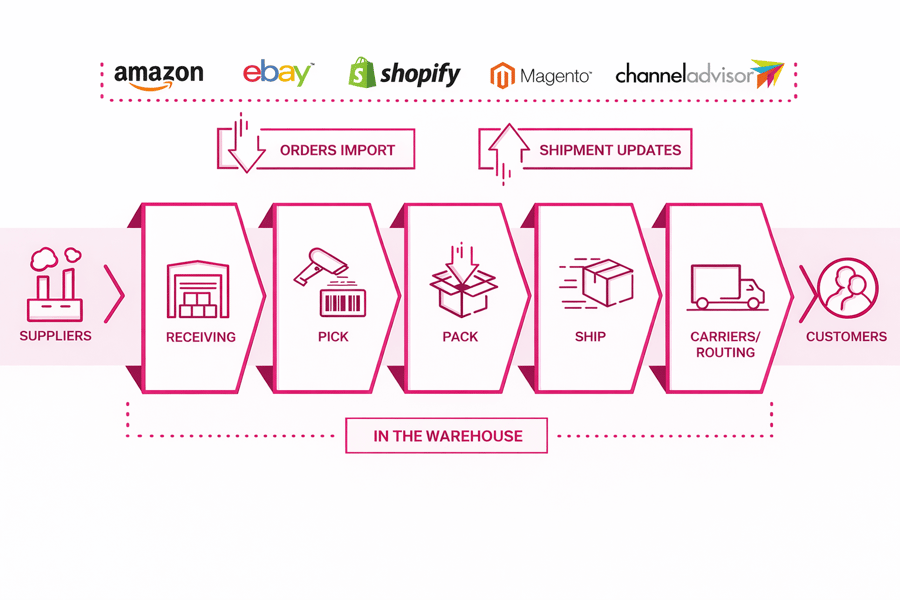
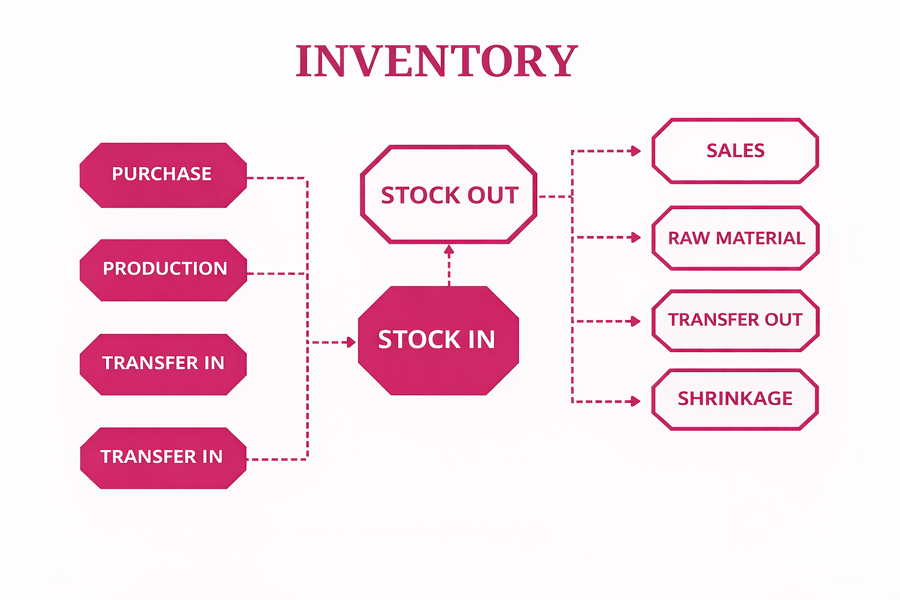
Inventory Fulfillment Basics: Stock Levels, Replenishment, and View
Inventory fulfillment keeps orders moving when demand spikes and timelines shrink. Miss stock signals, and the fulfillment business process slows. Errors rise. Buyers notice. Clear stock rules, fast restock, and a real-time view are all needed. Start there.
Set stock levels you can trust
Start with a simple baseline: what you sell, how fast it sells, and how long it takes to restock. Then set safety stock to cover supplier delays and seasonal swings. Align these targets with your fulfillment ops, too. Pickers do not waste time on empty bins.
Track three numbers for each SKU: on-hand, available, and committed. On-hand shows what sits on shelves. Available removes what you already promised to buyers. Committed prevents overselling, which protects inventory management and order fulfillment performance.
Build a replenishment rhythm for the fulfillment business process
Restock works best when it runs on a schedule and clear triggers. Use reorder points and lead times. They show when to buy or transfer stock. Fulfillment processing stays steady even when order volume changes.
To map handoffs, review the Business Process Diagram Example: Order Fulfillment. Compare it to your current flow. Then connect restock tasks to your fulfillment inventory management routines. Intake, putaway, and slotting stay steady.
Create end-to-end view
View means you can see stock across bins, warehouses, and channels in one view. It also helps you spot goods in fulfillment issues before buyers complain. Partial shipments and carrier delays show up early. Choose the best ship-from location and protect service levels.
Match your rules to your fulfillment method, too. In-house, 3PL, or hybrid each needs different settings. Real-time stock data means every team works from the same numbers. Fewer fights. Faster picks. Order management software makes it easiest.
Fulfillment Business Process: Workflows and Automation Opportunities
Strong fulfillment processing starts with a clear workflow. When you map each step, you remove guesswork and speed up decisions. The fulfillment business process stays steady as order volume grows. That is the goal.
Build a workflow that matches how orders move
First, write down what happens from order release to carrier pickup. Then assign owners, tools, and targets for each handoff. Align your workflow with daily fulfillment ops. Teams stay on track, and shipping does not slow.
- Order import, checks, and fraud checks
- Wave or batch planning for picking
- Pick, pack, and label with scan verification
- Carrier selection, manifesting, and dispatch
- Tracking updates and exception handling for goods in fulfilment
Where automation creates the biggest wins
Automation works best when it removes repetitive tasks and prevents errors. For example, rules can auto-split orders by warehouse to protect inventory fulfillment. Backorders drop, and buyer goals hold.
Next, connect systems so data flows without manual re-entry. Tight links between WMS, OMS, and shipping tools lift inventory management and order fulfillment. Data flows clean. No manual re-entry. Errors drop. Teams move faster. The team can focus on quality checks instead of chasing spreadsheets.
Automation ideas for fulfillment business process
The best setup depends on your fulfillment method and the types of fulfillment. In-house teams often automate scanning, slotting, and label printing first. If you use a 3PL, push for shared dashboards and real-time feeds. Both strengthen fulfillment inventory management.
Finally, measure cycle time, pick accuracy, and exception rate, then automate the slowest step first. Improving one bottleneck at a time protects service levels. Costs stay in control with ecommerce fulfillment automation.
Fulfillment Inventory Management: Tools, KPIs, and Common Mistakes
Fulfillment inventory management keeps your stock clean, your team fast, and your buyers happy. It also protects the fulfillment business process from costly surprises. Oversells and late shipments both drop. As a result, you can scale without adding chaos.
When you control inventory well, you improve inventory fulfillment across every channel. Also, you reduce backorders and speed up fulfillment processing. That creates a smoother flow from order to ship.
Tools that make inventory easier to manage
Start with a central inventory system that updates in real time. Connect it to your store, marketplace listings, and shipping tools. Numbers stay steady. Running many locations? Use bins and barcode scanning. Pick errors drop fast.
- Inventory software with real-time sync and low-stock alerts
- Barcode scanners for intake, put-away, and picking
- Cycle count tools to fix gaps before they grow
- Dashboards that link inventory management and order fulfillment data
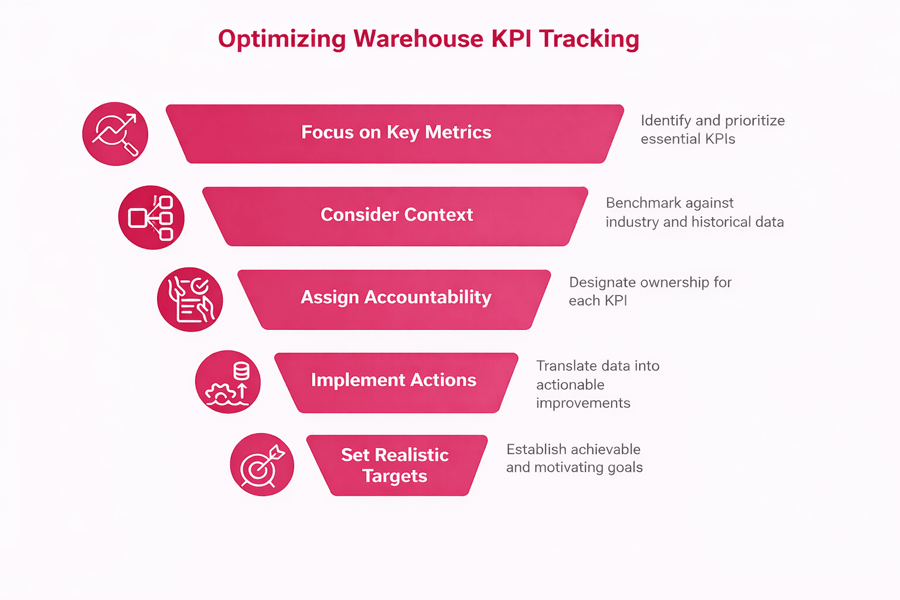
KPIs to track weekly (not just monthly)
Track a small set of KPIs and act on them quickly. Otherwise, small issues spread into your fulfillment ops. More time goes to expediting and less to improving.
- Inventory accuracy % (system count vs. physical count)
- Order cycle time (from paid to shipped)
- Pick accuracy and packing error rate
- Stockout rate and backorder rate
- Days of supply by SKU and location
- Return rate tied to the wrong item or damage
Common mistakes that slow down the fulfillment business process
Many teams skip cycle counts and rely on annual counts. But annual counts hide problems like mis-scans, bad intake, and untracked adjustments. Fix the intake first, because bad data enters the system at the dock.
Another common issue: changing a fulfillment method without updating restock rules. Storage rules, too. Both need updates. Each type of fulfillment needs its own safety stock and lead-time settings. Ignore that, and goods in fulfilment exceptions rise. Split shipments and delayed orders follow.
Finally, avoid “one-size-fits-all” reorder points. Group SKUs by velocity and margin. Then set clear min/max levels per bin. Tying those rules to clean workflows strengthens the fulfillment business process. Automated fulfillment becomes easier, too.
Types of Fulfillment: In-House, 3PL, Dropshipping, and Hybrid Models
Choosing among the types of fulfillment shapes your fulfillment business process from end to end. It affects speed, cost, and how well you handle peaks. Match the model to your products, order volume, and buyer goals.
In-house fulfillment
In-house means you store, pick, pack, and ship from your own space. You control fulfillment ops closely. Packing rules and branding can be tuned fast. But you also carry the burden of labor planning, equipment, and training.
This model fits when you need tight quality checks or custom kitting. It also fits when inventory fulfillment needs real-time counts. Quick restock matters here. Counts must be clean. Strong fulfillment inventory management and clear bins are a must.
3PL (third-party logistics)
A 3PL runs your storage and shipping in their warehouse network. Scale comes quickly. New regions open up without new leases. Many providers also improve fulfillment processing with scanning and batching. Carrier rate shopping helps, too. Costs drop.
Still, you need tight SLAs and clean data. Messy product data causes inventory management and order fulfillment to drift. Backorders follow. Align cut-off times, packaging standards, and return workflows before you launch.
Dropshipping
Dropshipping lets a supplier ship orders directly to your buyer. It reduces upfront inventory risk and simplifies storage. But you give up control over packing quality and shipping speed. Handling goods in fulfillment issues gets harder, too.
This approach fits test launches and long-tail catalogs. Even so, you must monitor supplier stock feeds and lead times daily. Otherwise, your store will sell items you cannot deliver.
Hybrid models
A hybrid setup mixes in-house, 3PL, and dropship lanes. For example, ship fast movers in-house while a 3PL handles bulky items. That creates a flexible fulfillment method. Also, you can route orders by channel, margin, or promised ship date.
- Use rules to split SKUs by size, demand, and handling needs.
- Set labels and carton sizes to reduce errors across sites.
- Review weekly KPIs so each node supports the same service level.
Designing your network this way keeps control where it matters. You outsource where it saves money. To make it work, connect systems and define handoffs. Record exceptions so every team follows one playbook for third-party warehouse management.
Choosing the Right Fulfillment Method for Your Products and Channels
The fulfillment business process should match what you sell and where you sell it. Start by listing your product size, weight, shelf life, and return rate. Then map those needs to your sales channels and buyer ship promises.
Next, review your daily order volume. Note how much it swings during promotions. If demand changes fast, you need a fulfillment method that can scale. Speed and accuracy must hold. As a result, you can protect buyer satisfaction while keeping costs steady.
Match the product needs to the right model
Different types of fulfillment work better for other product profiles. Fragile items need tight packing controls. Low-margin items need the lowest possible handling cost.
In-house: best when you need control over branding and quality, and your fulfillment ops stay stable.
3PL: strong choice when faster shipping zones are needed. Flexible labor handles spikes in fulfillment processing.
Dropshipping: useful when you want to test new SKUs without holding stock. But you trade away control of service.
Hybrid: ideal when top sellers stay in-house. Slower movers go out to support inventory fulfillment.
Align channels, inventory, and buyer alerts
Channel complexity often drives the decision more than product type. Selling on a marketplace? Your workflow must sync orders, track stock, and avoid oversells. Strong fulfillment inventory management becomes a must, not a nice-to-have.
Also, plan for exceptions, because delays happen. Seeing goods in fulfillment in real time lets you message buyers early. Support tickets drop. Connect your tools. Inventory management and order fulfillment then share the same data. That is why many teams invest in multi-channel inventory management.
Goods in Fulfillment: Tracking Exceptions, Delays, and Customer Updates
Goods in fulfilment can move fast, but problems still happen. A missed scan or wrong label can break the buyer promise. Act fast. Fix it the same day. So can a carrier delay. A clear way to spot exceptions early is needed. Act before they spread.
In a strong fulfillment business process, exception handling is not an afterthought. It sits beside daily fulfillment ops. Same data, same owners. As a result, your team fixes issues faster and avoids repeat mistakes.
Common exceptions to watch
Most delays start with a small signal you can detect. The right alerts also help focus on orders that truly need attention. Track these issues every day and assign a clear next step.
- Payment or address holds that block fulfillment processing
- Pick shortages that point to weak inventory fulfillment
- Damaged items, split shipments, or missing box scans
- Carrier exceptions like “ship attempted” or “weather delay”
- Returns-to-sender and failed handoffs between facilities
How to respond without slowing the line
First, set service-level rules for each exception type. For example, re-pick within two hours if the stock is short. Upgrade shipping when a cutoff is missed. Ship dates are protected without disrupting the rest of the work.
Next, connect exceptions to fulfillment inventory management so you can prevent repeats. If shortages rise, review cycle counts, bins, and restock timing. This approach works across each type of fulfillment. Each model has its own risk points.
Buyer alerts that reduce tickets
Customers accept delays more easily when you tell them early and clearly. Send early messages when the ship date changes or a package stalls. Reach out when you need more details, too. Also, explain the chosen fulfillment method in simple terms, such as “ships from our warehouse” or “ships from a partner.”
Finally, align messaging with your systems for inventory management and order fulfillment so support, warehouse, and carriers share the same status. Closing the loop on exceptions builds trust. Costs stay down with better inventory tracking.
Inventory Management and Order Fulfillment: Integrations and Data Flow
Fast ship starts with clean data moving between systems. Share the same facts across stores, warehouses, and carriers. The whole flow stays clean. Teams spend less time fixing errors. More time goes to shipping orders.
Inventory management and order fulfillment work best with real-time updates. Every pick and pack matters. Also, you avoid overselling when stock drops after a pick. Buyers see realistic ship dates. Cancellations drop.
What to integrate (and why it matters)
Start with the tools that touch orders and stock every day. Then connect the systems. Each event triggers the next step in fulfillment processing. That creates a single flow from “buy” to “shipped.”
- eCommerce platform to WMS: sends orders and item data for fulfillment ops.
- WMS to ERP/accounting: syncs costs, invoices, and returns.
- WMS to carrier tools: prints labels, rates, and tracking for goods in fulfillment.
- PIM to all channels: keeps product names, barcodes, and dimensions steady.
How data should flow through the warehouse
First, the order enters the WMS with the buyer, items, and service level. Next, the system reserves stock. That supports inventory fulfillment and prevents double allocation. After picking and packing, the system posts shipment details. Tracking goes back to the storefront. Buyers see updates fast.
But links only help if your item master stays clean. Keep one source for SKUs, units, and case packs. That supports fulfillment inventory management. Map each channel to the right rules too. The system then selects the right fulfillment method for speed and cost.
Automation and control for other models
Rules-based routing matters across types of fulfillment, including in-house, 3PL, and hybrid setups. For example, split orders by location, hazmat limits, or carrier cutoffs. Shipping gets faster without losing control of stock.
Finally, monitor exceptions like backorders and short picks. Use alerts and dashboards. This keeps teams proactive and protects buyer trust, most of all when volumes spike. To tighten links and keep data steady, consider inventory software for the warehouse.
Conclusion
A fast, clean ship engine does not happen by luck. Design a clear fulfillment business process. Improve it over time. Results follow. Fast. Each step needs an owner and a metric. No grey zones, no guesswork, no delays. Errors drop. Shipping speeds up.
Start with the basics of fulfillment ops. Capture the order. Pick the right items. Pack with care and ship on time. That is the core. Then tighten fulfillment processing with simple workflows and smart automation. The team spends less time fixing mistakes. That is a win. More time goes to fulfilling orders.
Next, protect your margins with strong inventory fulfillment practices. Accurate counts, clear locations, and timely restock prevent stockouts and oversells. Solid fulfillment inventory management also helps forecast demand. Cash stops sitting on shelves.
Choosing the right fulfillment method also matters. Review the types of fulfillment you can use. In-house, 3PL, dropshipping, or hybrid each have a fit. Match speed, cost, and control to your products and sales channels.
Finally, keep buyers informed when goods in fulfilment hit delays or exceptions. Strong tracking and clear updates build trust, even when problems happen. Better inventory management and order fulfillment data flow gives fewer surprises. Decisions improve.
- Set steps and train for consistency.
- Measure accuracy, cycle time, and cost per order.
- Integrate systems so inventory and orders stay in sync.
To scale with trust, audit your current flow. Fix the biggest bottleneck first, then record the new standard. More on this can be found in the article on ecommerce warehouse management.
Frequently Asked Questions
How can businesses automate order fulfillment processes?
Businesses can automate fulfillment processing by integrating ecommerce, ERP, and warehouse systems to sync orders, stock levels, and shipping rules. Use barcode scanning, pick-to-light, and automated packing slips to reduce errors. Workflow automation can route orders by fulfillment method, trigger carrier labels, and send tracking updates, improving speed and consistency across fulfillment operations.
What are the key steps in the fulfillment business process?
The fulfillment business process typically includes receiving inventory, storing and organizing stock, processing orders, picking and packing items, shipping, and handling returns. Strong fulfillment inventory management ensures accurate stock counts and fewer backorders. Clear handoffs between teams and systems help maintain service levels while controlling costs and meeting delivery expectations.
What are the main types of fulfillment for ecommerce and B2B orders?
Common types of fulfillment include in-house fulfillment, third-party logistics (3PL), dropshipping, and hybrid models. The best option depends on order volume, product size, delivery speed requirements, and geographic reach. Choosing the right fulfillment method can improve customer experience while balancing staffing, warehouse space, and shipping costs.
How does inventory management affect order fulfillment performance?
Inventory management and order fulfillment are tightly linked. Accurate inventory fulfillment depends on real-time stock visibility, clear reorder points, and disciplined receiving. When fulfillment inventory management is weak, businesses face overselling, stockouts, and delayed shipments. Regular cycle counts, demand forecasting, and location control within the warehouse improve accuracy and throughput.
What does “goods in fulfilment” mean, and why does it matter?
Goods in fulfilment refer to items currently being picked, packed, or prepared for shipment but not yet dispatched. Tracking this status helps prevent duplicate shipments and improves customer communication. It also supports better planning in fulfillment operations by showing workload in progress, helping managers allocate labor and manage carrier cutoffs effectively.
How do you measure and improve a fulfillment business process?
To improve the fulfillment business process, track key metrics such as order cycle time, pick accuracy, on-time shipping, return rates, and cost per order. Review bottlenecks in fulfillment processing, optimize warehouse layout, and standardize packing. Regularly audit inventory fulfillment and train staff to reduce errors and improve customer satisfaction.