Orders spike, SKUs grow, and buyers still want fast shipping. If your site runs on sheets, errors will follow. That is why ecommerce warehouse management now sits at the core of strong fulfillment. It links people, flows, and tools to move products from receipt to the door.
At its core, ecommerce warehouse management covers the flows that move stock from receipt to the buyer. That includes picking, packing, and shipping steps. Good inventory management and clear rules make each step faster and cleaner.
Software tends to turn the tide. A solid warehouse management system WMS helps you track stock, direct picks, and check packing. Many teams start with ecommerce warehouse management software, then add more as volume grows. See how this links to ecommerce management.
You will also link warehouse work to ship calls. So you will learn real ideas for warehousing and shipping for an ecommerce business that save margin while increasing speed. As a result, you can choose the best WMS for ecommerce and build a scalable plan.
What This Article Covers
- How to run an efficient ecommerce site with clean flows, live counts, and fewer touchpoints.
- Steps for warehousing and shipping for ecommerce, including meeting shipping dates while keeping costs low.
- When to choose a warehouse management system WMS versus ecommerce warehouse management software.
- Key needs for a WMS, like live stock, barcode scans, and gap handling.
- How an ecommerce WMS lifts view, runs orders, and cuts mis-picks across channels.
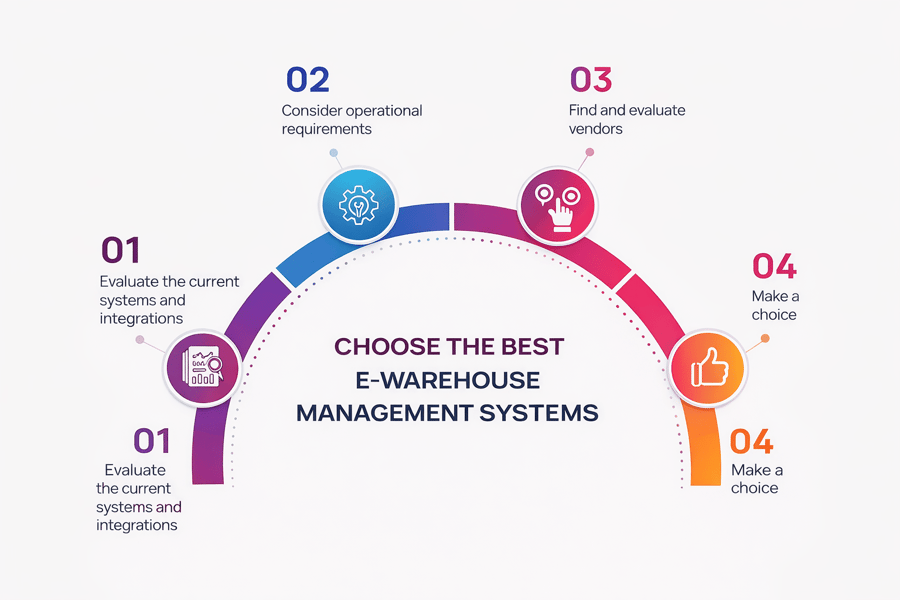
- How to check the best WMS for ecommerce using demos, ROI, and flow fit.
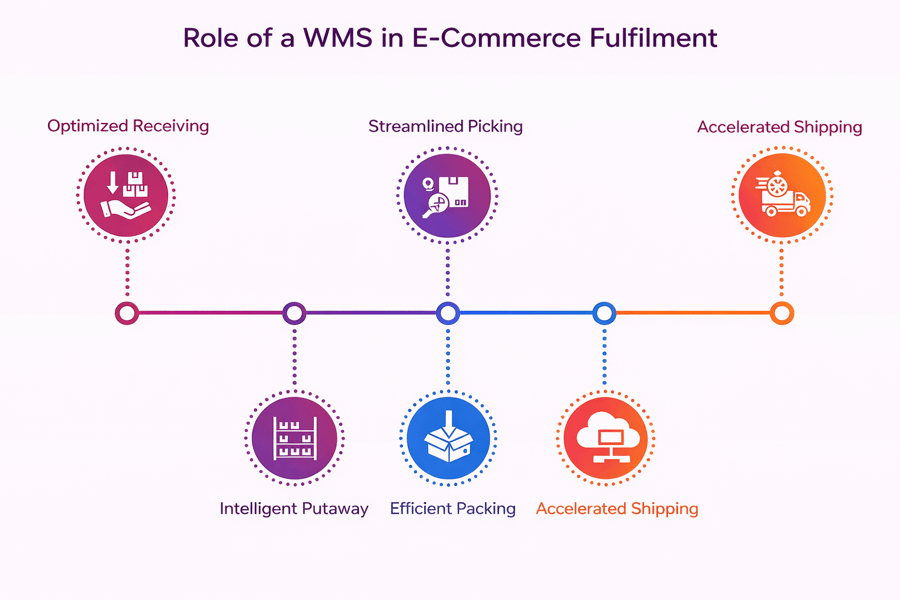
What Ecommerce Warehouse Management Means for Modern Operations
Ecommerce warehouse management is how you control the daily flow of stock and orders. It links people, space, and tech so each order moves fast and clean. As a result, you save margin while meeting buyer needs through solid flows.
Modern ecommerce warehouse work changes fast as demand shifts by season, channel, and promo. So, teams need clear rules and live data to stay on track. When you set steady flows, you cut errors and speed up training.
What it covers day to day
At its core, ecommerce warehouse management covers the full flow from inbound to outbound. It also helps you balance speed with clean data, even when order volume spikes. That matters in every warehouse, whether you ship 100 or 10,000 orders a day.
- Receipt and check of stock to stop gaps later
- Putaway and slotting so pickers walk less
- Picking flow, packing, and labels to cut mis-ships
- Returns handling to get sellable stock back fast
- Cycle counts to keep stock clean with no full stops
Systems and software: the backbone
Many teams rely on a warehouse management system WMS to guide tasks and track stock. Others start with ecommerce warehouse management software and add more control over time. The right setup depends on order depth, SKU count, and staffing.
In practice, warehouse management means you run your site with clear goals. But it also means you stay flexible when demand changes. When you do both, your fill stays fast and cost-aware.
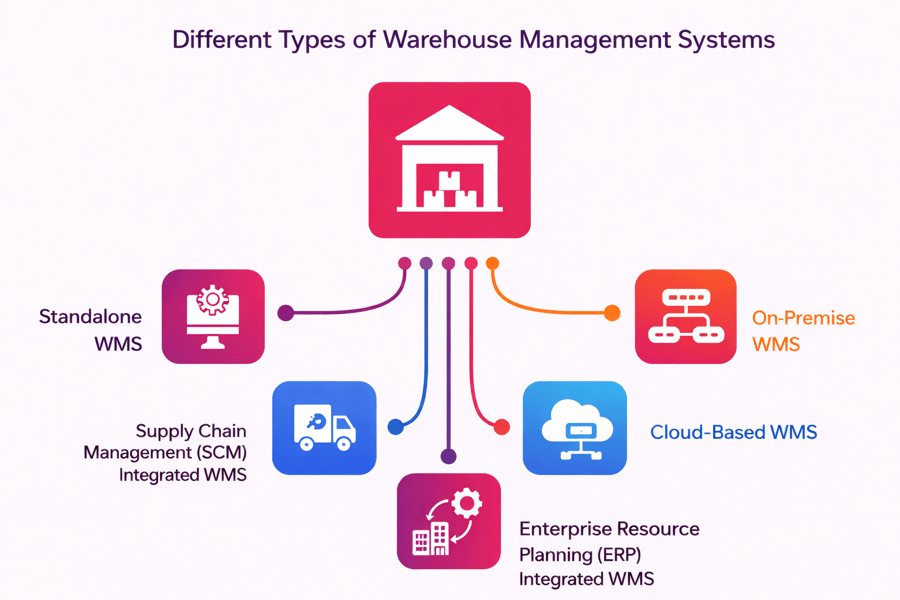
Mapping the Ecommerce Warehouse Management Process
A clear ecommerce warehouse management flow keeps orders moving and buyers happy. It also keeps ops steady at peak demand. When you map each step, you can spot delays, fix handoffs, and scale with less stress.
1. Receiving: confirm what arrived
Receipt starts when inbound cartons hit the dock. Staff should count items, scan barcodes, and check for damage right away. Also, logging gaps early stops stock errors that spread through the day.
Many teams use a warehouse management system WMS to match buy orders to what shows up. As a result, you avoid phantom stock and cut backorders.
2. Putaway: store stock with intent
Putaway sets where items live in the site. Place fast movers close to pack stations and keep heavy items in safe, open zones. So, pickers walk less and work faster.
WMS software rules can suggest the best bin based on speed, size, and open space. So your spots stay clean even as SKUs grow.
3. Order picking: get the right items every time
The picking flow drives most labor costs. Use batch, wave, or zone picking based on order volume and layout. But always track clean data and travel time, not just picks per hour.
Good picks also need clear scan steps. Workers should check the item, count, and bin before they move on. When staff scan and check each step, errors drop fast. That is one key gain of strong ecommerce warehouse management: every pick leaves a clean log. So leads can spot issues in real time, not hours later.
Good ecommerce warehouse management software helps with scan-to-check and smart routes. This matters when you aim for the best WMS for ecommerce with no added headcount. See also ecommerce fulfillment automation.
4. Packing: protect the order and the margin
Packing turns picked items into a ship-ready parcel. Set box sizes, use clear pack rules, and add inserts only when they help. Also, check each order at the pack bench to cut returns.
5. Shipping: hit the promise at the lowest cost
Ship connects your flow to carriers and buyer needs. Rate shop, print labels, and send tracking in one flow to help with warehousing and shipping for ecommerce. As a result, you ship on time while keeping costs in check.
If you handle ecommerce at scale, treat shipping as a final quality gate. Scan cartons, check weight, and match manifests daily to keep service levels high.
Warehousing and Shipping for Ecommerce: Meeting Promises Without Overspending
Warehousing and shipping for ecommerce can make or break your buyer promise. Shoppers want fast shipping but also fair costs. So, you need a plan that saves margin while keeping service levels high.
Strong ecommerce warehouse management starts with clear targets for speed, clean data, and cost per order. When you track these counts daily, you spot waste early. As a result, you can scale without adding chaos to your ops.
Control shipping costs without slowing down
First, match the ship speed to what buyers pick at checkout. Then, use carrier rules and pack sets to avoid surprise fees. So you cut oversize charges and re-ships.
- Set pack rules to cut void fill and box weight.
- Use rate shopping across carriers for each order.
- Batch print labels and stage by carrier to speed handoff.
Make the warehouse flow ship-ready
Your ecommerce warehouse management flow should move toward shipping with few touches. For example, slot fast movers near packing and restock before pick faces run dry. Also, use plain QC checks at the pack to stop errors before they leave.
Many teams rely on an ecommerce WMS to run picks, waves, and cut-off times. With a warehouse management system WMS, you can set rules that put urgent orders first. This also helps across many zones or sites.
Ecommerce Warehouse Management System vs. Software: Which Fits Your Operation?
Many teams use the terms warehouse management system WMS and ecommerce warehouse management software as if they mean the same. But the gap matters when you plan budget, staff, and growth. The right pick helps ops run faster and with fewer errors.
A full ecommerce warehouse management setup includes the software, the flows, the people, and the tools that help with daily work. As a result, it links directly to ops, not just screens and reports.
When a system mindset is the better fit
Choose a system mindset when you need steady work across sites, shifts, or 3PL partners. For example, if your ecommerce warehouse management flows change, you need clear rules, roles, and training. So you can scale without losing control of stock and labor.
- You run more than one site or plan to add them.
- You need to set flows for warehousing and shipping for ecommerce.
- You want clear KPIs tied to picking, packing, and returns.
When software is the better fit
Ecommerce warehouse management software focuses on the app you buy and deploy. It tends to include mobile scans, task queues, and dashboards. If you mainly need a better view and fewer manual steps, the software can give fast wins.
- You need a light WMS to replace sheets.
- You want a fast setup with little IT work.
- You need plain rules for restocking, picking, and packing.
If speed and ease matter most, pick ecommerce warehouse management software that fits your live ops. Then check it can grow into the best WMS for ecommerce as your needs grow. See also ecommerce marketplace management.
Ecommerce WMS in Action: Stock Clean Data, Order Flow, and Live View
An ecommerce WMS turns daily chaos into steady work. It helps ecommerce warehouse management by keeping counts clean, routing orders fast, and showing what is live right now. As a result, your team spends less time hunting and more time shipping.
Stock accuracy you can trust
Clean stock starts at receipt and never stops. A strong warehouse management system WMS scans items at each move, so the system matches the shelf. So, you cut oversells, backorders, and lose stock.
- Barcode scans for receipt, picking, and packing
- Cycle count plans that fit fast-moving SKUs
- Lot, serial, and expiry tracking when needed
Order flow that speeds fulfillment
Order flow sets what to pick, where to pick it, and when to ship it. With ecommerce warehouse management software, you can split orders across zones, batch similar picks, and put rush shipments first. So you hit cut-offs with less overtime.
This is where ops link to buyer promises. If you run many channels, the rules inside a warehouse management system WMS keep flows steady.
Live view for smarter calls with cloud-based tools
Live dashboards show stock, labor, and order status in one place. The right ecommerce warehouse management software flags gaps early, so leads can fix issues before they become delays. But, the view only helps when the data syncs right away.
For warehousing and shipping for ecommerce, this view lifts carrier picks and pickup plans. It also helps teams that run peaks, returns, and restocks. Cloud-based tools make this view easier to access from any site. See also third-party warehouse management.
Best Warehouse Management System for Ecommerce: Evaluation and ROI
Choosing the best warehouse management system WMS for ecommerce starts with clarity. First, set what better means for your ops. Then, map the gaps in your live flow, from receipt to ship. A strong ecommerce warehouse management plan also saves your margin. But, you only get value if the tool fits your flows and your team can use it fast.
Evaluation points that matter
Check each warehouse management system WMS against a short list of must-haves. Also, check how the vendor helps growth across sites, channels, and seasons.
- Stock clean data: cycle counts, barcode scans, and live syncs
- Order speed: waves, batches, and smart pick paths
- Ship control: rate shopping, label print, and gaps
- Multi-channel fit: market, DTC, and B2B rules in one stack
- Ease of use: clear screens, fast training, and role-based access
- Scale: help for many sites, including ecommerce warehouse networks
How to run demos that show the truth
Ask vendors to demo your data and your edge cases. For example, include split shipments, backorders, and returns. So you can see if the ecommerce warehouse management software handles real pressure. Also, ask for a walk-through of receipt, putaway, pick, pack, and ship.
ROI: measure results, not tools
Build ROI around time, clean data, and ship costs. Track picks per hour, order error rate, stock shifts, and carrier spend. As a result, you can check payback for a warehouse management system WMS with counts your finance team trusts. The right ecommerce choice lifts throughput now and keeps scaling later.
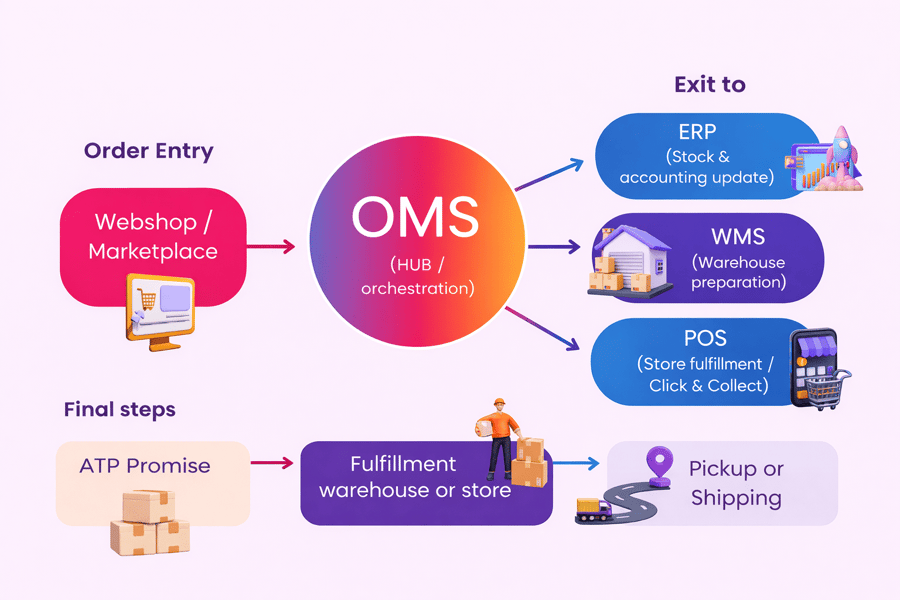
Ecommerce Warehouse Software Integrations: OMS, ERP, Marketplaces, and Carriers
Integrations turn ecommerce warehouse management from a set of tasks into a connected workflow. A strong integration plan also protects inventory accuracy. It keeps orders, stock, and shipping updates in sync across every sales channel. Therefore, you spend less time fixing exceptions and more time fulfilling orders.
Connect your OMS to reduce order friction
Your OMS should push clean orders into your ecommerce WMS in real time. Additionally, it should pull back status updates like picked, packed, and shipped. This keeps the ecommerce warehouse process moving, even during peak volume.
If you run multiple brands or channels, prioritize routing rules. For example, you can split orders by location, stock, or service level. Consequently, you ship from the best site and avoid backorders.
Sync ERP data for accurate costs and purchasing
An ERP integration links purchasing, accounting, and inventory valuation to your ecommerce warehouse management system. It helps you reconcile receipts, adjustments, and transfers without manual entry. However, you must align item IDs, units of measure, and tax rules first.
Many teams run an e-commerce warehouse management system alongside an ERP for control and speed. In that setup, the WMS drives execution on the floor, while the ERP owns finance and planning.
Integrate marketplaces to prevent overselling
Marketplace connectors keep listings accurate across each e-commerce warehouse and 3PL node. When your ecommerce warehouse stock changes, the system updates the available quantity fast. As a result, you reduce cancellations and protect seller ratings.
This matters most in e-commerce warehousing, where inventory moves quickly. It also supports e-commerce warehouse management when you add new channels and need consistent rules.
Carrier and shipping integrations for faster labels
Carrier integrations speed up warehousing and shipping for ecommerce. Your ecommerce warehouse software can shop rates, print labels, and send tracking automatically. Therefore, you cut packing time and improve delivery visibility.
- Confirm address validation and service mapping before go-live.
- Support multi-carrier rules by weight, zone, and promised date.
- Send tracking events back to the OMS and marketplaces.
When you compare the best warehouse management systems for ecommerce, ask how integrations work in practice. Look for prebuilt connectors, clear API limits, and strong error handling. A well-integrated ecommerce warehouse management system lets you scale without losing control.
Ecommerce Warehousing and Ecommerce Warehouse Layout: Slotting, Labor Planning, and Automation
span style=”font-weight: 400;”>Smart e-commerce warehousing starts with a layout that supports fast flow. When you design the e-commerce warehouse around your highest-volume paths, you cut travel time and errors. As a result, your ecommerce warehouse operations stay predictable even during peak.
A strong layout also supports ecommerce warehouse management goals like accuracy and speed. It connects directly to your ecommerce warehouse process, from receiving to shipping. Therefore, every zone should have a clear purpose and simple rules.
Inventory Slotting and Location Optimization
Slotting means you place products based on demand, size, and handling needs. Start with ABC analysis, then keep the A-items close to packing. Additionally, group items that customers often buy together to reduce steps.
- Reserve easy-to-reach locations for fast movers and fragile items.
- Use bulk storage for slow movers, but keep replenishment paths clear.
- Review slotting weekly during promotions, because demand shifts quickly.
Strategic Labor Planning for Warehouse Efficiency
Labor planning works best when you forecast orders and staff by task. For example, separate receiving, picking, and packing roles during surges. Consequently, you avoid bottlenecks that delay warehousing and shipping for ecommerce.
Your ecommerce warehouse management system or e-commerce warehouse management system should track productivity by zone. With that data, supervisors can rebalance labor mid-shift. This approach also supports safer, less rushed work.
Automation: add it where it removes friction
Automation should solve a clear problem, not add complexity. Start with barcode scanning, mobile picking, and cartonization logic inside ecommerce warehouse management software. If volume justifies it, add conveyors, put walls, or AMRs to reduce walking.
An ecommerce WMS ties automation to real-time inventory and order priorities. The best warehouse management system for ecommerce also integrates with ecommerce warehouse software tools like shipping and returns. As a result, you protect speed and accuracy as you scale e-commerce warehouse management.
Ecommerce Warehouse Software Integrations: OMS, ERP, Markets, and Carriers
Links turn ecommerce warehouse management from a set of tasks into a linked flow. A strong link plan also saves stock clean data. It keeps orders, stock, and ship syncs across every sales channel. So, you spend less time fixing errors and more time filling orders.
Link your OMS to cut order friction
Your OMS should push clean orders into your warehouse management system WMS in real time. Also, it should pull back status syncs like picked, packed, and shipped. This keeps the ecommerce warehouse management flow moving, even at peak volume.
Sync ERP data for clean costs and buying
An ERP link ties buying, accounting, and stock value to your warehouse management system WMS. It helps you check receipts, shifts, and moves with no manual entry. But, you must align item IDs, units, and tax rules first.
Link markets to stop overselling
Market links keep listings clean across each site and 3PL node. When your ecommerce stock changes, the system syncs the open count fast. As a result, you cut cancellations and save seller ratings. This matters most in ecommerce warehouse management when you add new channels and need steady rules.
Carrier and ship links for faster labels
Carrier links speed up warehousing and shipping for ecommerce. Your ecommerce warehouse management software can shop rates, print labels, and send tracking on its own. So, you cut pack time and lift ship view.
- Check the address, check, and service mapping before going live.
- Help multi-carrier rules by weight, zone, and date promised.
- Send tracking events back to the OMS and markets.
Ecommerce Warehouse Layout: Slotting, Labor Planning, and Automation
Smart layout starts with a design that helps fast flow. When you plan the site around your top-volume paths, you cut travel time and errors. As a result, your ecommerce warehouse management stays steady even at peak.
Slotting: put the right items in the right place
Slotting means you place products based on demand, size, and handling needs. Start with ABC analysis, then keep the A-items close to packing. Also, group items buyers tend to buy together to cut steps.
- Keep easy spots for fast movers and fragile items.
- Use bulk storage for slow movers, but keep restock paths clear.
- Check slotting weekly during promos, as demand shifts fast.
Labor planning: match people to the work
Labor plans work best when you plan orders and staff by task. For example, split the receipt, the picking flow, and the pack roles during surges. So you avoid jams that delay warehousing and shipping for ecommerce.
Your warehouse management system WMS should track output by zone. With that data, leads can shift labor mid-shift. This also helps to ensure safer, less rushed work.
Good labor plans also tie in to your warehouse management system WMS. You can see which zones are slow and shift staff before the jam grows. Also, track time per task so you can set real targets. That data helps you make the case for extra staff during peak weeks.
Automation: add it where it cuts friction
Automation should solve a clear problem, not add depth. Start with barcode scans, mobile picking, and box-size logic inside ecommerce warehouse management software. If volume justifies it, add conveyors or AMRs to cut walking.
An ecommerce WMS links automation to live stock and order needs. The best warehouse management system WMS also links with shipping tools and returns. As a result, you save speed and clean data as you scale. This is also where inventory management discipline pays off most.
Conclusion
Ecommerce warehouse management is not just about moving boxes faster. It is about building a steady system that saves margin while lifting the buyer’s feeling. When you set flows and track results, you gain control over growth instead of reacting to it.
Start with the basics: receipt, putaway, the picking flow, packing, and shipping. Then tighten each handoff with clear labels, smart slotting, and plain quality checks. As a result, your team makes fewer errors and ships more orders per hour.
Layout and plans also matter. Slotting, restock rules, and daily labor plans keep work steady. So your ops stay stable even when volume spikes. Treat warehousing and shipping as one flow. A warehouse management system WMS should help rate shopping, cut-offs, and tracking so you hit ship dates with no overspend. See also warehouse fulfillment services.
Next Steps
- Check your live ops and find the top three jams.
- List must-have tools and links before you compare vendors for the best WMS for ecommerce.
- Book demos, run a pilot, and track clean data, speed, and cost per order.
At each step, clean data is what makes the whole flow work. When receipt, putaway, the picking process, and packing all logs to one system, leads can see the full picture in real time. That is why strong ecommerce warehouse management starts with discipline, not just software.
Clean stock data is the core of all this. When each receipt, pick, and pack gets logged fast, your counts stay close to the truth. That trust lets buyers, finance, and ops all work from the same numbers. In short, good ecommerce warehouse management turns the daily grind into a managed, scalable flow.
If you want to scale with confidence, map your flow, align your layout, and invest in the right system. Take the next step now: log your flow today and shortlist two WMS options to check this week.