Fast shipping stopped being a bonus years ago. Customers expect accurate orders. Quick delivery updates matter now. Easy returns are standard expectations. When any step breaks, support tickets pile up. Repeat purchases drop. That’s why many brands turn to a pick and pack fulfillment center.
Modern fulfillment works from the inside out. Pick-and-pack services speed up order flow. Errors get reduced. Inventory stays under control. The right processes improve unboxing. Tracking gets better. Post-purchase trust builds over time.
Outsourcing versus in-house shipping matters at every stage. Some teams need flexible pick and pack warehouse services during peak season. Others need year-round support. Order volume drives your decision. SKU mix also plays a role. Delivery promises shape the choice.
Pick-and-pack distribution centers use location to reduce transit time. Shipping zones help lower costs. eCommerce pick-and-pack best practices differ for DTC. Marketplaces need different approaches. Subscriptions require unique strategies. Knowing what to ask saves time. Money is saved too when comparing pick-and-pack fulfilment services.
What a Pick and Pack Fulfillment Center Does
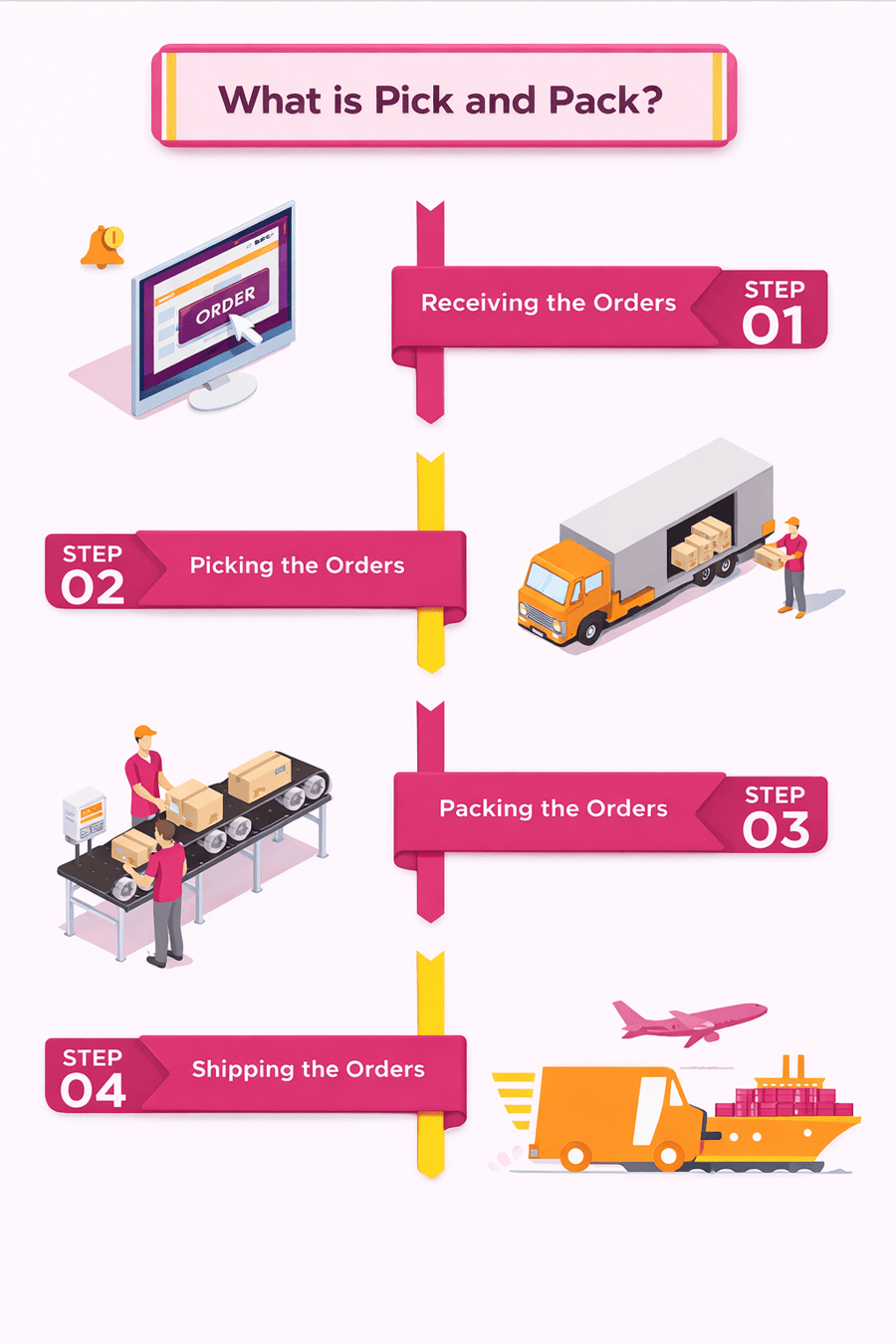
A pick and pack fulfillment center stores your products. The right items get selected for each order. Packing happens next for shipping. You ship faster this way. Adding more people to your team becomes unnecessary. Orders stay accurate even when volume spikes.
The workflow supports speed. Accuracy improves, too. A better customer experience gets created. Spotting what “good” looks like helps before you compare providers.
The core workflow in plain steps
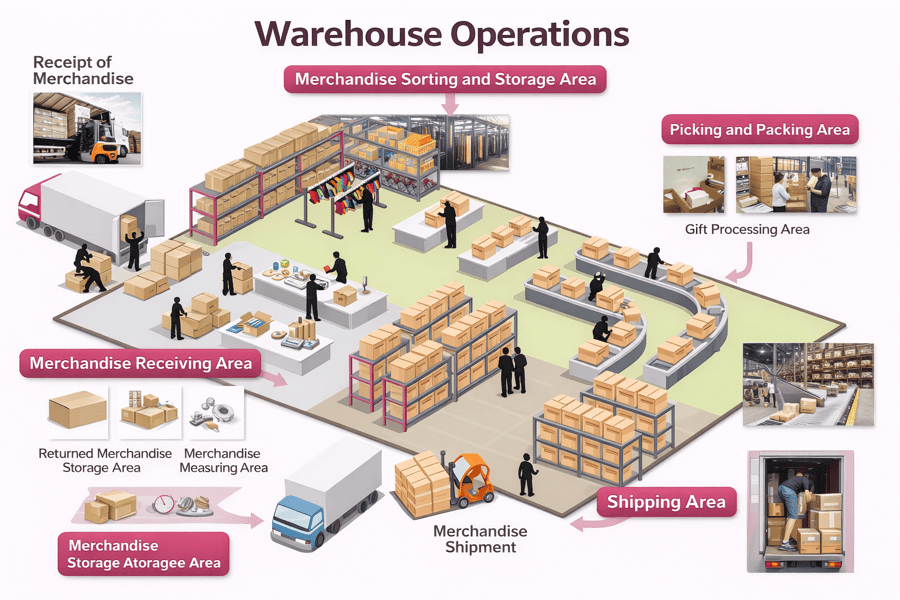
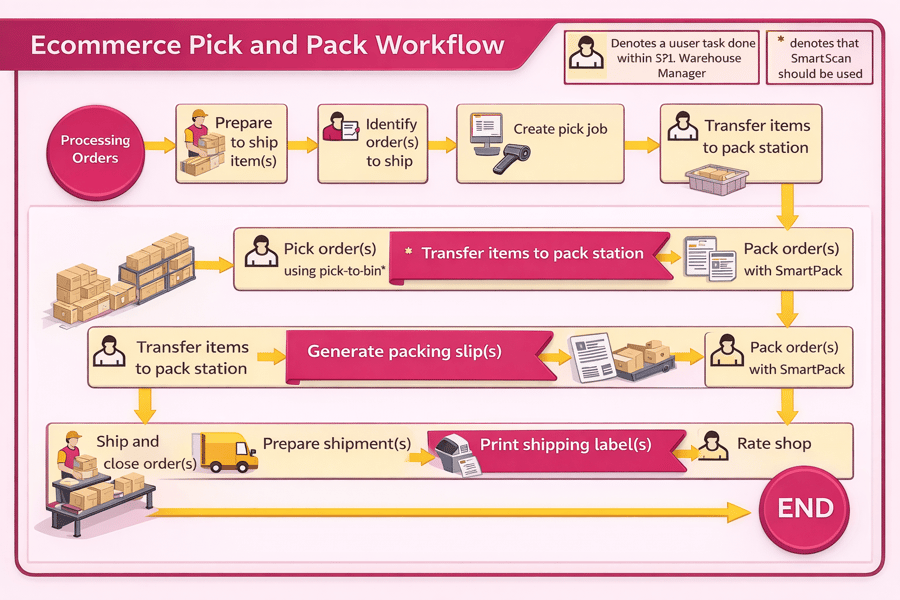
Products arrive at the warehouse. Workers count them. Damage gets checked during receiving. Items go into labeled locations. This makes finding them easy later.
Your store sends orders to the warehouse. This happens automatically. The system works for eCommerce pick-and-pack channels. Staff gets a scan-based list. The right SKU gets grabbed. The right quantity comes next.
The team picks the right box size. Inserts like promo cards get added. The shipment gets sealed. A carrier option gets selected by the system. Labels print automatically. Parcels move to the loading dock.
Many pick-and-pack services add checks at each step. Barcode scans catch errors. Weight checks catch errors, too. Mis-picks get reduced. Wrong sizes decrease. Missing items become rare. These controls support clear service levels. Predictable cutoff times emerge from good controls.
Why location matters for speed
Pick and pack distribution centers can shorten delivery times. How? By placing inventory closer to customers. Services like kitting help. Branded packaging helps. Returns processing helps. But not all pick and pack fulfilment services offer the same value.
The right center balances cost with speed. Accuracy needs to be balanced with volume, too. Technology prevents errors automatically. People handle exceptions when they occur. This combination protects your brand while keeping costs down.
Pick and Pack Services vs In-House Fulfillment
In-house shipping can feel simple at first. Control stays with you. Inventory sits nearby. Orders get packed on your own schedule. But volume changes everything.
Small delays turn into late shipments. Late shipments create support tickets. More time on boxes means less time on growth.
Outsourcing pick and pack services helps when speed matters. Consistency matters, too, when doing everything yourself becomes hard. A pick and pack fulfillment center uses trained teams. Set processes keep things moving. Scanning tools reduce errors automatically. More orders ship per day. Full-time labor doesn’t increase.
Keep fulfillment in-house when
In-house fulfillment works best when your operation stays predictable. Low daily volume makes sense to handle yourself. So does a small catalog. Custom handling for every order might move faster with your own team.
Local pickup works better from your location. Same-day delivery works better from your location. Your customers might expect both. Your products might need special care. Fragile items need gentle hands. Regulated items need trained staff.
Outsourcing makes more sense when
Growth friction hits hard at some point. You run out of space for inventory. Hiring becomes a constant struggle. Mis-picks start rising week over week. You need a scalable system.
Many pick and pack fulfillment companies offer more than just picking and packing. Pick and pack warehouse services expand the options. Kitting helps bundle products together. Branded inserts support marketing efforts. Returns processing recovers value from sent-back items.
Faster delivery is made possible by using multiple pick and pack distribution centers. You can’t afford to open your own warehouses. But you can use theirs. Selling across channels needs clean workflows. eCommerce pick-and-pack gets complex fast.
Seasonal spikes force hard choices. Overtime burns out your team. Temporary labor needs training. Missed ship-by times damage your reputation. Predictable SLAs from pick-and-pack fulfilment services protect what you built.
Planning for expansion: pick and pack fulfillment center
Expanding into new regions creates new problems. A top-pick-and-pack warehouse can shorten transit times. Brand experience gets protected in new markets. Marketing becomes your focus. Product development gets priority time. The partner handles daily operations through warehouse fulfillment services.
This split enables scaling without hiring a logistics team. Testing new markets happens without long-term leases. Flexibility emerges when demand shifts.
Pick and Pack Distribution Centers: Network Coverage and Delivery Speed
A fast delivery promise starts with location. Using a pick-and-pack fulfillment center with multiple sites helps. Inventory gets placed closer to buyers. Transit time drops as a result. Shipping costs fall at the same time.
Why network coverage matters
Strong network coverage means reaching more customers. Fewer shipping zones become necessary. Many pick-and-pack distribution centers place facilities near major metro areas. Carrier hubs get priority, too. Orders travel fewer miles as a result. Arrivals happen sooner.
Think about your customer base. Where do most orders go? East Coast customers need East Coast inventory. West Coast customers need West Coast inventory. Midwest customers fall in between.
This setup also reduces risk during peak season. One site runs tight on labor? Another site can help. One site runs tight on space? Load shifts to another location. Many pick-and-pack fulfillment companies call this “load balancing.” It keeps service steady when volume spikes.
Shipping zones and delivery speed
Zones affect both cost and speed. Customer experience gets shaped directly by zone selection. Smart inventory placement lets you ship more orders in Zones 1 to 3. These zones cost less per shipment. Delivery happens faster, too.
Faster delivery options become available without premium rates. Margins stay healthy. Customers stay happy with quick arrivals.
Speed often drives conversion for marketplaces. Buyers compare shipping times before they buy. Selling handmade items? You can still win on delivery. Selling personalized items? Same thing. Pair production with nearby fulfillment.
Many sellers compare options like Etsy 3PL fulfillment services to shorten delivery windows. Reliable pick and pack warehouse services make the difference between a sale and an abandoned cart.
How to set up inventory across locations
Start with the order history. Map where customers live. Look at the last six months, minimum. Look at twelve months if you have seasonal swings.
Split fast-moving SKUs across regions. Keep slow movers in one central node. eCommerce pick and pack strategies are supported this way. Two-day shipping becomes possible. Subscription replenishment works smoothly.
Demand data helps decide which SKUs go to each site. Reorder points need to be set per location. This prevents stockouts in busy regions. SLAs for cutoff times require confirmation. Carrier pickup schedules at each site need to be verified, too.
Choose pick and pack warehouse services that support site-to-site transfers. Inventory should move easily. Transfers should cost fairly. Some providers charge high transfer fees. Others include transfers in base pricing.
Testing your network strategy
When evaluating a top pick-and-pack warehouse, ask specific questions. How does it assign orders to the closest node? How does it handle split shipments when one location runs out?
The best pick and pack fulfilment services improve delivery speed. Complexity doesn’t increase. Consistent warehousing and shipping services are used across all locations.
Test the routing logic before you commit. Send sample orders to different zip codes. See which warehouse gets the order. Check whether the system selects the correct location every time. Confirm backup plans when primary sites hit capacity.
eCommerce Pick-and-Pack: Best Practices
eCommerce pick and pack works best with clear rules. Rules for every order type. Start by mapping how DTC orders differ from marketplace orders. Map how they differ from subscription orders. Look at speed requirements, packaging needs, and insert requirements.
Align those rules with your pick-and-pack fulfillment center. Every shift should follow the same playbook. No guessing or special cases unless absolutely needed.
DTC best practices: protect the brand
DTC customers notice details. They remember packaging and share unboxing experiences. Standardize your packaging steps. Standardize your unboxing experience.
Scan-to-verify works at pick. It works again at the pack. Wrong items get prevented. Missing components get caught early. Pairing this with reliable pick-and-pack services reduces support tickets. “Where is my order?” messages drop. Repeat purchases rise.
Branded packing slips build recognition. Inserts should stay consistent for promos. Loyalty programs need consistent messaging, too. Carton rules by product type reduce damage during shipping. DIM weight charges decrease with proper sizing.
Batch pick fast movers first. Then, single-pick fragile items. This improves accuracy for items that break easily.
Marketplace best practices: hit targets
- Marketplaces reward speed. They punish late shipments and poor tracking. Configure cutoff times by channel. Auto-route orders to the right carrier service.
- Strong pick-and-pack warehouse services help you keep labels correct. They keep tracking correctly, and the compliance documents are correct.
- Separate marketplace inventory. This prevents overselling and prevents cancellations that hurt your seller rating. Use channel-specific packaging rules and label placement rules.
- Monitor late-ship rates daily. Don’t wait for weekly reports. Monitor defect rates daily, too. Catch problems early before they hurt your account standing.
Subscriptions best practices: stay consistent
Subscriptions demand predictable output. Customers expect the same quality every month. Plan labor around drop dates. Know when the big waves hit.
Pre-kit common bundles. Stage materials before the wave starts. Many pick and pack fulfillment companies support kitting. This keeps subscription boxes uniform. It keeps them uniform even during peak weeks when everything else gets chaotic.
Create a dedicated space for subscription assembly. Don’t mix it with regular orders. This prevents mistakes when workers rush.
Pick and pack fulfillment center: choosing the right partner
Choose partners with the right footprint. Pick and pack distribution centers closer to customers shorten delivery times. They reduce costs at the same time.
Want a top-pick-and-pack warehouse? Ask how they handle channel rules, about kitting capabilities, and exception handling. All of this should fit within their pick-and-pack fulfilment services without custom fees.
Pick and Pack Warehouse Services That Matter Most
The best pick-and-pack warehouse services do more than just move boxes fast. They protect your brand, ship the right items, and pack them properly. Every single time.
Your pick and pack fulfillment center becomes a customer experience engine. Not just a cost center or a necessary expense. A true extension of your brand.
Accuracy that prevents costly errors
Accuracy starts with clean inventory counts. It starts with clear bin locations. Leading pick-and-pack services use barcode scanning. Scan at pick, pack, and ship.
Teams catch mistakes before labels print. This saves money on reships. It saves your reputation with customers.
Cycle counts happen regularly. Exception rules catch problems. Backorders get reduced. Oversells get prevented. This matters a lot for eCommerce pick and pack operations.
Scan-based picking catches the wrong SKU. Scan-based packing catches missing items. Lot tracking helps when needed. Serial tracking helps with electronics. Expiration tracking helps with food and cosmetics.
Photo verification works for high-risk SKUs. Weight checks work for high-value items. Some warehouses do both for expensive products.
Kitting and value-added assembly
Kitting turns multiple SKUs into a single ready-to-bundle package. Launch promos without slowing down daily orders, subscription boxes the same way, and multi-packs the same way.
A top pick and pack warehouse supports inserts. Gift notes add a personal touch. Custom packaging protects your brand identity. The workflow stays simple even with these extras.
Many brands use kitting for seasonal campaigns. Holiday bundles need assembly. Valentine bundles need assembly. Back-to-school bundles need assembly. The warehouse should handle this smoothly.
Returns that recover value
Returns move fast when the warehouse sets clear inspection steps. The team sorts items quickly. Restock goes in one pile. Refurbish goes in another pile. Dispose goes in a third pile.
Update inventory the same day. Not the next day. Not next week. Same day. You refund customers sooner. You resell good units faster. This happens across all your pick-and-pack distribution centers.
Good returns processing also identifies quality issues. Why did the customer return it? Was it damaged, wrong, or just unwanted? Track these reasons to improve your products.
SLAs that set expectations
Strong SLAs define cutoff times clearly. Same-day ship rates get spelled out. Order accuracy targets get written down. Everyone knows what success looks like.
They also spell out how pick-and-pack fulfilment services handle peak volume. What happens during Black Friday, holiday rushes, or when orders double overnight?
SLAs cover damages too. Carrier claims need processes. When comparing pick-and-pack fulfillment companies, choose the partner that reports on these metrics. Weekly reporting works best. Monthly reporting hides problems for too long.
Look for partners with experience in third-party warehouse management. They know how to balance speed with accuracy. They know how to scale without breaking.
How to Evaluate Pick and Pack Fulfilment Services
When comparing pick-and-pack fulfilment services, start with the tech stack. The right tools reduce touches. They prevent mistakes. They keep orders moving smoothly.
Customers get faster delivery. They send fewer “where is my order” emails. Your support team handles fewer tickets.
Technology that protects speed and accuracy
A strong pick and pack fulfillment center uses barcode scanning. It uses real-time inventory tracking and clear pick paths that guide workers efficiently.
It should support batch picking for speed, kitting for bundles, and support automated packing rules. These features matter most when volume spikes. You need consistency during chaos.
Real-time inventory updates happen across all channels. Your website shows what’s really in stock, Amazon listings show accurate counts, and marketplace stores stay in sync.
Lot tracking matters if you sell regulated goods. Serial tracking matters for electronics. Expiry tracking matters for food and cosmetics. Not every brand needs all of these. But the system should support what you need.
Quality checks happen automatically. Scan-to-verify catches wrong picks. Weight validation catches missing items. Returns workflows restock fast. They flag damaged items before they go back on the shelves.
Integrations that remove manual work
Review integrations before you sign any contract. Your provider should connect to your store easily. They should connect easily to your marketplaces, carriers, and accounting tools without custom development.
Your team should avoid spreadsheets. They should avoid duplicate data entry. They should avoid manual file transfers. All of this wastes time and creates errors.
Running eCommerce pick and pack across multiple channels? Ask detailed questions. How does the system handle split shipments? How does it handle backorders when one warehouse runs out?
Confirm how it routes orders across the pick-and-pack distribution centers. The goal is to cut transit time. The best partners make these rules easy to set. They make it easy to change when your business shifts.
Good order management software ties everything together. It becomes your command center for all fulfillment operations.
Reporting, you can act on
Demand reporting that ties service levels to real outcomes. Look for dashboards that show current performance. Pick accuracy rates indicate training quality. On-time ship rates indicate process quality. Order cycle time tells you about efficiency.
You can hold pick-and-pack fulfillment companies to meet SLAs. You can spot issues early before they become crises. Weekly reports work better than monthly reports. Daily reports work even better for high-volume brands.
Making your shortlist
When shortlisting pick and pack services, ask for specific deliverables. Request sample reports from current clients, live demos with your actual data, and a 30-day performance review plan.
Compare how each provider supports your required pick-and-pack warehouse services. Can they handle your specific needs? Can they scale to a top pick-and-pack warehouse as you grow?
Keep decisions simple. Review order fulfillment software capabilities carefully. The software drives everything else in the operation.
Pricing and Cost Drivers
Pricing varies widely across pick and pack fulfillment companies. You need to know what drives the bill. Understanding costs helps you budget correctly.
A pick-and-pack fulfillment center usually charges a mix of fees. Fixed fees cover basics. Variable fees scale with volume. The best way to compare options is by mapping pricing to your actual order flow.
Common fee categories for a pick and pack fulfillment center
Most quotes bundle several line items. Even when they call it “all-in” pricing. Different pick-and-pack services include different steps in their base rates. Confirm what each fee covers before signing.
Receiving includes unloading trucks. It includes counting items. It includes check-in on a per-pallet, per-carton, or per-hour basis. Some charge flat rates. Others charge by actual time spent.
Storage gets charged in different ways. Per bin works for small items, shelf works for medium items, and pallet works for large items. Cubic-foot rates work for irregular sizes. Rates rise with slow movers that sit too long.
Pick and pack includes per-order fees. It includes per-item fees. It includes packaging material charges. Simple orders cost less. Complex orders with multiple items cost more. Gift wrapping costs extra. Custom inserts cost extra.
Shipping adds carrier rates to your bill. Surcharges apply during peak season. Label fees apply per shipment. Some providers mark up carrier rates. Others pass through actual costs.
Returns include inspection time. They include restocking labor and disposal fees for damaged items. Refurb fees apply when items need cleaning or repackaging before resale.
What makes costs go up or down
Order profiles shape your total cost. They matter more than the quoted base rate. Multi-line orders take more time to pick. Fragile items need more careful packing. Custom inserts add touches to every order.
Many providers reference the basics of ecommerce fulfillment when explaining costs. Each touchpoint affects pricing. Understanding this helps you optimize your processes.
Network decisions create trade-offs. Using multiple pick and pack distribution centers reduces the number of shipping zones. Lower zones mean lower shipping costs. But you may incur higher fees on inbound transfers. You may pay for split shipments when inventory splits across locations.
eCommerce pick-and-pack brands balance speed against inventory complexity. Fast delivery costs money. Simple inventory saves money. Finding the right balance protects margins while satisfying customers.
How to compare providers fairly
Each provider should price the same sample month. Real order data works best. Peak days need inclusion. Regular days too. Slow days help complete the picture. This shows how pricing scales with volume.
- Review value-added work carefully. Kitting costs vary widely. Subscriptions need special handling. Branded packaging needs materials and labor. All of this falls under pick-and-pack fulfilment services and pick and pack warehouse services.
- Confirm minimums before signing. Monthly minimums protect the provider. They can hurt you during slow months. Surge labor rates apply during peaks. Onboarding fees cover setup time. Training fees cover special handling requirements.
- Compare total landed cost per order. Don’t just compare the pick-and-pack rate. One provider charges low pick fees but high storage fees. Another charges high pick fees but low storage. Total cost matters more than individual line items.
Get the full picture through analysis of the fulfillment business process. Different scenarios need modeling. Growth projections help planning. Seasonal patterns matter too. See how costs change as your business changes.
Implementation: Onboarding Your Pick and Pack Fulfillment Center
A smooth onboarding protects your delivery promise. It keeps customers happy during the transition. Switching to a new pick-and-pack fulfillment center requires planning.
Avoid stockouts during the switch, shipping delays, and order errors. Use a clear timeline. Use thorough testing.
Prepare data for a pick and pack fulfillment center
Start by cleaning your SKU master file. Confirm barcodes work correctly, dimensions are accurate, and weights match reality.
Map which SKUs need kitting, need expiry tracking, require special handling (e.g., fragile stickers or “this side up” labels), or are otherwise notable. Share this data with your pick and pack services partner early. Four weeks before launch works best.
Send product samples to the warehouse. Let the team test packaging options. Let them test carton selection. Define receiving rules clearly. What happens with damages, overages, and shortages?
Cycle counts need clear expectations. Inventory accuracy targets should be defined. Put these in writing before launch.
Connect systems and test workflows
Link your store to the warehouse management system, marketplaces, and your carriers. Many pick-and-pack fulfillment companies offer prebuilt connectors. This speeds up setup.
But you still need field mapping. Shipping methods need mapping. Tax codes need mapping. Order tags need mapping. Custom fields need mapping. Don’t skip this step, or errors will happen daily.
Run test orders for common scenarios. Test single-item orders, multi-line orders, and subscription kits. Check that labels print correctly every time.
Tracking updates should flow back to your store. Inventory decrements need to happen in real time. Packing rules require fixing now. Cutoffs need adjustment now, too. Don’t wait until real customers feel the impact.
Test split shipments carefully. This matters if you use multiple pick-and-pack distribution centers. Confirm that orders route to the closest facility with stock. Verify that backorder logic works as expected. Test across all channels for eCommerce pick and pack.
Set SLAs and monitoring
Agree on performance targets before launch day. Cutoff times need to be defined clearly by the carrier. Same-day ship rates should be spelled out. Order accuracy minimums must be in writing. These aren’t suggestions. These are requirements.
Confirm how pick and pack warehouse services handle peak volume. What happens during holiday rushes? When orders triple overnight, what’s the plan? If SLAs slip below targets, what are the consequences?
Schedule daily check-ins for the first two weeks. Pick accuracy gets reviewed every day. On-time ship rates need daily attention. Order cycle time requires daily monitoring. Adjust workflows based on what you learn. Problems caught early stay small.
Move to weekly reviews after the first month. But keep watching the numbers. Track these metrics ongoing: receiving accuracy shows how well inbound works, inventory accuracy shows how well storage works, pick accuracy shows how well training works, on-time ship rate shows how well processes work, and order defect rate shows how well quality controls work.
The best pick and pack fulfilment services share these numbers without you having to ask. They work with you to improve constantly through ecommerce fulfillment automation.
Making Your Decision: Pick and Pack Fulfillment Center
Choosing a pick and pack fulfillment center comes down to speed, accuracy, and scalability. Storage, picking, packing, and shipping need to work as one system. Customers get what they ordered on time. Your team focuses on growth instead of daily logistics.
Match your order profile to provider strengths. DTC brands need branded packaging and scan-to-verify. Marketplaces need channel-specific rules and compliance. Subscriptions need kitting and drop-date planning. The best pick-and-pack services scale with your business without forcing constant changes.
Focus on clear pricing with all fees included. No surprise charges for materials, labor, or peak surcharges. Track real service levels such as order accuracy, on-time shipping rate, and inventory precision. Pick technology that connects smoothly with your store and carriers while giving real-time visibility. Check proven onboarding with testing, cycle counts, and documented workflows.
Don’t trust sales promises alone. Get recent performance reports. Tour actual warehouse operations. Check coverage in your key shipping zones. This cuts risk and avoids expensive switches later.
Build a short evaluation list. Make a comparison scorecard. Ask for pilot programs or sample months. Pick the team that communicates clearly, meets deadlines, and reports proactively. Execution beats features every time. Keep improving after launch by reviewing processes and tools regularly through fulfillment business process optimization.
Frequently Asked Questions
What does a pick and pack fulfillment center actually do?
A pick and pack fulfillment center receives and stores your inventory, picks items for each order, packs them securely, and ships them to customers. The center handles everything from inbound receiving to carrier handoff. Many also offer kitting, returns processing, and branded packaging. You get faster shipping and better accuracy without hiring your own warehouse team.
When should I outsource to pick and pack services instead of shipping in-house?
Outsource when order volume outgrows your space or team. Growth friction shows up as missed cutoffs, rising mis-picks, or hiring struggles. Pick and pack services make sense when you need multiple distribution centers, clean multi-channel workflows, or predictable SLAs during peak season. Keep it in-house when volume stays low, you handle custom assembly, or customers need same-day local pickup.
How do pick and pack distribution centers improve delivery speed?
Distribution centers closer to customers cut transit time and shipping costs. A network of facilities lets you ship more orders in lower zones. Smart inventory placement supports two-day ground shipping instead of expensive expedited options. Load balancing across sites also reduces peak season delays when one location hits capacity.
What are the best practices for eCommerce pick and pack?
Best practices vary by channel. DTC needs branded packaging and scan-to-verify at pick and pack. Marketplaces need channel-specific rules, separate inventory, and daily monitoring of late-ship rates. Subscriptions need pre-kitting, staged materials, and labor planning around drop dates. All channels benefit from clear SLAs, real-time inventory, and quality checks at every step.
Which pick and pack warehouse services matter most?
Accuracy matters most because it protects your brand. Look for barcode scanning at pick, pack, and ship, plus cycle counts and exception rules. Kitting supports bundles and promotions. Returns workflows should sort, update inventory same-day, and flag damaged items. Strong SLAs define cutoffs, accuracy targets, and how peak volume gets handled.
How do I evaluate pick and pack fulfillment companies?
Start with technology. Check for real-time inventory, barcode scanning, and automated packing rules. Review integrations with your store, marketplaces, and carriers. Ask for sample reports showing pick accuracy, on-time ship rate, and order cycle time. Test common workflows during demos. Confirm they support your required services like kitting, returns, and multi-site inventory.
What drives pricing for pick and pack services?
Pricing includes receiving fees, storage charges, pick and pack labor, shipping costs, and returns handling. Order profiles matter more than base rates. Multi-line orders, fragile items, and custom inserts increase touches. Using multiple distribution centers can reduce shipping zones but may increase transfer costs. Always compare total landed cost per order, not just the pick fee.
How long does onboarding with a pick and pack fulfillment center take?
Onboarding typically takes four to eight weeks. Start by cleaning the SKU data and sending product samples. Connect systems and map fields for orders, inventory, and shipping. Run test orders for all scenarios before going live. Plan daily check-ins for the first two weeks to review accuracy and on-time metrics. Move to weekly reviews after the first month.
Can pick and pack warehouse services handle subscriptions and kitting?
Most providers support subscriptions and kitting as value-added services. Kitting turns multiple SKUs into one bundle for promos or subscription boxes. Strong providers pre-kit common bundles, stage materials before drop dates, and keep boxes uniform during peaks. Confirm labor planning, materials handling, and how kitting affects pricing before signing.
What SLAs should I expect from pick and pack fulfilment services?
Expect SLAs for cutoff times, same-day ship rates, order accuracy, and on-time delivery. Strong providers define how they handle peak volume, damages, and carrier claims. Weekly reporting should cover pick accuracy, pack accuracy, on-time ship rate, and order defect rate. SLAs should include consequences when targets slip and a process for continuous improvement.