Warehousing fulfillment services help brands ship faster as orders grow. Online stores face constant pressure to deliver quickly. Buyers expect accurate orders, real-time tracking, and reliable shipping. Delivery speed often influences where customers choose to buy.
Catalogs also continue to expand. New products appear. More SKUs enter the warehouse. Order volumes rise during promotions and peak seasons. As a result, many companies rely on warehouse fulfillment services to handle daily logistics. Internal teams stay focused on marketing, product, and growth. Operational pressure becomes easier to manage.
Demand for external logistics continues to rise. Industry research estimates the global third-party logistics market will reach about $1.6 trillion in 2025. Growth is expected to continue through the next decade. More brands rely on fulfillment partners for storage, picking, packing, and shipping.
Choosing the right partner requires careful evaluation. A fulfillment setup affects delivery speed. It influences stock accuracy and order processing. Returns management also depends on the warehouse process. Customer experience often reflects fulfillment performance. Poor operations lead to delays, stock issues, and higher costs as the business grows.
Understanding how warehouse fulfillment services work helps avoid these risks. The process covers inventory intake, putaway, picking, packing, and shipping. Each stage influences order accuracy and delivery speed. Visibility across these steps keeps operations stable.
Choosing the best fulfillment partners for inventory spot checks qa ensures operational excellence.
Summary
Choosing the right warehouse fulfillment services partner can speed up shipping and reduce errors. The team gets to focus on sales. But not each provider fits each brand. Knowing what to look for helps brands scale with confidence. No costly shocks.
First, you will see how warehousing fulfillment services work from end to end. We cover intake, storage, pick and pack, shipping, and returns. As a result, you can map the process to your order flow. Gaps show up early.
Next, the article compares outsourcing to in-house shipping. It explains what to measure, like labor, space, tech, and service levels. So you can choose a model that fits your order volume and growth plan.
We also dig into storage and fulfilment basics that protect your margins. These protect your margins. Clean intake, right putaway, and tight counts all matter. The reason matters for margins. As a result, you can cut stockouts, oversells, and avoidable complaints.
Partnering with the best fulfillment partners for inventory spot checks qa enhances operational efficiency.
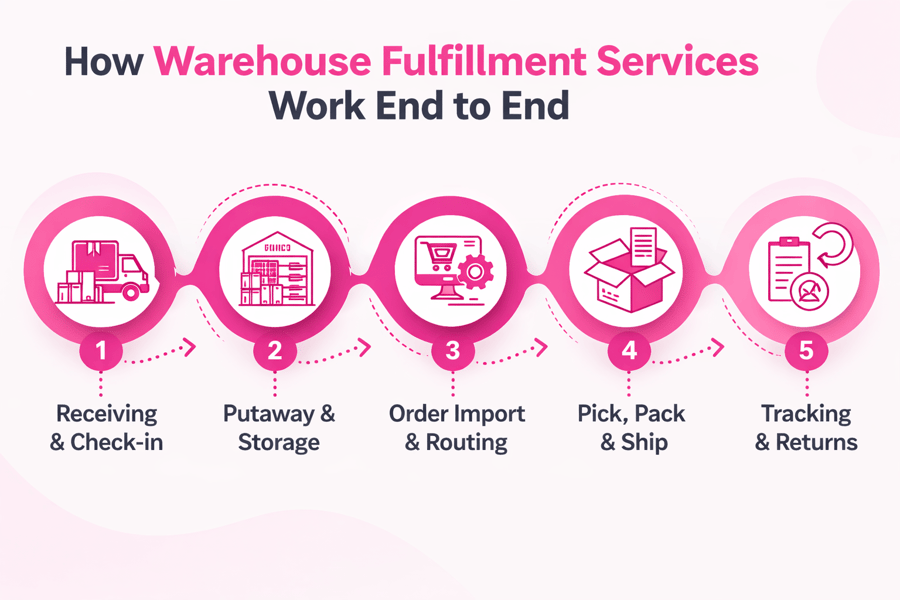
How Warehouse Fulfillment Services Work
Warehouse fulfillment services manage the full path from inbound stock to the buyer’s door. Instead of shipping from your office or store, you send products to a fulfillment warehouse. From there, the partner handles the daily work and keeps orders moving fast.
Step 1: Receiving and check-in
Your inventory arrives by parcel, LTL, or full truckload. The team counts units, checks for damage, and matches each shipment to your purchase order. As a result, you start with clean data. Items go to the right spot on the shelf.
Step 2: Putaway, storage, and inventory control
Next, staff label items and place them in assigned bins. Bin accuracy drives speed and sits at the core of storage and fulfilment. Getting it right matters from day one. Cycle counts and audits also help prevent stockouts and oversells.
Step 3: Order import and routing
When a buyer buys, orders flow in from your store, platform, or ERP. The warehouse routes each order to the best pick path. Warehousing fulfillment services keep service levels high. Even during peak. That is the goal. Advance planning helps. That way, peak runs smoothly.
Step 4: Pick, pack, and ship
Pickers pull the right items. The Packers choose the right box and inserts. They print labels, scan for accuracy, and hand off parcels to carriers. As a result, the right fulfillment solutions cut errors and control shipping costs.
Step 5: Tracking, returns, and buyer support
After shipping, tracking data syncs back to your storefront and support team. Returns go through a check, restock, or disposal. The rules are set by you. If you use an American order fulfillment warehouse, you can shorten ship zones. Order fulfillment software sends clear, steady updates. Buyer goals get lifted.
Choosing the best fulfillment partners for inventory spot checks qa ensures smooth operations.
Warehousing Fulfillment Services vs In-House Shipping: What to Compare
When you compare warehouse fulfillment services to in-house shipping, focus on what affects speed, cost, and buyer service. In-house can feel simple at first. It often gets harder as order volume grows. Costs rise. Errors creep in. Advance planning avoids shocks during peak. As a result, budgets stay on track.
1) Total cost per order (not just postage)
Start with your true cost per order. Labor, packing supplies, rent, and software all count. Then add the cost of errors, returns, and re-ships. As a result, many brands find that warehousing fulfillment services lower the all-in cost. The savings hold once a steady order threshold is crossed.
2) Speed, cut-off times, and carrier options
Buyers expect fast delivery, so late pick-and-pack hurts reviews and repeat sales. It is worth asking how late orders can be sent and still ship same day. Carrier rates, zone reach, and weekend handling are also worth comparing.
3) Accuracy, returns, and buyer support
In-house teams can control details. But they depend on training and steady output. A partner should offer clear SLAs for pick right rates. Easy returns workflows matter too. How they handle hurt or bad items is also worth checking. Response time on tickets matters.
4) Space, stock control, and scale
If your shelves are full, growth slows down. A partner built for storage and fulfilment can add bins, pallets, and sites. No new lease. Scaling for peaks without hiring a large peak crew protects margins. Costs cover only what is needed. That keeps cost per order low.
5) Technology and integrations
Compare how each option manages inventory, batching, and shipping labels. Strong fulfillment solutions connect to your store, platform, and ERP. Stock data stays right. That matters for every sale. Wrong counts cost you. They also slow your team down. So fix counts early. If you sell across channels, this matters even more.
Geography also plays a big role. An American order fulfillment warehouse cuts ship zones. The right partner helps you move from manual packing to automated fulfillment.
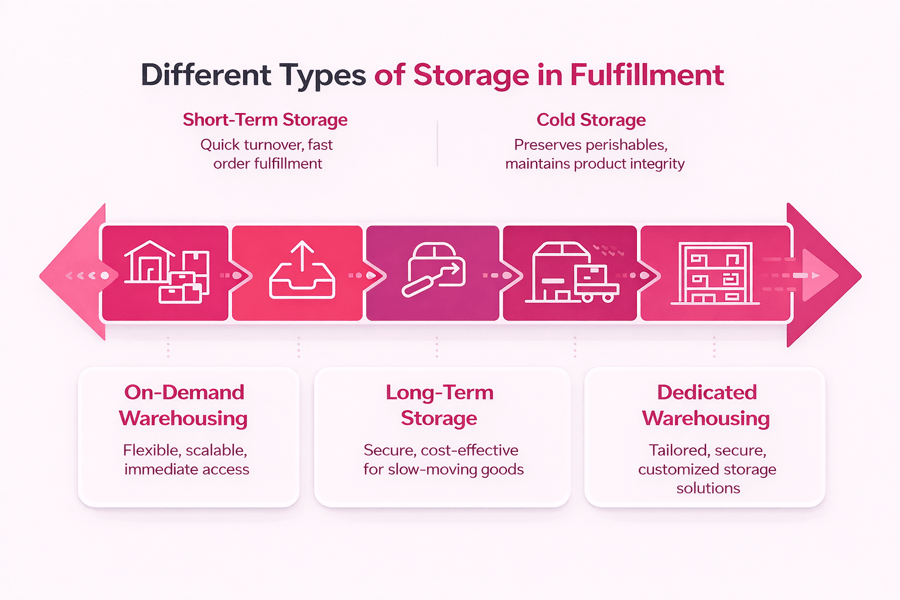
Storage and Fulfilment Essentials: Receiving, Putaway, and Inventory Accuracy
Fast shipping starts long before a label prints. With warehouse fulfillment services, the real work begins at the dock. Teams count and confirm each carton. When this step runs well, delays and stockouts drop.
Warehouse fulfillment services: The first scan
Intake sets the tone for your entire operation. First, the warehouse checks purchase orders and scans items in. Clear rules for lot codes and expiry dates protect you from disputes too.
To reduce errors, ask how a partner handles exceptions. For example, do they quarantine hurt goods and notify you the same day? Strong warehousing fulfillment services write down each issue. Clean audit trails follow.
Putaway: Place inventory where it sells fastest
Putaway sounds simple. But it drives pick speed and accuracy. As a result, the best teams use set bin spots, smart slotting, and clear labels. Pickers spend less time walking and more time on orders.
Storage and fulfilment strategy also matters here. A partner puts fast-moving SKUs in forward pick bins. Slow movers go higher or farther away. If you use kitting or bundles, putaway must support those flows too.
Stock accuracy: The foundation for scaling
Stock accuracy protects your buyer service and your cash flow. So look for cycle counting, real-time fixes, and tight controls on who edits counts. If you plan to work with an American order fulfillment warehouse, confirm they can sync counts. Fulfillment solutions must grow with the business.
A partner that gives clear reports and proactive alerts is worth the investment. Back it up with inventory software for the warehouse.
Fulfillment Solutions for Ecommerce, B2B, and Omnichannel Brands
Not all warehouse fulfillment services fit each business model. Ecommerce brands need fast pick-and-pack. B2B sellers need strict routing rules. Omnichannel teams need both. Real-time stock across all sites is a must. So the right partner should match your order types, not just your volume.
Ecommerce fulfillment: Speed, accuracy, and returns
Ecommerce shoppers expect quick shipping and clear tracking. As a result, strong fulfillment solutions focus on same-day handling and barcode scanning. Smart packing cuts damage. A simple returns flow also protects your margins. Buyers keep coming back. Returns are not a cost center. Done right, they build trust.
- Fast pick paths and batch picking for high-SKU carts
- Branded packing options and packing inserts
- Returns intake with check and restock rules
B2B fulfillment: Compliance and steady output
B2B orders often ship in bulk and must follow buyer scorecards. Non-compliance leads to chargebacks. Following the rules closely matters. Many brands struggle with labels, pallet builds, and drop-off slots. Warehousing fulfillment services that handle routing guides, EDI, and retailer labels are worth seeking out. These details protect the margin. For example, wrong labels lead to chargebacks.
- Case/pallet picking, lot tracking, and carton labeling
- Freight coordination, LTL/FTL options, and ASN support
- Checks to reduce chargebacks
Omnichannel fulfillment: One inventory view, many channels
Omnichannel growth adds complexity. Orders flow from platforms, DTC, and wholesale all at once. Each has different rules. So your 3PL must handle all of them. Consequently, you need tight storage and fulfilment processes that stop overselling and split shipments. If you plan to expand nationally, an American order fulfillment warehouse network can shorten shipping zones. Service levels lift too. Buyers notice. For example, a two-day ship window wins repeat sales.
Before you sign, confirm links and reporting. How the team handles backorders and addresses fixes matters too. Stock update sync frequency and count reconciliation are worth asking about as well. A clean connection to your order management software is also key.
Choosing an American Order Fulfillment Warehouse: Location, Speed, and Coverage
When you choose warehouse fulfillment services, the warehouse spot shapes your ship promise. A great partner shortens transit time and cuts ship costs. Speed wins buyers. As a result, you compete on speed without cutting margins.
Warehouse fulfillment services: Location and shipping zones
An American order fulfillment warehouse should sit close to your buyers. Not near your office. First, map where orders ship today and where you expect growth next quarter. Then look for sites that hit key zones in two days or less. Ground service works well. Zone maps are worth checking before signing.
A heat map of top ship-to ZIP codes and suggested warehouse nodes is worth requesting. Carrier options, daily pickup times, and weekend handling all need confirming. Weather risk and peak-season congestion in the region are also worth checking.
Speed: cutoffs and SLAs
Fast shipping starts inside the building. Order cutoffs, same-day pick volume, and accuracy rates are worth asking about. Strong warehousing fulfillment services show service levels for on-time shipments.
How they handle spikes is worth checking, too. Promos and drops need flexible labor. Gaps here hurt your buyers. Spikes cause a backlog fast. So review surge plans before you sign. Strong fulfillment solutions protect buyer service at exactly this point.
Coverage for each channel
Your partner should support more than one sales channel. For example, you may need DTC parcels, routing guides, and pallet shipping in the same week. Reliable storage and fulfilment has kitting, returns, lot tracking, and approved labels.
A simple pilot with a few SKUs is worth running before a full migration. Migration can follow once the test runs clean. When location, speed, and reach align, scaling is easy. Data in your order management system stays right.
Costs and Pricing Models for Warehouse Fulfillment Services
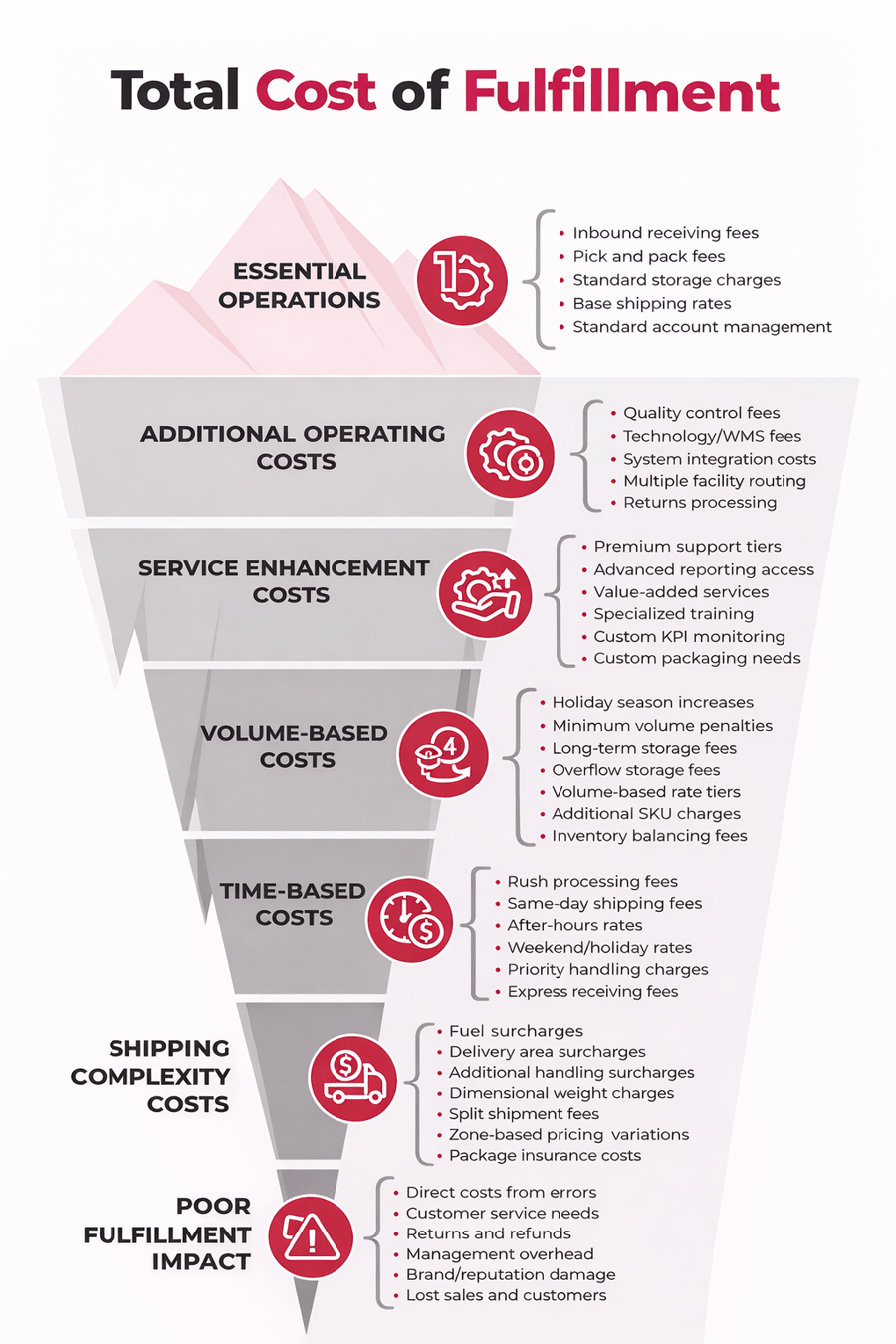
Pricing for warehouse fulfillment services looks simple at first. But it varies by product, volume, and service. The fine print deserves a close look. Real examples, not averages, are more useful. Mapping the real workflow before comparing quotes is the first step. The fees that hit margins the most become clear.
Common fee types you will see
Most partners bundle several charges into one quote. They may list them on separate lines. Some fees also change by season or how fast you need orders out. A rate card and a plain-language walkthrough are worth requesting.
Intake: per pallet, per carton, or per hour to unload and check inbound stock. Storage: per bin, per shelf, per pallet, or per cubic foot for storage and fulfilment. Pick and pack: per order plus per item, often with tiered volume discounts. Packaging: standard supplies included or billed at cost with a handling fee. Shipping: carrier label cost plus any markup, fuel surcharges, and zone-based rates. Returns: per return processed, with add-ons for testing, refurb, or restock.
Pricing models and when they fit
With warehousing fulfillment services, you often choose between use-based pricing and bundled plans. Use-based pricing works well if your volume swings. Payment covers only what gets used. No waste. No fixed cost when volume drops. Slow months carry no extra cost. But a bundled plan can win when orders stay steady. Billing stays predictable. That helps you plan. So bundled plans work well for steady brands.
If you use an American order fulfillment warehouse, confirm how they handle peak orders. Some add short-term labor fees. Others raise pick rates after a daily limit. Knowing the rules before peak helps plan the budget right. Peak and off-peak examples using the actual order mix are worth requesting.
How to compare quotes the right way
Start with your last 60-90 days of orders. Units per order and pack sizes should be listed. Then test each proposal against that data, not against typical assumptions. As a result, you can judge which fulfillment solutions lower your true cost per order.
Looking past the invoice matters. What the software includes and what support costs extra both need checking. How fast stock issues get resolved matters too. Those details affect multi-channel inventory management.
Implementation Checklist for Storage and Fulfilment Transitions
Switching partners can feel risky. But a clear plan keeps orders moving. Risk drops fast. A phased go-live also helps a lot. As a result, risk drops fast. A simple checklist helps move to warehouse fulfillment services with fewer shocks and faster results. One owner should coordinate tasks across the team and the 3PL.
1) Confirm scope, timelines, and success metrics
First, write down what you will ship, where, and how fast. Then set clear goals like same-day cutoffs and return turnaround time. As a result, you spot gaps before they cause problems. Acting early pays off. Gaps in the first week of go-live should be flagged fast.
- Define channels: ecommerce, marketplaces, wholesale, and subscriptions
- List SKUs, bundles, kitting needs, and hazmat or temperature rules
- Agree on SLAs, peak plans, and escalation contacts
2) Prepare systems and data for clean handoff
Next, map each link and data field. Cover orders, stock, and tracking events. SKU naming should stay consistent. Barcodes, case packs, and units of measure need to be locked down. If you sell on Amazon, align your inbound plan with Amazon Warehousing and Distribution (AWD). Storage and replenishment rules must not conflict.
- Connect your store, ERP, and carrier accounts to your fulfillment solutions
- Validate address rules, tax settings, and shipping methods
- Run test orders end-to-end and confirm tracking emails
3) Execute inventory transfer and go-live safely with warehouse fulfillment services
Then schedule inbound shipments, intake windows, and cycle counts. During the switch, keep a short overlap period. Orders can be rerouted if delays happen. Revenue stays safe. Short, clear contact lists on both sides help. So revenue stays protected while new workflows settle.
- Create an intake checklist for storage and fulfilment (labels, ASN, pallet config)
- Plan a phased go-live by channel or SKU group
- Verify packing, inserts, and branded supplies on day one
4) Audit performance and optimize after launch
Last, review weekly dashboards. Small issues should be fixed fast before they grow. Sharing reports with the 3PL weekly helps. Costs, speed, and error rates vs the baseline should be compared. If you chose an American order fulfillment warehouse, confirm zone reach and carrier results across your top regions, and keep lifting warehouse inventory tracking.
Warehouse Fulfillment Services: Conclusion
Choosing the right warehouse fulfillment services partner changes your growth rate. The right choice takes care. A wrong pick costs months. Vetting each partner properly is worth the time. When you outsource well, you ship faster and cut errors. The team can focus on sales. Best results come from a clear plan, not a quick handoff. Clear goals come first. Weekly check-ins during the first 30 days also help.
Mapping the flow from intake to returns is the right starting point. Warehousing fulfillment services should then be compared against in-house costs, speed, and service goals. As a result, you see where a 3PL adds real value. It also shows where tighter control is still needed.
What to prioritize as you scale
- Storage and fulfillment accuracy, including clean stock counts and smart slotting
- Flexible fulfillment solutions for ecommerce, B2B, and omnichannel orders
- Clear pricing, with simple rules for pick, pack, storage, and special projects
- Fast onboarding, plus integrations that keep orders and stock synced
The right footprint and carriers for your customers, especially if you need an American order fulfillment warehouse
Set goals early, too. Cut-off times, packing rules, and peak volume all need defining. SLAs get hit. Buyer service stays strong.
If you are ready to scale, shortlist two to three partners. A walkthrough of their process and support model is worth requesting. Running a small pilot with real SKUs before full migration is the safest approach.
To keep lifting results after launch, reviewing workflows and tools helps. More on this can be found in the article on ecommerce warehouse management.
Frequently Asked Questions
How do warehouse kitting and fulfillment services work for global companies?
Global brands send inventory to a fulfillment center where teams assemble kits, label products, and pack orders to match each market’s requirements. Warehouse fulfillment services often include customs-ready documentation, multi-channel order processing, and carrier selection to reduce transit times. Many providers also offer storage and fulfilment with regional hubs to serve customers faster.
How do local freight delivery services compare for warehouse fulfillment?
Local freight delivery focuses on moving pallets or cartons between locations, while fulfillment covers picking, packing, and shipping individual orders. Freight can be cost-effective for bulk replenishment, but it won’t manage returns, kitting, or customer-ready packaging. For end-to-end fulfillment solutions, businesses typically combine inbound freight with a warehouse operation that handles order-level processing.
What is a warehouse management system for fulfillment services?
A warehouse management system (WMS) is software that tracks inventory, locations, and workflows inside a facility. It helps manage receiving, put-away, picking, packing, and cycle counts with real-time accuracy. When integrated with ecommerce platforms and carriers, a WMS supports warehousing fulfillment services by improving order speed, reducing errors, and providing reporting on performance.
What should you look for in warehouse fulfillment services?
Evaluate accuracy rates, order cut-off times, scalability during peak seasons, and transparency in pricing. Strong warehouse fulfillment services include clear SLAs, fast onboarding, and integrations with your storefront, ERP, and shipping carriers. Also confirm capabilities like storage and fulfilment options, returns processing, kitting, and quality control for branded packaging.
How are pricing and fees typically structured for fulfillment providers?
Most providers charge a mix of storage fees, pick-and-pack fees, packaging costs, and shipping charges. Some add setup, receiving, kitting, or returns fees depending on complexity. Ask for a complete rate card and examples based on your order profile. Comparing fulfillment solutions is easiest when you model the total monthly cost at different volumes.
When do you need an American order fulfillment warehouse?
An American order fulfillment warehouse is useful when you sell to U.S. customers and want faster delivery, lower shipping costs, and simpler returns. Holding inventory domestically can reduce cross-border delays and improve customer experience. It’s especially valuable for brands with consistent U.S. demand, seasonal spikes, or marketplace requirements for quick shipping.