Warehouse management stops late shipments before they start. Most delays begin with one small error. A pallet sits in the wrong bay. Someone grabs the wrong case. A label gets scanned incorrectly.
These mistakes seem minor at first. But they create friction across the entire operation. One error forces the next worker to search longer. Inventory counts drift. Orders slow down. Deadlines get missed.
The damage shows up in multiple ways. Hours get burned fixing problems. Expedited freight costs pile up. Each delay erodes customer trust a little more.
Teams need clear rules for stock movement. Real-time proof of what moved and where matters just as much. Strong processes cut search time and reduce rework. They also prevent write-offs from lost or damaged inventory.
When systems work correctly, small errors stay small. Without them, minor problems turn into expensive delays.
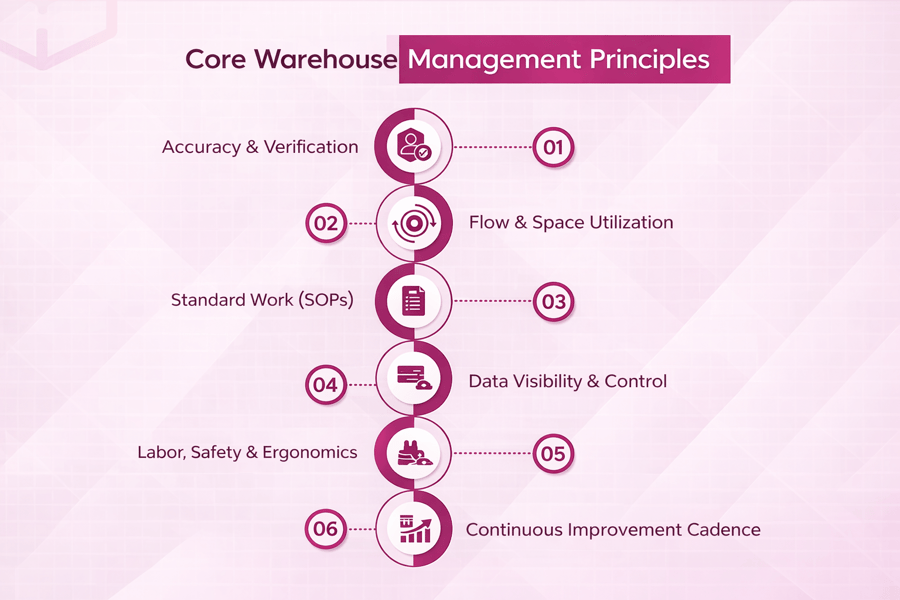
Warehouse Management: Meaning and Core Principles
Warehouse management’s meaning comes down to control and speed. You guide goods from the dock to the shelf and track each move with clean data. Many leaders still ask what this looks like in practice. It is the daily work that keeps orders on track.
Definition in plain terms
A practical warehouse management definition focuses on actions and checks. It sets locations, tasks, and counts. A clear definition also covers labor and space. Both shape how teams store, pick, and ship.
Systems and workflows for warehouse operations
A basic warehouse management system provides teams with a single source of truth. It assigns bins and records moves. Warehouse management and inventory control work best as one habit. Counts match the shelf because staff scans each step.
The warehouse management process links receiving to shipping. Each handoff needs a check. Simple warehouse management keeps steps short and repeatable. That helps new staff learn faster.
Logistics warehouse management connects the warehouse to transport plans. Distribution warehouse management handles high order volume and tight cutoffs. This approach is typically used anywhere speed and accuracy matter. Retail, manufacturing, and e-commerce all depend on it.
How the warehouse management process supports daily work
The warehouse management process sets the steps for each move. Workers scan items, confirm locations, and record handling. Managers spot delays and fix the cause fast. Clear steps also protect margins. Wrong picks create rework and extra freight costs. Tight checks cut those errors before shipments leave.
Where stock management meets inventory control
Warehouse stock management keeps counts accurate by location. Teams track each pallet, case, or unit. They reduce stockouts and limit dead stock. Warehouse management and inventory control work as one system. The warehouse confirms what moved and when. Inventory records then match the physical shelf.
Systems and styles for warehouse operations
A basic warehouse management system tracks items, bins, and orders. It supports scanning and standard pick lists. Many small sites start here to cut manual entry. Simple warehouse management still needs discipline. Labels, clear zones, and cycle counts do most work. Teams keep tools light when order volume stays steady.
Operational contexts
Logistics warehouse management links the warehouse to transport timing. Teams plan dock schedules and carrier pickups. They ship more orders on time with fewer delays. Distribution warehouse management fits high-volume, fast-turn sites. It focuses on wave picking, sortation, and staging lanes. Managers watch throughput and keep aisles clear.
This approach is typically used anywhere stock moves at scale. Retail, manufacturing, and e-commerce rely on it daily. The goal stays the same across sites: accurate stock and steady flow.
Warehouse management is typically used when leaders need repeatable work. Warehousing management fits when the whole site needs redesign. Strong definitions help teams align on warehouse inventory tracking.
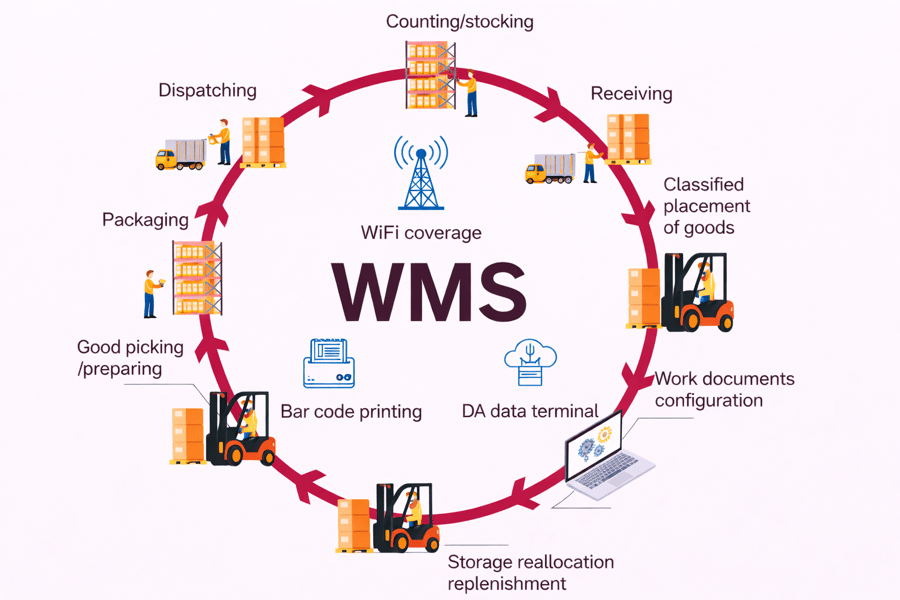
Warehouse Management Process: From Receiving to Shipping
The warehouse management process turns inbound goods into shipped orders. Each step needs clear owners and clear checks. Tight handoffs cut rework and missed items.
Receiving: start with clean data
Teams unload, count, and inspect every delivery. They match cartons to the purchase order. Staff record damage and short shipments right away.
Putaway starts after teams confirm each SKU. Labels and barcodes must scan on the first try. Good receiving supports accurate tracking and control.
Putaway and slotting: build simple rules
Workers move items to assigned bins and racks. Fast movers go near packing and shipping. Heavy goods stay low to cut lift risk.
Slotting rules should fit your volume and layout. A basic warehouse management system can suggest locations. Paper lists can work for small sites.
Picking and packing: daily operations
Pickers follow a route and scan each item. Teams use batch, zone, or wave picking. The best method depends on order size.
Packers check items, quantities, and lot numbers. They choose the right box and dunnage. Clear pack rules reduce returns and reships.
Shipping: close the loop
Staff print labels, confirm weights, and stage pallets. Carriers need clean paperwork and on-time dock loading. Late cutoffs create backlogs and extra labor.
Many teams tie these steps to their daily operations and internal rules. The goal stays the same across sites: accurate handling and consistent flow.
Warehouse management is typically used where speed and accuracy matter. Track cycle times at each handoff. Fix the slow step first, then tighten inventory tracking.
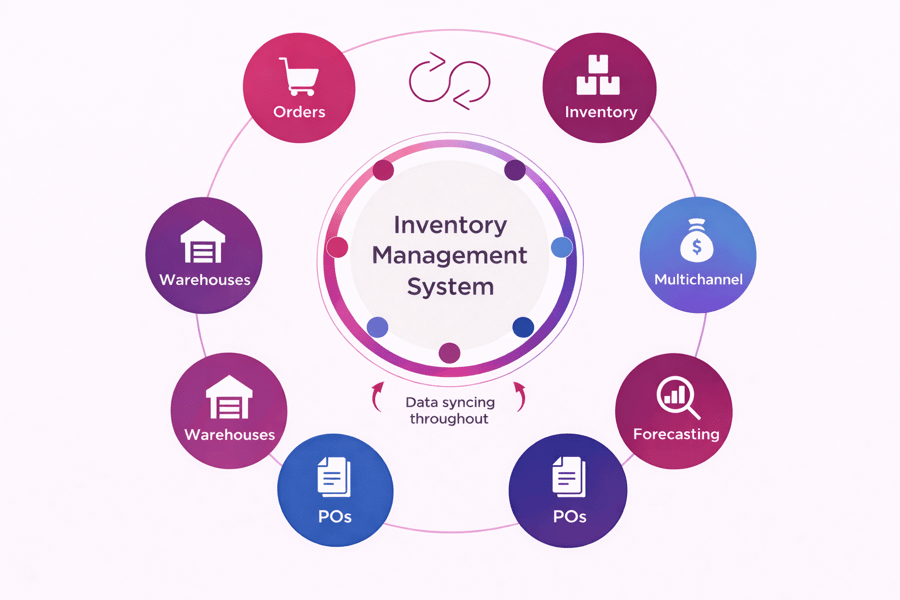
Warehouse Stock Management and Inventory Control
Warehouse stock management keeps every unit visible and countable. It tracks what you have, where it sits, and what moved. Strong operations start with clean stock records.
Warehouse management and inventory control: how they work together
Warehouse management and inventory control link physical moves to system counts. Pickers scan items as they pick and pack. The system updates stock levels right away.
Teams avoid “ghost stock” when scans match real moves. Cycle counts confirm the numbers without stopping work. Managers fix gaps fast and prevent repeat errors.
Controls that support the warehouse management process
The warehouse management process needs clear rules at each step. Receiving checks, quantity, damage, and SKU labels. Putaway assigns a bin and records the location.
- Set reorder points per SKU and lead time
- Use lot, batch, or serial tracking when risk stays high
- Run daily exception checks for negative or odd balances
- Count fast movers more often than slow movers
System fit: from simple methods to a basic system
Simple warehouse management can work with low SKU counts. Spreadsheets break when orders rise or staff changes. A basic warehouse management system keeps locations, scans, and counts in one place.
A clear definition often centers on control and flow. In practice, teams want fewer stockouts and fewer write-offs.
Where stock control matters most in operations
Logistics warehouse management needs tight counts for fast dispatch. Distribution warehouse management depends on clean inventory for wave picking. This approach is typically used where volume and speed clash.
Clear data answers what warehousing management is for most teams. It turns stock into reliable promises for sales and shipping. Many start with a barcode inventory management system for a small business.
Basic Warehouse Management System: Core Features and When to Use It
A basic warehouse management system tracks stock and guides daily work. It supports operations without a heavy setup. Many teams start here after spreadsheets break down.
Think of it as the practical side of daily warehouse work. The tool turns processes into repeatable tasks and helps new hires get up to speed faster.
Core features in a basic system
Core tools keep the floor calm and predictable. They also support warehouse management and inventory control in real time. Look for these features first.
- Warehouse stock management with live on-hand counts by location
- Barcode scanning for receiving, picking, and cycle counts
- Putaway rules that suggest bins and zones
- Pick lists that cut walking and missed lines
- Simple user roles and action logs for traceability
- Basic reports for stockouts, slow movers, and accuracy
For a quick refresher, read What is Warehouse Management? Process, Benefits, & Tips. It matches the day-to-day flow most teams run. That flow mirrors the process from dock to ship.
When simple warehouse management works best
Simple warehouse management fits stable product lines and steady order volume. It works well when picks stay under a few hundred daily. Teams also benefit when training time stays tight.
Choose this approach for small 3PL sites and local retailers. It can support growing operations until volume spikes.
Signs you need more than the basics
Growth exposes gaps fast in slotting and labor planning. Multi-warehouse transfers add new failure points. Complex kitting also strains basic rules. If errors rise, move to stronger tools and clearer processes. This often happens when operations scale across multiple sites.
Start with clean data and a clear owner, then choose cloud-based inventory software.
Simple Warehouse Management: Best Practices for Small and Growing Teams
Simple warehouse management starts with clear rules and clean data. Small teams win by cutting choices. Pick one way to label, store, and pick items.
Set roles and follow the process
- Assign one owner for receiving, picking, and shipping
- Keep backups for each role
- Use a short checklist for every handoff
- Match steps to your team’s rules
- Write the steps on one page
- Train new hires on day one
Location labels that support stock management
- Label every shelf, bin, and pallet spot
- Use large text and a single format
- Place fast movers near packing tables
- Keep one home location per SKU when you can
- Split locations only for overflow
That rule cuts search time during picks.
Cycle counts for inventory control
- Count a small set of SKUs every day
- Focus on high-value and high-volume items
- Fix errors the same day
- Track three numbers each week: pick errors, stockouts, and count variance
- Review them in ten minutes
- Act on one root cause at a time
Start light with a basic system
A spreadsheet fails once order volume climbs.
- Move to a basic warehouse management system with barcode scanning
- Keep the setup simple and keep fields tight
- Link item masters to order lines and locations
- Use one source of truth for stock
That supports growth and returns.
Plan for growth in distribution operations
Small sites often add channels without new space.
- Create a staging zone for each carrier.
- Use clear cutoffs for same-day ship.
- When work gets messy, return to simple rules and clear processes.
- Tighten counts and bin labels to support steady growth.
- Use those rules where warehouse management is typically used, then tighten counts and bin labels for inventory optimization.
Logistics Warehouse Management: Improving Fulfillment Speed and Accuracy
Logistics warehouse management links storage work to shipping deadlines. It keeps orders moving without missed scans. Teams pick faster when locations stay consistent. Errors drop when every step leaves a clear trace.
Process steps that cut pick time
Tight slotting rules shorten travel paths for pickers. Wave picking groups orders with similar routes. Put fast movers near pack stations and docks. Keep bulky items close to pallet lanes.
Standard work keeps the floor calm during rush hours. Pickers follow one scan pattern on every run. Pack teams use the same carton rules daily. Supervisors fix jams before lines back up.
Inventory control for fewer shipping mistakes
Accurate counts prevent short picks and split shipments. Cycle counts focus on high-risk SKUs first. Barcode scans confirm item, lot, and bin each time. Clear holds stop damaged goods from shipping.
Clean data inputs also matter. Receivers scan at the dock, not later. Returns go to a set triage zone. Put-away happens right after check-in. Those habits protect order promise dates.
When a basic system beats simple methods
Spreadsheets work until volume spikes and errors rise. A basic warehouse management system tracks bins and tasks in real time. It assigns picks and records each scan. Teams ship more orders with the same headcount.
Simple warehouse management still fits small, stable catalogs. Use it with clear labels and tight receiving rules. Move up once you add zones or multiple shifts. That change supports growth without daily fire drills.
How distribution operations connect to shipping
Distribution warehouse management focuses on speed across many orders. It relies on fast pack lines and staged lanes. Carriers need clean manifests and on-time dock loads. Late trailers create rework and extra touches.
Use clear rules tied to shipping outcomes and daily targets. A shared approach helps teams stay aligned across shifts and locations.
Start by mapping current operations to daily decisions. Track pick rate, scan errors, and trailer close times. Fix the top delay, then lock the new standard.
For deeper gains, connect scans and reorder rules with inventory optimization software.
Distribution Warehouse Management: Workflows for High-Volume Operations
Distribution warehouse management runs on speed, space, and control. High-volume sites ship fast and miss fewer picks. Teams need tight handoffs between receiving, storage, and dispatch.
The flow around the warehouse management process
Start with dock scheduling and clear inbound lanes. Put fast movers near packing and shipping. Keep slow movers higher or farther back.
Map each step from scan to putaway. Set one route for each picker. Short travel cuts time and lowers fatigue.
Stock accuracy at scale
Use scan rules for every touch point. Count by zone each day, not once a year. Fix the root cause after each variance.
Slot items by velocity and case size. Re-slot weekly when demand shifts. That keeps aisles clear and picks steady.
Systems that support inventory control
A basic warehouse management system can work for one building. High-volume networks need tighter rules and more scans. Most teams outgrow simple warehouse management once orders spike.
Connect wave planning to labor plans and carrier cutoffs. Track picks per hour by zone and shift. Use alerts for short picks and late pallets.
How logistics warehouse management fits distribution
Logistics warehouse management links the warehouse to transport plans. Build loads by route, stop order, and cube. Stage by door to cut trailer dwell time.
Cross-dock urgent freight to skip storage. Use pre-pack and label rules for key accounts. Those steps reduce touches and damage.
Standards and training for consistent output
Write clear work rules for scans, labels, and exceptions. Train new hires on one zone first. Move them only after steady accuracy.
Use simple terms when you teach processes on the floor. Tie each rule to a real miss or delay. That clarity improves consistency across teams.
Repeatable workflows help teams ship on time and reduce errors. In practice, structured operations are used to control volume, labor, and exceptions with order management software.
Where Warehouse Management Is Typically Used: Industries and Use Cases
Many teams ask what this looks like in real terms. The answer depends on the work you run daily. In most cases, warehouse management keeps stock accurate and moving.
Retail and ecommerce: fast-paced operations
Retail sites need tight stock control to avoid overselling. Pickers must find items fast and scan every move. Strong processes cut backorders and refunds.
Manufacturing: process for parts and WIP
Factories store raw parts, kits, and finished goods. The warehouse management process must support line feeding and returns. Teams track lot codes and dates to stop scrap.
3PLs and carriers: multi-client environments
Third-party warehouses run many rules in one building. Operations must keep labels, SLAs, and billing clean. Each client needs separate stock views and reports.
Wholesale and high-volume hubs
Bulk orders drive pallets, cases, and cross-docks. Distribution warehouse management focuses on speed and dock planning. Teams batch picks and build stable loads for fewer damages.
Small operations: simple tools and workflows
Some teams start with a spreadsheet and barcode scans. Simple warehouse management still needs clear bin labels and counts. A basic warehouse management system fits when volume stays steady.
Use cases vary, yet the goal stays the same. Clear rules support daily control and consistent execution.
In practice, warehouse management is typically used where errors cost time and money, so teams adopt order fulfillment software.
Conclusion
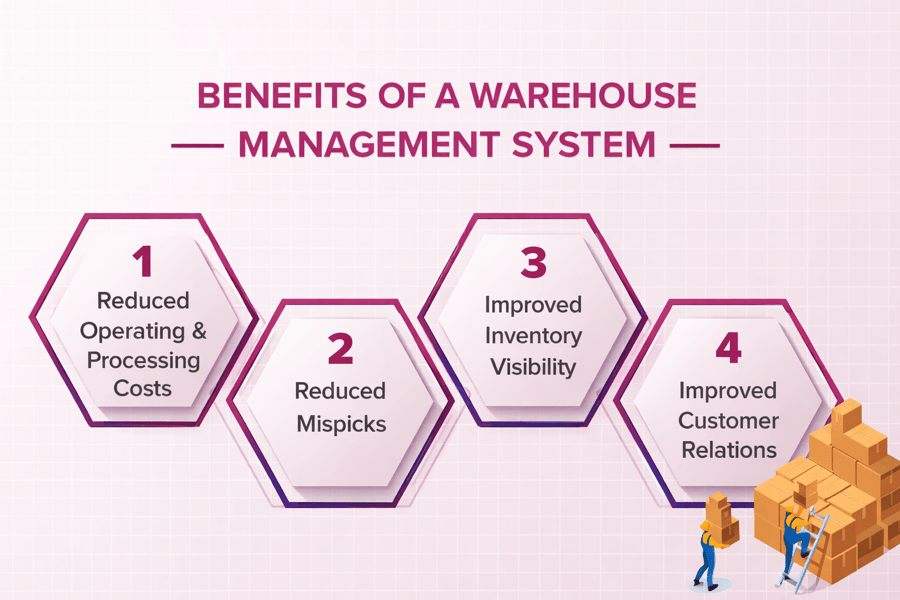
Strong warehouse management keeps stock accurate and orders moving. Clear rules reduce delays, prevent picking errors, and improve daily consistency. Teams also spend less time searching and more time completing tasks.
At its core, warehouse management is about controlling space, people, and stock. A clear warehouse management definition helps teams align on how work should be done. When everyone follows the same structure, operations become predictable and easier to scale.
The warehouse management process connects every step from receiving to shipping. Each handoff needs visibility and control. Simple checks at each stage prevent small errors from turning into costly issues later.
The main goal stays the same across all setups. Keep stock reliable, keep flow consistent, and reduce operational friction. Teams that focus on these basics build stronger, more scalable warehouse operations over time.
Next step
List your top five error sources from last month. Map each one to a step in your process. Then assign one rule, one check, and one owner. Review results weekly and improve one bottleneck at a time.
Frequently Asked Questions
What is warehouse management?
Warehouse management is the coordination of daily warehouse activities to store, move, and ship goods accurately and efficiently. The warehouse management process includes receiving, putaway, picking, packing, and returns. It supports warehouse stock management, warehouse management, and inventory control by improving visibility, reducing errors, and helping teams meet service levels.
What is a warehouse management system (WMS)?
A warehouse management system is software that guides warehouse tasks and tracks inventory locations in real time. It supports the warehouse management process by directing receiving, picking, replenishment, and shipping. A basic warehouse management system may include barcode scanning, bin location tracking, and basic reporting, while advanced tools add automation, labor planning, and analytics.
What is warehousing management, and how is it different?
What is warehousing management? It generally refers to the broader operation of running a warehouse facility, including space planning, safety, staffing, and equipment. A warehousing management definition often overlaps with the warehouse management definition, but it may emphasize facility operations. Warehouse management typically focuses more on inventory flow, accuracy, and order fulfillment performance.
How do you manage a warehouse effectively?
Start with clear processes for receiving, labeling, putaway, cycle counting, and picking. Use layout and slotting to reduce travel time and support simple warehouse management. Standardize work instructions, track KPIs like pick accuracy and dock-to-stock time, and train staff consistently. Strong warehouse management and inventory control also require regular audits and clean master data.
How do you choose a warehouse management system?
Choose a WMS based on your order volume, SKU complexity, and integration needs with ERP, carriers, and eCommerce. For logistics warehouse management or distribution warehouse management, prioritize wave picking, cross-docking, and shipping automation. Confirm mobile scanning support, reporting, scalability, and vendor implementation experience. Request demos using your real workflows and data.
How much does a warehouse manager make?
Warehouse manager pay varies by country, region, industry, and facility size. Compensation is typically influenced by responsibilities such as labor supervision, compliance, safety, and performance targets tied to throughput and accuracy. In many markets, experience with WMS tools, automation, and distribution operations can raise salary potential. Check local salary surveys for current ranges.