Artificial intelligence in ecommerce is not a future trend. It is running in stores right now, doing work that used to take hours by hand. It routes orders, writes product tags, answers support questions, and adjusts prices while your team sleeps. The brands getting the most from it are not the biggest ones. They are the ones who started testing early and kept going.
The basic promise of AI ecommerce is simple: less guesswork, faster decisions. Instead of sending the same email to your whole list, you send each person an offer based on what they just browsed. Instead of setting a price once a quarter, you update it when demand shifts. These are not big overhauls. They are small, compounding changes that add up fast.
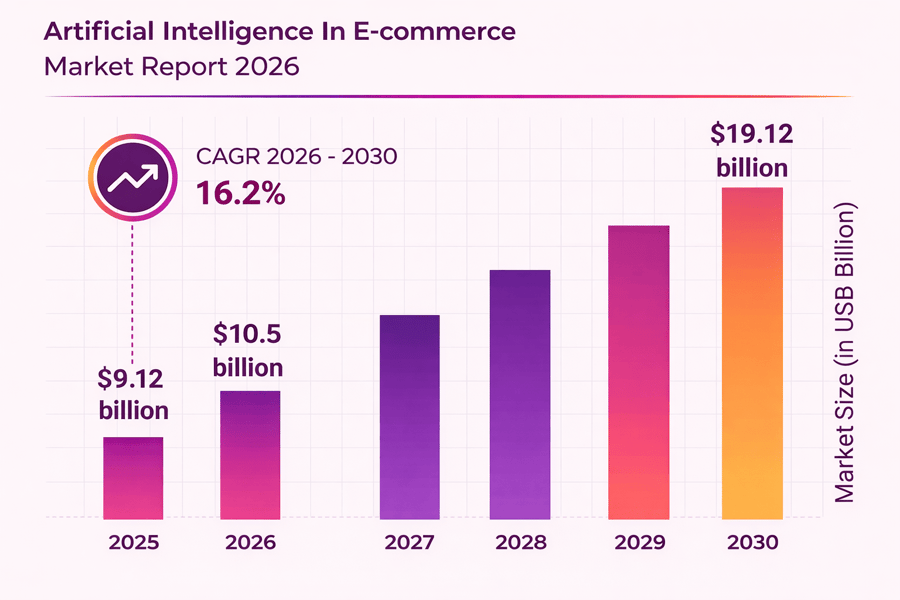
The Rise of Artificial Intelligence in Ecommerce
A few years ago, artificial intelligence in ecommerce was mostly a feature in large platform demos. Today, it is in your search bar, your pricing rules, and your returns inbox. The reason it spread so fast is not that AI got smarter overnight. The cost of running it dropped sharply, and the data stores needed to train it were already sitting in most ecommerce platforms.
Most teams come to AI ecommerce through one problem they need to fix. Maybe cart abandonment is high, or the support queue is drowning in the same ten questions, or search returns the wrong items. AI does not solve all of those at once, but it can hit one hard and show results within weeks.
What is actually driving adoption
With machine learning and ecommerce, platforms can now spot patterns in clicks, searches, and orders that no analyst could catch manually. When a shopper adds a specific brand of shoe to their cart three times without buying, the system notices. It can then adjust the placement, offer a bundle, or trigger an email at the right moment.
The result is that AI-powered e-commerce now does more than automate. It shows you what slows checkout, where shoppers drop off, and which product pages are costing you sales. That kind of visibility used to need a data team. Now it comes built in to many mid-market platforms.
Overall, the best starting point when you learn how to use AI in ecommerce is to pick one weak spot in your funnel and test a focused fix. Track conversion rate, average order value, and support tickets. Then scale what works. To see how chat tools fit into this, read our guide on AI chatbots for ecommerce and conversion.
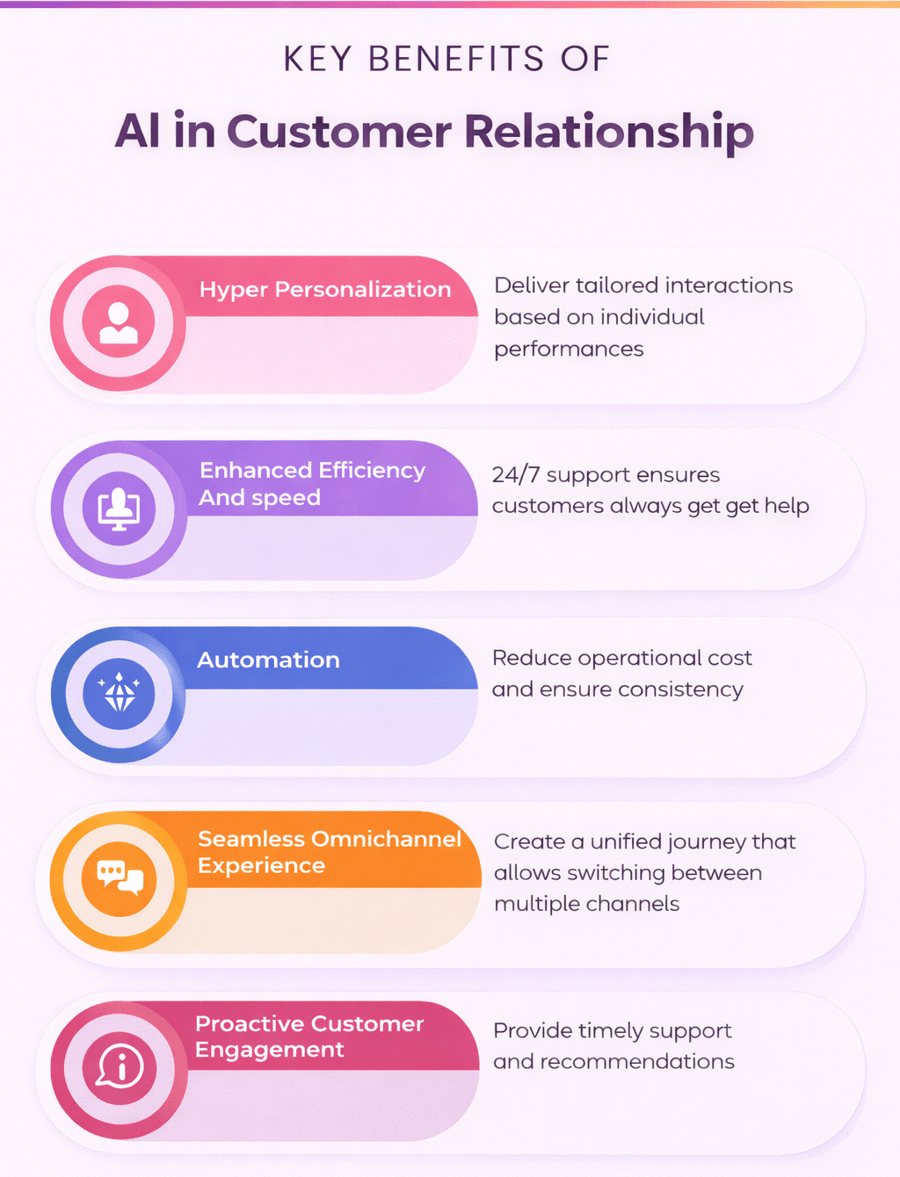
AI Customer Experience: Personalization in Ecommerce
Most shoppers can tell when personalization is lazy. A homepage that shows the same eight products to everyone, a recommendation block full of items they already bought, and an email subject line with their first name but nothing else relevant. Artificial intelligence in ecommerce fixes this when it is set up well, but it takes real data and honest intent.
Good personalization is not about knowing everything about a shopper. It is about using the signals they already gave you. What they searched, what they clicked, how long they stayed on a page, and what they skipped. AI ecommerce tools turn those signals into actions: a different sort order, a different hero banner, a different bundle suggestion.
Where personalization actually moves numbers
The clearest wins from AI use cases in ecommerce personalization come from three places. First, product pages that show the right size or color based on past buys. Second, email sends are timed to when a shopper is most active, not just Tuesday at 10 am for everyone. Third, on-site search sorted by what each person tends to buy, not just what is popular overall.
Support also gets better with AI-powered e-commerce tools. A chatbot that knows a shopper’s last order, their return history, and their size profile can answer questions in seconds. When it does need to pass the case to a human, it sends the full context along. That means the customer does not repeat themselves, and the agent can help faster. These are core benefits of artificial intelligence in ecommerce for any team handling volume.
Ecommerce Automation: Where AI Saves the Most Time
Automation gets talked about a lot, but the gains in AI ecommerce are most clear when you zoom in on specific tasks. Order routing is one. When a shopper in Texas orders an item that is low in your Texas warehouse but full in your Ohio one, the system should route it automatically based on cost and delivery promise, not wait for someone to check.
Inventory is another strong area. Artificial intelligence in ecommerce can review your sales history, flag slow movers, and suggest reorder points before you run out. It does not replace your buyer, but it gives them a data-driven starting point rather than a gut feel.
Which workflows to automate first
Start with the work that repeats the most and varies the least. Order confirmation emails, return label creation, address validation, and picking list generation are all good early targets. Each one is rule-based, measurable, and low-risk. Once those run cleanly, you can move to harder tasks like fraud scoring and dynamic repricing.
- Streamlined logistics to speed up delivery and improve tracking
- Automated order processing to cut down on mistakes and manual entry
- Efficient resource allocation to lower operating costs during peaks
Also, add AI solutions for ecommerce to your support queue. A bot that handles the top ten most common questions, like order status, return windows, and size guides, can cut your ticket volume sharply. It responds in seconds, keeps a steady tone at 2 am and 2 pm alike, and hands off complex cases with context. That is what makes AI in online shopping feel smooth from the customer side.
Finally, do not forget pricing and marketing. AI can group customers by behavior, send follow-ups after cart drops, and suggest bundles based on past orders. To dig into what the data shows, see our post on ecommerce analytics tools.
AI-Powered Recommendations and Search in Ecommerce
Search is often the most underrated part of an ecommerce site. Shoppers who use search convert at two to three times the rate of those who browse. But most store search tools are still matching on exact keywords, which means a search for “running sneakers” misses a listing titled “jogging trainers.” Artificial intelligence in ecommerce closes that gap by reading intent, not just words.
Many AI solutions for ecommerce now handle misspellings, short queries, and even images. A shopper who uploads a photo of a chair they saw in a magazine can find the closest match in your catalog. Over time, machine learning and ecommerce continue to improve these results as the system learns what shoppers actually buy after each search.
How recommendations compound over time
Recommendations work best when they follow the shopper across the whole visit, not just appear on one page. On a product page, show what goes well with this item. At checkout, suggest the thing they almost always forget. In the follow-up email, remind them of what they looked at but did not buy. Each touchpoint adds a small lift, and together they move the average order value in a clear direction.
For example, a brand that sells outdoor gear might show tent pegs when someone adds a tent, a headlamp when they look at sleeping bags, and a repair kit in the post-purchase email. None of those are complex. They just need the right AI use cases in ecommerce logic tied to your catalog data.
- Better product discovery through stronger search features
- Increased conversion rates with tailored recommendations
- Improved user satisfaction through more personal shopping
To see how this translates into loyalty, read our guide to personalized ecommerce experience.
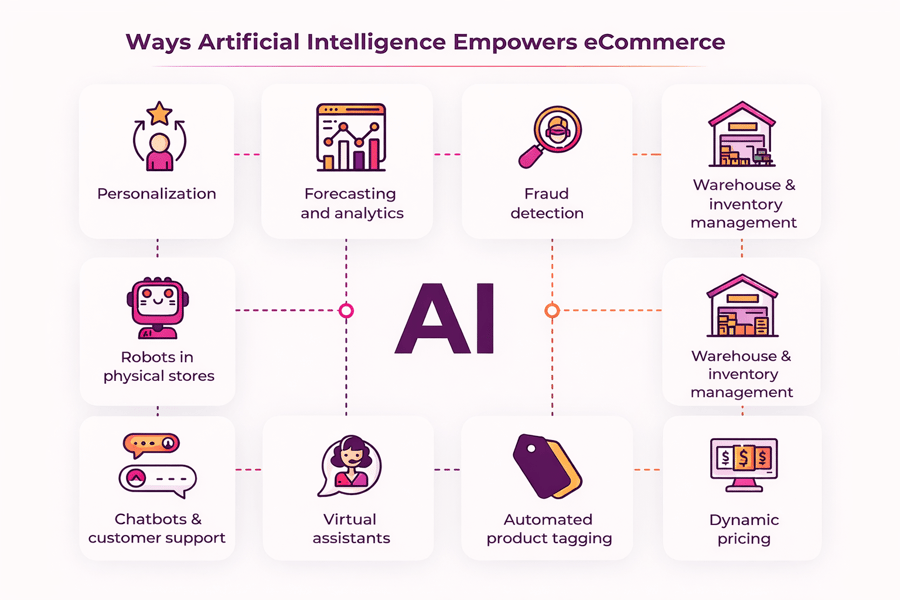
Dynamic Pricing with Artificial Intelligence in Ecommerce
Pricing is one of the highest-leverage places to apply artificial intelligence in ecommerce. A one percent improvement in price across your catalog can move revenue more than a ten percent increase in traffic. The reason most teams do not optimize prices regularly is that it is slow and hard to do by hand. AI makes it a daily process instead of a quarterly one.
Dynamic pricing does not mean raising prices on every spike. It means setting prices that match what the market will pay right now. When a product trends on social, AI ecommerce tools can raise the price slightly and protect your margin. When a competitor runs a sale on a category you share, the system can match or undercut without you checking every hour.
How to set up pricing without losing shopper trust
The risk with dynamic pricing is that shoppers notice big swings and feel misled. To avoid this, set clear floors and caps before you start. Decide the lowest price you will ever show for each product, the highest you are willing to go, and the maximum change allowed in one day. Then let the AI in online shopping tools move within those bounds.
Start with simple rules: raise the price when stock drops below ten units, lower it when an item has not sold in two weeks, and match a competitor within a set range. As you get more comfortable, machine learning and ecommerce models can take over the finer adjustments based on real demand signals.
- Increased revenue by staying competitive
- Enhanced market positioning by keeping up with trends
- Improved profit margins through smarter pricing rules
To complement pricing with stronger loyalty, read our post on AI personalized experiences in ecommerce.
AI Chatbots and Virtual Assistants in Ecommerce
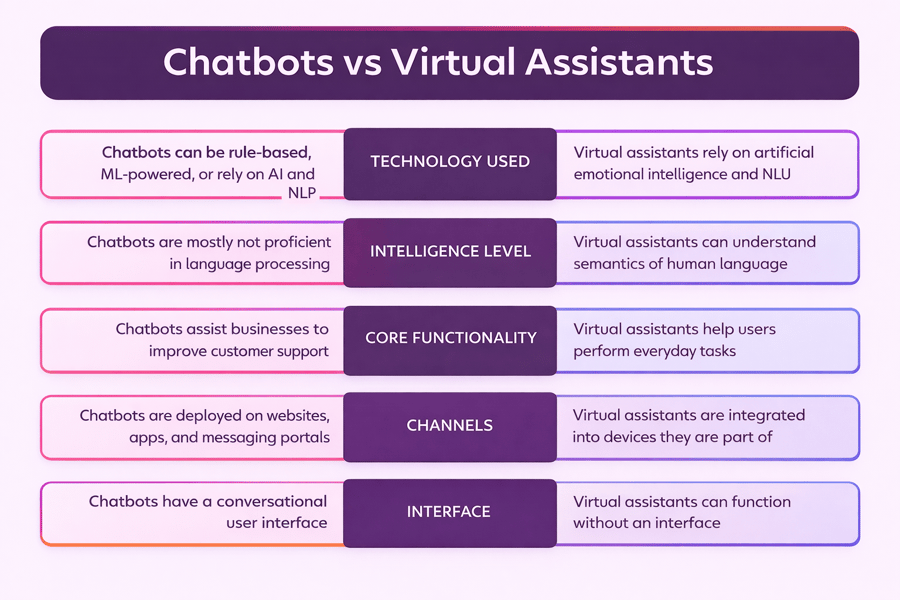
A chatbot that just answers FAQs is not much better than a help page. The ones worth deploying in AI ecommerce settings do something more useful: they hold a short conversation, figure out what the shopper actually needs, and give a specific answer or next step. That is the difference between a tool that reduces tickets and one that shoppers ignore after one try.
Today’s bots use better language models, so they sound more natural and are harder to confuse with a simple question rephrasing. As a result, they handle a much wider range of queries than older rule-based systems. This is one of the more impactful AI use cases in ecommerce because the volume of support queries tends to grow faster than headcount. A bot handles the first line cleanly, and your agents focus on the edge cases that need real judgment.
What a good AI ecommerce bot does after the sale
Post-purchase is where chatbots often earn back their setup cost. A shopper who orders something and then has no tracking update will email or call. A bot can check the status, share the link, explain a delay, and start a reship if needed. All of that runs without an agent opening the ticket. Because artificial intelligence in ecommerce handles routine tasks, your team gets clearer data on what customers actually struggle with, which helps you fix product pages and delivery messaging upstream.
To take these efficiency gains further, explore our guide on Ecommerce Automation Tools to drive more consistent sales.
Predictive Analytics: a Key AI Use Case in Ecommerce
Overstock and stockouts are two of the most expensive problems in ecommerce. Overstock ties up cash, fills warehouse space, and often ends in markdowns that hurt margin. Stockouts lose sales you already earned. Predictive analytics, as a part of artificial intelligence in ecommerce, addresses both by giving your team a better read on what will sell before it needs to be ordered.
The inputs matter as much as the model. Sales history is a starting point, but it does not tell the whole story. Add your promotion calendar, your supplier lead times, and your traffic data. Then layer in external signals if you have them: weather, local events, category trends. An AI-powered ecommerce forecast built on all of those sources is much harder to surprise than one built on last year’s numbers alone.
Practical steps to start forecasting
Start with your top fifty SKUs and build a simple twelve-week forecast. Compare it to what you actually sold. The gaps will show you where your model needs more data or different inputs. Most teams find that a few product categories behave very differently from the rest, and those are the ones worth modeling more carefully.
Once you trust the forecast for your fast movers, use it to plan. Set reorder points that account for lead time plus a safety buffer. Time your promotions so stock arrives before the discount goes live. For example, if you forecast a thirty percent demand spike for a product in week eight, your order needs to land in week six. That kind of planning is what AI use cases in ecommerce make routine instead of heroic.
- Accurate demand forecasts that reduce excess inventory
- Proactive trend analysis that supports stronger market positioning
- Improved decision-making for inventory and sales plans
This planning fits many setups, from standalone AI ecommerce tools to a full AI-based ecommerce platform. You can forecast by SKU, category, and region. You can also run “what if” scenarios, like a price drop or a supplier delay, and see how stock may shift.
Overcoming Challenges in Artificial Intelligence in Ecommerce
The most common reason artificial intelligence in ecommerce projects underperforms is not the model. It is the data going in. If your product catalog has missing sizes, outdated prices, or inconsistent category names, the AI will learn the wrong patterns and give you outputs you cannot trust. Before you scale any AI feature, spend time cleaning the data it will use. That work is unglamorous, but it determines most of the outcome.
Integration is the second common sticking point. Your store, ERP, CRM, and support tools all hold pieces of the picture. When they do not share data in a consistent format, models learn from incomplete information, and your results drift. The fix is not always technical. Sometimes it is just agreeing on a shared naming convention for product categories or customer segments across teams. Start with one goal, test the full data flow, and then expand to AI tools integration more broadly.
The ethics side of AI in shopping
Ethics in online shopping is not just a compliance item. It is a trust issue. Shoppers who feel that a site is tracking them too closely or showing them prices that seem to change when they look twice will leave and not come back. Protect privacy, limit data access to what you actually use, and store it securely.
Also, test for bias in your ranking and pricing models. If a model consistently surfaces certain brands or price points over others in a way that does not reflect real quality or demand, it will frustrate shoppers and cost you sales. Meanwhile, be transparent about how you use data in machine learning and ecommerce tools. Give shoppers clear choices and honor them. That transparency supports long-term trust more than any short-term conversion tactic.
The Future of AI Ecommerce: Trends Worth Watching
The next few years in artificial intelligence in ecommerce will bring tools that are harder to distinguish from a knowledgeable human assistant. Visual search is already close. A shopper uploads a photo, and the system finds the best match in your catalog. Voice shopping is growing, especially on mobile and in connected home devices. Both of these depend on the same underlying AI investments you are making now in search and recommendations.
Personalized marketing will also go deeper. Brands that collect clean, consent-based data now will have a major advantage as third-party signals become less reliable. AI ecommerce tools that learn from your own customer behavior, rather than borrowed data, will compound in value. The brand that knows its buyers well and can act on that knowledge in real time will be very hard to compete with on price alone.
Where teams will focus next
- Integration of virtual shopping assistants
- Expansion of AI-driven voice commerce
- Advancements in visual search technology
At the same time, inventory and pricing tools will get tighter. AI-powered e-commerce systems will spot demand shifts earlier, recommend price moves with more confidence, and connect to suppliers with less manual input. Teams that build these habits now will find the next wave of tools much easier to adopt, because the data and processes will already be in place. The goal is not to automate everything. It is to remove the friction that keeps your team from doing better work.
To move forward, run a few focused tests, measure results, and scale what works.
Conclusion: Where to Start with AI in Ecommerce
Artificial intelligence in ecommerce is not something you adopt all at once. The teams that get the most from it treat it like any other growth channel: pick one thing, test it properly, measure it honestly, and then build on what works. That is slower than a full platform rollout, but it gets real results instead of impressive demos.
The practical entry points are well established at this point. Recommendations and search are where most teams see the fastest conversion lift. Chatbots and support automation cut ticket volume without hurting customer satisfaction when they are set up well. Demand forecasting reduces the cash tied up in inventory and the lost sales from stockouts. Any one of those is worth the effort on its own.
In addition, AI-powered ecommerce makes the shopping experience feel more personal without the brand having to work harder per order. Shoppers see the right products, get faster answers, and receive emails that are actually relevant. Over time, machine learning and ecommerce improve together as the system learns from new data and your team learns which levers are worth pulling.
To stay ahead, pick one high-impact goal first, set simple metrics, and run a short pilot. Train your team, expand to returns and loyalty, and keep iterating. With the right setup, AI use cases in ecommerce can lift conversion, protect revenue, and build the kind of consistent service that keeps customers coming back.