
AI for inventory management automation: how it works and key features
 Fiftify Team
·
· 16 min read
Fiftify Team
·
· 16 min read

Artificial intelligence is changing how firms manage inventory. It marks a real shift in daily work. With AI for inventory management automation, teams plan stock faster and make fewer mistakes. They waste less time and spend less money.
An AI inventory management system can forecast demand by location. It can suggest stock levels for each site. Teams also use it for reorder alerts, low-stock checks, and reports. Real-time inventory tracking helps staff spot issues early and act fast.
Machine learning for inventory can test what-if test cases before teams commit. Managers can model supplier delays, price changes, or sudden sales spikes. That makes planning easier when demand shifts or supply slows. Over time, these tools help smart inventory management with better clean data, a stronger view, and liftd inventory forecasting.
Teams can track lead times, sell-through rates, and season changes. Those signals help firms check vast amounts of data, monitor market trends, and make informed calls instead of relying on guesswork. AI helps companies move faster without adding more manual tasks. That gives leaders more control and steadier service. For a broader view, see AI in ecommerce.
Modern platforms also combine data checks with artificial intelligence AI to lift forecasting, clean data, and run on its own repetitive inventory tasks. AI inventory management systems, steady liftment, and product syncs ensure adaptability and speed. Firms benefit from AI-enabled inventory management software for automation in dynamic markets.
Summary
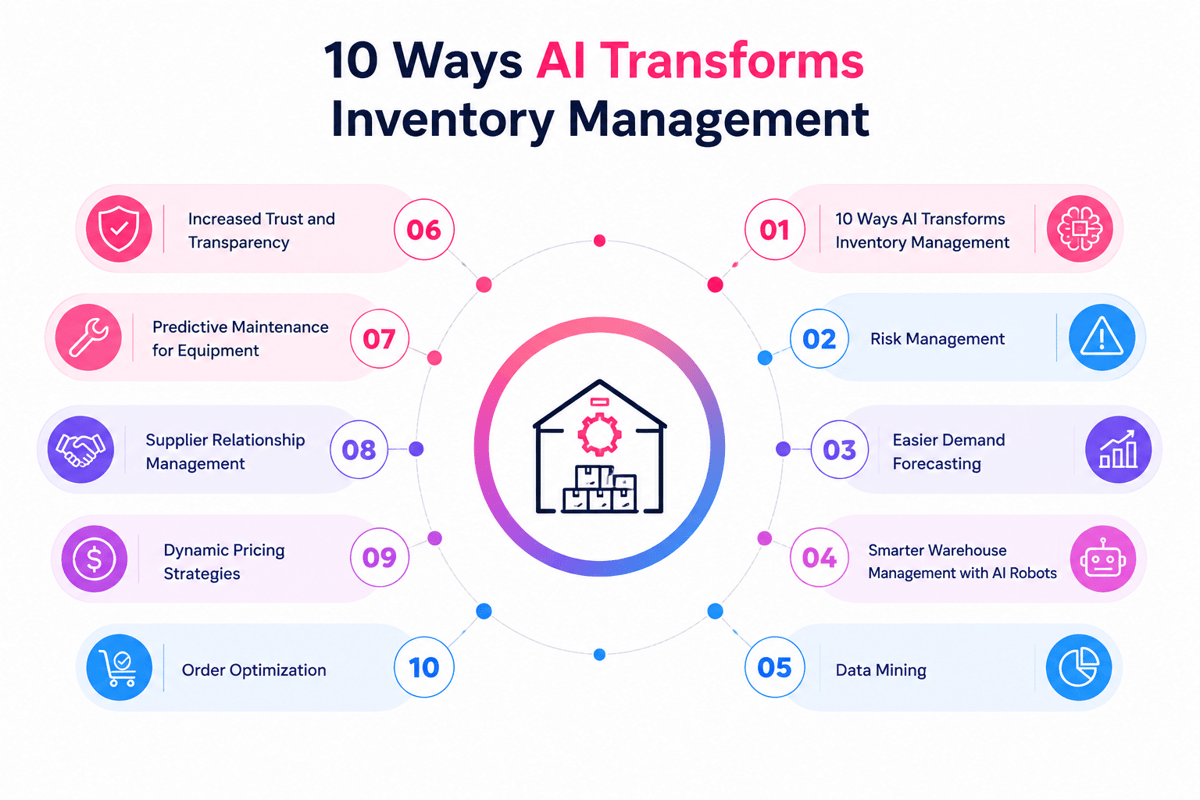
Understanding AI in inventory management
In practice, AI for inventory management automation helps teams control stock with faster, smarter calls. It uses machine learning for inventory to spot patterns in sales, returns, and lead times. Teams can react sooner and rely less on guesswork.
Manual inventory work tends to cause delays and costly mistakes. Staff may copy data by hand or sync spreadsheets too late. An AI inventory management system brings data from POS, warehouses, and suppliers into one view. It flags risks early and suggests the next step.
Also, AI helps teams plan with cleaner data. For example, it can forecast demand by store, channel, or season. So, it can suggest reorder points and safety stock from real lead times. That means fewer stockouts, less excess stock, and more cash on hand.
In practice, smart inventory management tools tend to work inside inventory management software with AI:
- Demand Forecasting: Predict future sales using past sales data, seasonality, and promotions.
- Stock Optimization: Set reorder points and safety stock to match demand and supplier speed.
- Real-Time Tracking: Check inventory levels right away across locations and sales channels.
- Analytics: Find patterns like slow movers, fast sellers, and shrink risk.
- Automation: Make buy orders, alerts, and tasks to save time and lower costs.
AI gives teams a clearer view of supplier and stock risk. To see how top AI tools are changing ecommerce, read The Rise of AI Tools Transforming E-Commerce. Buyers can track delays, compare lead times, and adjust orders early. Shared numbers keep warehouse staff, buyers, and suppliers aligned. That helps firms stay lean as demand changes.
AI inventory management systems, continuous improvement, product updates, and ensure evolving speed and tools. Using AI-enabled inventory management software for automation optimizes speed and cuts manual tasks.
Connect Shopify, draw your floor, pick an order - free plan, 7-day full trial, no credit card, no sales call.
How is AI used in inventory management?
Furthermore, AI for inventory management automation changes how teams manage stock. It speeds up routine work, cuts mistakes, and keeps counts clean across locations.
For example, an AI inventory management system predicts demand with more precision. It checks past sales, season trends, promotions, and live buying patterns. Teams can order the right items at the right time.
AI tracks inventory in real time across stores and warehouses. It pulls data from barcode scans, POS systems, and warehouse tools. Staff can see stock levels fast and fix gaps before sales suffer.
Teams also use AI to run on its own reordering and stock rules. It sets reorder points based on lead times and sales pace. Orders go out when stock hits set limits.
That means fewer stockouts and fewer rush buy orders. Also, AI spots slow movers, demand spikes, and shrinks risks early. Those signals help smart inventory management and better weekly planning.
Here’s how AI is used in inventory management
- Demand Forecasting: Predict and plan inventory needs.
- Automation: Simplify routine tasks and cut errors.
- Real-Time Tracking: Steadily monitor inventory levels.
- Analytics: Find trends and key insights in your inventory data.
- Test case: Test “what-if” plans to prepare for changes.
Many teams now use machine learning for inventory to test test cases. They can model supplier delays, price changes, or a new product launch. So, each test shows likely effects on cash flow, service levels, and safety stock.
Also, AI for inventory management automation works with tools you already use. It can link with ERP, WMS, and e-commerce platforms. Teams add AI without rebuilding the full flow.
To turn those forecasts into faster fulfillment and fewer errors, pair AI insights with an order management system built for e-commerce success.
Key benefits of AI inventory management automation
Also, AI for inventory management automation gives teams tighter stock control. It cuts mistakes, speeds up routine work, and helps teams react faster when demand changes.
An ai inventory management system cuts manual entry across warehouses and stores. It keeps counts aligned and catches odd scans early. Teams spot missing SKUs and duplicate logs before issues spread.
Lower costs follow when stock levels stay closer to real demand. Smart inventory management helps avoid rush orders, excess storage, and expired goods. It also keeps cash out of slow-moving items.
AI takes over repetitive work like stock syncs and reorder checks. Low-stock alerts reach staff sooner and with fewer misses. Teams spend more time on supplier talks and product planning.
Furthermore, machine learning for inventory reviews, sales history, lead times, and returns. It finds patterns in seasonality and demand swings. Those signals guide faster replenishment and smaller orders where needed.
Frequent syncs help teams act on live numbers, not old reports. They respond faster to supplier delays and shipping changes. That speed helps leaner ops and steadier service levels.
Here’s a summary of key benefits
- Error Reduction: Cuts mistakes in inventory work and lifts log quality.
- Cost Savings: Cuts waste, storage fees, and avoidable spending.
- Speed: Automates routine tasks to save time each day.
- Data Insights: Gives clear signals for better ordering and planning.
- Agility: Helps you react fast to market shifts and supply issues.
As a result, better stock clean data means fewer backorders and more on-time shipments. Buyers get the items they expect with no long delays. Help teams also handle fewer cancellations and status requests.
So, AI for inventory management automation also cuts waste across the supply chain. Teams order closer to need and avoid emergency loads. That means less spoilage, better space use, and steadier margins.
To build on these gains, explore how inventory optimization software delivers deeper forecasting, replenishment, and cost-control improvements across your supply chain.
Core features of AI inventory management software
An AI inventory management system helps teams track, plan, and move stock. It brings key tools into one system. Teams make fewer errors and spend less time fixing counts.
Real-time tracking shows live stock across every location. Teams spot gaps early and check counts faster. Managers can see on-hand, incoming, and reserved stock at once.
Demand forecasting helps teams plan with more confidence. Machine learning for inventory reviews, sales history, and seasonal shifts. It helps smart inventory management with better reorder points and safer stock buffers.
Also, task automation removes repetitive work from daily inventory tasks. With AI for inventory management automation, the system can trigger reorders and send alerts. Teams act faster when stock runs low or approvals stall.
Furthermore, strong links keep inventory data in sync across systems. The best inventory management software links with ERP, sales, and buying tools. Shared data cuts double entry and helps teams avoid delays.
Key features include
- Real-Time Tracking: Shows live stock levels right away.
- Predictive Analytics: Estimates future inventory needs.
- Task Automation: Handles routine inventory tasks automatically.
- ERP Link: Links with existing firm systems.
Analytics tools turn raw numbers into clear next steps. They show trends, flag slow movers, and track supplier lead times. Teams can compare locations, watch fill rates, and adjust orders with less guesswork.
Furthermore, AI-driven inventory management studies sales patterns and buying behavior. Those signals come from live data and recent order activity. Teams keep stock levels tighter, cut waste, and protect cash flow.
Generative AI and scenario simulation in inventory management
In practice, generative AI gives teams a practical way to plan inventory. It runs what-if tests and shows likely outcomes fast. Teams can compare options before they commit cash or space.
Test case lets planners test stock moves with no real risk. They can check how delays, demand spikes, or returns affect supply. That helps smart inventory management with clearer choices and fewer rushed calls.
First, start with one goal that matters to the firm. You might want fewer stockouts or lower excess stock. Then test plain cases like a late supplier or a 15% demand jump. Real sales and supply data keep the results grounded and easy to trust.
Also, teams use these models to prepare for market shifts. They can test promotions, price changes, or new product launches. That helps them set reorder points earlier and protect service levels.
Key applications of generative AI in inventory management include
- Test case Check: Test strategies and show likely outcomes.
- Market Test: Models how demand and supply may change.
- Resource Planning: Forecasts labor, space, and cash needs for each test case.
When teams pair tests with AI for inventory management automation, planning gets faster and more consistent. A strong AI inventory management system can suggest reorder dates, sync safety stock, and flag risky items. At the same time, machine learning for inventory learns from sales, returns, and lead-time shifts. That helps buyers, warehouse teams, and service staff act sooner.
To see how these insights translate into faster picking and shipping, explore our guide to running on its own fulfillment and the future of fulfillment solutions.
As these models use live data, teams can adjust plans fast when conditions change. Over time, they cut overstocks, spot demand shifts earlier, and make better buying calls across the supply chain.
AI inventory optimization: balancing stock and demand
So, AI inventory tools help match stock to real demand. That cuts waste and speeds up daily calls. With AI for inventory management automation, teams keep top sellers open. They also avoid tying up cash in slow stock.
Also, an AI inventory management system reads sales history, open orders, and seasonal trends. It predicts the likely demand for each SKU. Teams can reset reorder points faster. They can also sort items by sales speed and margin. That helps stop stockouts and excess units.
Furthermore, real-time data helps take faster action across locations. Teams can also optimize inventory levels across sites before demand peaks. When demand jumps, teams can move stock right away. They can sync buy orders and safety stock in minutes. Managers also see which SKUs drive revenue and which ones stall. That helps smart inventory management with clearer rules.
Core benefits of AI inventory optimization include
- Demand Forecasting: Uses machine learning for inventory to spot patterns and predict future sales.
- Inventory Balancing: Adjusts stock targets by item, location, and lead time to match expected demand.
- Cost Reduction: Cuts waste by stopping overstock, shrinkage, and expired goods.
Also, AI helps with just-in-time inventory with tighter timing. So, teams order closer to actual need. Therefore, that lowers storage costs and frees cash for growth. It also cuts rush orders and manual fixes. So buyers can focus on higher-value work.
Shared forecasts help buyers, planners, and suppliers stay aligned. So, clear data shortens lead times and cuts delays. So, real-time sales signals help teams react before shelves go empty. Over time, better stock calls cut buying, storage, and fulfillment costs.
To extend these gains beyond inventory, explore our guide to AI tools for ecommerce that help run on their own pricing, marketing, and fulfillment.
As teams act on live sales data and buyer behavior, they respond faster when demand shifts. That keeps inventory levels closer to actual need and helps provide steadier service.
Real-world applications and industry use cases
Indeed, many industries now use AI for inventory management automation to keep stock clean and easier to manage. Teams use an AI inventory management system to catch demand shifts early and cut manual errors. Real use cases show how AI helps teams make faster stock calls and keep service levels steady.
For instance, retailers use sales data, promotions, and local trends to predict demand. The system syncs reorder points fast, so popular items stay open. Stores lose fewer sales and carry less extra stock. Buyers order closer to real demand and free up shelf space.
Manufacturers link buy orders, supplier lead times, and production plans in one view. AI flags supply risk early, so planners act before shortages stop production. Teams avoid rush shipping and keep labor on schedule. Machine learning for inventory also finds slow-moving parts and helps release tied-up cash.
For example, healthcare teams track medicines, surgical kits, and daily supplies across sites. AI sends alerts for low stock, rising use, and items near expiry. Staff protect patient care and cut waste from expired products. Clear data also helps with faster handoffs between departments.
Some key use cases of AI-driven inventory include
- E-commerce: Responds to fast demand changes, cuts stockouts, and lifts reorder timing. AI also drives personalized ecommerce experiences that lift buyer loyalty.
- Automotive: Plans parts and components, balances safety stock, and keeps assembly lines moving.
- Food and Beverage: Forecasts seasonal demand, manages perishable goods, and cuts spoilage.
- Fashion: Tracks trends, sizes, and colors, so teams stock what sells and avoid overbuying.
These examples show why smart inventory management works across many industries. Teams that set clear goals cut waste, lower costs, and lift stock clean data. AI helps growing firms scale without adding the same level of manual work.
To coordinate stock across marketplaces and stores as you scale, see our practical guide to multi-channel inventory management for a consistent, real-time view.
Overcoming challenges: data, integration, and security
However, AI for inventory management automation works best with clean data, solid connections, and strong security. Most issues start in those three areas. Fix them early, and teams trust the system faster.
First, start with data quality. A strong AI inventory management system needs clear, live logs. Bad SKUs, duplicate items, and wrong lead times make bad reorder signals. Teams then buy too much slow stock or miss fast sellers. Set naming rules, standard units, and a cleaning schedule. Check new entries at the source before errors spread.
Link comes next. Smart inventory management depends on steady data flow across tools. Your AI tools for ecommerce should link with your ERP, POS, WMS, and buying tools. If systems show varied stock counts, buyers and warehouse teams make costly mistakes. Map each field, pick one source of truth, and test each workflow. Start with one site or product line first.
Furthermore, security needs the same focus. Inventory logs tend to include supplier terms, pricing, and demand patterns. Therefore, protect that data with role-based access, encryption, strong passwords, and regular audits. Machine learning for inventory tends to pull from large cloud data sets. Watch access logs and train staff to catch risky behavior early.
To overcome these challenges, businesses can
- Lift data quality with regular cleaning and validation
- Plan a secure link across ERP and inventory tools
- Use strong cybersecurity controls, including encryption and role-based access
When systems share clean, secure data in real time, teams act faster and make fewer stock errors. That is how ai for inventory management automation helps steady, reliable inventory calls.
Conclusion: embracing the AI-driven inventory revolution
Overall, inventory teams now use AI to gain a clear edge. AI for inventory management automation speeds routine work and cuts costly mistakes. It also helps teams make faster calls with live data. That means fewer stockouts, lower carrying costs, and steadier service.
First, start with goals your team can measure each month. Pick targets like lower overstock, better fill rates, or shorter order cycles. Then bring sales, buying, and warehouse data into one view. Clean data helps people trust reports and act sooner.
Many firms begin with an AI inventory management system. It tracks stock by location and flags issues early. Teams then move into smart inventory management with alerts and plain rules. Buyers and planners can act faster each day.
Also, add machine learning for inventory to read demand shifts. It can adjust safety stock and sharpen forecasts over time. These tools also spot slow movers, seasonal swings, and supplier delays. Early warnings help teams stop wider problems.
Small steps still make strong results. Train users, review outcomes each month, and tune settings as needs change. For more details, explore our full guide on running its own inventory management. Companies that start now build leaner ops and stay ready for change. For small firms just starting out, see strategies to optimize small business inventory management.
 Google AI
  OpenAI ChatGPT
 Frequently Asked Questions
What is AI for inventory management automation?
How does AI improve inventory accuracy?
Can small businesses benefit from AI-powered inventory tools?
Is AI difficult to implement in existing inventory systems?
What types of inventory tasks can AI automate?
Does AI help with seasonal inventory planning?
Is AI inventory automation cost-effective?
How secure is AI-based inventory management?
Why is AI for inventory management automation gaining popularity?
How does AI for inventory management automation support supply chain resilience?
What are the key benefits of AI for inventory management automation?
What industries can benefit most from AI inventory automation?
Can AI help detect inventory fraud or shrinkage?
Sync inventory in real time, manage orders, and run warehouse operations across Amazon, eBay, Etsy, Shopify, and other sales channels. From barcode scanning to organized storage and faster fulfillment, Fiftify helps reduce errors, prevent overselling, and support business growth. Explore our articles for insights on warehouse management, inventory control, and multichannel operations.
You may also like

Enterprise parcel shipping software: what to check before you buy
Choosing the right enterprise parcel shipping software lowers logistics costs, boosts delivery performance, and simplifies complex carrier operations at scale. Explore the essential features, benefits, and selection criteria to optimize your multi-carrier strategy today.

Warehouse order fulfillment software: features and use cases
Warehouse order fulfillment software helps businesses streamline inventory, picking, packing, shipping, and returns from one connected platform. This brief outlines key benefits, features, use cases, and buying criteria for choosing fulfillment software that scales.

Inventory management cloud: how it works and when to switch
An inventory management cloud helps businesses track stock, automate workflows, reduce errors, and make faster decisions from anywhere. Benefits, use cases, selection criteria, and practical steps for adopting cloud-based inventory tools with confidence.