
Amazon dynamic pricing strategy: how it works, benefits and risks
 Daniel Brooks
·
· 15 min read
Daniel Brooks
·
· 15 min read

Amazon changes prices fast, and sellers must keep up. A strong Amazon dynamic pricing strategy helps you protect margin and stay visible. Small price moves can change clicks, conversions, and Buy Box wins.
On Amazon, even a $0.01 gap can shift results. That is why your Amazon pricing strategy needs clear rules. Sellers should pair pricing decisions with e-commerce strategies and strong market positioning. Maintaining market share often depends on reacting to pricing changes before competitors do.
Amazon tracks rival offers, stock levels, shipping speed, and demand. Those signals shape Amazon’s dynamic pricing across millions of listings. Smart sellers watch the same numbers and react before sales drop.
Good tools help you spot price changes in real time and optimize prices based on demand and competition. They also support Amazon price optimization without guesswork or slow manual checks. With the right data, you can defend profit, win more Buy Box share, and increase market share.
Many sellers use pricing software to manage products on Amazon across multiple categories. Monitoring products on Amazon helps identify pricing opportunities before competitors gain an advantage.
Understanding what pricing strategy Amazon uses can improve your sales approach. Leveraging dynamic pricing strategies allows sellers to maximize profits efficiently.
Summary
Amazon changes prices fast, and sellers must react just as fast. A strong strategy shapes sales, Buy Box wins, and search rank. The shift is clear. Manual price edits no longer keep pace.
Amazon’s system reads market signals in real time. It tracks rival prices, demand swings, shopper behavior, reviews, stock levels, and fulfillment type. Those inputs shape decisions across the marketplace. Sellers need tools that read the same signals and act quickly.
Price changes should support margin, not start a race down. A smart Amazon pricing strategy means setting rules that match your goals. You can hold price when stock runs low. You can cut price when rivals gain ground.
Good Amazon price optimization depends on speed and clear rules. Sellers who wait too long often lose visibility and the Buy Box. Higher prices can push shoppers away. Slow reactions can also leave money on the table.
To stay competitive, sellers often ask what pricing strategy Amazon uses effectively. Understanding these strategies is crucial for sellers aiming to optimize profits and protect market share.
Sellers managing large numbers of products on Amazon often rely on automated repricing tools. These systems track competitor activity and adjust prices based on predefined rules. As a result, businesses can maintain visibility across products on Amazon without constant manual monitoring.
The evolution of Amazon’s pricing strategy
Amazon built its early model on low prices and fast delivery. That focus shaped its Amazon pricing strategy from the start. Over time, the company moved from simple price cuts to constant price changes across its catalog.
Today, pricing decisions happen through software and live market data. In the past, teams changed prices by hand. Now, dynamic pricing in Amazon systems reacts within minutes. They track rivals, demand shifts, stock levels, and shopper behavior.
That shift defines the modern strategy. It also drives Amazon’s dynamic pricing across millions of listings each day. Prices no longer stay fixed for long. Sellers must watch the market and act fast.
Strong pricing decisions help brands increase market share while remaining profitable. Companies that analyze competitor pricing trends can identify opportunities to expand market share without sacrificing margins.
For brands and resellers, slow updates can cost sales quickly. A stale price can lose the Buy Box or cut product visibility. Strong Amazon price optimization depends on clear rules, steady checks, and fast reactions. Sellers who match Amazon’s pace protect margin and stay competitive.
Businesses selling products on Amazon face constant competition from new entrants and changing demand patterns. Effective pricing strategies help sellers keep products on Amazon visible, competitive, and profitable over the long term.
Sellers often ask what pricing strategy does Amazon use to maintain its edge. Many sellers adopt Amazon dynamic pricing strategies to remain competitive and profitable.
Connect Shopify, draw your floor, pick an order - free plan, 7-day full trial, no credit card, no sales call.
What is dynamic pricing?
Dynamic pricing changes product prices as market signals shift. On Amazon, sellers use it to stay competitive and protect margin. A strong strategy helps match price moves to real demand.
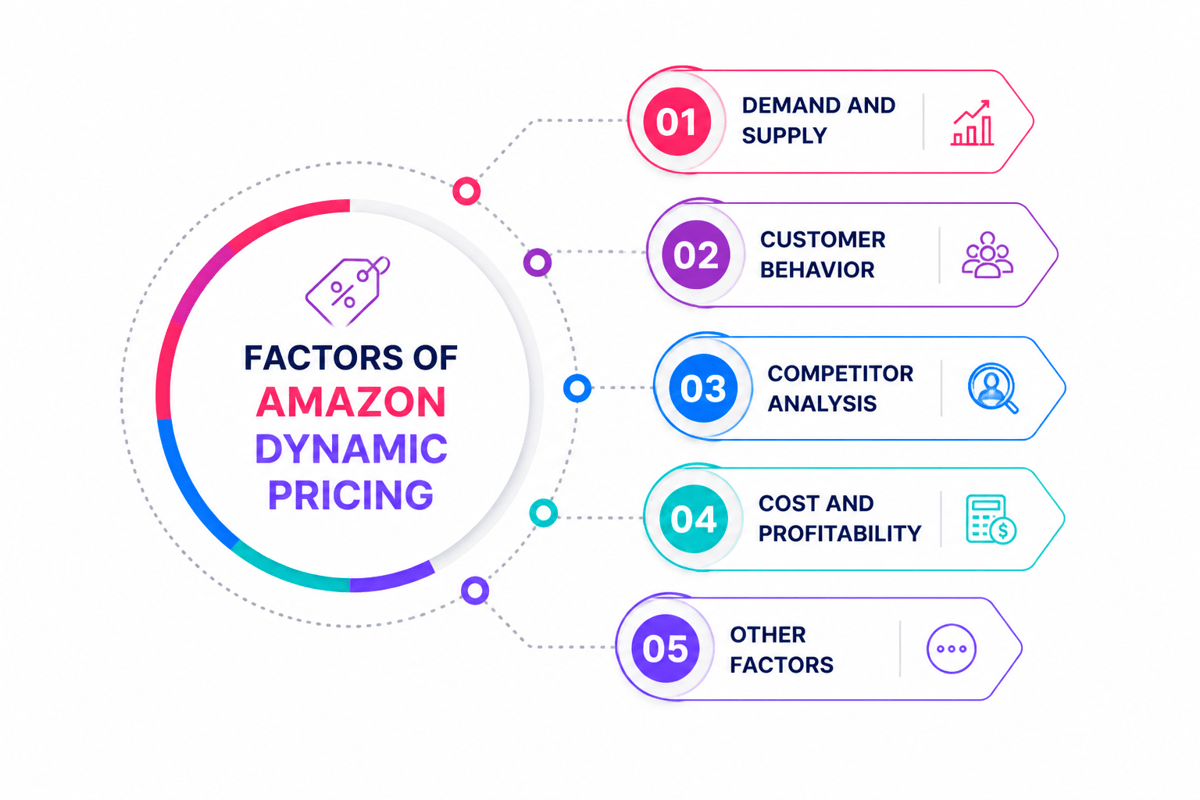
The system checks several signals before prices change. Those signals shape both speed and price range.
-
Competitor pricing updates
-
Current supply and demand trends
-
Customer behavior, including browsing and purchase history
-
Product reviews and star ratings
-
Available inventory levels
-
Fulfillment type (FBA vs. FBM)
These inputs guide price changes throughout the day. Sellers often pair this with amazon price optimization rules to avoid sharp margin loss. A clear amazon pricing strategy also helps teams set floor prices and react faster.
Good dynamic pricing amazon decisions do more than cut prices. They help win the Buy Box, move slow stock, and hold profit on strong listings. Smart pricing depends on timing, inventory, and market pressure, not guesswork.
To support dynamic pricing with the right tech stack, explore our guide to E-commerce Tools that streamline operations and improve decision-making.
This approach works best when a dynamic pricing algorithm adapts to real-time market conditions, allowing sellers to adjust prices strategically without sacrificing profitability.
Amazon dynamic pricing: how it works
Amazon changes millions of prices each day. That pace helps it react fast to demand, stock levels, and rival offers. Amazon dynamic pricing strategy depends on constant data checks and quick price updates.
The system uses machine learning and live market data. It reviews broad trends and product signals at the same time. That mix helps shape a stronger amazon pricing strategy for each listing.
Macro factors include:
-
Market trends by product category
-
Global supply chain shifts
-
Seasonal shopping behavior
Micro factors include:
-
What customers are doing
-
Competitor prices
-
Your product’s past sales
If a rival cuts prices, Amazon may lower similar offers. When demand spikes or stock drops, prices often rise. That is how dynamic pricing Amazon keeps listings competitive and responsive.
Smart software sits at the center of this process. It tracks inventory, clicks, conversions, and price gaps. Sellers use those signals for better amazon price optimization with less manual work.
Tools like the Amazon Automated Pricing Tool let sellers set rules and guardrails. You can protect margins, stay in range, and react faster in busy categories. Strong pricing works best when you test settings and watch results.
To learn more about how Amazon implements these systems, you can review their official documentation on Automate Pricing via Amazon Seller Central.
To refine your pricing strategy further, pair Buy Box monitoring with ecommerce analytics tools to spot trends and protect margins.
At scale, a dynamic pricing algorithm continuously analyzes real-time market conditions to adjust prices faster than manual strategies ever could, ensuring optimal positioning and profitability.
Amazon pricing strategy analysis
A strong amazon pricing strategy starts with how Amazon ranks offers. The platform looks at price, speed, and seller health. Category trends matter too. A smart amazon dynamic pricing strategy tracks both broad market shifts and product-level pressure.
1. Buy Box control
Amazon favors sellers who keep prices sharp and service steady. Fast shipping and clean metrics also help. Even a one-cent gap can change who wins the Buy Box.
- Offer competitive pricing
- Learn more about starting an online business (FBA)
- Maintain strong seller performance metrics
- Provide fast, reliable shipping
That is why many teams review prices several times a day. Small moves often decide visibility and sales across different pricing models.
2. Automated repricing tools
Many sellers use repricers to support amazon price optimization. These tools react to rival prices and your rules. Good settings protect margin while keeping offers in range.
Popular tools include:
-
RepricerExpress
-
Informed.co
-
Seller Snap
Amazon dynamic pricing works best with clear floors and ceilings. Sellers can set rules by margin, stock, and sales pace. That cuts manual work and speeds up price changes.
3. Loss leaders and bundle pricing
Some sellers price one item low to pull in traffic. They then sell higher-margin add-ons or bundles. This approach can raise order value without chasing the lowest price on every SKU.
4. Psychological pricing
Price endings still shape clicks and conversions. Many buyers react differently to $9.99 and $10. Dynamic pricing amazon sellers use often stays just below key mental limits across different pricing models.
Key benefits of dynamic pricing for Amazon sellers
A strong strategy helps sellers react fast and protect profit. Prices shift with demand, stock, and rival moves. That gives you a clear edge in crowded categories.
Higher Sales
Smart price changes can help you win the Buy Box more often. More Buy Box time means more clicks and more orders. That makes pricing a practical sales tool.
Better Profit Margins
Good rules do not cut price without a reason. They raise or hold price when demand stays strong. That supports amazon price optimization without giving away margin.
Faster Market Response
With dynamic pricing amazon tools, you can change prices in minutes. A rival drop, low stock, or peak demand can trigger action fast. Quick moves help you keep sales and avoid missed profit.
Smarter Strategy
Data drives each decision. Sales history, stock levels, and shopper behavior shape each price move. A solid amazon pricing strategy uses those signals to set clear price rules.
Sellers who price this way stay flexible in a fast market by adapting strategies across different pricing models.
To build on these gains, explore our roundup of amz tools that help Amazon sellers streamline pricing, inventory, and growth decisions.
These benefits are strongest when a dynamic pricing algorithm adjusts prices in real time based on changing market conditions, helping sellers stay competitive while maximizing revenue.
Challenges and risks of Amazon dynamic pricing
A strong strategy can raise sales fast. It can also create costly mistakes. Sellers need clear rules and frequent checks.
Price Wars
Automation can trigger fast price cuts across similar listings. That pattern often starts price wars. Margins shrink first, and recovery takes time.
Reduced Profit Margins
Many sellers chase the Buy Box with lower prices. Sales may rise, but profit per unit falls. A weak amazon pricing strategy can hide that problem.
Poorly Set Rules
Bad rules can drop prices too far, too fast. One error can erase profit on every sale. Strong amazon price optimization starts with floor prices, limits, and review alerts.
Customer Confusion
Shoppers notice sharp price swings. Some delay purchases and wait for another drop. Trust can fall when pricing feels erratic or unfair.
Review your pricing data each week. Check margin, conversion rate, and competitor moves. Keep your dynamic pricing Amazon rules simple and strict. That approach helps you stay competitive without training buyers to expect constant discounts across different pricing models.
To protect margins while staying competitive, pair pricing oversight with amazon ppc management tactics that maximize ad efficiency and overall ROI.
To reduce these risks, a well-tuned dynamic pricing algorithm should adapt gradually to changing market conditions, ensuring price stability while maintaining competitiveness.
How to perform an Amazon price check
Start every listing change with an Amazon price check. You need current numbers before you set a price. That habit supports a strong amazon pricing strategy. It also helps you avoid fast margin loss.
Check the product page first. Look at the “Other Sellers on Amazon” area. You can spot the lowest price and see who holds the Buy Box. Those details shape your next move.
1. Use Amazon’s native tools
Seller data on the listing page gives you a quick market view. Use it to compare your offer, shipping, and seller rank. That makes amazon dynamic pricing decisions faster and more accurate.
2. Try Keepa for price history
Keepa shows how prices moved over time. You can spot dips, short promos, and repeat patterns. That history helps you build a better strategy.
3. Leverage CamelCamelCamel
CamelCamelCamel tracks price swings and sends alerts. Use those alerts to react before a drop cuts sales. It works well for dynamic pricing amazon checks on key products.
4. Analyze in Amazon Seller Central
Inside Seller Central, open the Pricing Dashboard. It shows real-time comparisons, Buy Box status, and price suggestions. Those numbers support daily amazon price optimization work.
5. Use third-party APIs
For large catalogs, use the Amazon SP-API or tools such as Helium 10 or Keepa. These tools pull data across many SKUs and speed up price checks.
To go beyond basic automation, explore how ai tools for ecommerce use real-time pricing signals to drive smarter growth decisions.
How to set up your Amazon dynamic pricing strategy
A strong strategy starts with clear rules. You need fast price moves and firm margin control. That balance helps sellers react to demand without cutting too deep.
Step 1: define your goals
Set one main goal first. You may want more sales, stronger margins, or more Buy Box wins. Each target needs a different amazon pricing strategy. Clear goals also make daily pricing decisions much easier.
-
Want more visibility? Focus on competitive pricing.
-
Looking for higher margins? Aim for steady price gains over time.
-
Trying to win the Buy Box? Prioritize speed and real-time updates.
Good goals guide your rules. They also keep your team aligned.
Step 2: set pricing limits
Set a floor price and a ceiling price. These limits protect profit and prevent sharp swings. Raise prices slightly when stock runs low. That move can lift margin during strong demand.
Step 3: choose the right repricing tool
Pick a tool that fits your catalog and pace. Strong tools support real-time updates, custom rules, and bulk edits. They should also connect with Amazon and your inventory system. That setup supports better amazon price optimization.
Step 4: set up smart pricing rules
Build rules from live market data. Many sellers undercut by $0.01 or match only FBA offers. Others raise prices when stock gets tight. Smart rules keep dynamic pricing amazon focused and controlled.
Step 5: monitor and adjust regularly
Track sales trends, conversion rate, and profit margin each week. Change rules when the market shifts or costs rise. Strong amazon dynamic pricing needs regular review, not guesswork.
To go beyond pricing tweaks, explore our playbook to Increase e-commerce sales with proven strategies across marketing, merchandising, and retention.
Real-world examples of Amazon dynamic pricing
Amazon pricing changes do more than beat the lowest seller. A strong strategy sets prices that protect margin, move stock, and support steady sales.
Amazon’s Own Listings
Amazon changes prices on in-house brands like AmazonBasics all day. Those items often sit just below similar third-party offers. Amazon reads demand, stock, and rival prices fast. That makes amazon dynamic pricing a daily profit tool.
How repricing software helps third-party sellers
Repricers apply your rules faster than manual checks. They work best when they also see your stock level, so they do not cut prices on items that are about to sell out.
The role of inventory in dynamic pricing
Stock levels shape every smart amazon pricing strategy. Low stock can justify higher prices. Extra units may call for lower prices to free space and recover cash.
-
Low stock? Raise prices to slow demand and protect profit.
-
Overstocked? Lower prices to speed sales and clear space.
Teams need clear inventory signals to act fast. Good systems track stock, costs, and reorder timing. That link helps sellers react to market shifts without guessing.
Read our related guide on inventory optimization software for more detail.
What’s next for Amazon dynamic pricing?
Amazon’s automated pricing will keep changing. Sellers will need faster tools and clearer rules. A strong Amazon dynamic pricing strategy will depend on speed, stock data, competitor activity, and market shifts.
Smarter AI pricing
AI tools will make more pricing moves each day. They will track rivals, demand, and stock in real time. That gives sellers quicker price changes with less manual work. As AI capabilities improve, an Amazon dynamic pricing strategy will become more accurate and responsive to changing market conditions.
Better system connections
Future dynamic pricing Amazon tools will connect with stock, ads, and shipping systems. Shared data will cut delays and pricing errors. Strong Amazon price optimization depends on clean data across each system. Businesses that integrate inventory, fulfillment, and pricing data can build a more effective Amazon dynamic pricing strategy that reacts to changes across the entire operation.
Custom prices for each buyer
Some brands may test prices by region or buying history. That can lift margin on some products. It can also sharpen an amazon pricing strategy for repeat buyers and local demand.
More rules and oversight
Rules will likely tighten as tools grow more powerful. Sellers must watch fairness, price swings, and marketplace limits. Smart teams will review amazon dynamic pricing often and keep records for compliance.
Conclusion: embrace smarter Amazon dynamic pricing
A strong Amazon dynamic pricing strategy helps sellers protect margin and win more Buy Box share. Smart rules adjust prices fast. Your team still needs clear goals and sound judgment.
Set price floors, profit targets, and stock rules first. Then pick tools that react to market shifts in minutes. Good amazon pricing strategy links price changes to demand, costs, and inventory risk.
Keep testing small changes and watch the numbers closely. Track conversion rate, margin, and sell-through by SKU. Strong amazon price optimization comes from steady review, not guesswork.
Your pricing system should work with ads, stock, and fulfillment. That connection cuts delays and helps prevent stockouts. A solid dynamic pricing Amazon setup also supports faster decisions across your catalog.
Pricing rules work best when they see a true stock number. Fiftify does not set prices. It keeps Amazon orders and stock in one warehouse system: each paid order reserves units, and the listing quantity updates once per packed shipment. Your repricer then works from stock you can actually ship.
Businesses that invest in the right technology and maintain a well-defined Amazon dynamic pricing strategy will be better positioned to respond to market changes, protect profitability, and grow sales over time.
See how it works with Amazon on the Amazon integration page.
 Google AI
  OpenAI ChatGPT
 Frequently Asked Questions
What is a dynamic pricing strategy on Amazon?
A dynamic pricing strategy on Amazon means changing your prices often based on real-time data. This includes things like competitor pricing, product demand, your inventory levels, and seasonal trends. Dynamic pricing helps you stay competitive and increase profits at the same time.
How does competitive pricing work on Amazon?
Competitive pricing on Amazon involves checking what others charge for similar products. Then, you adjust your price to stay attractive to shoppers. Smart pricing rules help you stay competitive without hurting your profit margins.
What are the best tools for Amazon pricing?
Top tools include RepricerExpress, SellerLogic and Informed.co. These platforms help sellers apply amazon automated pricing strategies. They automate price changes, track competitors, and update prices in real time.
How can I increase sales using Amazon pricing strategies?
To grow sales, combine different methods. Use dynamic pricing Amazon tools, monitor your competitors, and apply psychological pricing (like $9.99 instead of $10). Limited-time deals and product bundles can also help boost conversions.
Does Amazon allow automated pricing?
Yes. Amazon has its own Automate Pricing tool. You can set pricing rules that change your prices automatically. For more control and better insights, many sellers use third-party amazon automated pricing tools.
What is value-based pricing on Amazon?
Value-based pricing means setting your price based on how much a customer believes the product is worth. This works well for premium or unique items. It’s not just about costs or competitor prices—it’s about perceived value.
Can pricing affect Buy Box eligibility?
Yes. Your price plays a big role in winning the Buy Box. Amazon chooses sellers who offer the best value. That includes good prices, fast shipping, and strong seller ratings.
What’s the difference between static and dynamic pricing?
Static pricing stays the same. Dynamic pricing on Amazon changes based on live market data. Dynamic strategies give you more flexibility and help you compete better in fast-moving markets.
How often should I review my Amazon pricing strategy?
If you don’t use automation, check your pricing once or twice a week. If you use dynamic pricing software, monitor your results often, but let the tool handle price changes.
How do I avoid a race to the bottom with pricing?
Don’t always try to be the cheapest. Instead, build value with strong product photos, good reviews, and helpful listings. In many cases, shoppers choose the most trusted seller—not just the lowest price.
I specialize in building scalable eCommerce systems powered by AI and automation. My work focuses on growing sales across Amazon, eBay, and Etsy through technology integration, data-driven strategies, and performance optimization. I also publish articles and insights about eCommerce technology, warehouse operations, and multichannel growth.
You may also like

eBay stock management software: prevent overselling across channels
Choosing the right eBay stock management software helps sellers effortlessly avoid overselling, sync multi-channel listings in real time and improve order accuracy. Discover the essential integration features and practical tips to scale your business.

Starting an online business on Amazon or eBay: pros and challenges
Starting an online business on Amazon or eBay. Compare pros and cons, and learn tips to pick the right platform for your e-commerce journey.

Ecommerce marketplace management: channel mix, listings and operations
Ecommerce marketplace management helps brands centralize listings, inventory, pricing, orders, and advertising across major channels. This guide explains online marketplace management workflows, tools, and KPIs to reduce errors, protect margins, and scale revenue.