
Amazon dropshipping software: how automatic dropshipping sites compare
 Emily Carter
·
· 13 min read
Emily Carter
·
· 13 min read

What is Amazon dropshipping automation?
Many new sellers start with one tool, then add more as their store grows. This slow build helps you learn what each tool does well before you spend on a full bundle.
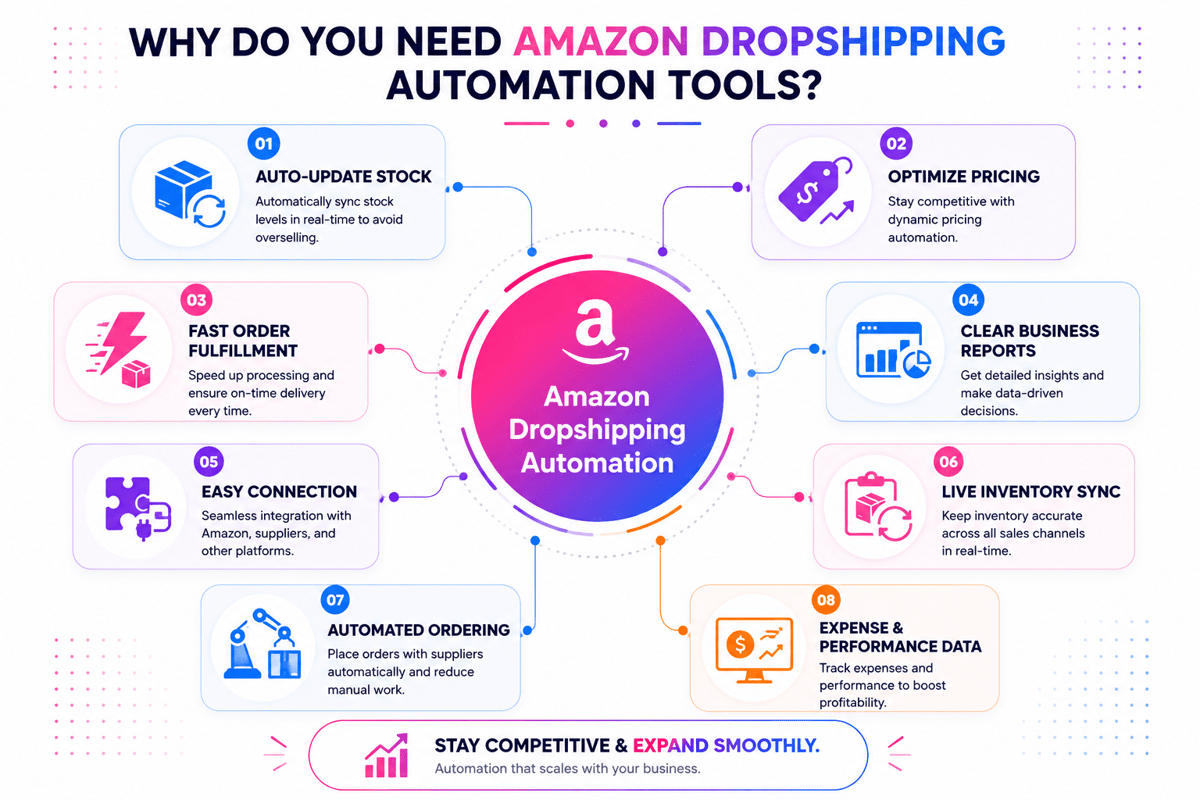
Automation uses software to handle repetitive tasks in your online store. For example, it can track stock and run orders for you.
As a result, you spend less time on manual work and make fewer slips. Then you can focus on marketing and buyer help.
Compared to manual ways, many tools also give you live stock syncs and send orders to vendors on their own. In addition, price tracking, Buy Box checks, and reports help you make smarter picks. This helps you run a cleaner flow and strictly comply with the official Amazon Dropshipping Policy to avoid account suspension.
Core features to look for in an automatic dropshipping site for Amazon
- Real-time inventory updates
- Automatic order fulfillment
- Price monitoring
- Data analytics
- Buy Box tracking
With the right setup, an automated Amazon dropshipping platform can help you grow faster. It also keeps your firm easier to run as orders rise.
Many of these tools work as full Amazon dropshipping software, with order sync, price rules, and basic stock control on one screen. When paired with a solid dropshipping supplier, automation also helps keep listings clean and product descriptions matched to real stock checks. Over time, this setup helps a stronger dropshipping firm since you spend less time fixing slips and more time growing with software that runs daily tasks.
Using a fit Amazon dropshipping tool or dropship software for Amazon also helps you run your seller account well by syncing orders and tracking inventory counts on its own. When linked with a trusted wholesale vendor that can ship in plain packs, you can protect profit cuts and focus on growing strong items with less risk.
To grow past automation and build a steady dropshipping business, see our full guide to dropshipping with Amazon and beyond. Also, learn how to build and manage a scalable dropshipping store as your store grows.
Connect Shopify, draw your floor, pick an order - free plan, 7-day full trial, no credit card, no sales call.
Key benefits of using automatic dropshipping sites for Amazon
Time saved on daily tasks adds up fast. A few hours a week spent on manual order checks can cost you a full workday each month. Tools that run those checks for you free up time for growth tasks. Using an automatic dropshipping site for Amazon can help you run your store with less manual work. With automation, the system runs repetitive tasks for you.
First, you save time. The site can run orders fast, so you can focus on marketing and growth. As a result, you get more done each day. Next, you lift clean data. Automation cuts slips in stock syncs and order details. When your data is right, you can help buyers better.
Also, scaling gets simpler. An automated Amazon dropshipping platform can handle more orders with no extra steps. That way, you grow as demand rises. In addition, you get clear views. Many tools show sales trends and result reports. As such, you can make smarter calls fast.
Core benefits of Amazon dropshipping automation
- Save time with automation
- Lift clean data and reduce errors
- Scale faster as order volume grows
- Get useful reports and insights
Finally, you lift the buyer’s feel. Faster ship syncs and fewer slips lead to happier buyers. In turn, your store earns better notes and more repeat sales.
By linking a solid Amazon dropshipping tool to your seller account, you can send tracking counts and sync orders with each wholesale supplier on its own. This setup also helps protect profit cuts by focusing on strong items and making sure they ship in plain packs to meet Amazon rules.
To keep automation running well, pick solid dropshipping suppliers — see our guide to top vendors for Amazon.
How to choose the best automatic dropshipping site for Amazon
A short trial run on real orders tends to show more than any sales page or demo clip. Test the tool with your own products before you commit to a long plan. Picking the right automatic dropshipping site for Amazon can help you grow faster. First, list your firm’s needs and goals.
Next, check links. Make sure the site links with Amazon with no issues. Smooth syncs help you skip slips and save time. Then, check the tools. Look for Amazon dropshipping automation tools that run stock syncs, order routes, and price shifts.
After that, check the price. Look at the monthly fees, per-order costs, and add-ons. Pick an automated Amazon dropshipping platform that fits your budget while still giving you the tools you need. Also, read buyer notes and proof. Notes from other sellers can show how well the site works in real stores.
Quick checklist for picking an Amazon dropshipping tool
- Define your firm’s needs
- Check Amazon integration
- Review automation features
- Compare pricing and fees
- Read user reviews
In the end, pick an automatic dropshipping site for Amazon that fits your plan and helps steady, solid growth. Also, check if the site links with trusted dropshipping supplier rings and helps clean product descriptions. Strong Amazon dropshipping software should have built-in inventory management so stock stays right as orders grow.
When these basics are set, your dropshipping software becomes a solid base for a strong dropshipping firm built on high-quality listings and steady fill. Make sure the site also works as a fit Amazon dropshipping tool that keeps your seller account rulesafe and syncs tracking counts on its own. Working with a checked wholesale supplier who can ship in plain packs will help protect profit cuts.
To grow listings, stock sync, and order syncs as you scale, see our guide on ecommerce automation tools that lift sales well.
Top automatic dropshipping sites for Amazon: in-depth reviews
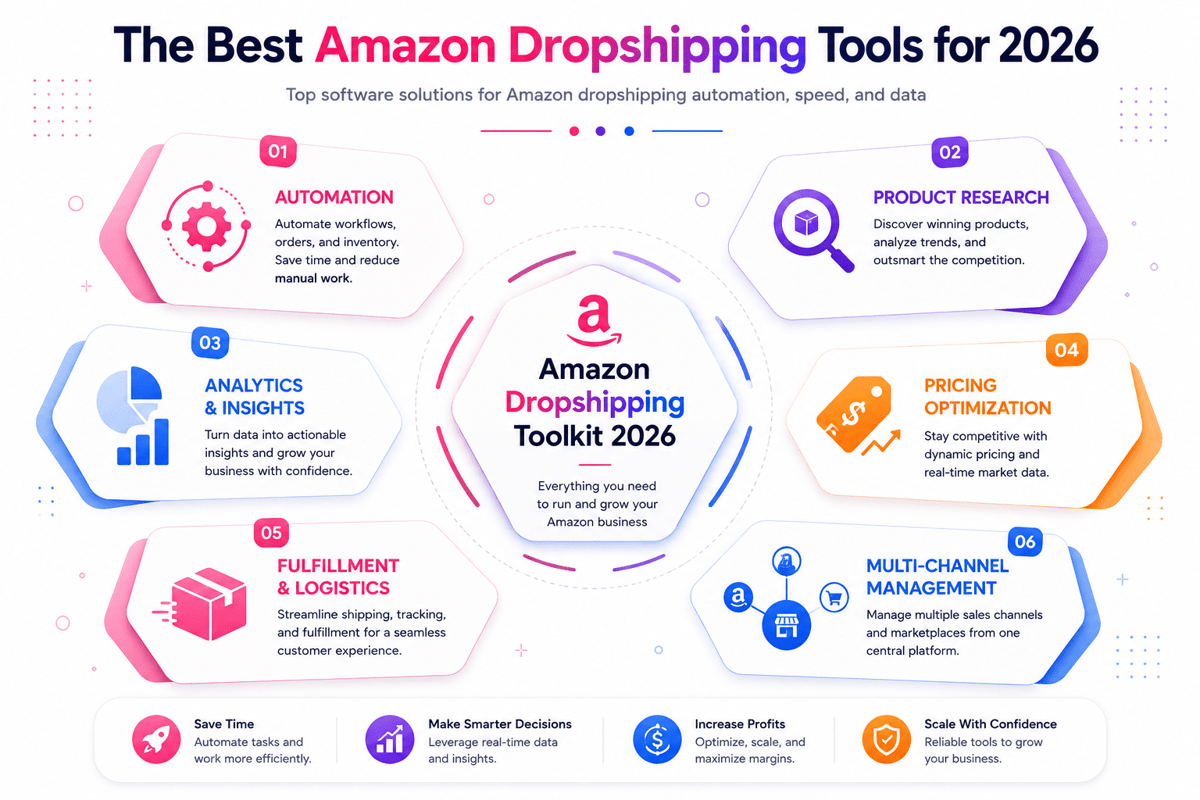
Each tool below fits a varied stage of growth. Some suit a brand-new store with low volume. Others fit a firm that ships hundreds of orders each day. Match the tool to where your store stands now, not where you hope to be in a year.
Picking the right automatic dropshipping site for Amazon can lift your store fast. Below, you will find clear reviews of the top picks.
Spocket, SaleHoo, AutoDS, CJDropshipping, and Dropified all solve varied issues. So check their strengths and limits before you pick a tool for Amazon dropshipping automation.
1. Spocket
Spocket stands out as it links you with many US and EU vendors. As a result, you can offer shorter ship times to Amazon buyers.
Spocket keeps product sourcing plain. You can find items, import them, and run orders from one clean screen. Plus, you can run bulk order set-up to save time.
Spocket also has check tools to help you spot items that may sell well. You also get a wide range of item picks.
- Strong supplier network
- User-friendly interface
- Helpful research tools
But keep these gaps in mind: a tight free plan and vendor coverage that depends on the region.
2. SaleHoo
SaleHoo works best if you want a trusted vendor list. It holds thousands of checked vendors, which helps you skip risky ties.
It also has market check tools. With these, you can find items with strong demand and track trends sooner. In addition, SaleHoo offers guides and training for new sellers.
- Verified supplier directory
- Strong learning resources
- Active user community
But it also has limits, such as fees and a focus that leans more toward a list than a full automated Amazon dropshipping platform.
3. AutoDS
AutoDS focuses on speed and automation. If you want strong Amazon automation, this tool can help you run daily tasks with less manual work.
AutoDS runs order work and tracks stock live. As such, you can cut overselling and stock slips. It also has stats to track results and lift calls.
- Strong automation tools
- Advanced analytics
- Simple product management
Still, note that the first setup can feel hard, and it takes more time to learn the system. For a deeper look at how order work fits this flow, see automated order processing.
4. CJDropshipping
CJDropshipping offers full support. It helps you source items, store them, and ship orders, which gives you more control as you scale.
One key feature is custom branding. You can add your logo to items or packs, which can help your Amazon brand look sharper. It also gives round-the-clock buyer help.
- End-to-end service options
- Custom branding
- 24/7 buyer support
But note that ship times can shift by item and spot, and prices can shift across vendors.
5. Dropified
Dropified helps you run dropshipping with a full tool set. It also helps Amazon links, which can make daily care simpler.
Its screen feels plain and fast to use. You can run stock and price in fewer steps. It also has item check tools to speed up picks.
Each pick can work as an automatic dropshipping site for Amazon. In the end, pick the site that fits your budget, skill, and goals.
Amazon dropshipping automation: build a strong business model
A strong business model rests on three legs: steady demand, fair margins, and a vendor you trust. If one leg is weak, automation alone will not fix the gap. Software can speed up good moves, but it cannot turn a weak plan into a strong one.
When you use Amazon dropshipping automation, you can save time and scale faster. But you still need a clear plan and steady watch to stay strong on profit.
First, learn your target market. Look at what buyers buy, what they search for, and what gaps they want fixed. Then pick items that match those needs.
Next, lift your Amazon listings often. Write clear titles and details, add strong photos, and keep your price sharp. These syncs help you win clicks and sales.
Tips for a strong dropshipping business model
- Use item check tools to find goods with steady demand
- Track stock daily so you skip stock-outs and late orders
- Run price rules on their own, so you stay sharp and protect margins
- Review stats each week to spot trends and fix weak listings
When you follow these steps, you run smoother ops, lift the buyer’s feel, and grow your Amazon dropshipping firm with less stress.
In addition, pick a solid Amazon dropshipping software that helps with inventory management as order count grows. Work only with a trusted dropshipping supplier that gives high-quality goods and steady fill, since automation cannot fix poor product sourcing. When your dropshipping software, listings, and vendors line up, you build a stronger dropshipping firm with clear product descriptions and fewer buyer issues.
Also, use a fit Amazon dropshipping tool that keeps your seller account rulesafe and sends tracking numbers on its own after each order. Tying up with a solid wholesale vendor who can ship in plain packs will help protect your profit cuts and let you focus on growing proven strong items.
As you scale across markets, solid multi-channel inventory management helps stop overselling, syncs stock counts, and keeps fill smooth.
Picking the right niche for your online store
A clear niche also helps your brand stick in the buyer’s mind. When you sell a tight set of related goods, buyers trust your store more than a mixed catalog with no clear theme.
Strong product sourcing starts with a clear niche. A focused online store tends to win more buyer trust than a store that sells a bit of everything.
Before you pick an inventory source, check demand, margin, and ship cost for each niche you weigh. Strong niches tend to have steady search demand, fair rival count, and items that ship with no high break risk.
For a full check of high-margin, low-rival picks, see our guide to profitable dropshipping niches for 2024 and beyond. That guide pairs well with the tools in this article, as niche choice shapes your whole firm model from day one.
Common challenges and how to overcome them
Many sellers face the same set of issues each year: slow vendors, price wars, and tight margins. A clear plan for each issue helps you act fast with no panic moves.
The dropshipping model gives you flex. But it also brings a few common issues. Most sellers fight with vendor trust and stock clean data.
First, cut vendor issues with clear, steady talk. Also, check vendor scores and new notes often. This helps you spot quality issues early.
Next, fix stock gaps before they hurt sales. Use Amazon dropshipping automation tools to track stock live. If you use an automatic dropshipping site for Amazon or an automated Amazon dropshipping platform, set it to sync stock and price often.
Key challenges in the dropshipping business model
- Supplier delays: Work with more than one vendor, so you always have a backup
- Price fluctuations: Set auto alerts for price shifts, then fix your listings fast
- Buyer complaints: Reply fast, fix the issue, and follow up to check the fix
Finally, stay sharp. When you watch vendors, stock, and service each day, you cut risk and keep your Amazon dropshipping firm running smoothly. To make daily watch easier and cut stockouts, use inventory management software, and see our full guide for modern firms.
Final thoughts: choosing the best automatic dropshipping site for Amazon
Stay flexible as your store grows. The tool that fits your needs at launch may not fit you in a year. Check your stack each quarter and swap out tools that no longer match your scale. Picking the right automatic dropshipping site for Amazon starts with product research and smart product selection. It helps you protect your profit margin, improve customer service, and start dropshipping with more confidence. First, check tools, price, and ease of use.
Next, match the tool to your goals and daily flow. If you want faster order work, look for Amazon dropshipping automation and strong buyer help. Many top sites also have an Amazon listing tool, which helps speed up item uploads and lift listing quality, making your store more rival-ready.
Finally, pick an automated Amazon dropshipping platform that boosts your speed and cleans data. Then you can focus on growing your Amazon store and your wider firm model.
 Google AI
  OpenAI ChatGPT
 Frequently Asked Questions
What is Amazon dropshipping automation?
Amazon dropshipping automation refers to the use of software or platforms that streamline the process of managing an Amazon dropshipping business. An automatic dropshipping site for Amazon handles key tasks like product listing, inventory syncing, price updates, and order fulfillment—saving sellers time and reducing manual errors.
Is automation necessary?
While not strictly required, automation is highly recommended. Managing a dropshipping business manually can become overwhelming, especially as sales grow. An automated Amazon dropshipping platform helps scale operations efficiently, reduces errors, and ensures real-time updates across your product catalog.
How can automation software benefit me?
Automation tools improve accuracy and speed. With an automatic dropshipping site for Amazon, you can:
-
Sync inventory automatically
-
Avoid stockouts and overselling
-
Set dynamic pricing rules
-
Auto-route orders to suppliers
-
Monitor performance in real-time
These features free up your time, improve your seller rating, and boost profitability.
Which is the best automation tool?
The best tool depends on your needs and budget. Top platforms like AutoDS, DSers, and Ecomdash are popular for their robust features. Look for solutions that offer integrations with Amazon, customizable automation rules, and strong customer support. Always test tools before committing to find the best fit for your dropshipping strategy.
I am an eCommerce expert with a strong focus on marketplaces like Amazon, eBay, and Etsy. Over the past decade, I have helped both startups and $1M+ revenue brands scale their sales through listing optimization, marketplace SEO, and AI-driven strategies. I also share articles and insights about eCommerce growth, marketplace operations, and multichannel selling.
You may also like
eBay stock management software: prevent overselling across channels
Choosing the right eBay stock management software helps sellers effortlessly avoid overselling, sync multi-channel listings in real time and improve order accuracy. Discover the essential integration features and practical tips to scale your business.

Starting an online business on Amazon or eBay: pros and challenges
Starting an online business on Amazon or eBay. Compare pros and cons, and learn tips to pick the right platform for your e-commerce journey.

Ecommerce marketplace management: channel mix, listings and operations
Ecommerce marketplace management helps brands centralize listings, inventory, pricing, orders, and advertising across major channels. This guide explains online marketplace management workflows, tools, and KPIs to reduce errors, protect margins, and scale revenue.