At some point, your warehouse starts to slow you down. Orders spike. A new channel goes live. Promos land bigger than expected. When that happens, your ops keep pace. Or you lose the sale. Keeping pace is the only option. Third-party warehouse management helps growing brands solve that problem. No new space or teams needed. The partner handles it all. Growth follows.
The shift toward 3PL is not small. The global third-party logistics market reached about $1.24 trillion in 2025. Analysts expect it to grow to $2.85 trillion by 2034. More brands rely on external fulfillment each year.
You hand the daily warehouse work to an expert partner. Products get received, stored, picked, packed, and shipped. You focus on demand and growth. As a result, you scale faster without adding fixed costs or infrastructure.
A good 3PL runs faster than most brands can manage in-house. Space, staff, and systems are already in place. Spikes, returns, and issues are handled. Your team keeps its focus.
Overview
Third-party warehouse management helps growing brands ship faster without building or running their own space. A 3PL handles daily ops while you focus on sales and growth. The core benefit is straightforward: you scale without building anything. It works when the right partner, process, and tech are in place.
Starting with how a 3PL works in practice, you will see who owns each step and how data moves. Roles become clear, and handoff problems shrink. In short, everyone knows their job.
From there, it walks through the full order flow. The full order flow covers intake, picking, packing, shipping, and returns. Cut-off times and how they affect ship speed are also covered.
Stock control has its own section. Profit depends on it more than most brands expect. For this reason, it gets its own section. You will also learn how to manage stock accuracy, restock timing, and multi-site splits. So you can prevent oversells, stockouts, and costly shocks that hurt margins.
What you will also learn:
- Compare 3PL warehouse management vs in-house ops on cost, speed, and risk
- Match 3PL warehousing management to ecommerce, B2B, and omnichannel needs
- Check partners with clear SLAs, reports, and due review steps
- Plan launch with clean data, testing, and a controlled go-live
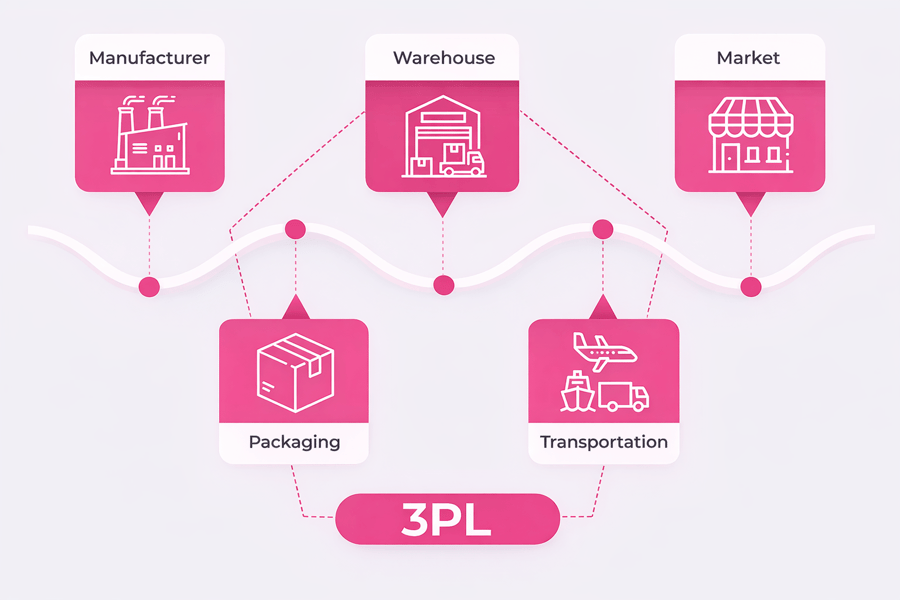
What Is Third Party Warehouse Management?
Third-party warehouse management means outsourcing daily warehouse operations to an expert partner. Instead of running your own facility, you rely on a partner. They receive, store, pick, pack, and ship your products. As a result, you scale faster without adding space, labor, or equipment.
In practice, it combines people, process, and technology at its site. Partners follow your rules for handling, packing, and service levels. In addition, results get tracked so you can improve over time. Issues get flagged before reaching your buyers.
How does it work day to day?
First, you send stock to the facility, and the team checks it in, counts it, and labels it. Then they store items by demand rate, size, and handling needs. Pickers move fast and make fewer errors as a result. Layouts are built around your products, not a generic template.
When orders arrive, fulfillment starts right away. Pickers take items, pack them to your standards, and print labels. Good partners handle issues like bad addresses and split shipments without needing your team for each case. As a result, your ops team stays focused.
What systems do you need for third-party warehouse management?
A reliable 3PL system connects your store, platforms, and ERP. It shares order details, stock data, and tracking. All in near real time. Support teams can answer buyer questions without guessing. Ops teams also see what is happening on the floor. Hours are saved each week.
- 3PL stock is received, counted, and updated as it moves through the facility
- Orders flow in, get ranked by priority, and move through pick-pack-ship steps
- Reports highlight accuracy, on-time shipping, and cost per order
- 3PL warehousing management also covers kitting, lot control, and returns when needed
Third-party warehouse management gives you a model that holds up. Growth and spikes are not a problem. In addition, it works well when paired with order fulfillment software that ties orders, stock, and updates into one view.
How Third-Party Order Fulfillment Works
Third-party order fulfillment follows a clear workflow. It turns inbound stock into fast, right shipments. When each step is right, errors drop and speed goes up. Accuracy follows. Scaling becomes easier from there.
Step 1: inbound intake and check-in
First, the 3PL books a receiving appointment and unloads your freight. The team scans cartons, counts units, and flags any damage. Goods only move on once the count is clean. As a result, you get clean data from the start. Every unit shows up right when orders come in later. Last-minute stock chases become a thing of the past.
Step 2: storage and slotting for third-party warehouse management
Next, the staff puts each SKU into a storage bin based on size and demand rate. Good slotting cuts picker travel time. Errors drop too. In addition, tighter stock control across bins and zones is supported. Both help a lot. Volume growth becomes easier.
Step 3: order import and wave planning
Then orders flow in from your store, marketplace, or ERP through the 3PL system. The team groups orders into waves to keep labor lean. Time between pick and ship drops.
Step 4: pick, pack, and ship
Pickers follow scan tasks and packers confirm items, add inserts, and choose the right box. The team shops carriers, prints labels, and closes shipments. Strong 3PL ops deliver consistent service levels. Buyers notice it, and it protects your brand.
- Picking methods: single, batch, zone, or pick-to-cart
- Packing rules: brand packs, kitting, and gift notes
- Shipping controls: cut-off times, hazmat checks, and address validation
Step 5: returns and ongoing improvement
Last, the team handles returns with inspection, restock, quarantine, or disposal steps based on your rules. The best partners track errors and fix root causes. Repeat issues drop over time. For full visibility, connect fulfillment events to order management software.
3PL System Essentials for Third-Party Warehouse Management
A strong 3PL system turns third-party warehouse management into a process you can scale reliably. Sales channels get connected, orders get routed fast, and data stays clean. As a result, your team spends less time fixing issues. Sales grow.
However, not every platform supports the same workflows. Good setups match how your fulfillment actually runs. So focus on three core areas: links, automation, and clear data. Each one matters.
Links that keep data in sync
Links push orders, shipping preferences, and customer details to the facility in real time. They also pull back tracking, stock data, and issues. No manual exports needed. That is the base of reliable third-party warehouse management.
- Shop and marketplace connectors to prevent order delays
- Carrier tools for rate shopping, label creation, and tracking events
- Returns and support tools to reduce “where is my order” tickets
Automation that speeds up ops
Automation reduces manual touches per order and boosts consistency across high-volume periods. For example, rules can split orders by region, flag bad address data, and pick the best carrier. So your 3PL stays fast and right at peak volume. Manual work goes down as volume goes up. In short, automation is worth it.
- Auto-waves and pick path logic to cut floor travel time
- Scan-based packing steps that reduce mis-shipments and wrong labels
- Alerts for back orders, stock holds, and inventory mismatches
A clear view: third-party warehouse management
Clear dashboards for order status, labor, and service levels are a must for managing a 3PL relationship well. You also need stock views by SKU, lot, and bin. Planning demand gets easier. Stockouts get rarer. Better restock decisions follow naturally in your order management system when your data is clean.
3PL Inventory Management in Third-Party Warehouse Management
Stock problems scale fast when volume grows. Lost sales, poor ratings, and margin leaks. All hard to track. Inventory must be a live system for this reason, not a static spreadsheet. With the right setup, margins are protected. Back orders drop. Buyers stay informed.
Accuracy starts with disciplined intake and counting
Accurate stock begins at the dock. A good partner guides intake with barcode scans, lot tracking, and clear rules. Each unit lands in the right bin. Items show up correctly when orders come in. Your team does not chase missing stock.
Cycle counts keep records honest without stopping ops. Fast-moving SKUs need counting often. Investigate gaps right away. That way, you avoid surprise stockouts and last-minute splits. Both hurt service and margins.
Restock that stops stockouts
Restock works best on simple, rule-based triggers. Your partner should set min/max levels, safe-stock, and reorder points. That keeps pick faces full and pack teams moving. A good setup also flags aging stock and slow movers. You can act before they hurt cash flow.
Restock also depends on clean lead times and good inbound schedules. A mature 3PL flags risky SKUs early. Rush orders or swaps get suggested before a stockout hits. Proactive support like this is a key win when scaling fast. However, it only works with clean lead time data.
Multi-location control and full sight
When you store inventory in more than one building, accuracy can slip quickly if processes are not tight. A good process assigns each SKU to a set bin. Transfers get tracked with scan checks. Double-selling is prevented, too. Order rules also route orders to the best node by stock and speed.
- Real-time stock by SKU, lot, and bin
- Transfer workflows with scan verification at every handoff
- Rules that protect top-rank orders from stockouts
- Dashboards that flag aged stock and slow-moving SKUs early
- Alerts when stock drops below safe-stock levels
When these controls work together, you know what you can sell today and what to reorder next. That is key for multi-channel inventory management that scales without constant firefighting.
Third-Party Warehouse Management vs In-House Operations
Choosing between third-party warehouse management and in-house changes costs, speed, and daily risk. In many cases, a 3PL helps you scale faster. You rent instead of building. However, in-house ops feel simpler when volume is steady.
Cost: fixed costs vs flexible spend
In-house ops has two models. In-house fulfillment has fixed costs: rent, gear, insurance, and full-time staff. Slow months cost nearly the same as busy ones. Margins get squeezed. So slow months require careful planning.
With a 3PL, you pay for storage, picks, and shipping. Costs track sales. A good 3PL spreads labor across many brands. Cost per order drops. That said, fees grow with complex catalogs. Fees grow with complex catalogs. Model costs on your real data, not averages.
Speed: staffing, cut-offs, and network reach
Speed depends on process, geography, and how close you are to your buyers. A modern 3PL routes orders fast. Labels get printed to spec. Tracking updates are pushed automatically. Ship times improve when the 3PL has multiple sites and later cut-offs.
In-house teams move fast, especially when ops sit near your product team. But hiring for peak takes time. Errors rise when you rush. Small in-house teams struggle to plan for it.
Risk: control, accuracy, and what you own
In-house gives direct oversight. However, you own each failure. From safety issues to carrier delays. With a 3PL, however, risk is shared through SLAs and audits. Keeping data clean falls on your team.
- Ask how they protect stock counts with cycle counts and exception handling
- Confirm how 3rd party warehouse management handles recalls, lot codes, and returns
- Review reporting so you can spot issues before they affect buyers
The right choice depends on growth rate, SKU count, and control needs. If you go with 3PL, align on costs and accuracy targets. Also, connect dashboards to the inventory software for the warehouse.
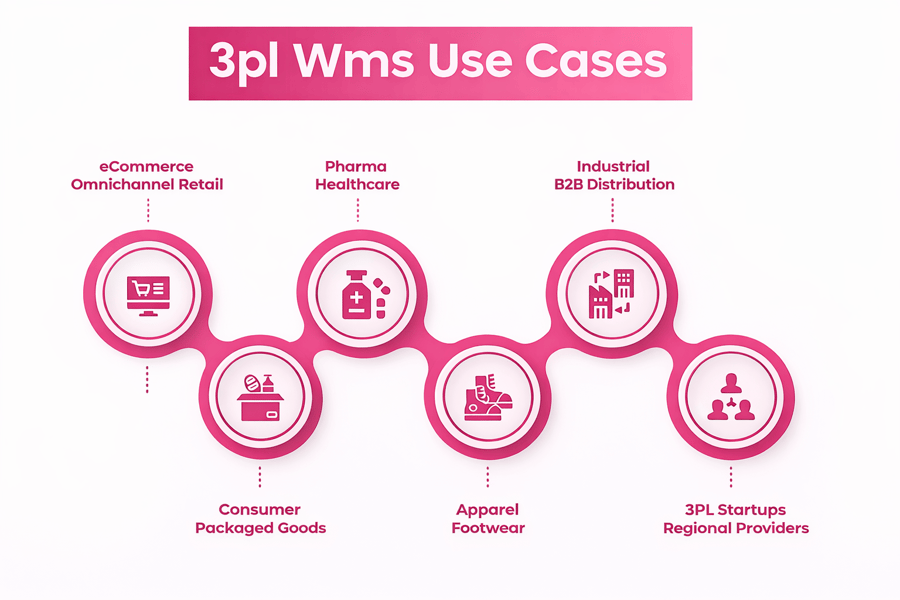
3PL Warehousing Management for Ecommerce, B2B, and Omnichannel
Third-party warehouse management works differently based on how you sell. Each model has its own needs. So the best partners adapt their process accordingly. Ecommerce needs speed and flex. However, B2B demands strict accuracy and set slots. Omnichannel adds one more layer. As a result, stock and orders must stay in sync. Every channel depends on it. Good partners tailor their process to your model, not just their storage.
Ecommerce: fast picks, fast ship, and easy returns
In ecommerce, fulfillment succeeds when ops move fast and stay on target. A modern 3PL system pushes orders in real time. Touches per order drop. Labels get printed to spec. Smart slotting and batch picking also help handle volume spikes without chaos.
Returns matter as much as outbound speed. Strong returns protect margin and buyer trust. Fast returns keep buyers loyal, too. Strong third-party warehouse management routes returns fast. Options: check, restock, or toss. Sellable units come back faster. As a result, stock records stay clean.
B2B: rules, cartons, and compliance
B2B shipping requires a different kind of control. It needs pallets, case picks, and drop-off slots that match retailer windows. With a 3PL, label rules are set before freight leaves the dock. Disputes and chargebacks drop. Payment cycles speed up, too. In addition, compliance audits become easier to pass.
Lot, serial, and due-date controls also matter more in B2B. Recall requirements and compliance audits demand them. Tight stock steps support traceability. You get the paper trail you need. Many brands choose third-party warehouse management for this control and consistency. Worth it.
Omnichannel: one inventory view across channels
Omnichannel ops balance store replenishment, marketplace orders, and direct-to-consumer shipments all at once. The right 3PL splits stock fairly. Orders get routed to the best node. Over-selling is prevented, too. Confirm all of this with warehouse inventory tracking. Aligning cut-offs and packing rules per channel keeps service high. Confirm that all of it works together.
How to Choose a 3PL for Third-Party Warehouse Management
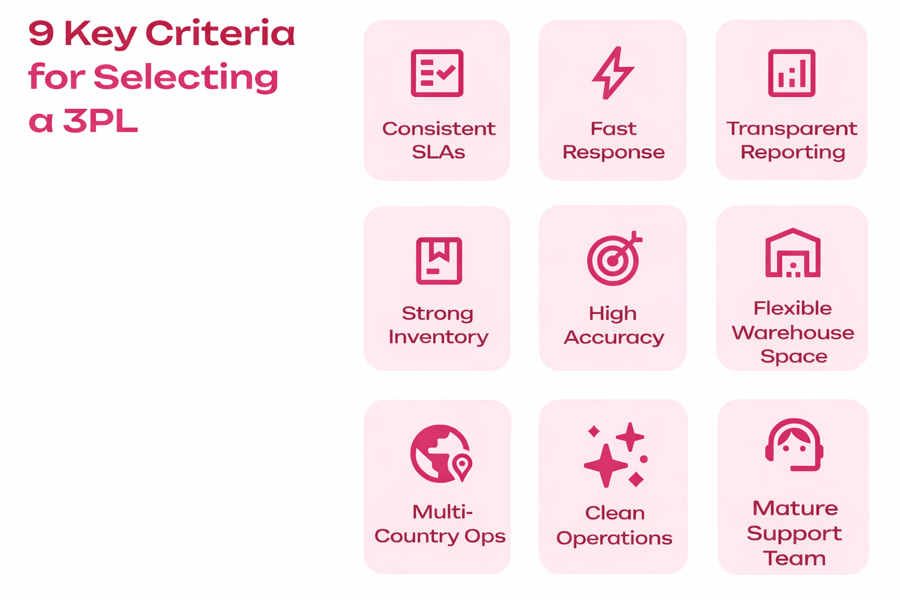
Choosing the right partner helps you scale and stay in control. Not every 3PL fits your products and service promise. Start with clear requirements and compare each provider against the same scorecard.
What matters day to day
Confirm the site can handle your SKU count and peak orders. Ask about kitting, returns, and lot control, too. These show how mature their ops are. Ops maturity matters a lot. So do not skip this step. A strong 3PL should connect to your store, ERP, and carriers. Your team then sees the same data.
- Location and shipping zones to reduce transit time and cost
- Intake speed, putaway process, and storage layout options
- Pick methods, packing standards, and how errors are prevented
- Experience with your mix and third-party fulfillment rules
- Controls for inventory, including cycle counts, holds, and audits
SLAs to lock in results
Turn service expectations into SLAs that protect your buyers. For example, define same-day cut-offs, accuracy targets, and turnaround times. That way, issues get caught early. Costs stay low.
- Order accuracy rate, on-time ship rate, and back order handling
- Dock-to-stock time and ASN compliance rules
- Returns processing time and disposition outcome rules
- Support response times and escalation paths
- Reporting cadence for key 3PL KPIs
Before you sign
Before you sign, check what the sales team promised. Tour the facility. Meet the ops manager and review their peak staffing plan. Also, ask for references from clients with a similar SKU mix. Request a sample report from their tools.
When comparing pricing, include all extras and setup fees to avoid shocks after go-live. You end up choosing a partner that grows with you and keeps service stable, with solid inventory tracking from day one.
Third-Party Warehouse Management: Implementation and Onboarding
A smooth launch starts with a clear plan. Align on scope and owners. Write down how orders should flow. That way, nothing falls through the gaps.
Prepare clean data for third-party warehouse management
Messy data stalls your launch before it starts. Standardize SKUs, barcodes, and case packs before you send files. Also, confirm the lot and due-date rules if your products need them.
- Item master: dimensions, weights, hazmat flags, and storage needs
- Packing specs: inner packs, cartons, pallets, and labeling standards
- Routing: carrier accounts, service levels, and cut-off times
- Returns: outcome rules, grading criteria, and restock steps
Connect systems and map workflows
Set up data links. Information then flows without manual work. Your 3PL should connect to your store, ERP, and shipping tools. Orders flow without manual work. From day one, smooth data flow is the goal. So set up your links before go-live. Also, define how stock feeds update when split by channel. Map the real workflow on site. Cover intake, picking, packing, and shipping. Scans and pack rules get configured to match your ops.
Test, train, and go live with confidence
Testing cuts surprises at go-live. Run sample receipts, transfer orders, and a full day of shipments. Do not stop at clean-path tests. Also test back orders and bad address data. Those break ops in real life. Plan a phased go-live with clear targets. Do daily check-ins. Keep a short contact list. When data and SLAs match, scaling with automated fulfillment is straightforward.
Conclusion
Third-party warehouse management helps you scale without the fixed costs of running your own facility. Instead of chasing space and staff, you focus on demand. Buyer service stays strong. As a result, you gain speed and operational control at the same time. Hard to achieve in-house.
By now, you have a full picture of how 3rd party warehouse management works. It is a lot to take in. But the steps are clear. We walked the full workflow from intake to returns. Tech and process keep ops on track. Use it to review your process and spot gaps.
What to focus on as you move forward
Tech and process control matter as much as location. A strong 3PL gives you clean data and reliable links. Clean data and reliable links are the foundation. Everything else builds on top. Additionally, tight stock controls cut stockouts and oversells. Margins stay strong. In addition, service levels hold up even during peak periods.
- Choose partners with clear SLAs, measurable accuracy targets, and fast issue resolution
- Confirm the 3PL warehouse management stack supports your channels, carriers, and reporting needs
- Validate receiving processes, cycle counts, and restock rules to protect stock counts
- Plan launch with thorough testing, a clean cutover, and a go-live checklist for stable ops
Last, treat the 3PL as an ongoing partner. Treat them as an ongoing partner, not a one-time vendor. Review performance weekly. Share forecasts ahead of peak. Adjust before volume spikes. As a result, service levels stay high as you grow. Your 3PL is a real edge, not just a cost center.
For a deeper look at tools and best practices, explore our guide to ecommerce warehouse management.
Frequently Asked Questions
What is third-party warehouse management?
Third-party warehouse management is when a business outsources warehousing operations—receiving, storage, picking, packing, and shipping—to a specialized provider. A 3pl warehouse runs the day-to-day processes, often using a 3pl system for tracking and reporting. This helps companies scale faster, reduce fixed facility costs, and improve shipping speed without building their own warehouse.
How does third-party warehouse management differ from a traditional warehouse?
In a traditional warehouse, you own or lease the facility and manage labor, equipment, and systems. With third-party warehouse management, the provider supplies the space, staff, and technology, and you pay based on usage. This model supports flexible capacity, faster onboarding, and access to established best practices in 3pl warehouse management.
What services are included in third-party order fulfillment?
Third-party order fulfillment typically includes inbound receiving, put-away, storage, picking, packing, shipping, returns processing, and customer-specific labeling or kitting. Many providers also offer value-added services like quality checks and custom packaging. Using 3pl warehousing management, businesses can standardize workflows and improve accuracy while meeting delivery expectations across multiple channels.
What technology should a 3PL use for effective warehouse operations?
A reliable 3pl system should provide real-time inventory visibility, barcode scanning, order routing, and reporting on accuracy and labor productivity. Look for integrations with your ecommerce platform, ERP, and carriers. Strong 3pl inventory features—like lot/serial tracking, expiration management, and cycle counting—help reduce stockouts, shrinkage, and fulfillment errors.
How do you choose the right 3PL warehouse for your business?
Evaluate location, shipping zones, service levels, and experience with your product type. Confirm the provider’s 3rd party warehouse management processes, including SLAs, quality control, and returns handling. Ask about peak-season capacity, onboarding timelines, and integration support. Transparent pricing and clear reporting are essential for managing costs and performance over time.
What are the main benefits of 3PL warehouse management?
3pl warehouse management can lower overhead, shorten delivery times through better distribution, and improve order accuracy with standardized processes. It also provides scalable space and labor during promotions or seasonal spikes. With professional 3pl inventory controls and consistent fulfillment workflows, businesses gain better visibility, fewer shipping issues, and more time to focus on sales and product growth.