
Ecommerce management: how to run, optimize, and scale your online store
 Fiftify Team
·
· 14 min read
Fiftify Team
·
· 14 min read

What ecommerce management means (and how it differs from ecommerce and management)
Ecommerce management is the day-to-day work of running an online store, so it stays clean, fast, and strong. It covers your products, pricing, inventory, orders, buyer support, marketing, and reports. Put simply, it turns strategy into action and helps you optimize daily operations. As a result, your store can grow without chaos.
People also use the phrase ecommerce and management. But it often sounds broader and more academic. It can refer to business management principles applied to online selling. But ecommerce management usually points to simple store ops. This guide focuses on what you can do to improve each week and optimize performance over time.
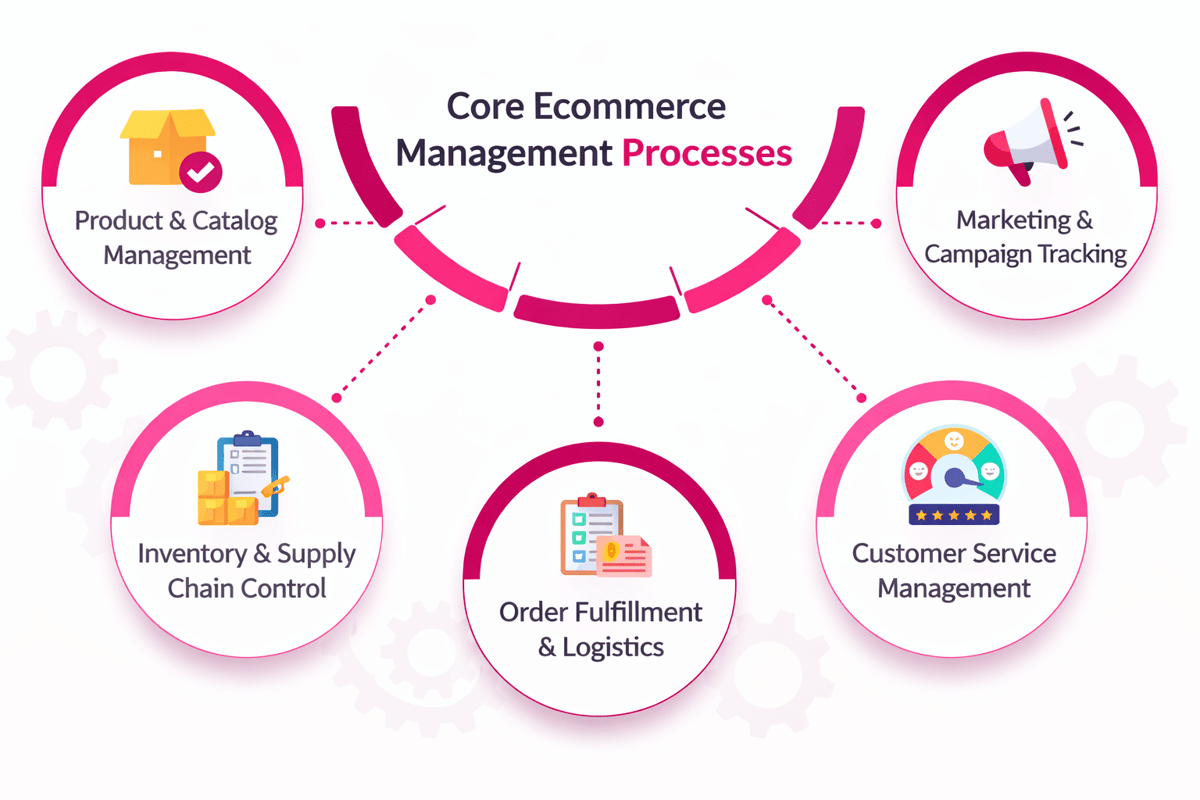
Core ecommerce website management tasks: catalog, pricing, inventory, and merchandising
Strong ecommerce management starts with the basics. If you control your catalog, pricing, and inventory. Merchandising, you control the buyer’s result. As a result, you reduce errors and protect margins. Sell more with less effort.
Catalog management: build trust and help shoppers decide
Your product catalog is your storefront. Good ecommerce website management keeps product pages clean, steady, and easy to scan. Clean data also makes search, filters, and ads work better.
Write clear titles and benefit-led descriptions that match how people search. Use steady attributes (size, color, material) to improve filtering and SEO. Add strong photos, alt text, and simple FAQs to reduce pre-purchase doubts. Group products with smart categories and collections to support merchandising. This speeds up the search.
Pricing: protect margin while staying strong
Pricing is not “set it and forget it.” In electronic commerce management, you review costs and rival moves. Demand signals, then adjust quickly. Early discounts get avoided, and the store stays relevant. Margins hold.
For a structured approach, see Ecommerce Management 101. It connects pricing rules to goals like profit, growth, or clearance. Profit, growth, and clearance are all covered. Then, document who can change prices and how often. The team can then manage ecommerce website updates. No chaos.
Inventory ecommerce management: prevent oversells and stockouts
Inventory clean counts keep buyers happy and support tickets low. For ecommerce store management, sync stock across your store and marketplaces. Warehouses, and set reorder points. But don’t rely on gut feel. Use sales rate and seasonality.
Track available, reserved, and inbound stock separately. Set low-stock alerts and back-in-stock alerts. Audit top sellers weekly and slow movers monthly. Gaps show up fast.
Merchandising: guide shoppers to the right products
Merchandising turns traffic into revenue. In ecommerce and management, you use sorting rules and bundles. On-site promotions to shape what people see first. Average order value rises, and top items move faster.
Create a simple weekly routine. Refresh homepage features and rotate collection banners. Review search terms that return poor results. If the team feels stretched, ecommerce management services help. Catalog cleanup, pricing audits, and tests are covered. But clear rules, reports, and reliable order management software are still needed.
Connect Shopify, draw your floor, pick an order - free plan, 7-day full trial, no credit card, no sales call.
How to manage an ecommerce site daily: orders, shipping, returns, and support
Daily ecommerce management keeps cash flow steady. Buyers stay happy too. Good ecommerce website ops reduce mistakes. Delivery speeds up, too. As a result, you protect your reviews and improve repeat purchases.
Process orders fast and accurately
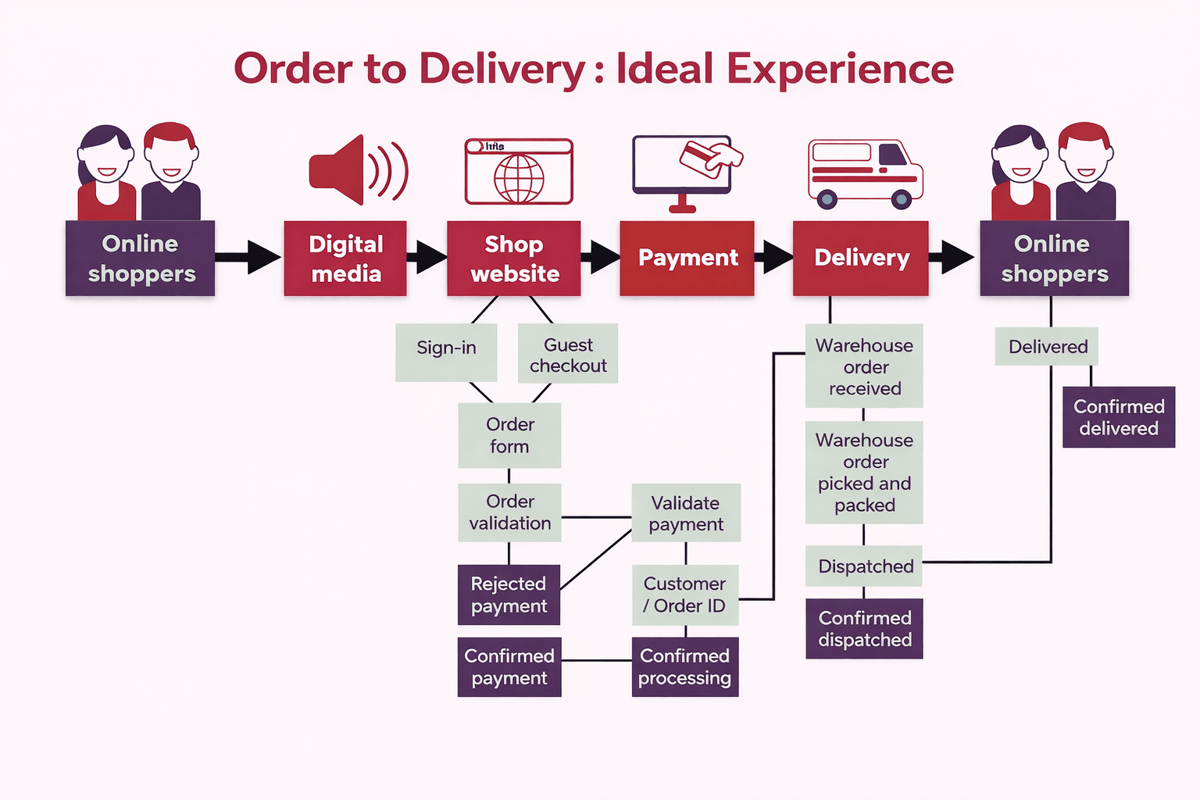
Start each day by reviewing new orders, payment status, and fraud flags. Then confirm inventory, pick items, and pack with a checklist. Also, send confirmations and tracking emails right away. That cuts “Where is my order?” tickets.
Verify address details and contact info before you print labels. Batch pick and pack to reduce walking time and mis-picks. Use clear status tags so your team sees what needs action.
Run shipping like a system
Shipping works best with set carriers, packing rules, and cutoff times. Ecommerce website management becomes steadier, even during peak weeks. Selling on marketplaces? Align handling times across channels, including Business Selling on eBay. For stock that sells on eBay and other channels at once, see our guide to eBay stock management software.
Make returns simple, but controlled with ecommerce management
A clear returns policy supports ecommerce store management. It also avoids abuse. Set rules for return windows, condition checks, and refund timing. When items come back, inspect them fast. Restock or write them off the same day. Speed cuts costs.
Deliver support that reduces future tickets
Support is a core part of electronic commerce management. It protects trust. Templates work well for common issues. Tailor the first two lines. Speed builds trust. But track the top contact reasons. Fix the root cause in product pages, shipping options, and checkout.
Define daily owners for orders, shipping, returns, and support. This holds for both in-house teams and ecommerce management services. Then record workflows so new staff can follow them without guesswork. That is essential for managing an ecommerce site as you grow. Finally, connect statuses and alerts. Inventory updates in one place with an order management system.
How to manage ecommerce website performance: speed, UX, SEO, and conversion
Strong ecommerce management depends on results. If your site feels slow or confusing, shoppers leave fast. A simple plan is needed. It covers how to measure, fix, and improve key pages.
Speed: make each page load fast with ecommerce management
To manage ecommerce website speed, start with your biggest traffic pages: home, category, product, and checkout. Next, compress photos, remove unused apps, and limit heavy scripts. Also, use caching and a CDN. Both cut load time for shoppers in each region.
Track Core Web Vitals and page load time weekly. Keep product photos sharp but lightweight. Test checkout speed on mobile data, not just Wi‑Fi. Slow loads lose sales.
UX: remove friction on mobile and checkout
Good ecommerce website management focuses on clarity. Use clear menus, strong search, and filters that match how people shop. But avoid endless pop-ups and long forms because they break momentum.
Review your product pages like a buyer. Add clear shipping costs and shipping times. Returns info near the buy button. As a result, shoppers feel confident and complete the purchase. Less friction means more sales.
SEO: earn traffic with a clean structure
Electronic commerce management includes SEO basics that many teams skip. Use one primary keyword per page, and write unique titles. Keep URLs short and readable. Search engines can then understand the catalog and rank it more often.
Build internal links between categories and top products to support ecommerce store management. Fix broken links, add product schema, and keep your sitemap updated. Ecommerce marketing works best when SEO brings steady, high-intent visitors to your store.
Conversion: test, measure, and improve
To manage an ecommerce site for growth, treat conversion rate as a daily metric. Run A/B tests on headlines, photos, and calls to action. Also, improve trust with reviews, clear policies, and secure payment badges.
Reduce checkout steps and offer guest checkout. Show stock status and shipping estimates early. Buyers act fast. Use analytics to spot drop-offs by device and page.
Align results with your ecommerce and management goals. This holds whether you run it in-house or use ecommerce management services. When these areas improve together, the team spends less time fixing problems. More time goes to scaling with multi-channel inventory management.
Electronic commerce management for marketing: email, paid ads, social, and retention
Strong ecommerce management ties marketing to revenue, not just traffic. With electronic commerce management, you plan campaigns around margins, stock, and buyer intent. As a result, you spend less on guesswork and more on what converts.
Email marketing that drives repeat sales
Email remains one of the fastest ways to improve retention. Start with welcome, browse-abandon, and post-purchase flows, and then add weekly promos. Segment by category interest, average order value, and purchase frequency.
Send a 3-email welcome series with your best sellers and social proof. Recover carts with a reminder, a benefit-focused email. Then, a time-bound offer. Use post-purchase emails to upsell accessories and request reviews. Both lift values.
Paid ads with clean testing and clear goals
Paid ads work when you control the inputs and measure the outputs. In ecommerce website management, set one goal per campaign. New buyers or profit on a top category both work. But keep tests simple: one audience change or one creative change at a time.
To manage an ecommerce website, spend wisely, watch contribution margin, not only ROAS. Exclude low-margin products from cold traffic. Focus on high-intent search terms. That way, the budget supports growth instead of chasing vanity metrics.
Social content that supports conversion
Social builds demand, but it must connect to the store. Use short videos, buyer stories, and “how to use it” posts that match your product pages. This approach aligns ecommerce and management across channels.
Pin top offers and best sellers to your profile and highlights. Reuse review screenshots and UGC on product pages and ads. Link to focused landing pages, not the homepage. Keep it tight.
Retention systems for long-term growth
Retention improves when you remove friction and add value. Build loyalty perks and referral rewards. Replenishment reminders, and then track cohort repeat rates. Running ecommerce store management across multiple channels? Consistent messaging matters. Buyers recognize the brand fast.
If the team feels stretched, ecommerce management services can run campaigns. Strategy stays in-house. Still, write down your playbooks. Each person knows how to manage an ecommerce site during launches and peak seasons. Finally, connect marketing calendars to inventory tracking.

Ecommerce store management tools and automations: CRM, ERP, OMS, and analytics
Smart tools turn busywork into steady processes. In ecommerce management, automations help you move faster without losing control. Also, they reduce human error. That protects your margins and your buyer results.
To manage ecommerce website ops at scale, start by mapping your workflow. Then choose tools that connect data across marketing, inventory, orders, and support. The team spends less time switching tabs. More time goes to improving results.
CRM: keep buyer data useful in ecommerce management
A CRM stores buyer profiles, order history, and contacts in one place. Support agents solve issues faster. Marketers tailor offers. Both win. It is a simple win for ecommerce website management. Retention improves, and ticket volume drops.
Segment buyers by purchase behavior and lifetime value. Trigger emails for abandoned carts, replenishment, and win-back flows. Log support notes so each agent stays on the same page. No repeat asks.
ERP: align inventory, finance, and purchasing
An ERP connects stock levels, purchase orders, and accounting. But it only helps if your product data stays clean and steady. In electronic commerce management, an ERP often becomes the single source of truth. Costs and inventory stay aligned.
This is where ecommerce and management meet real-world ops. When the ERP syncs with your store, reordering on time gets easier. Cash flow forecasts improve, too. Stockouts drop. Overbuying stops, too.
OMS: control orders from checkout to shipping
An order management system (OMS) routes orders to the right warehouse, store, or 3PL. It also manages split shipments, backorders, and cancellations. Learning how to manage an ecommerce site well? An OMS gives clear rules and fewer exceptions.
Automate fraud checks, address validation, and shipping method selection. Set rules by SKU, location, margin, or shipping promise. Centralize returns so refunds and restocks stay clean. Counts stay right.
Analytics: measure what matters and act fast
Analytics tools show what drives revenue and what blocks conversions. Track product results, funnel drop-offs, and repeat purchase rates. For ecommerce store management, dashboards help you spot issues early and test gains weekly.
Finally, review your stack each quarter and remove tools you do not use. If you hire ecommerce management services, ask how they handle integrations and reports. Ownership of your data. Write down your automations too. The team can then maintain them and scale with order fulfillment software.
Ecommerce management services vs in-house ecommerce website management: costs and tradeoffs
Choosing between ecommerce management services and an internal team changes your budget, speed, and control. First, define what you need to run day to day. Then match that need to the right mix of people, tools, and process.
What you get with ecommerce management services
ecommerce management services can plug gaps fast, especially when you need expert help for growth. Design, SEO, ads, or full ecommerce website management can all be outsourced. As a result, you often launch gains sooner than a small team can.
But service fees add up. Urgent requests may cost extra. Plan ahead. Their schedule sets the pace, so priorities can shift. Set clear goals, response times, and control rules before signing.
What you get with an in-house team
In-house teams give you tighter control over your brand and data. They learn your products and buyers. That helps ecommerce store management stay steady. Also, they can align work across support and ops. Marketing without long handoffs.
So, you pay more fixed costs like salaries, benefits, and training. Hiring also takes time, and turnover can stall progress. To manage an e-commerce website that changes weekly, enough coverage is needed. Bottlenecks slow the whole team down.
Cost drivers to compare
Scope: full electronic commerce management vs one channel like paid ads. Speed: project timelines, approvals, and turnaround time Quality: senior expertise, testing, and docs Risk: security, access control, and vendor dependency
A hybrid model often works best for e-commerce and management at scale. Keep core strategy, data, and buyer results in-house. Outsource specialized work during peaks. Deciding how to manage an ecommerce site long-term? Choose the approach that supports clear control and stable costs. Steady systems, then reinforce them with ecommerce automation tools.
Conclusion
Strong ecommerce management turns a busy store into a steady, scalable business. The catalog stays clean, pricing stays steady, and inventory stays clean. As a result, buyers find what they need and trust what they see.
Day to day, you also protect the experience after checkout. Fast shipping, careful returns, and clear, responsive support requests. Refunds drop. Reviews improve. Repeat buyers grow.
Performance matters just as much. When you improve speed, UX, and SEO. Conversion, you make each marketing dollar work harder. Analytics help spot issues early. Fix them before they hurt revenue.
Your next steps
If you want a simple plan, start with the basics and build momentum. Start by documenting how to manage an ecommerce site. Use checklists for orders, stock, and support. Next, tighten ecommerce website management by setting owners for content, promotions, and site health.
Audit your product data and merchandising for better ecommerce store management. Review your workflows to manage e-commerce website tasks faster and with fewer errors. Choose tools that fit the team. They should support electronic commerce management across sales, ops, and reports. Decide when to hire help. Ecommerce management services speed up growth when time is tight.
Treat ecommerce and management as an ongoing practice. It is not a one-time project. Track results, test gains, and standardize what works. If fulfillment is the next bottleneck, explore ecommerce warehouse management. Scaling shipping without losing clean counts is the goal.
 Google AI
  OpenAI ChatGPT
 Frequently Asked Questions
How to manage an ecommerce site?
Start with clear goals for traffic, conversion, and retention. Use ecommerce management to coordinate product catalog updates, pricing, promotions, customer support, and analytics. Set weekly checks for site speed, checkout performance, and stock accuracy. Create standard processes for content updates and order handling to keep ecommerce store management consistent as you scale.
How to manage page backups in an ecommerce platform?
Schedule automatic backups for your database, theme files, and media assets, and store copies in a secure off-site location. Test restores regularly on a staging environment to confirm backup integrity. Keep versioned backups before major changes like theme updates or app installs. This approach supports reliable ecommerce website management and reduces downtime risk.
What does an ecommerce manager do?
An ecommerce manager oversees online sales performance and daily operations. Responsibilities often include merchandising, campaign planning, conversion rate optimization, product data quality, and coordinating with marketing, IT, and fulfillment teams. They monitor KPIs such as revenue, margin, and cart abandonment, ensuring ecommerce and management decisions align with customer experience and business goals.
How do ecommerce returns management services streamline customer returns?
Ecommerce returns management services simplify returns with self-serve portals, prepaid labels, and clear status updates. They can automate approvals, route items to the right warehouse, and trigger refunds or exchanges faster. This reduces support tickets, improves customer satisfaction, and helps recover value through restocking rules and resale workflows within electronic commerce management.
How do I choose an ecommerce content management system?
Choose a CMS based on your product complexity, content needs, and team skills. Evaluate ease of editing, SEO controls, integrations, security, and scalability. Confirm it supports multichannel publishing and a reliable checkout experience. A good CMS makes it easier to manage ecommerce website content without slowing development or creating operational bottlenecks.
What agencies help with multi-marketplace ecommerce management?
Specialized agencies provide ecommerce management across marketplaces like Amazon, eBay, Walmart, and regional platforms. Look for partners that handle listing optimization, advertising, pricing rules, inventory syncing, and compliance. Strong ecommerce management services also offer reporting, brand protection, and operational support so you can expand into new markets with fewer errors.
Sync inventory in real time, manage orders, and run warehouse operations across Amazon, eBay, Etsy, Shopify, and other sales channels. From barcode scanning to organized storage and faster fulfillment, Fiftify helps reduce errors, prevent overselling, and support business growth. Explore our articles for insights on warehouse management, inventory control, and multichannel operations.
You may also like

How to choose an ecommerce marketplace service provider for scalable growth
Learn how an ecommerce marketplace service provider helps businesses launch, manage, and scale a profitable ecommerce marketplace. Platform choices, vendor operations, software tools, management services, costs, and practical selection tips.

Ecommerce software solutions: features, costs and how to choose
Learn how to evaluate ecommerce software solutions for online stores, marketplaces, and retail teams. Essential features, vendor comparisons, implementation tips, and practical ways to choose software that supports growth, operations, and customer experience.

Multi-carrier shipping software: features and how to compare options
How multi carrier shipping software compares rates, prints labels, tracks orders and handles returns, and which features to check before you choose one for your store.