A strong warehouse rarely happens by chance. Warehouse layout planning shapes how goods move, where labor time goes, and how fast orders leave the dock. When the warehouse layout fits the operation, travel drops and congestion ease. Teams pick faster, forklifts cross paths less often, and inventory is easier to find during busy periods.
Poor flow creates costs that hide in daily work. Extra touches, blocked aisles, and long walks can drain hours from each shift and raise the risk of errors, damage, and missed ship dates.
- Good warehouse layout design balances speed, safety, and room for growth. It considers aisle width, slotting logic, dock access, equipment movement, and the best use of floor and vertical space.
- Warehouse layout planning also supports better decisions before capital spending begins. It helps operators judge whether a new rack system, added automation, or a different warehouse layout pattern will solve the real problem.
- Warehouse planning works best when it reflects actual demand, order profiles, and replenishment cycles. A layout built around real volume data can cut travel distance, reduce rehandling, and create steadier labor output.
- Warehouse layout optimization is not only about fitting more inventory into the building. The stronger goal is a design for warehouse flow that keeps product moving with fewer delays and fewer avoidable touches.
As operations grow, small layout flaws become expensive. Warehouse layout planning gives businesses a practical way to build an efficient site now while leaving room for future change.
What Is Warehouse Layout Planning and Why Does It Matter
Warehouse layout planning defines how space, people, equipment, and inventory work together inside a building. It shapes where goods enter, where they are stored, and how they move through to packing and shipping. A strong plan turns a building into a system that supports speed, accuracy, and safe daily work.
At its core, warehouse layout planning connects physical space to daily demand. It aligns storage zones with order volume, product size, and handling needs. When that link is missing, extra travel builds up. Picks get missed. Dock congestion slows receiving and shipping at the same time.
How layout affects labor costs
Warehouse planning affects labor costs as much as it affects storage capacity. When fast-moving items sit near picking and packing areas, teams walk less and complete more orders per hour. Clear aisles and logical slotting also reduce the time lost to forklift traffic and replenishment conflicts.
A well-built warehouse layout supports safety and service at the same time. Separate paths for people and equipment lower accident risk. Better staging space near receiving and shipping helps teams process loads without blocking core work areas.
How layout affects inventory accuracy
Warehouse layout design influences how easy it is to count, replenish, and find stock. Products placed in the right zones reduce search time, limit handling errors, and help records match what is actually on the floor. That accuracy matters most during audits, peak periods, and returns processing.
The value of good warehouse layout planning grows as operations change. Seasonal spikes, new product lines, and higher order counts can strain a rigid floor plan. A layout built with flexibility in mind makes future growth less disruptive and less expensive to manage.
Warehouse layout planning: Four questions that reveal layout problems
- How far does inventory travel from receiving to storage? Long paths here signal misaligned slotting or poor zone design.
- Where do pickers lose time during peak periods? Bottlenecks here usually point to aisle conflicts or pick face shortages.
- Which zones create congestion for trucks or people? Shared traffic routes between forklifts and pedestrians are a common cause.
- How much space supports growth without wasting capacity? Too little buffer space creates problems at scale. Too much waste, rent, and labor.
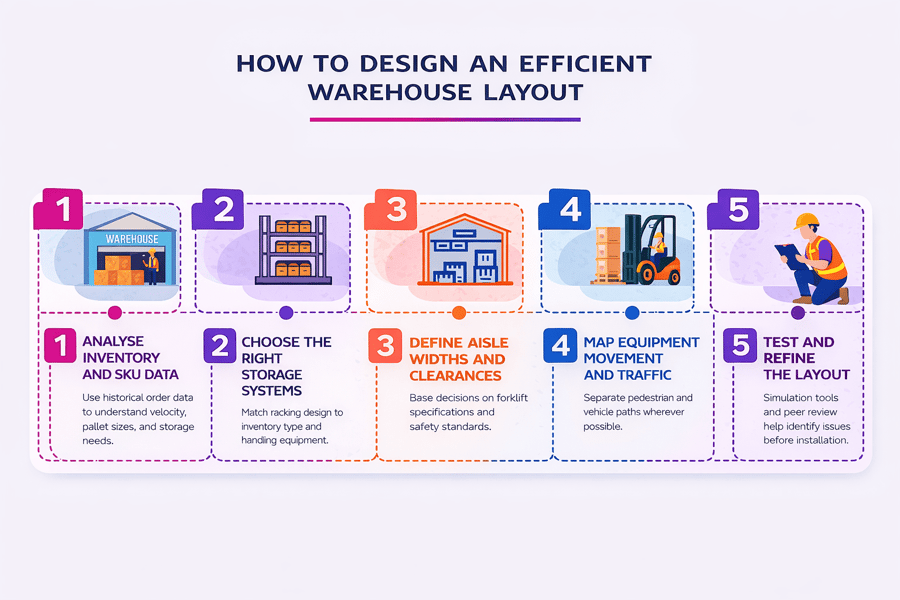
Core Principles of Warehouse Layout Design for Efficiency and Safety
Warehouse layout planning starts with flow. Goods should move in one clear direction with few crossings or backtracks. A strong warehouse layout design shortens travel time, lowers handling costs, and reduces congestion near busy zones. That single principle explains most of the difference between warehouses that work well and those that do not.
Match space to product movement
Fast-selling items belong near packing and shipping. Slower stock can sit deeper in storage. This approach to warehouse planning reflects actual demand rather than guesswork. When slotting follows velocity, pickers spend less time walking and more time completing orders.
Slotting logic also accounts for weight, size, and fragility. Heavy products need stable, easy-to-reach positions. Fragile goods need protected zones with lower foot traffic. When item placement follows those rules, teams work faster with fewer errors and less damage.
Design for safety from the start
Safety depends on clear separation between people, forklifts, and stored goods. Wide aisles, marked walkways, and clean sightlines help prevent collisions. Racking height, turning radius, and dock activity all shape a safe design for warehouse operations. These are not afterthoughts. They belong in the first draft of any layout plan.
Key safety and efficiency checkpoints for any layout include:
- Receiving and shipping areas need enough room for peak volume, not just average days.
- Pick paths should stay short and easy to follow without crossing forklift routes.
- Storage zones should support both current stock levels and seasonal swings.
- Safety signage should remain visible from all main travel routes across every shift.
Use data to guide layout decisions
Order profiles, SKU velocity, return rates, and labor travel time reveal where the current warehouse layout creates waste. That insight supports smarter warehouse layout optimization without forcing a full redesign. Many of the best improvements cost very little. They come from moving products, adjusting pick paths, or clearing one blocked area that has slowed a shift for months.
Teams that review these principles regularly find the best next moves faster. Practical warehouse optimization tips often begin with simple questions about where time and space are being lost right now.
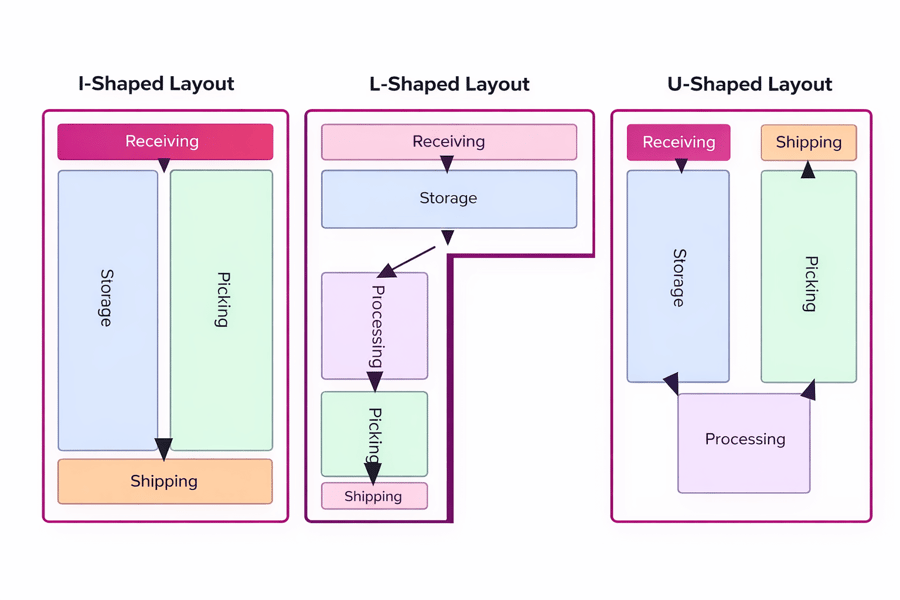
Choosing the Right Warehouse Layout Pattern for Your Operations
The right warehouse layout pattern depends on product mix, order volume, and handling methods. A layout that fits a pallet-in, pallet-out business often fails in piece-pick operations. Strong warehouse layout planning starts with how goods actually flow, not with the shape of the building.
Common layout patterns and their trade-offs
Most operations fall into a few main patterns. Each one creates different trade-offs in travel time, congestion, and storage access.
- U-shaped layout. Keeps receiving and shipping close together. Helps teams share labor and equipment across both functions. Can create dock congestion when inbound and outbound traffic peaks at the same time.
- I-shaped layout. Suits long buildings with high through traffic. Supports straight product flow from one end to the other. Long travel paths can raise labor time in piece-pick operations.
- L-shaped layout. Separates inbound and outbound activity when dock space sits on adjacent walls. Useful for sites where traffic volume differs sharply between receiving and shipping.
Good warehouse planning weighs the trade-offs of each pattern against daily demand before committing to a floor design. A pattern that looks clean on paper may create problems that only appear under real operating conditions.
Match the pattern to inventory behavior
Warehouse layout planning also needs to match how inventory actually moves. Fast-moving items belong near packing and shipping zones. Reserve stock works better in deeper storage areas with clear replenishment paths. That link between slotting and movement shapes better warehouse layout design decisions from the start.
Different operation types need different approaches:
- High-SKU operations often need shorter pick paths and flexible shelving that can be reconfigured quickly.
- Bulk storage sites usually need wider aisles and direct forklift access to every storage position.
- Cold storage layouts need tighter travel routes to limit door-open time and protect temperature zones.
- Ecommerce sites benefit from layouts that support fast picking and packing close to outbound staging.
Leave room for future change
A sound design for warehouse work accounts for future change as well as current demand. Seasonal peaks, new channels, and added automation can strain a rigid layout. Warehouse layout planning should leave room for added pick faces, staging space, and future conveyor paths from the very first draft.
Warehouse layout optimization works best when the chosen pattern is tested against real operating data. Order profiles, replenishment frequency, and dock schedules reveal where flow breaks down. Better decisions come from pairing warehouse layout planning with clear movement data from inventory software for the warehouse.
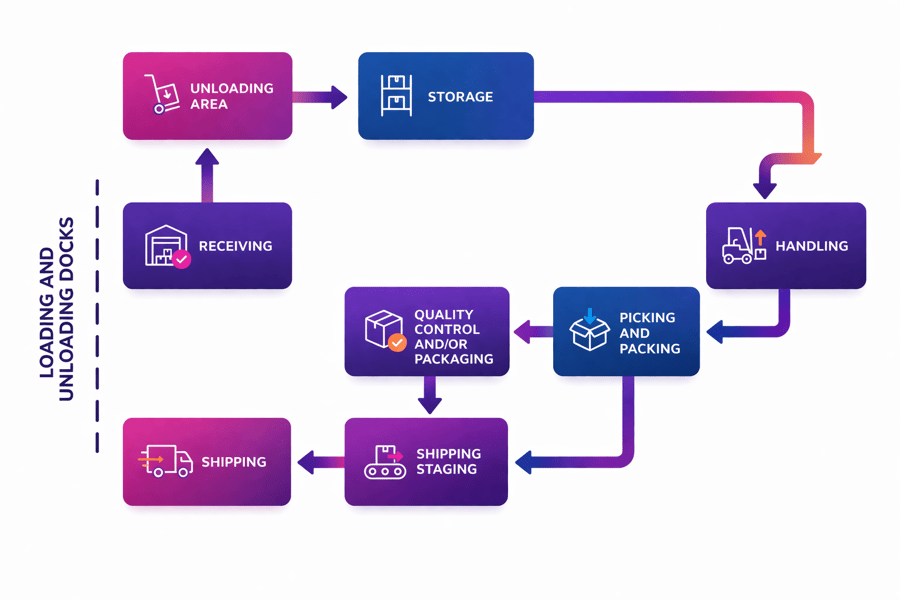
How Warehouse Planning Supports Receiving, Storage, Picking, and Shipping
Warehouse layout planning shapes how goods move from the dock to dispatch. A strong plan shortens travel paths, limits handoffs, and keeps each task in the right zone. That flow matters most in high-volume sites where small delays spread quickly across the whole shift.
Receiving
Clear staging space prevents trailers from backing up at the dock door. Teams can check, sort, and route inbound stock without blocking aisles or storage lanes. Good warehouse planning also separates returns, damaged goods, and fast-turn items before they enter the main storage zones. Each category needs its own path from the moment it arrives.
Storage
Storage works best when slotting matches demand, product size, and handling needs. Fast movers belong near the pick area. Reserve stock fits deeper in the building with clear replenishment paths. That approach aligns space with actual inventory behavior rather than filling positions based on what arrived first.
Picking
Picking speed depends on distance, visibility, and aisle logic. A poor warehouse layout pattern forces workers to cross paths and revisit the same zones repeatedly. Strong warehouse layout planning reduces that waste by grouping related items and keeping replenishment positions close to active pick faces. When the pick path is logical, workers move faster and make fewer errors.
Shipping
Shipping performance often reveals whether the full layout works. When packing stations sit too far from staging, orders wait longer and miss carrier cutoffs. Thoughtful design for warehouse flow links picking, packing, and loading into one steady sequence without unnecessary stops.
Key requirements for each operational area:
- Receiving zones need room for inspection, labeling, and short-term staging of inbound goods.
- Storage areas need slotting rules that reflect product velocity, size, and replenishment frequency.
- Picking zones need direct paths, clear signage, and minimal congestion from forklift traffic.
- Shipping areas need packing space close to docks and clearly marked outbound staging lanes.
Warehouse layout planning also supports labor balance across the day. Receiving peaks in the morning, while shipping often spikes later in the afternoon. A layout that accounts for those patterns gives supervisors cleaner control through warehouse management tools and clearer visibility into what is happening on the floor.
Warehouse Layout Optimization: Improving Space, Labor, and Inventory Flow
Warehouse layout optimization turns a workable site into a faster, lower-cost operation. The best gains often come from shorter travel paths, cleaner slotting logic, and fewer handoffs between zones. Strong warehouse layout planning connects those choices to order volume, SKU mix, and service targets.
Space use
Space improves when storage matches product behavior rather than shelf capacity. Fast movers belong near packing and shipping. Slow movers can sit deeper in reserve areas. In effective warehouse layout planning, aisle width, rack height, and replenishment paths support both density and safe movement at the same time.
Vertical space is often underused. Review cube use, not just floor space, during warehouse planning. Taller racking in reserve areas and lower shelving near pick faces can create a significant capacity gain without expanding the footprint.
Labor cost
Labor costs rise when teams walk too far or cross each other’s routes. A better warehouse layout reduces backtracking and keeps receiving, picking, and packing in a logical sequence. That flow helps supervisors balance work across shifts and cut idle time during peak periods.
Four practical steps for faster layout optimization:
- Slot high-demand items near the pick face with replenishment stock directly behind.
- Separate forklift traffic from pedestrian picking routes wherever the floor plan allows.
- Place packing stations close to outbound staging to reduce the number of touches per order.
- Review cube use alongside floor use during every warehouse planning review cycle.
Warehouse layout planning: Inventory flow
Warehouse layout design shapes how inventory flows through the building. Goods should move forward with few reversals or bottlenecks. When pallets, cases, and each-pick orders share the same travel path, congestion builds, and errors follow.
The right warehouse layout pattern makes problems visible sooner. Managers spot blocked aisles, overloaded pick zones, and poor slotting before service levels fall. Over time, better warehouse layout planning creates smoother flow, stronger labor output, and more accurate warehouse inventory tracking.
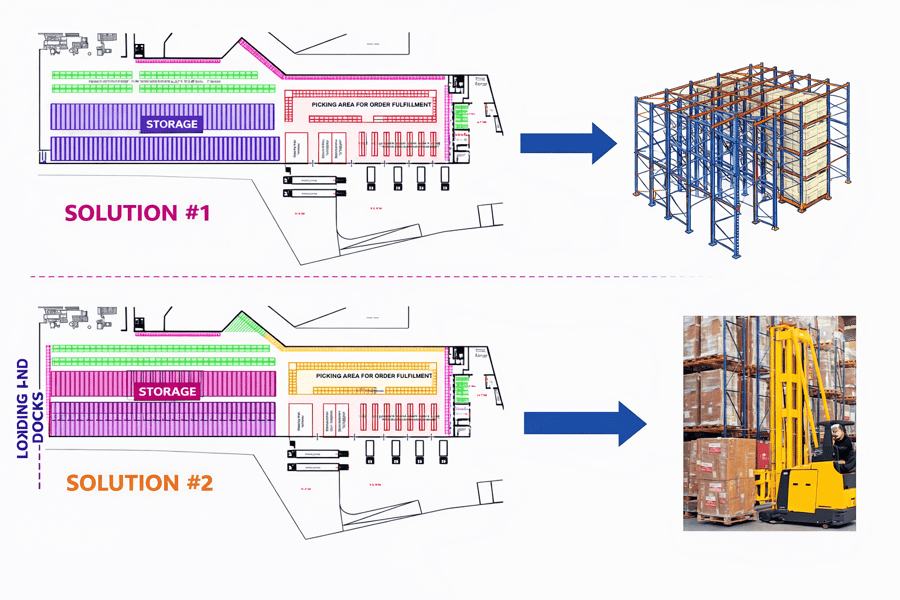
Design for Warehouse Growth: Building a Flexible and Scalable Layout
Growth changes order profiles, SKU counts, and labor needs. A rigid warehouse layout struggles when those shifts arrive. Strong warehouse layout planning accounts for future volume from the beginning, not as an afterthought once the floor is already full.
Flexible zones
Scalable space starts with zones that can expand without disrupting flow. Receiving, reserve storage, picking, packing, and staging each need room to grow. Wide main aisles, clear cross aisles, and movable rack sections create options for later. Teams can add pick faces or change storage density without rebuilding the whole operation.
A good design for warehouse growth protects travel paths above everything else. Once aisles get blocked by overflow stock, the damage to flow compounds quickly across every shift.
Flexible slotting
Warehouse layout planning works best when fast-moving and slow-moving inventory can shift easily over time. Slotting changes as demand patterns move. A flexible warehouse layout design supports those changes with modular shelving, adjustable rack heights, and open buffer areas that do not lock any zone into a single purpose.
Key features of a scalable warehouse layout:
- Modular storage systems make expansion less disruptive and faster to execute.
- Shared work zones absorb seasonal peaks more smoothly than single-purpose areas.
- Utility access in key areas supports future equipment changes without major construction.
- Extra staging space prevents shipping congestion when volume grows faster than expected.
Data-driven growth decisions
Historical order volume, SKU growth, and pick frequency reveal where pressure will build first. That insight supports warehouse layout optimization before congestion starts to slow the floor. Teams that wait until the problem is obvious usually face more expensive changes and more disruption.
Scalable design also connects space decisions with labor planning. As volume rises, managers need layouts that shorten walking time and keep supervision clear. That connection becomes stronger when layout decisions align with a warehouse labor management system that tracks output alongside floor activity.
Common Warehouse Layout Mistakes and How to Avoid Them
Most layout problems share a common root. Decisions were made one at a time rather than as a system. A rack went in to solve a space problem. A pick station was moved to fix a bottleneck. Nothing was redesigned to match the bigger picture. Over time, those individual fixes created a floor that works against itself.
Placing racks before the mapping flow
Poor warehouse layout planning often starts with storage decisions made too early. Teams place racks where they fit rather than where flow makes sense. That choice creates longer travel paths, more cross-traffic, and slower order movement. Mapping the flow of goods first, then placing storage around it, produces much better results.
Treating all inventory the same
A weak warehouse layout treats all products the same way. Fast-moving items end up far from packing stations while slow stock takes prime space near the dock. Better warehouse planning groups products by velocity, size, and handling needs. That single change often cuts pick travel time by more than any other layout adjustment.
Ignoring growth
Warehouse layout design often fails when growth is not part of the original plan. A layout that works today can break under higher SKU counts or order volumes. Smart design for warehouse operations leaves room for added storage, new equipment, and changing pick paths. Retrofitting is always more expensive than planning ahead.
Choosing the wrong layout pattern
Many sites choose the wrong warehouse layout pattern for their order profile. Wide aisles may support bulk moves, but waste space in piece-pick operations. Dense storage may raise capacity, but slow replenishment when access becomes too tight. Matching the pattern to the actual product mix and order type avoids that mismatch from the start.
Common layout mistakes seen across many warehouse types:
- Storage blocks are needed for aisles for picking and replenishment during busy periods.
- Packing stations sit too far from high-volume pick zones, adding time and touches to every order.
- Returns, staging, and replenishment compete for the same floor space without clear separation.
- Forklift routes cross pedestrian paths in busy work areas, creating both safety risks and congestion.
Scan data, travel time reports, and slotting results show where motion adds no value. That evidence supports better warehouse layout optimization without relying on guesswork. Regular review also helps the operation avoid repeating the same mistakes and supports better inventory optimization over time.
Warehouse Layout vs. Warehouse Layout Design: Key Differences for Better Decisions
Warehouse layout planning and warehouse layout design sound similar, but they serve different roles. Planning sets the operating logic. Design turns that logic into a physical arrangement of aisles, storage zones, docks, and workstations. Keeping the two distinct helps teams make better decisions at each stage.
What planning covers
The planning stage answers business questions before any lines appear on a floor map. It looks at order volume, SKU mix, replenishment speed, equipment limits, and future growth expectations. A strong warehouse planning process defines what the building must support each day. Without that foundation, even a well-drawn layout will produce the wrong result.
What design covers
Design work starts once operating needs are clearly defined. The team decides on aisle widths, rack placement, pick paths, and staging areas. That is where a warehouse layout becomes visible, measurable, and testable against real demand data.
A good drawing cannot fix weak assumptions. A site can look clean on paper and still create long travel time, dock congestion, or poor slotting logic when it runs under real conditions. Better decisions come from linking warehouse layout planning to actual demand patterns before finalizing the physical design for warehouse operations.
How the three stages connect
The three stages work best as a continuous process, not separate projects:
- Warehouse layout planning defines flow rules, capacity targets, and service needs based on real demand.
- Warehouse layout design places storage, travel paths, and work areas to support that plan.
- Warehouse layout optimization reviews the result over time and improves performance as the operation changes.
That connected process becomes even stronger when layout decisions are supported by order fulfillment software that tracks real order behavior and flags where the layout creates friction.
Practical Tips to Audit and Improve Your Current Warehouse Layout
The best audits start on the floor, not with a floor plan. Walk the building during a busy shift. Talk to pickers, forklift operators, and receiving staff. They already know where the layout creates friction. A structured audit confirms what they know and adds the data to support a fix.
Start with observation
A useful audit begins with direct observation during normal operations. Teams often discover travel waste, blocked aisles, and poor slotting during a standard shift. That makes warehouse layout planning more accurate because it reflects real movement rather than assumptions. Watch where workers slow down. Note where forklifts wait. Mark, which aisles are consistently crowded?
Add time studies for detail
Track receiving, putaway, picking, packing, and shipping activity by zone. A clear map of delays shows where the warehouse layout slows labor and where space sits underused. In many sites, a small slotting change cuts walking time faster than a full rebuild would. Time studies make that case clearly.
Check these areas in every audit
- Actual travel paths vs. intended flow. Map where workers actually walk, not where the plan assumed they would.
- Cube use, aisle clearance, and rack accessibility. Vertical space and aisle width are often the first capacity gains to find.
- SKU velocity and slotting accuracy. Fast movers should be closest to packing. Audit whether they actually are.
- Staging area behavior during peaks. Check whether staging expands into aisles when volume rises.
Use digital tools to test changes
Digital modeling helps test changes before crews move racks or signage. Many operators use Warehouse Design Software to compare aisle widths, slotting plans, and staging zones with lower risk. That approach supports warehouse optimization because proposed changes can be tested against labor and space data before any physical work begins.
Build a review cycle
Warehouse layout planning becomes more effective when reviews happen on a regular schedule. Quarterly audits catch drift before it turns into daily friction. A workable warehouse layout pattern today may fail during seasonal spikes or SKU expansion, so reviewing on a set schedule protects performance year-round.
Better decisions come faster when layout data connects with order volumes, inventory rules, and order management software that makes the gaps visible before they become expensive.
Warehouse Layout Planning: Conclusion
Warehouse layout planning shapes how space, people, and inventory work together every shift. A strong plan reduces travel time, clears bottlenecks, and supports safer daily movement. It also gives teams a practical base for growth when order volume, product mix, or service demands change.
The best warehouse layout connects receiving, storage, picking, packing, and shipping in a logical flow. That flow matters more than squeezing racks into every open foot. Good warehouse layout design balances storage density with access, speed, and visibility across the floor.
Scalability depends on thoughtful warehouse planning from the start. Flexible slotting, wider decision points, and room for process changes help a site adapt without major disruption. Over time, that approach supports steady warehouse layout optimization instead of costly one-off redesigns that interrupt daily operations.
Every operation benefits from matching the right warehouse layout pattern to its products, order profile, and labor model. A smart design for warehouse performance considers current demand and future pressure at the same time. That balance separates a warehouse that copes from one that performs well under real strain.
Start with real data. Travel paths, pick rates, congestion points, and storage use often reveal the clearest next move. Review the current layout, identify one high-friction area, and make a focused change you can measure.
For ideas that support stronger warehouse layout planning and day-to-day performance, explore these warehouse efficiency tips.
Frequently Asked Questions
How do you plan a warehouse layout?
Start by reviewing inventory types, order volume, storage methods, and material flow. Then, map receiving, storage, picking, packing, and shipping areas to reduce travel time and congestion. Warehouse layout planning should also account for safety, equipment access, and future growth so the space supports both daily efficiency and long-term operational needs.
How do you effectively plan a warehouse layout design?
Effective warehouse layout design begins with clear business goals, such as faster picking, better space use, or improved accuracy. Analyze product movement, slot fast-moving items strategically, and choose a warehouse layout pattern that fits your processes. Test the design with real workflows to confirm it supports smooth operations and scalable warehouse planning.
What are the key elements of a good warehouse layout?
A strong warehouse layout includes logical product placement, clear travel paths, safe equipment zones, and efficient use of vertical and floor space. It should support receiving, storage, picking, packing, and dispatch without bottlenecks. Good design for warehouse operations also improves visibility, labor productivity, and inventory control across the facility.
Why is warehouse layout optimization important?
Warehouse layout optimization helps reduce unnecessary movement, improve order speed, and lower operating costs. When products, aisles, and workstations are arranged efficiently, teams can work faster and more safely. It also supports better space utilization, which is especially important for growing businesses that need to delay expansion or increase throughput.
What is the best warehouse layout pattern to use?
The best warehouse layout pattern depends on inventory profile, order volume, and handling methods. Common options include U-shaped, I-shaped, and L-shaped flows. Each supports different operational goals, from faster inbound and outbound movement to better separation of work zones. The right warehouse layout should match your process, labor model, and available space.
How often should you review warehouse layout planning?
You should review warehouse layout planning regularly, especially after changes in inventory mix, order demand, equipment, or staffing. Many businesses assess their warehouse layout every 6 to 12 months to identify inefficiencies and adjust workflows. Ongoing reviews help maintain performance, support warehouse layout optimization, and prevent space from becoming a constraint.