
Warehouse slotting: strategies and how to optimize it
 Emily Carter
·
· 17 min read
Emily Carter
·
· 17 min read
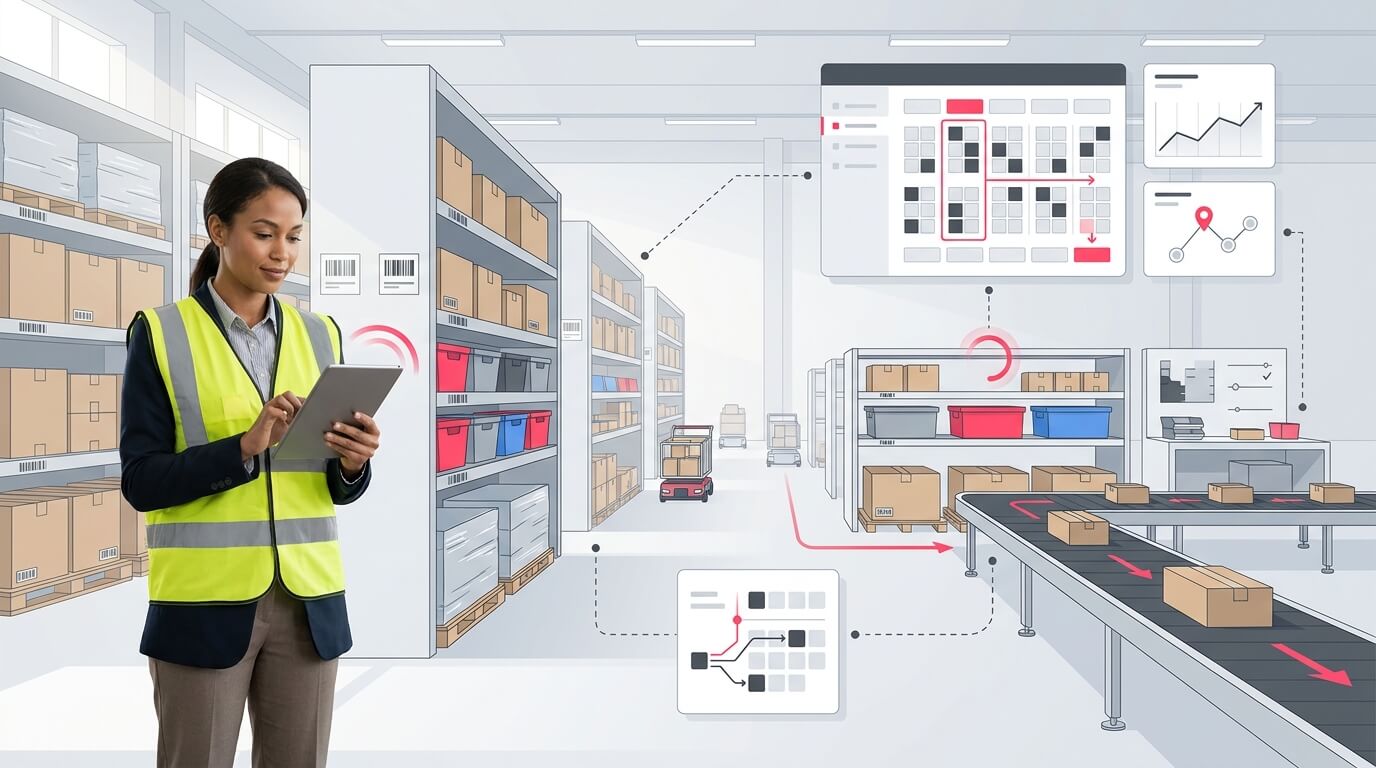
Fast fulfillment starts with where each item sits. Warehouse slotting shapes travel time, pick speed, and labor cost across the floor. When popular SKUs sit in the wrong zones, teams walk farther, touch more locations, and miss cutoffs more often.
Strong warehouse slotting connects product demand with physical space. It places fast movers near packing, keeps heavy items in safe reach, and groups products that ship together. That logic turns layout decisions into measurable gains in throughput and accuracy.
Every pick path reflects a storage decision made earlier. Good warehouse slotting reduces wasted steps and shortens the time between order release and shipment. It also helps supervisors balance work across zones during peak periods.
What is slotting and what does slotting mean in a warehouse?
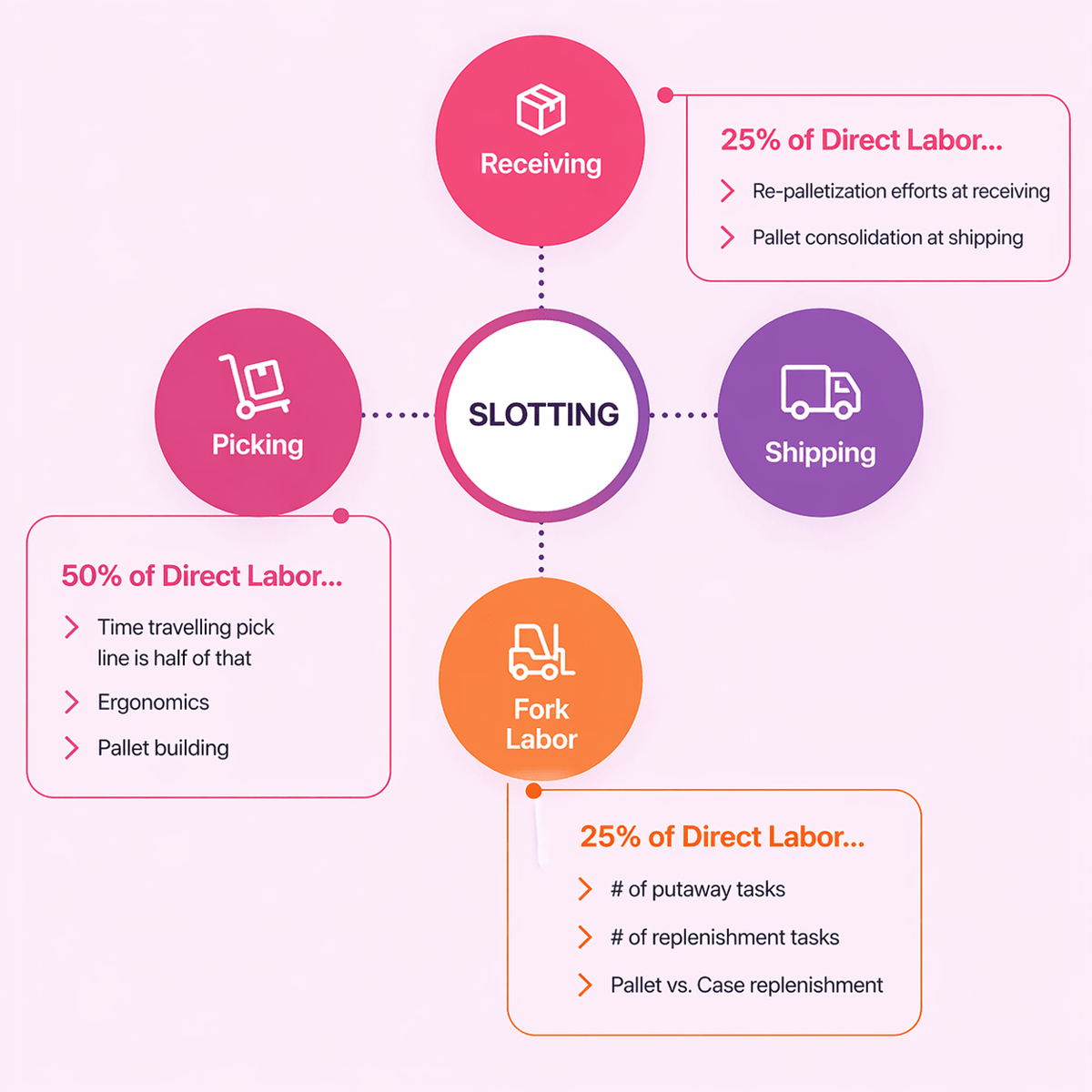
Warehouse slotting is the process of assigning products to the best storage locations. It matches item demand, size, weight, and handling needs with specific pick faces or reserve areas. When people ask what slotting is, they usually mean this rules-based placement of inventory inside the warehouse.
The slotting meaning in warehouse operations goes beyond shelf assignment. It shapes how far workers walk, how often they replenish, and how quickly orders move out the door. Strong warehouse slotting decisions can cut travel time, reduce touches, and lower picking errors.
How slotting works in daily operations
Every SKU has a storage profile. Fast movers often sit near packing or shipping zones, while slow movers can stay farther back. Fragile goods need protected locations, and heavy cases belong in locations where the lifting risk is low.
This is why warehouse slotting strategies focus on product behavior, not just open space. A popular item may need a forward pick slot with frequent refill support. A seasonal item may need a temporary position during peak demand, then move later.
Why the meaning of slotting matters
When leaders ask what slotting means in a warehouse, the practical answer is better flow. Good placement helps labor move with less wasted motion. It also supports cleaner replenishment cycles and steadier throughput during busy periods.
A slotting WMS can support these decisions with demand history, velocity data, and location rules. More advanced operations may also use slotting software or warehouse slotting software to test changes before moving stock. Those tools help planners compare scenarios and spot conflicts early.
Warehouse slotting matters because location choices affect nearly every task in fulfillment. The clearest way to understand its value is to see it as a link between inventory behavior, labor efficiency, and warehouse layout planning.
Warehouse slotting basics: why slotting matters in warehouse operations matters
Warehouse slotting shapes how products move through a facility each day. It decides where each SKU sits, how far pickers walk, and how often teams touch the same item. When people ask what slotting is, the practical answer is simple: it is the logic behind product placement.
The slotting meaning in warehouse operations goes beyond shelf location. Good placement supports faster picks, cleaner replenishment, and fewer travel steps. Poor placement creates congestion, longer routes, and avoidable handling errors.
How product placement affects daily work
Warehouse slotting matters because small location choices create large labor effects. Fast-moving items near packing stations cut walking time across every shift. Heavy or bulky goods in the wrong zone can slow down picks and raise safety risks.
Order profiles also shape the value of warehouse slotting. A facility with many single-line orders needs a different placement than one shipping full cases. Seasonal demand changes the picture again, which is why fixed layouts often lose value over time.
Why slotting supports accuracy and growth
Warehouse slotting strategies influence more than speed. Clear item placement reduces picker confusion, especially in dense pick faces. That can lower mis-picks, reduce rework, and protect on-time shipping rates.
Growth puts more pressure on layout logic. New SKUs, channel expansion, and changing order mixes can turn a workable setup into a daily bottleneck. At that point, warehouse slotting optimization becomes a way to protect labor capacity without adding more space.
Warehouse slotting works best when it stays tied to real order behavior, not guesswork. That foundation makes later system changes easier, whether a team adds automation, refines replenishment rules, or reviews broader warehouse optimization tips.
Connect Shopify, draw your floor, pick an order - free plan, 7-day full trial, no credit card, no sales call.
Core warehouse slotting strategies for efficiency and accuracy
Warehouse slotting works best when product placement follows demand, size, and handling needs. Fast movers belong near packing stations and main pick paths. Heavy items need stable, easy-to-reach locations that reduce strain and travel time.
Order history often reveals where current layouts slow the team down. A clear view of pick frequency, cube, and seasonality shapes stronger warehouse slotting strategies. That same data also helps teams answer what slotting is in practical terms: placing inventory where it supports faster, cleaner work.
Slot products by demand and movement
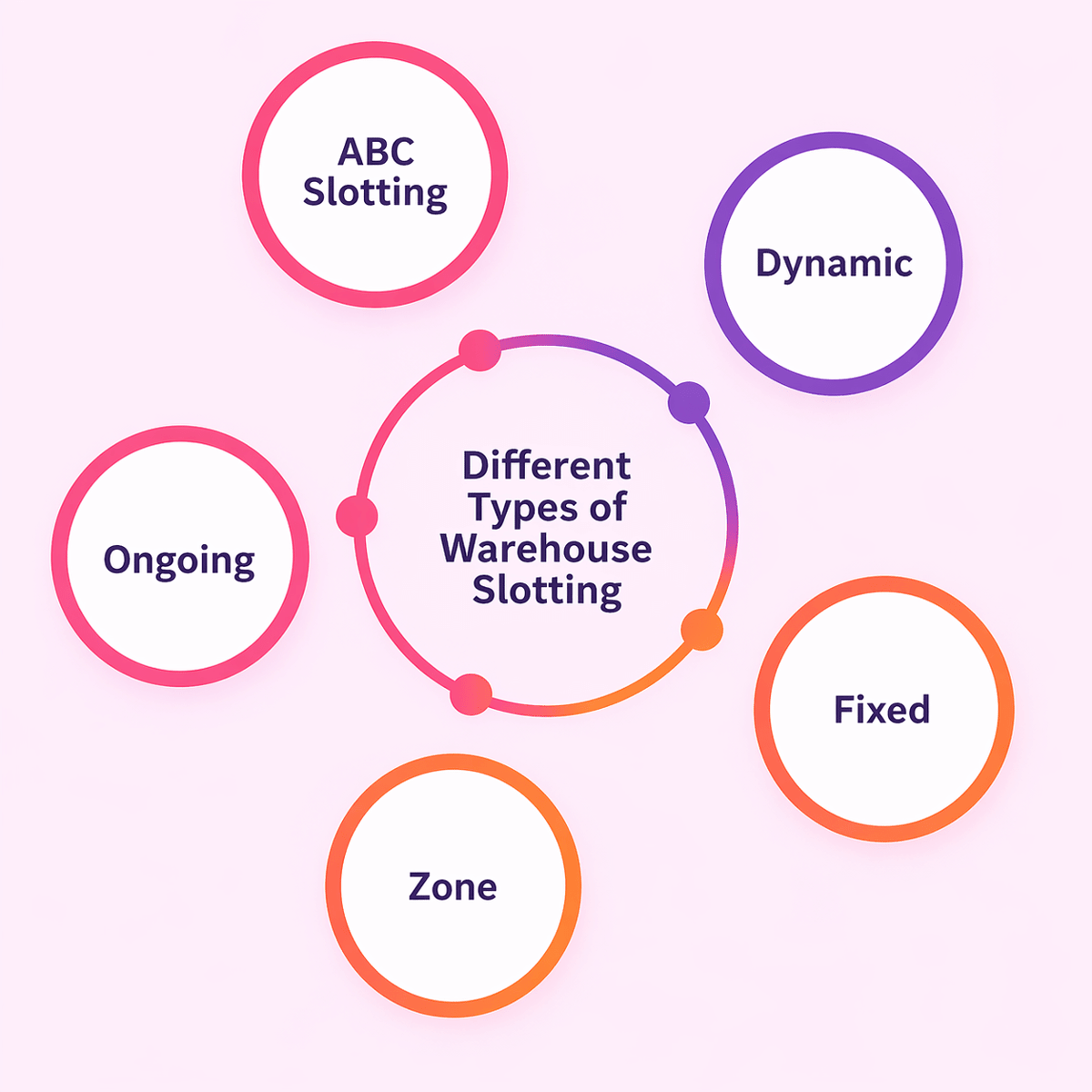
ABC analysis remains one of the most useful methods for warehouse slotting. High-volume SKUs take the most accessible slots, while slower items move farther out. This simple structure cuts picker travel and supports higher line rates.
Velocity alone does not tell the full story. Items often sell together, and placing them nearby reduces repeated trips across the floor. That approach improves batch picking and raises accuracy during peak periods.
Match slot size, handling, and replenishment
Good warehouse slotting also reflects product dimensions and handling risk. Small items fit dense pick modules, while fragile goods need protected locations. Hazmat, temperature-sensitive stock, and regulated products require clear separation and control.
Slot size affects both space use and labor. Oversized locations waste capacity, while tight slots create jams and mis-picks. Strong warehouse slotting optimization balances cubic use with easy access for the picker.
The best results come from regular review, not one-time resets. Demand shifts, new SKUs, and channel mix can change the right layout within weeks. Long-term gains from warehouse slotting usually appear when slot reviews connect with broader warehouse management strategies.
Warehouse slotting optimization: how to improve space, labor, and picking speed
Warehouse slotting optimization connects product demand, storage space, and travel time. The goal is simple: place the right items in the right locations. When that match improves, teams walk less, picks move faster, and storage capacity rises.
How better placement improves throughput
Effective warehouse slotting uses demand patterns, item size, and pick frequency together. A bulky item with low demand should not take a golden forward-pick slot. Small, fast-moving products often deliver more value in those positions.
Order affinity matters too. Items that ship together often should sit near each other. That simple change shortens pick paths and reduces congestion in busy aisles. Many of the best warehouse slotting strategies focus on this relationship between product pairs.
Data, systems, and continuous slotting optimization
Data turns warehouse slotting from a one-time project into an ongoing process. Seasonality, promotions, and channel mix can all change demand quickly. Slot maps that worked last quarter may now slow the floor.
Teams that ask what slotting is often focus on storage alone. The real answer includes labor flow, replenishment timing, and pick density. That broader view of slotting optimization creates better use of space and faster fulfillment. The clearest way to track those gains is through warehouse KPIs.
Slotting WMS capabilities and how they support better decisions
A modern slotting WMS turns raw warehouse data into clear slotting choices. It connects order history, item velocity, dimensions, and storage rules in one system. That view helps teams make warehouse slotting decisions based on facts, not habit.
Many operations start by asking what slotting is in system terms. In practice, the WMS matches products to locations that fit demand and handling needs. That link between demand patterns and bin assignment makes warehouse slotting more consistent across shifts.
Data that improves slotting decisions
A WMS can rank SKUs by pick frequency, cube, weight, and seasonality. Those rankings support stronger warehouse slotting strategies for fast movers, bulky items, and fragile goods. Managers can see when a top seller sits too far from the pack stations.
The same system can flag poor location choices before they create labor waste. Travel time, replenishment frequency, and congestion often reveal hidden slotting problems. With that data, warehouse slotting optimization becomes a repeatable process instead of a one-time project.
How WMS tools support ongoing improvement
Good slotting software does more than recommend a location once. It tracks exceptions, monitors replenishment pressure, and shows when current slots no longer fit demand. That feedback loop keeps warehouse slotting aligned with actual order flow.
Some teams compare a standalone tool with warehouse slotting software built into the WMS. The built-in option often works well when slotting depends on live inventory, task queues, and labor data. Standalone tools can add deeper analytics, though they may need more data cleanup.
For leaders asking what slotting means in a warehouse, the answer is not just product placement. It is a decision model shaped by movement, space, and service goals. A strong WMS supports that model with better timing, clearer rules, and tighter warehouse inventory tracking.
Choosing slotting software and warehouse slotting software for your operation
The right warehouse slotting tool should match order volume, product mix, and labor model. Some teams need basic rules and reports. Others need deeper analysis that adjusts locations as demand shifts.
A strong warehouse slotting software platform connects item data, order history, and location logic. That connection helps managers see why current layouts slow down picks. It also shows where a better slotting plan can cut travel time.
Many operations start with a slotting WMS module before they buy a separate tool. That path often works when the business has stable demand and a simple layout. A dedicated slotting software platform makes more sense when SKU counts, seasonality, and replenishment rules grow more complex.
Features that support better decisions
Good software does more than answer what slotting is. It ranks SKUs by velocity, size, weight, and handling needs. It also tests different location plans before teams move inventory on the floor.
Scenario planning matters because slotting changes can create new bottlenecks. A system should show the labor impact of each move. Optimization becomes more useful when the software ties slotting changes to pick paths, replenishment frequency, and storage limits.
The best warehouse slotting tools also support clear exception handling. Fragile goods, hazmat items, and temperature-sensitive stock need separate rules. Without those controls, a fast layout on paper can create safety and compliance problems in practice.
How to evaluate fit for your operation
Software fit depends on data quality as much as feature depth. If dimensions, cube, and velocity data are weak, recommendations will be weak too. That is true whether the team uses a basic WMS add-on or advanced warehouse slotting software.
Reporting should stay simple enough for supervisors to trust and act on. Clear visuals, move lists, and before-and-after labor estimates help teams approve changes faster. Those details turn warehouse slotting from a one-time project into an ongoing process.
Cost also needs a practical view. A lower-priced tool may still create extra work if it lacks replenishment logic or batch analysis. The best choice usually supports both daily decisions and long-term warehouse slotting optimization, while connecting cleanly with a warehouse labor management system.
Warehouse slotting use cases across ecommerce, retail, and B2B fulfillment
Warehouse slotting looks different across order profiles, SKU counts, and service demands. The best layout depends on product velocity, order mix, and how often demand shifts. That is why the answer to what slotting is changes by channel, even when the goal stays the same.
Fast-moving ecommerce operations often need short travel paths and dense pick faces. Store replenishment centers need stable locations that support case picking and seasonal resets. B2B sites usually balance pallet storage, carton picks, and customer-specific rules in one building.
Ecommerce and retail fulfillment patterns
In ecommerce, warehouse slotting often centers on speed for each pick. Small-item zones near pack stations can cut walking time by a wide margin. High-volume SKUs usually move into the golden zone, while slower items stay in reserve.
Order spikes also shape warehouse slotting strategies in online channels. Promotions, social demand, and holiday peaks can change item velocity in days. Teams that review slotting weekly often keep pick rates steady during those swings.
A slotting WMS helps retail sites group products by department, aisle flow, or planogram logic. That matters when stores expect shipments to arrive shelf-ready. In that setting, the slotting meaning in warehouse work goes beyond speed and supports store labor savings too.
B2B fulfillment and mixed-mode operations
B2B fulfillment brings more variation into warehouse slotting. One customer may order pallets, while another orders split cases from the same SKU. The layout has to support reserve storage, forward pick locations, and safe replenishment timing.
Account rules also affect location choices. Fragile items, hazmat goods, lot-controlled stock, and customer-specific packaging create slotting limits. That is where slotting software and warehouse slotting software help planners test scenarios before moving stock.
When leaders ask what slotting means in a warehouse, the practical answer is simple. It is the discipline of matching product placement to real demand, labor limits, and service goals. The clearest gains appear when slotting decisions connect with inventory software for the warehouse.
Common warehouse slotting mistakes and how to avoid them
Many warehouse slotting problems start with old assumptions. Teams often keep fast movers in the same bins long after demand shifts. That mismatch adds travel time, creates congestion, and slows every pick path.
Another common issue comes from treating all items the same. Case size, weight, velocity, and order frequency need different slot rules. Good warehouse slotting strategies reflect how products actually move through the building.
Data quality also shapes results. If dimensions, cube, or sales history are wrong, warehouse slotting decisions drift fast. A weak data set can make even strong slotting software recommend poor locations.
Planning errors that hurt picking speed
Static slot maps create hidden waste. A layout that worked during one season may fail during a promotion or product launch. Strong warehouse slotting programs review movement patterns often and adjust with clear rules.
Some operations focus only on space use. That approach can push top sellers into dense storage that looks efficient on paper but adds touches on the floor. Better warehouse slotting optimization balances space, labor, and replenishment effort.
Ignoring item relationships causes another avoidable delay. Products that ship together should often sit near each other. That principle matters when teams ask what slotting is and expect faster fulfillment rather than just tighter storage.
System and process gaps
A disconnect between floor activity and system logic creates repeated errors. When the slotting WMS rules do not match actual pick methods, associates work around the system. Those workarounds weaken accuracy and make future analysis less reliable.
Some companies buy warehouse slotting software and stop there. Software helps, but results depend on review cycles, exception handling, and bin discipline. The best setups pair system recommendations with regular floor checks.
Replenishment often gets left out of the plan. A slot may look ideal for picking, yet fail when reserve stock sits too far away. Strong warehouse slotting links forward pick locations with refill timing and labor capacity.
Clear ownership keeps the process stable. One team should review data, approve moves, and measure outcomes after each major reset. That structure turns short-term fixes into a repeatable practice that supports broader inventory optimization.
How to measure slotting optimization results with the right KPIs
Good measurement shows whether warehouse slotting changes actually speed up fulfillment. It also shows where a new layout shifts work instead of removing it. A strong KPI set connects travel time, pick accuracy, space use, and labor cost.
Most teams start with speed, but speed alone can mislead. A faster route means little if replenishment trips rise all day. The best view of optimization combines picking, replenishment, and storage metrics.
KPIs that show real slotting impact
Pick rate remains one of the clearest measures. Cases or lines picked per hour often rise when fast movers sit in easier locations. That makes it a useful signal for slotting optimization, especially in high-volume zones.
Travel distance per order gives a more direct read on layout quality. Shorter paths usually mean better slot placement and less wasted motion. This KPI helps teams judge whether warehouse slotting changes truly reduce walking time.
Pick accuracy matters just as much as speed. A slotting plan can fail if similar items end up too close together. When accuracy drops after a move, the issue may sit with location logic, not worker performance.
Replenishment frequency also deserves close review. A popular item placed in too small a slot creates constant refill work. Many operations use a slotting WMS or slotting software to balance pick access with refill demand.
How to read KPI trends over time
Baseline data gives each metric meaning. Compare results before and after the slotting change across the same order mix, labor hours, and service levels. That keeps seasonal swings from hiding the real effect of warehouse slotting.
A weekly view often works better than a single-day snapshot. Daily numbers can move sharply with promotions, staffing gaps, or inbound delays. Trend lines show whether warehouse slotting software recommendations hold up under normal demand.
These KPI groups usually give the clearest picture:
- Pick rate, travel time, and lines per labor hour
- Pick accuracy, mis-picks, and order error cost
- Replenishment trips, stockouts, and slot capacity use
- Dock-to-stock time for new item placement
What is slotting in practical terms? It is the process of placing items where they support faster, cleaner work. The results should appear in measurable gains, not just a neater floor plan.
Warehouse slotting works best when teams review KPIs often and adjust with care. A strong scorecard turns slotting meaning in warehouse operations into clear business results.
Conclusion
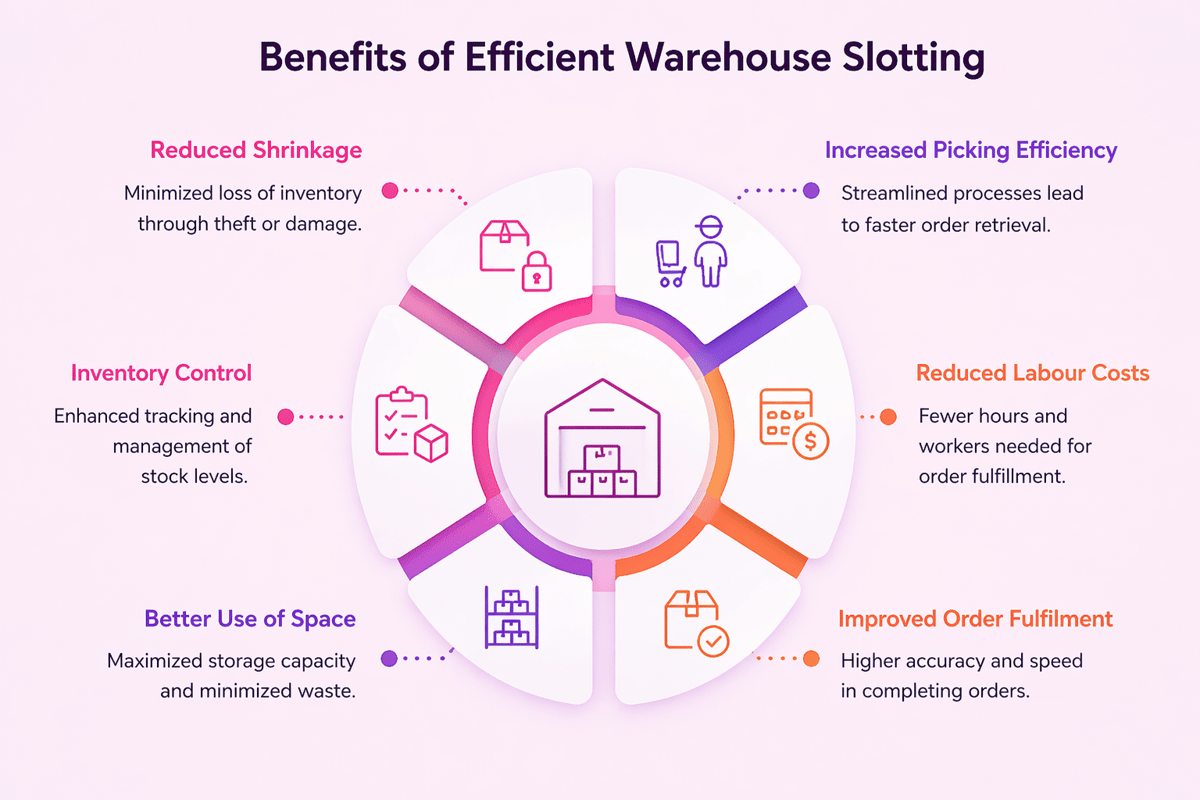
Warehouse slotting shapes how fast orders move, how far pickers walk, and how well space supports demand. Strong results come from clear product data, steady review cycles, and slot assignments that match order patterns. When teams understand what slotting is, they make better location decisions that cut travel time and reduce congestion.
The best warehouse slotting strategies balance speed, accuracy, and flexibility. Fast movers belong in easy-reach zones, while seasonal items need room to shift as demand changes. Good warehouse slotting also depends on clean item dimensions, order history, and replenishment rules that reflect daily work.
Where software adds value
A strong slotting WMS turns raw warehouse data into practical location guidance. It connects velocity, cube, affinity, and pick frequency so planners can spot better layouts faster. That support matters when warehouse slotting optimization needs to keep pace with growth.
The right slotting software helps teams test moves before changing the floor. It also highlights slow movers, crowded zones, and poor product pairings that hurt pick speed. For larger operations, warehouse slotting software gives planners a clearer view of labor impact and storage limits.
Next step for better fulfillment
Warehouse slotting works best as an ongoing process, not a one-time project. Regular reviews help the layout stay aligned with demand, labor, and service goals. That is where slotting optimization becomes a practical discipline rather than a one-off fix.
Start with a review of your fastest movers, travel paths, and replenishment pain points. Then compare those findings against your current system support and data quality. For more ideas that connect warehouse slotting with daily performance, explore these warehouse efficiency tips.
 Google AI
  OpenAI ChatGPT
 Frequently Asked Questions
What does slotting mean in a warehouse?
Slotting, meaning in a warehouse, refers to assigning products to the best storage locations based on demand, size, weight, and handling needs. The goal is to reduce travel time, improve picking speed, and use space more efficiently. In simple terms, it is the process of placing inventory where it supports faster, more accurate operations.
What is warehouse slotting?
Warehouse slotting is the method of organizing inventory so each item is stored in the most effective location for picking, replenishment, and movement. It uses data such as order frequency, product dimensions, and seasonality to improve workflow. Strong warehouse slotting strategies can lower labor costs and increase overall warehouse productivity.
What is slotting optimization for a warehouse?
Slotting optimization is the process of continuously improving where products are stored to support faster fulfillment and better space usage. It looks at sales trends, picking paths, and inventory velocity to reduce unnecessary movement. Warehouse slotting optimization helps businesses respond to changing demand while maintaining accuracy and operational efficiency.
What does slotting mean in a warehouse management system?
In a slotting WMS, slotting means using system data to recommend or manage the best storage locations for inventory. A warehouse management system can analyze order history, item characteristics, and replenishment patterns to support smarter placement decisions. This helps teams standardize processes and improve picking performance across the facility.
How does slotting software improve warehouse efficiency?
Slotting software improves efficiency by identifying better product locations based on real operational data. It can reduce picker travel, improve cube utilization, and support faster replenishment decisions. Many businesses use warehouse slotting software to automate analysis, test layout changes, and maintain more effective slotting strategies as inventory and demand shift over time.
Why is warehouse slotting important for operations?
Warehouse slotting is important because it directly affects labor efficiency, order accuracy, and storage capacity. When fast-moving items are placed in accessible locations, teams can pick orders more quickly and with less effort. Effective warehouse slotting also supports safer workflows, better use of warehouse space, and improved customer service through faster fulfillment.
I am an eCommerce expert with a strong focus on marketplaces like Amazon, eBay, and Etsy. Over the past decade, I have helped both startups and $1M+ revenue brands scale their sales through listing optimization, marketplace SEO, and AI-driven strategies. I also share articles and insights about eCommerce growth, marketplace operations, and multichannel selling.
You may also like

How to choose an ecommerce marketplace service provider for scalable growth
Learn how an ecommerce marketplace service provider helps businesses launch, manage, and scale a profitable ecommerce marketplace. Platform choices, vendor operations, software tools, management services, costs, and practical selection tips.

Ecommerce software solutions: features, costs and how to choose
Learn how to evaluate ecommerce software solutions for online stores, marketplaces, and retail teams. Essential features, vendor comparisons, implementation tips, and practical ways to choose software that supports growth, operations, and customer experience.

Multi-carrier shipping software: features and how to compare options
How multi carrier shipping software compares rates, prints labels, tracks orders and handles returns, and which features to check before you choose one for your store.