Selling on Amazon, Walmart, and eBay can grow revenue quickly. However, it can also create messy listings, stock problems, and price conflicts across platforms. Millions of sellers compete on the same platforms. As a result, ecommerce marketplace management helps brands grow sales without creating operational chaos. Ecommerce marketplace management defines how brands operate across these platforms.
Online marketplaces now play a major role in global ecommerce. Global online sales are expected to reach about $6.3 trillion, according to recent market data. Platforms such as Amazon, Walmart, and eBay attract millions of shoppers every day. In the United States alone, Amazon accounts for about 37% of ecommerce sales.
What this guide covers:
- Key tasks inside ecommerce marketplace management
- How to build a channel mix that fits your margins and team
- Ways to improve listings, stock, pricing, and promotions
- Service targets and metrics that keep results steady
- Tools for online marketplace management that cut manual work
Summary
Ecommerce marketplace management helps you sell more while staying in control. The guide shows how to build a system that cuts errors and guards against margin. You can grow across Amazon, Walmart, eBay, and more. No chaos needed.
We start by defining what strong marketplace management includes. Then we look at why it matters for sales, trust, and day-to-day speed. You will also learn how to stop common problems early, before they hurt your numbers.
What you will learn:
- What ecommerce marketplace management covers, from catalog setup to daily results
- How online marketplace management differs from running your own channels
- How to pick the right platforms and build a channel mix that fits your products
- How to write listings with strong titles, good photos, and content that each platform rewards
- How to handle stock, pricing, and promos without cutting into profit
- How to set order, return, and support standards that marketplaces expect
- How to run ads, grow reach, and stop rogue sellers
- Which tools help with online marketplace management: PIM, OMS, and repricers
- Which numbers to watch and how to keep things on track long term
You will finish with a real plan for running multiple marketplaces with fewer surprises. In short, fewer fires and more growth.
What Ecommerce Marketplace Management Covers
Ecommerce marketplace management runs your brand across platforms. Think Amazon, Walmart, or eBay. You tie catalog, prices, stock, and orders into one plan. Done right, you protect profit as you grow.
Most teams just list products and stop there. However, small errors spread fast across channels. You need clear steps. Keep data right and ops steady.
What it covers in practice
Good ecommerce marketplace management blends plan with action. When teams line up, every channel earns its keep. As a result, nothing falls through the gaps.
- Channel strategy: where to sell, what to expect, and how to measure each platform
- Catalog and listings: titles, images, specs, and rules, all accurate and up to date
- Stock and pricing: real-time sync, buffer rules, and margin-safe price floors
- Orders and shipping: fast routing, SLA tracking, and fixing issues before they get worse
- Returns and support: clear rules per platform, consistent tone across every reply
- Ads and promos: planned campaigns, tight budgets, and results tied to real goals
- Brand safety: catch hijackers, wrong content, and policy breaks before they cost you
- Reporting: track what matters, spot dips early, and test changes that lift results
Why it matters for growth
Marketplaces track your metrics all the time. Poor ops pushes your listings down. Good products do not save bad ops. Strong online marketplace management wins buy boxes. It cuts cancelled orders and lifts ratings.
Better workflows save money. Fix errors once, not over and over. In practice, you add new channels with real confidence.
To keep stock accurate as you scale across platforms, our guide to multi-channel inventory management explains the systems and workflows that prevent oversells.
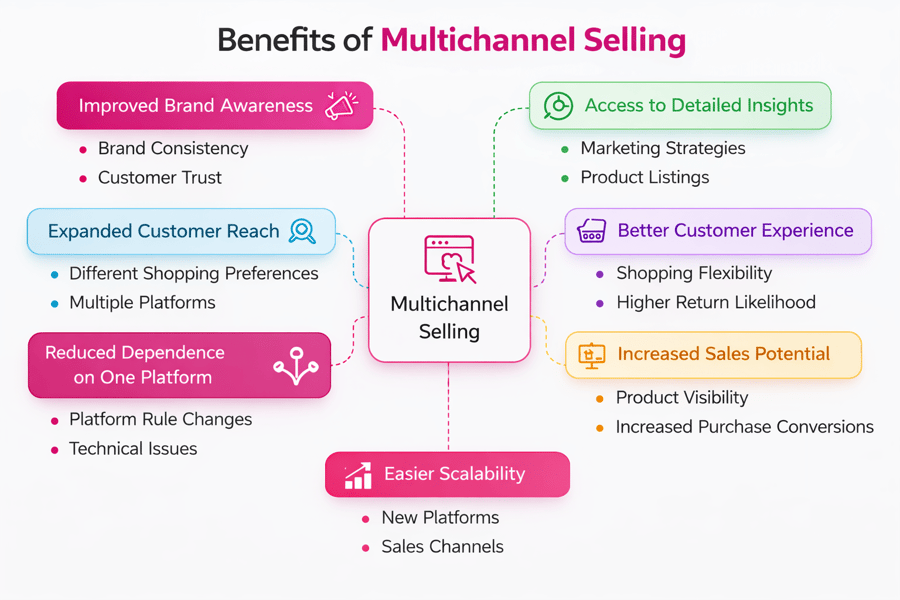
Online Marketplace Management VS In-House Channel Operations
Both drive revenue. However, they work in different ways. Marketplaces bring built-in traffic and fast demand data.
Your own site gives you more say over the brand. Meanwhile, most teams use the same rules for both. That leads to costly mistakes.
What does ecommerce marketplace management usually include
On a marketplace, you follow their rules. You compete with other sellers. Sometimes you even sell the exact same product. Therefore, speed matters more than polish.
- Listing creation, content updates, and category rules
- Stock feeds, price rules, and promo setup
- Order routing, return handling, and reply-time targets
- Ad campaigns, keyword work, and brand monitoring
What in-house channel work focuses on
Your own channels run by your rules. You control the layout, the copy, and the checkout. For example, you can test things fast, on your own terms.
- Page design, conversion tests, and email or SMS campaigns
- New product launches, bundles, and repeat orders
- First-party data and loyalty programs
- Brand story told your way, across every page
How to decide what to keep or hand off
Your goal comes first. Need volume fast? Marketplaces work well for that. A good partner speeds things up even more. On the other hand, if you need brand control, keep pricing and content in-house.
Next, write a simple chart. Who sets prices, owns content, and fixes problems? That one step stops teams from clashing.
To refine those launch rules and channel priorities, use ecommerce analytics tools to spot trends and scale what converts.
Choosing Marketplaces and Building a Winning Channel Mix
Where you sell shapes your growth and cash flow. You do not have to sell everywhere. Instead, you just need the right places.
Your goal shapes everything here. Want new buyers? Better margin? Faster stock turns? Pick channels that match that goal. Also, skip launches that just eat up time.
How to pick the right marketplaces
It helps to know where your buyers already shop. Big marketplaces bring volume. However, they also bring strict rules and steep fees. Think about how much control you need before you commit.
- Audience fit: does the platform attract buyers in your price range?
- Fees and real margin: add referral fees, shipping, ads, and returns to see true profit
- Competition: how many sellers with similar products rank on page one?
- Ops load: what are the labeling, SLA, and packaging rules?
- Brand risk: how easy is it for hijackers or fakes to harm your listings?
Build a balanced channel mix for ecommerce marketplace management
A good mix pairs high-volume channels with higher-margin ones. One platform may drive discovery. Another might work better for premium bundles. As a result, that spread lowers your risk on any single platform.
A tiered plan works well here. Your best SKUs go on the main channels. Then test slower items on one or two smaller platforms. Your team learns faster, and service levels stay high. That supports solid online marketplace management over time.
Before expanding, it helps to set clear rules: minimum margin, target conversion rate, and required stock level. Applying them every time is what turns ecommerce marketplace management into a growth system, not a fire drill.

Catalog, Listings, and Content for Online Marketplace Management
Your catalog is the base of every channel. Gaps in your data show up as listing errors, and listing errors hurt sales. Therefore, treat product data as a core part of ecommerce marketplace management. Do not treat it as an add-on.
Cleaning up titles, specs, and variant structure is the right first step. Then map each field to what each platform needs: size, color, material, and fit. Clean data speeds up approvals and cuts costly listing mistakes.
Build a channel-ready catalog for ecommerce marketplace management
One naming system and clear parent-child links work best for product variants. However, do not copy one platform’s format straight to another. Each platform ranks content by its own rules. Therefore, your online marketplace management process needs platform-specific versions of the same core data.
- Clean up brand names, model numbers, and GTIN or UPC data
- Group variants right to avoid split reviews and lost traffic
- Fill in required fields first, then tackle the high-impact optional ones
- Keep specs honest and skip keyword stuffing
Optimize listings for search and sales
Titles should match the way shoppers search. Lead with the most important words, then add details like size, count, or fit. As a result, better titles mean more clicks and better rank.
Next, write bullets around benefits, not just features. Keep sentences short. Use a format that is easy to scan. Answer common buyer questions in the listing. Cover use cases, care, and box contents.
Use images to cut returns
A good image sells the product before the shopper reads a single word. Include a clean main shot, real-life photos, and close-ups of the key details. As a result, setting the right expectations up front cuts “not as described” returns fast.
A regular review schedule keeps content sharp. Check top sellers once a month. Then look at slow movers every quarter. Fresh, accurate content keeps your online marketplace management strong.
To scale these updates without adding manual work, see how Ecommerce Automation Tools can streamline listing edits, pricing rules, and content refreshes.
Core Ecommerce Marketplace Management Workflows
Stock, pricing, and promos decide whether you win the buy box and keep your margins safe. In ecommerce marketplace management, these three areas are tied together. Therefore, a mistake in one affects the others fast.
Keep stock available without overselling
One system should serve as your stock source of truth. Push updates to each platform on a fixed schedule. Also, set safety stock levels by SKU to handle late shipments and demand spikes. Fewer cancelled orders means better seller scores.
- Add buffer stock for fast movers and seasonal lines
- Send orders to the right warehouse based on cost and speed
- Pull listings down when stock falls below your safety level
Match your price to the channel and protect your floor
Each platform has its own fee structure, shipping norms, and buyer habits. One flat price rarely works across all of them. Therefore, set a floor price, a target price, and a ceiling for each channel.
Rival prices on top SKUs are worth checking daily. For slower items, weekly is enough. However, avoid constant small changes that confuse buyers and start price wars. Instead, change prices with clear rules, and write them down.
Plan promos with a real goal
Every promo needs a purpose: clear old stock, push a new launch, or hold ground on a key search term. Also, line up promos with your stock. Do not discount items you cannot ship.
A simple calendar with start dates, end dates, and expected results keeps promos on track.
- Pair slow sellers with the best sellers to lift the average order value
- Use step discounts to increase units per order without big cuts
- Measure promo ROI by SKU, not just total revenue
When all three of these workflows run together, ecommerce marketplace management gets much steadier. In short, you fix less and scale more.
Tools and Automation for Ecommerce Marketplace Management (PIM, OMS, Repricers)
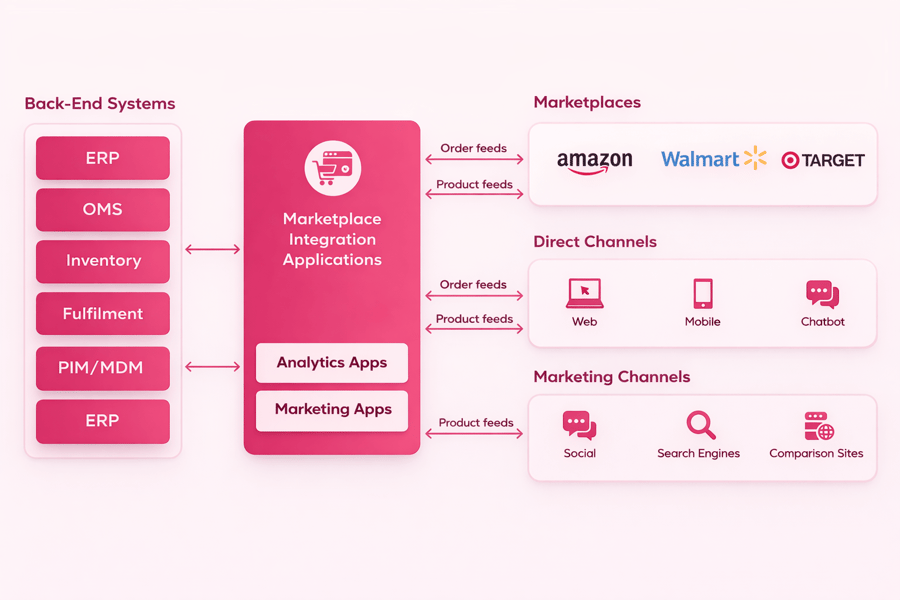
Add enough channels, and manual work falls apart. The right tools let you scale ecommerce marketplace management without losing accuracy or speed. As a result, errors drop, updates go out faster, and the buyer experience stays steady.
Automation saves margin, too. React to stock and price changes in minutes. Meanwhile, your team spends less time on repeat work. More time goes to real growth.
PIM: one home for all product data
A PIM gives you one home for all product data. Push clean data to every platform from one place. No more copy-paste errors. Also, a PIM helps most when each platform has different content rules. Map fields per channel. Then push updates in bulk. Keep a sign-off step so nothing goes live unchecked.
OMS: one queue for all orders
An OMS pulls all orders into one queue. It sends each order to the right warehouse or store. As a result, orders ship faster, and cancellations drop. An OMS handles split shipments and backorders, too. Additionally, returns and status updates run the same way each time. You hit SLAs more often, and account health stays clean.
Repricers: stay sharp without constant checking
Repricing tools work by the rules you set. For example, match the buy box but hold your price floor. Consequently, no need to check prices by hand all day.
- Set a floor price, a ceiling, and a margin target for each channel
- Use smart filters: only match certain sellers, skip low-rated ones, pause on low stock
- Pull in fees, shipping costs, and promo dates to keep rules accurate
Choosing and rolling out your stack
How to build your stack
Fix the biggest problem first. Bad listings? Start with a PIM. Similarly, late shipments? Start with an OMS.
Connect your tools and write down who owns what. Clarify who signs off on content and who sets price rules. Finally, those clear answers keep things steady and easy to fix.
Order, Returns, and Customer Service Standards Across Marketplaces
Orders and messages come in fast on marketplaces. Your process has to hold up across every channel, every day. Strong ecommerce marketplace management means clear rules for shipping speed, tracking, and reply times.
Each marketplace scores your account differently. Late shipments, cancelled orders, and slow replies all hit your health score. One internal standard that clears the bar on every platform is the safest approach.
How to handle orders at speed
Order handling and shipping targets
A simple order flow works best: confirm, pick, pack, ship, and upload tracking. Addresses should be checked before shipping. Also, flagging risky orders early cuts disputes and “item not received” claims.
- Set a daily cut-off time for orders and make sure the team knows it
- Upload tracking inside the platform window. Do not wait until the end of the day
- Use scan-based carrier drop-off to avoid false late scans
- Keep packaging tight to prevent damage and bad reviews
Handle returns without losing margin
Returns build trust but cost money. Therefore, set clear rules by product type, condition, and return window. Match those rules to each marketplace’s policy so disputes stay rare.
Refund quickly when the item comes back in good shape. When you make an exception, however, log it with photos and notes. That paper trail protects you if a platform reviews the case.
- Log return reasons to find listing or quality problems early
- Send “wrong item” and “damaged” cases to a fast-track review lane
- Get items back into stock quickly to avoid overselling
Customer service that holds up at scale
Good support is part of online marketplace management. Replying fast and solving the problem in one message is the goal. Also, keep templates short and direct. They should feel like a real person wrote them.
Patterns in incoming questions are worth tracking. If the same thing comes up often, fix the root cause. For example, updating a photo or rewriting a vague bullet point can stop the question from coming in at all. Fewer questions mean better ratings and less support load.
Advertising, Reach, and Brand Protection in Online Marketplace Management
Ads bring buyers in on crowded platforms. But they only work if your listings, prices, and shipping are already solid. Therefore, advertising is a core part of ecommerce marketplace management. Do not bolt it on later.
Build reach with smart ads
Run ads that actually build reach
Start with the basics: sponsored product ads, brand ads, and follow-up ads, where you can use them. Sort campaigns by intent: best sellers, new items, seasonal lines. That way you control spend without losing sight of results.
Use search term data to improve your bids and your listings. As a result, that loop between ads and content cuts costs and raises sales fast.
- Push harder on high-margin SKUs with wide keyword targeting
- Protect your brand name from rivals and resellers bidding on it
- Test different titles and creatives, keep what works, cut what does not
Protect your brand as you grow
More sales attract copycats and rogue sellers. Therefore, set firm rules for pricing, bundling, and who gets to sell your products. Also, register your brand in every marketplace protection program you can access.
Watch your listings for hijacks, wrong photos, and fake reviews. In addition, keep an eye on sudden buy box losses or spikes in returns. Those signals often point to a real problem, well before it hits your revenue.
- Use MAP policies and reseller deals to slow price erosion
- Keep product IDs clean and standard to avoid duplicate listings
- Keep proof of origin and packaging records ready for fast disputes
When ads, reach, and control all work together, growth holds up over time. Consequently, your ecommerce marketplace management program stays strong even when rivals push harder.
Metrics, Reporting, and Governance for Continuous Progress
Good ecommerce marketplace management needs real data. Without it, you are guessing. Therefore, build a short scorecard and review it each week.
Pick a few KPIs tied to your goals. Define each metric the same way, on every platform. That way, your team can compare results without any debate.
Core KPIs to track across ecommerce marketplace management
Track numbers tied to revenue, cost, and trust. Drop vanity stats that change nothing. In short, keep the list short so people actually use it.
- Sales: gross revenue, net revenue, margin per order, average order value
- Traffic and conversion: sessions, conversion rate, buy box win rate
- Ops: on-time ship rate, cancelled order rate, return rate, refund speed
- Buyer signals: star rating, review count, defect rate, first-reply time
- Content health: listing fill rate, suppressed listings, image rules
Reporting and governance for ecommerce marketplace management
Reporting schedule and dashboards
Daily alerts for stockouts, price errors, and suppressed listings are worth setting up. Then run a weekly review by platform and by product group. You catch issues early and fix them before they spread. One dashboard with net sales, margin, and service levels side by side is ideal. Also, add a “what moved up” list and a “what needs fixing” list. That pairing makes it easy to act fast.
Governance: who owns what
Governance turns data into action. Each area needs a clear owner: pricing, stock, content, ads, and support. Furthermore, every alert needs a next step attached to it. Rules for key calls are worth writing down: margin floors, promo steps, policy flags. Keeping all of them in one shared doc helps. As a result, things stay on track even when the team changes.
Conclusion
Growing sales takes more than adding listings. You need a clear goal, a steady plan, and fast feedback. That is exactly what ecommerce marketplace management provides. The right platforms come first. Then build a channel mix that fits your margins. Strong listings with clean data and good photos matter too. Also, keeping stock and pricing in line avoids errors that hurt your scores.
Next, the buyer experience needs to be protected. Firm standards for shipping and returns, held to every day, lead to better ratings and more buy boxes. Visibility needs a plan as well. Use ads, promos, and control to stay strong. However, do not rely on campaigns alone. Reporting and regular reviews turn short wins into lasting results.
Your next steps:
- Audit listings, pricing rules, and stock sync across all your channels
- Set targets for shipping, returns, and reply times
- Pick tools that fit the way your team works
- Track a small set of numbers every week and act on what you see
Online marketplace management works best as a system, not a task list. That way, your team spends less time on fires and more time on growth.
One marketplace is the right place to start. Get the process right there first. Then grow from that base. With strong ecommerce marketplace management, you grow sales and protect your brand. Finally, pair it with solid ecommerce warehouse management to keep stock accurate and orders moving on every channel.
Frequently Asked Questions
What agencies help with multi-marketplace ecommerce management?
Agencies specializing in marketplace operations can manage catalog setup, listing optimization, advertising, and day-to-day account health across channels such as Amazon, Walmart, and eBay. Look for teams with proven experience in online marketplace management, strong reporting, and platform certifications. The best partners align with your margins, brand guidelines, and growth targets.
What does ecommerce marketplace management include?
Ecommerce marketplace management typically covers product listing creation and optimization, inventory and pricing control, order and returns workflows, customer messaging, and performance monitoring. It may also include marketplace advertising, promotions, and compliance with each platform’s policies. The goal is to grow sales while protecting brand reputation and maintaining operational efficiency.
How do you manage inventory and pricing across multiple marketplaces?
Use a centralized system that syncs stock levels, orders, and pricing rules across channels to reduce overselling and manual updates. Many businesses rely on an OMS, ERP, or multichannel listing tool with real-time feeds. For online marketplace management, set minimum margin thresholds, automate repricing within limits, and review exceptions daily.
Which tools are best for ecommerce marketplace management?
The best tools depend on your size and complexity, but common categories include multichannel listing software, inventory/OMS platforms, repricing tools, and analytics dashboards. For ecommerce marketplace management, prioritize integrations with your ecommerce platform and shipping carrier, reliable feed management, and clear performance reporting by marketplace, SKU, and campaign.
How do you improve marketplace rankings and conversion rates?
Start with high-quality product data: clear titles, optimized bullet points, accurate attributes, and strong images. Then improve conversion through competitive pricing, fast shipping, and consistent customer service. In online marketplace management, monitor search terms, run targeted ads, and use A/B testing where available to refine content and offers.
What KPIs should you track for marketplace performance?
Track revenue, gross margin, ad spend efficiency (ACOS/ROAS), conversion rate, and buy box or offer share where applicable. Operational KPIs include order defect rate, late shipment rate, cancellation rate, and return rate. For online marketplace management, review these weekly to catch issues early and prioritize the highest-impact fixes.