
Lean Warehousing: Best Practices for Faster, Smarter Operations
 Fiftify Team
·
· 11 min read
Fiftify Team
·
· 11 min read 
Most warehouses do not lose time through big failures. They lose it through small waits and repeat mistakes. Lean warehousing targets those hidden delays before they spread.
A picker walks past the same pallet ten times daily. A supervisor trusts the dashboard, then finds empty bins. These gaps look small until orders miss the cutoff.
Why Waste Hides in Plain Sight
A busy warehouse can still waste hours every shift. Movement, searching, rework, and overstock often look normal. Teams accept them because the floor keeps moving.
The real problem starts when speed hides poor flow. People work harder, but orders still leave late. That pressure creates errors, returns, and avoidable overtime.
A lean warehouse changes the focus from activity to flow. The goal is not to squeeze more from people. It removes the friction that slows good work.
What Lean Thinking Changes
Lean warehouse management connects layout, labor, inventory, and data. Each decision must support faster, cleaner order movement. Extra touches usually mean extra cost.
Strong teams start with the floor, not spreadsheets. They watch where workers pause, backtrack, or wait. Those moments reveal problems reports often miss.
The best gains often come from simple fixes. Clear slotting can cut travel time fast. Better replenishment rules can stop daily stock gaps.
Lean warehouse best practices work because they expose waste early. A lean warehouse management system then keeps those gains visible. That mix builds faster operations without constant firefighting.
Connect Shopify, draw your floor, pick an order - free plan, 7-day full trial, no credit card, no sales call.
What Lean Warehousing Means for Modern Operations
Modern warehouses rarely fail from one big mistake. They bleed time through small daily delays. Lean warehousing gives teams a way to see those delays.
It treats motion, waiting, rework, and excess stock as costs. The goal sounds simple, but the work feels demanding. Teams must question habits that once felt safe.
Waste Shows Up in Daily Work
Waste often starts before a picker touches a product. A poor slotting plan adds thousands of steps each week. One missing label can slow every order behind it.
Many teams chase faster labor before fixing the flow. That choice usually hides the real problem. People move faster, yet orders still leave late.
A lean warehouse looks at the full path. The product should move with fewer touches and fewer decisions. Exceptions should expose root causes, not create hero work.
Flow Matters More Than Busy Work
Busy aisles can look productive from a distance. On the floor, they often mean poor planning. Pickers cross paths because orders lack clear waves.
Lean warehouse management changes how leaders read activity. They track handoffs, dwell time, and repeat errors. Small signals often reveal where capacity disappears.
A simple example appears at packing benches. If cartons sit waiting for labels, shipping falls behind. More packers will not fix that delay.
The stronger answer fixes the constraint first. A lean warehouse management system can show that blockage early. Data then supports better timing and cleaner work.
Modern operations need discipline more than slogans. Lean warehouse best practices work when teams remove friction daily. That mindset turns lean thinking into practical warehouse optimization tips.
Key Benefits of a Lean Warehouse for Cost, Speed, and Accuracy
A warehouse rarely loses money in one dramatic failure. It leaks money through small daily delays. Lean warehousing makes those leaks easier to see and supports continuous improvement through better workflows and operational discipline.
A picker walks too far between fast-moving items. A receiver waits because labels arrive late. Each delay looks minor until volume doubles. Many companies begin implementing lean warehousing when these small inefficiencies start affecting service levels and profitability.
Lower Costs Without Cutting Corners
The cheapest warehouse often becomes the most expensive one. Staff rush, errors rise, and overtime hides the waste. A lean warehouse cuts costs by removing that friction while improving processes across daily operations.
Travel time usually carries the highest hidden cost. Moving best sellers closer can save hours each week. One team cut picking routes by 28% this way.
Better flow also lowers damage and rework. Fewer touches mean fewer dropped cartons and wrong scans. That saving feels small until returns start falling.
Organizations that focus on improving processes often discover that layout optimization delivers larger savings than adding more labor or equipment.
Faster Flow and Cleaner Counts
Speed improves when work moves in a clear path. Traditional layouts often grow around old habits. Lean warehouse management questions those habits with floor data.
A good team watches where people stop. Those stops show missing tools, poor slotting, or unclear rules. Fixing them can cut handoffs from four to two.
Accuracy rises for the same reason. People make fewer mistakes when steps stay simple. A lean warehouse management system WMS supports that discipline with live records and task visibility.
The system looks accurate on paper. The floor tells the truth during cycle counts. Strong lean warehouse best practices connect both views before errors spread.
Many businesses use a warehouse management system WMS to support inventory accuracy, labor planning, and process control. The right platform helps teams improve efficiency by reducing manual work and improving visibility across the warehouse.
Cost, speed, and accuracy work together. Treating them separately creates fresh problems elsewhere. Track those gains against warehouse KPIs.
Better results come from improving processes rather than increasing headcount. Small workflow improvements often create measurable gains in productivity and service quality.
Lean Warehouse Management vs. Traditional Warehouse Management
Traditional warehouses often chase speed by adding labor. The floor gets busier, but delays still grow. People work harder while the same problems repeat.
Lean warehousing starts from a different daily question. It asks where time, motion, and stock get wasted. That question changes how managers run each shift.
Traditional Control Creates Hidden Waste
Traditional warehouse management relies on zones, reports, and firefighting. Supervisors react after orders miss cutoffs. Teams fix symptoms, then meet again tomorrow.
The system looks organized from the office. On the floor, pickers walk the same aisles repeatedly. Forklifts wait because inbound stock blocks fast movers.
Batch work creates another common trap. A large wave feels efficient during planning. It then floods, packing with work nobody can finish.
Lean Management Builds Flow
Lean warehousing is an approach to warehouse management that focuses on removing waste, reducing unnecessary movement, and creating smoother operations. Companies often begin implementing lean warehousing to increase productivity without expanding warehouse space.
Many organizations follow lean warehousing principles to improve inventory flow, labor utilization, and operational consistency. These lean warehousing principles help teams identify bottlenecks before they affect customers.
Lean warehouse management treats flow as the main measure. Managers track what slows an order now. Small fixes matter because delays compound quickly. A lean warehouse usually moves high-volume items closer. It also removes dead stock from prime space. These choices cut walking time without adding staff. Better organization improves space utilization and reduces congestion in high-traffic zones. Stronger space utilization also allows companies to delay expensive warehouse expansions.
Strong teams compare actual movement against planned movement. They watch travel paths, handoffs, and rework daily. Bad layouts lose trust when workers show the numbers.
Lean Warehouse Best Practices Also Change Team Behavior
Staff raises problems before they become order failures. Leaders fix causes, not just late shipments.
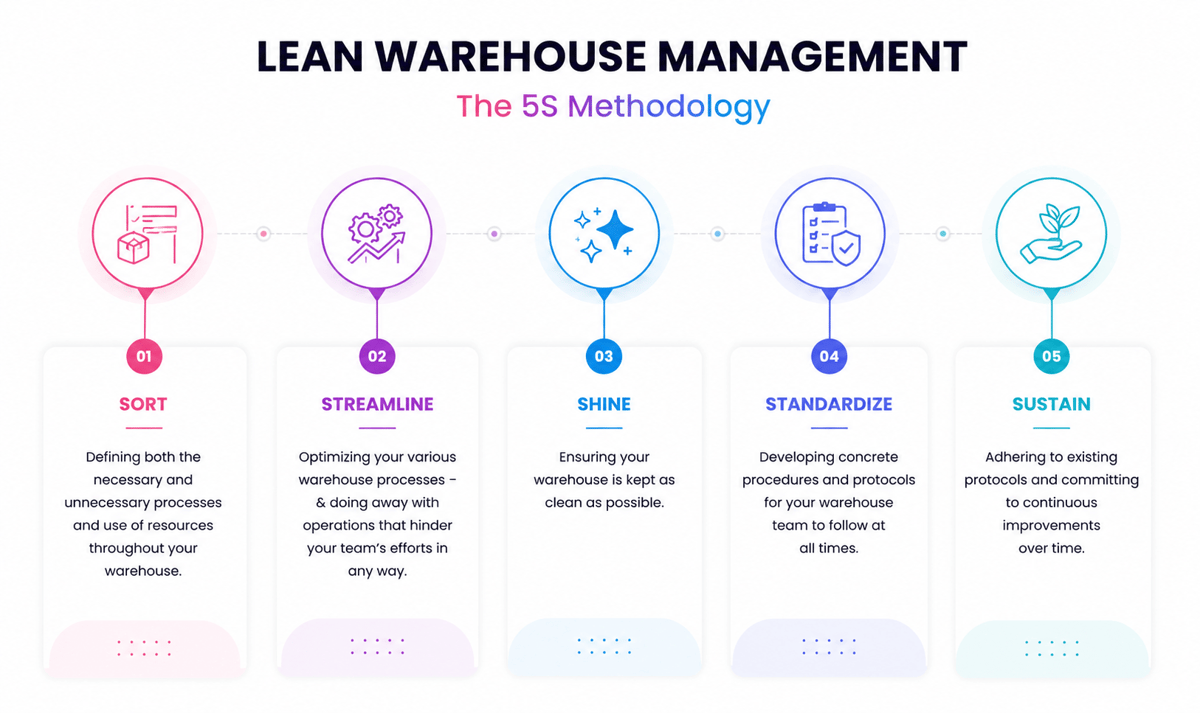
Many warehouses apply the 5S method, known as sort, set in order, shine, to keep work areas organized. The sort set in order shine approach makes inventory easier to find and reduces wasted movement across daily tasks.
A lean warehouse management system WMS supports that rhythm. It shows live stock levels, task status, and bottlenecks. Good data turns daily meetings into clear action and helps managers improve efficiency over time.
Advanced facilities often combine lean practices with automated storage and retrieval systems to reduce manual handling and improve throughput. These automated storage and retrieval systems support faster order fulfillment while maintaining inventory accuracy.
Companies that combine implementing lean warehousing, a modern warehouse management system WMS, and automated storage and retrieval systems often achieve the highest gains in productivity, space utilization, and operational performance.
The real difference shows during pressure. Traditional teams add people and accept chaos. Lean teams protect flow through standards, visibility, and warehouse slotting.
Lean Warehouse Best Practices for Waste Reduction and Flow
Most warehouses lose time in small, repeatable ways. A picker walks past the same aisle all day. A pallet waits because nobody owns the next step.
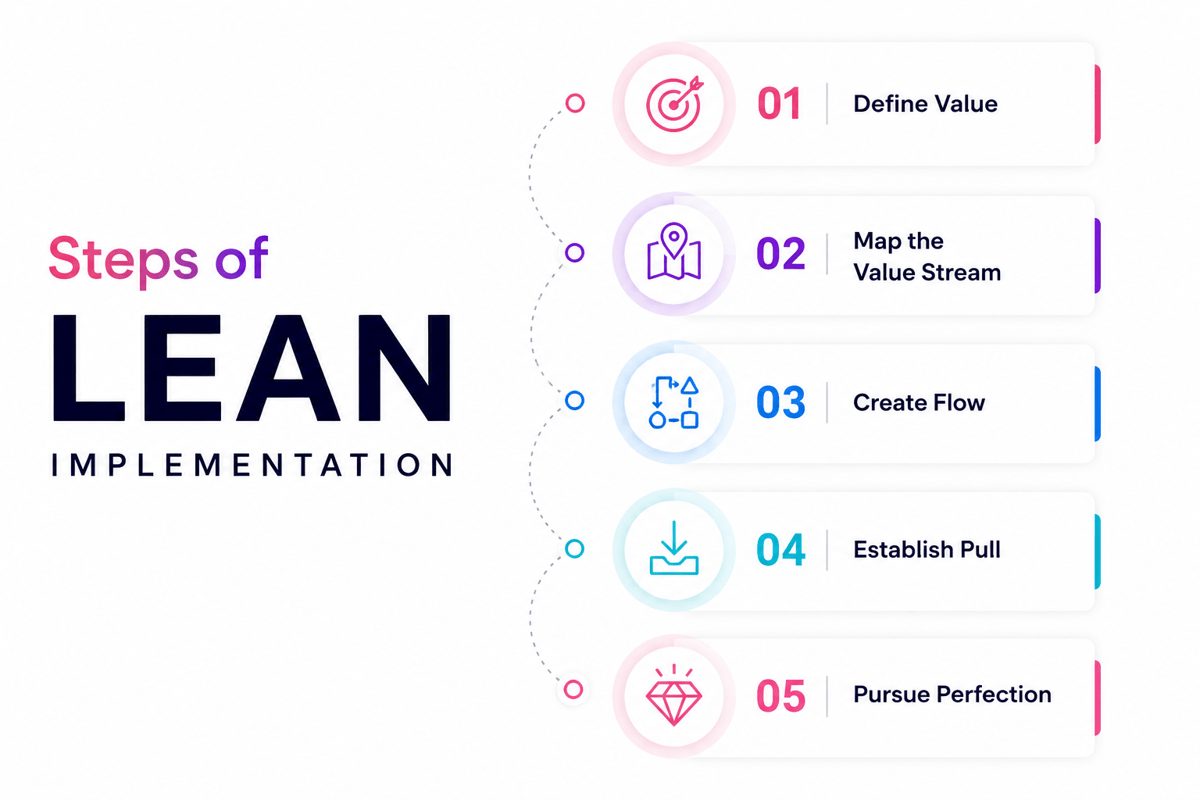
Lean warehousing makes those delays visible and fixable. The goal is not a prettier process map. The goal is a smoother flow from dock to shipment.
Remove Waste Where Work Happens
Waste rarely starts in reports or planning meetings. It shows up beside staging lanes and pick faces. Good teams watch the work before changing the work.
The strongest lean warehouse best practices start with walking routes. Teams often find ten wasted steps per pick. Across 1,000 picks, that becomes hours of lost labor.
Fast movers belong near the main pick path. Heavy items work best between knee and chest height. Slow stock can move away from prime locations.
Build Flow Around Clear Handoffs
A lean warehouse fails when work waits silently. Receiving finishes, but putaway does not start. Picking ends, but packing lacks cartons or labels.
Clear handoffs cut that dead time quickly. Visual lanes show what waits and what moves next. Standard work keeps each shift from inventing methods.
One distributor marked three zones for inbound freight. Red meant inspection, yellow meant putaway, and green meant ready stock. Dock dwell time dropped from six hours to two.
Lean warehouse management depends on fewer floor decisions. Workers move faster when rules stay simple. Exceptions still need a clear path.
A lean warehouse management system supports these routines with live signals. It shows stalled tasks before they create shortages. Software helps most when the physical flow already makes sense.
Start with one broken flow, not the whole building. Measure travel, wait time, and touches before changes. Strong flow starts with disciplined warehouse layout planning.
How a Lean Warehouse Management System Supports Continuous Improvement
A lean warehouse management system turns daily work into measurable signals. It shows where delays start, not just where they end. That difference matters in lean warehousing.
Many teams see missed shipments as packing problems. The real cause often sits upstream. A late replenishment task can slow every picker.
Data That Exposes Daily Waste
Good systems make waste visible during the shift. Supervisors see idle time, rework, and blocked aisles quickly. They can fix the pattern before overtime starts.
The dashboard should match the floor reality. If scan points feel awkward, workers skip them. Then the report looks clean, while inventory drifts.
Teams using SAP tools can compare process logic in the SAP Help Portal. That reference helps spot gaps between setup and daily work. Clean master data still decides the final result.
Small Fixes Become Standard Work
Continuous improvement needs fast feedback loops. A strong lean warehouse does not wait for month-end reviews. It tests small changes while the pain stays fresh.
One site cut dock waiting time by 22%. The team changed staging rules after three busy mornings. The system showed which lanes caused the queue.
Lean warehouse management works best when people trust the numbers. Trust grows when data helps them remove friction. Those habits create a stronger base for a warehouse labor management system.
Conclusion
Lean warehousing works when teams treat waste as daily work. It starts with small gaps, not grand plans. A poor pick path can drain hours every week.
The strongest operations keep asking one hard question. Does this step help move accurate orders faster? If not, the process needs a closer look.
What Matters Most
A lean warehouse does not depend on slogans. It depends on clean data, clear zones, and steady routines. Teams win when they remove friction before rush periods.
Lean warehouse best practices usually look simple from the outside. On the floor, they require discipline every shift. Missed scans, blocked aisles, and unclear labels create silent delays.
The Next Practical Step
Lean warehouse management improves when leaders inspect real work. Reports help, but the floor tells the truth. The system may show flow while pallets sit waiting.
A lean warehouse management system supports this habit well. It shows stock gaps, late tasks, and repeated errors. Good teams use those signals before problems spread.
Start with one aisle, one metric, and one bottleneck. Track the change for two full weeks. What result surprised your team the most?
For your next move, compare your floor with these warehouse efficiency tips.
 Google AI
  OpenAI ChatGPT
 Frequently Asked Questions
What is lean warehousing?
Lean warehousing is a method of managing warehouse operations by reducing waste, improving flow, and using resources more efficiently. It focuses on activities that add value, such as faster picking, better inventory accuracy, and fewer handling steps. The goal is to create a lean warehouse that supports lower costs, higher productivity, and more reliable customer service.
What does motion refer to in lean warehousing?
In lean warehousing, motion refers to unnecessary movement by employees, equipment, or products within the warehouse. Examples include excessive walking, reaching, bending, or traveling between poorly placed storage areas. Reducing wasted motion helps improve productivity, lower fatigue, and speed up order fulfillment through better layout design and lean warehouse best practices.
What is lean in warehousing?
Lean in warehousing means applying lean principles to remove waste from daily warehouse processes. This includes reducing excess inventory, improving storage layouts, standardizing tasks, and minimizing errors. Lean warehouse management helps teams identify bottlenecks, streamline workflows, and create more consistent operations without sacrificing quality or customer service.
What is lean warehousing experience?
Lean warehousing experience refers to practical knowledge of improving warehouse operations using lean methods. This may include process mapping, 5S, continuous improvement, waste reduction, and performance tracking. Professionals with this experience understand how to make warehouse activities faster, safer, and more efficient while supporting business goals.
What are common lean warehouse best practices?
Common lean warehouse best practices include organizing work areas with 5S, reducing unnecessary travel, improving inventory visibility, standardizing picking processes, and using data to track performance. Many businesses also train employees to identify waste and suggest improvements. These practices help create smoother workflows and more predictable warehouse performance.
How can a lean warehouse management system help?
A lean warehouse management system can support lean goals by improving inventory accuracy, task prioritization, labor planning, and real-time visibility. It helps reduce manual errors, unnecessary handling, and delays in order processing. When aligned with lean warehouse management principles, the system makes it easier to measure performance and sustain continuous improvement.
Sync inventory in real time, manage orders, and run warehouse operations across Amazon, eBay, Etsy, Shopify, and other sales channels. From barcode scanning to organized storage and faster fulfillment, Fiftify helps reduce errors, prevent overselling, and support business growth. Explore our articles for insights on warehouse management, inventory control, and multichannel operations.
You may also like

Sustainable Packaging in E-Commerce: Why Retailers Are Switching to Reusable Shopping Bags
Sustainable packaging is becoming an important part of modern e-commerce and retail. Reusable shopping bags help businesses reduce packaging waste while creating a practical and visible extension of their brand. This article explores why retailers are adopting reusable bags, how bulk and custom options support different business needs, and what to consider when building a more sustainable packaging strategy.
Hardware Inventory Software: Smarter IT Asset Management
Choosing the right hardware inventory software helps teams track devices, control costs, improve compliance, and plan upgrades with confidence. Read on to discover key benefits, use cases, selection criteria, and best practices for smarter IT asset management.
Material Inventory Software: A Practical Guide to Smarter Stock Control
Learn how material inventory software helps businesses track raw materials, reduce waste, prevent stockouts, and connect purchasing with production. Benefits, key features, use cases, comparisons, and practical selection tips for teams ready to improve inventory control.