
Omni channel marketing platform: how it works and how to choose one
 Daniel Brooks
·
· 18 min read
Daniel Brooks
·
· 18 min read

Today’s customers do not shop in a straight line. They may see a product on social media, compare prices on a laptop, and then buy in a store. They also expect the same prices, messages, and support across all sales channels. An omnichannel marketing platform helps businesses connect these interactions and create a consistent customer experience across online and offline touchpoints. By bringing customer data, marketing activities, and channel insights together, businesses can better understand each shopper’s journey and deliver more relevant experiences at every stage.
Because of that, many brands use an omnichannel marketing platform to connect each touchpoint and keep the experience consistent. To deliver a complete view of customer behavior, these tools unify data across channels and teams. For businesses, that alignment helps ensure every interaction reflects the same intent and information.
An omnichannel marketing automation platform helps you plan, run, and measure marketing across channels in one place. You can align email, SMS, ads, mobile apps, and in-store messages so they work together. This helps you reduce mixed signals and guide people toward a clear next step.
This guide explains what an omnichannel marketing platform is, how it works, and what to look for when you choose one. You will also learn how omnichannel marketing automation can save time by triggering the right message based on real actions, like a cart add, a store visit, or a support ticket.
Some teams call it an omnichannel marketing platform, while others call it marketing software. The name changes, but the goal stays the same: create one connected customer journey. A strong platform helps brands deliver a consistent omnichannel experience across every touchpoint while improving engagement and conversion rate performance.
Choosing the best omnichannel marketing platform software is crucial for seamless integration in any platform.
How an omni-channel marketing platform works
To take that consistency further, see how a personalized ecommerce experience uses unified data to tailor every touchpoint across channels.
This approach also supports multichannel marketing strategies by connecting channels through seamless integration, helping brands deliver a consistent customer experience and stronger user experience across every touchpoint.
This approach is especially important for businesses that operate both online and in brick-and-mortar stores, ensuring a consistent experience across physical and digital touchpoints.
Choosing the best marketing platform software ensures seamless integration across every omni-channel platform.
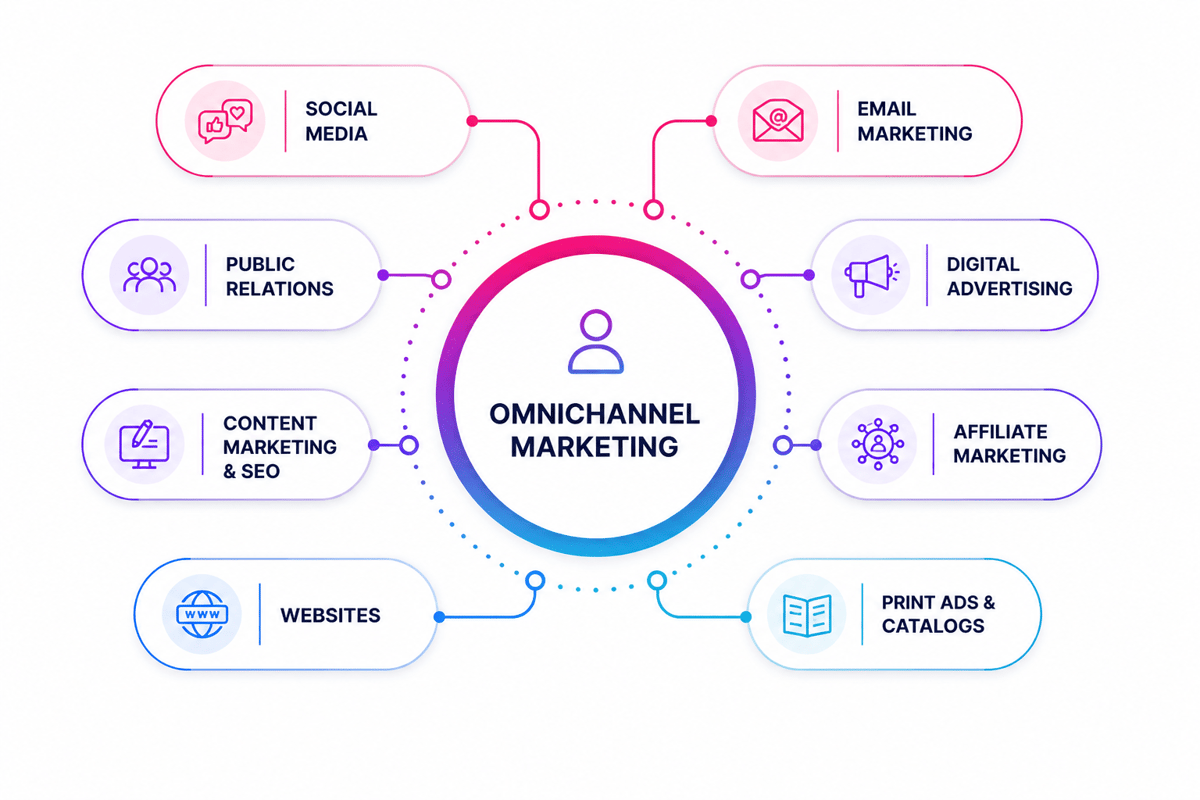
How omnichannel marketing platform work across channels
An omnichannel marketing platform connects your customer data, messages, and campaigns in one place. Instead of running each channel on its own, you plan one journey and deliver it everywhere. Customers see the same brand story whether they shop on your site, open an email, or visit a store.
Step 1: collect signals from every touchpoint
The platform tracks product views, cart activity, purchases, and support chats. Then it ties those actions to a single customer profile. This step helps you avoid mixed messages and repeated offers.
Step 2: set rules and trigger messages
With omnichannel marketing automation, you can trigger messages based on behavior. If a shopper abandons a cart, the system can send a reminder email, follow up with an SMS, and show a matching ad. It can also stop those messages the moment the customer buys, which protects the experience.
Step 3: control timing and frequency
A strong marketing platform keeps timing and frequency under control. You can cap how many messages a person receives and choose the best channel for each step. You reach customers without overwhelming them.
Modern omnichannel platforms act as a central omnichannel tool that unifies data from multiple channels into a single platform, making it easier to deliver personalized experiences at scale. When marketing, customer service, and the support team operate through one cross channel system, brands can create consistent journeys while improving efficiency and collaboration.
To scale these unified journeys into measurable engagement, see how b2c marketing automation helps brands personalize, automate, and optimize customer interactions.
This level of coordination supports multichannel marketing through seamless integration, helping brands maintain a consistent customer experience and improve the overall user experience across every channel.
By following an omnichannel approach and focusing on creating a seamless experience across all touchpoints, brands can significantly improve customer engagement and build stronger connections with their audience.
This approach is especially valuable for businesses that operate both online and in brick-and-mortar stores, ensuring consistent messaging and customer experiences across physical and digital environments.
Connect Shopify, draw your floor, pick an order - free plan, 7-day full trial, no credit card, no sales call.
Omni channel marketing automation explained
Modern buyers switch between phone, laptop, store visits, and social apps in the same purchase journey. That is why many teams use omnichannel marketing automation. It helps you plan, send, and track messages across channels from one place. You can keep your brand voice steady and your timing sharp.
At the center of this approach sits an omnichannel marketing platform. It connects your customer data, your campaigns, and your reporting. Then it uses rules (and sometimes AI) to trigger the next best message. A customer may browse a product on mobile, abandon the cart on desktop, and later buy in-store. With automation, you can send a helpful reminder, a price drop alert, or a post-purchase tip at the right moment.
A strong marketing software setup can also segment audiences by behavior, not just by basic traits. You can target new visitors, loyal customers, and high-intent shoppers with different flows. You can also test subject lines, timing, and offers so you learn what works faster.
When you compare tools, look for an omni channel marketing platform that can unify profiles, sync consent settings, and track results across email, SMS, push, ads, and on-site messages. Make sure the platform supports clear dashboards. If your team can see revenue impact quickly, you can improve campaigns every week, not once a quarter.
A well-designed omnichannel tool allows brands to deliver personalized messages consistently across multiple channels while managing campaigns from a single platform. This cross channel approach improves customer service alignment and gives your support team better visibility into the full customer journey across modern omnichannel platforms.
To apply these omnichannel principles in online retail, see how ecommerce marketing automation software helps you scale campaigns and boost conversions efficiently.
This level of coordination is especially important for brands that operate both online and in brick and mortar stores, ensuring a unified experience across all customer touchpoints.
Omnichannel marketing platform vs single-channel tools
Ecommerce Automation Tools usually focus on optimizing one channel well. Still, they struggle with timing and context. For instance, a customer may abandon a cart on your site. Your email tool sends a reminder, but your ads tool may show a discount at the same time. That can cut your margin and confuse the buyer. With omnichannel marketing automation, you can set clear rules. You can pause ads when an email converts, or switch to a different message when the shopper returns.
Another key difference is reporting. Single-channel dashboards show channel results, not the full path to purchase. An omni channel marketing platform links events and revenue across channels so you can see what truly drives sales. A strong omnichannel marketing software stack also helps you scale. You can reuse audiences, templates, and journeys, which saves time while improving the customer experience.
By using an advanced omnichannel tool, businesses can manage multiple channels from a single platform and deliver personalized messaging without creating internal data silos. This cross channel visibility also improves customer service coordination and gives your support team better insight into how customers interact across modern omnichannel platforms.
Integrating with CRM systems provides a unified view of each customer, helping teams track every customer’s contact across their preferred channels. This alignment also strengthens customer support, as teams can respond faster and deliver more consistent experiences.
Key features of omni channel marketing software
Modern teams need more than a tool that sends emails. They need an omnichannel marketing platform that keeps every message consistent across channels. That way, customers get the same clear experience whether they shop on mobile, desktop, social, or in-store.
Single customer view
Good omnichannel marketing software pulls data from your store, CRM, and support tools into one profile. You can personalize offers based on real behavior, not guesses.
Behavioral triggers and timing controls
With omnichannel marketing automation, you can trigger messages when customers browse, abandon a cart, or make a repeat purchase. You can also set frequency caps and quiet hours. This keeps your brand helpful, not pushy.
Segmentation and journey building
You should be able to create simple flows, test different paths, and adjust quickly. Built-in A/B testing helps you improve subject lines, offers, and send times without extra tools.
Cross-channel analytics
A solid omnichannel marketing platform shows channel performance, revenue impact, and customer lifetime value. It tracks how channels work together, not just last-click results.
Integrations and scalability
The right omni channel marketing platform connects to your ecommerce stack, supports real-time syncing, and stays fast as your list grows. When these features work together, your team can launch campaigns faster and drive more sales with less manual work.
To connect those omnichannel wins to pipeline impact, see how crm marketing automation aligns sales and marketing for faster growth.
Benefits of using an omni channel marketing platform
Modern customers move fast. They browse on mobile, compare on desktop, and buy in-store or online. An omnichannel marketing automation platform helps you keep up by connecting every touchpoint into one clear plan. Your team can send the right message at the right time, without guessing.
Better customer experience
When your email, SMS, social, website, and store data work together, people see consistent offers and helpful reminders. This builds trust and reduces frustration.
Time saved through automation
You can set rules for welcome flows, cart reminders, win-back messages, and loyalty updates. Then the system runs them across channels while you focus on growth.
Smarter personalization
A strong omni channel marketing platform supports personalization based on browsing behavior, past purchases, location, and channel preference.
Cleaner data and sharper reporting
Instead of juggling separate tools, you track one customer journey from first click to final sale. That makes it easier to spot what drives revenue and what needs work.
To turn that unified data into measurable revenue gains, explore how ecommerce analytics tools uncover insights that boost sales across your store.
Common challenges in omni-channel marketing automation
Many teams buy an omnichannel marketing platform to create a smooth customer journey. But the work often gets hard once you connect every channel. The good news is that you can fix most issues with clear ownership, clean data, and simple rules.
Data silos
Your email tool may not share updates with your POS or support desk. As a result, people see mixed messages. To solve this, map your data sources, pick one customer ID, and sync key fields daily. This step also helps your omnichannel marketing software trigger the right messages.
Channel consistency
A promo may look great in email, but confusing in SMS or in-store. Create one offer library, one brand guide, and one approval flow. This keeps your omni channel marketing platform campaigns aligned.
Over-automation
When you run too many journeys, customers get tired of alerts. Set frequency caps, use suppression lists, and prioritize high-intent actions. Strong omnichannel marketing automation should reduce noise, not add it.
Messy measurement
Different channels report different numbers, so ROI looks unclear. Define one set of goals, use consistent UTM rules, and review results in one dashboard. When you do these steps, your omnichannel marketing automation platform becomes easier to manage and easier to scale.
Addressing these issues also allows teams to use AI to coordinate campaigns across email and social media channels and deliver consistent experiences both online and offline.
Integration with CRM systems creates a unified view of each customer, helping teams manage every customer’s contact across their preferred channels. This also improves customer support, allowing faster responses and more consistent communication at every stage of the journey.
How to choose the right omni-channel marketing platform
Choosing the right omnichannel marketing platform starts with your goals. List the customer journeys you want to improve, such as browsing on mobile, buying on desktop, and getting support in chat. Then map the channels you use today (email, SMS, social, ads, web, and in-store). This step helps you avoid paying for tools you will not use.
Next, check data and tracking. A strong omnichannel marketing platform should pull customer data into one view, update it fast, and keep it accurate. Look for clear consent controls, easy tagging, and simple reporting. Also, make sure it connects to your store, CRM, and support tools through ready-made integrations or an API.
After that, review automation features. Good omnichannel marketing automation lets you build welcome flows, cart recovery, post-purchase messages, and win-back campaigns across channels. You should be able to set rules based on behavior, not just time.
Then, test usability and speed. Your team should create campaigns without long training. Choose marketing software with a clean builder, strong templates, and simple approval steps. Finally, compare pricing to value. Look beyond the monthly fee and ask about contact limits, add-ons, support levels, and setup costs. If possible, run a pilot with one key journey and measure lift in revenue, repeat buys, and customer satisfaction.
A platform that supports multichannel marketing with seamless integration across your systems will help you deliver a consistent customer experience while improving the overall user experience at every stage of the customer journey.
A modern platform should also use AI power to coordinate campaigns across email and social media channels and deliver a consistent experience for customers, both online and offline.
In addition, strong integration with CRM systems provides a unified view of each customer, helping teams manage every customer’s contact across their preferred channels. This also enhances customer support, enabling faster responses and more consistent communication throughout the entire journey.
Best practices for omnichannel marketing campaigns
Strong omnichannel campaigns start with a clear plan. Define one goal for the campaign, such as more sign-ups, higher repeat sales, or fewer abandoned carts. Map the customer journey across email, SMS, social, paid ads, and your website. When you know where people drop off, you can fix the gaps fast.
Use one source of truth for customer data. A solid omnichannel CRM helps you join profiles, orders, and browsing behavior in one place. A modern omnichannel CRM also makes it easier to coordinate campaigns across sales, service, and marketing teams. You can send the right message at the right time. Also, keep your brand voice consistent across every channel. Use the same offer, tone, and key points, even when the format changes.
Build simple segments. Group shoppers by first time vs. repeat, high value vs. low value, or product interest. With omnichannel marketing automation, you can trigger messages based on actions, such as viewing a product, adding it to the cart, or buying it twice. But avoid sending too many messages. Set frequency caps so customers do not feel spammed.
Many brands combine marketing strategies with customer data platforms to create more relevant campaigns. A strong marketing omni approach ensures customers receive consistent messages regardless of channel or device.
Test and improve every week. Run A/B tests on subject lines, send times, and offers. Track results by channel, but also measure the full journey. A good omnichannel marketing platform and modern omnichannel marketing software make it easier to see what drives real revenue, not just clicks. Review your results, share learnings with your team, and repeat what works.
To scale effectively, use an omnichannel tool that connects multiple channels inside a single platform and enables true cross-channel coordination. An integrated omnichannel CRM helps teams maintain a unified view of customer activity across all touchpoints.
Future trends in omni-channel marketing platform
Modern buyers move fast. They jump from social to email, then to a store or an app. Because of that, the next wave of the omnichannel marketing automation platform will focus on speed, clarity, and better customer experiences.
AI-driven decisions
Teams will use AI to spot patterns, predict needs, and suggest the next best message. Omnichannel marketing automation will feel less like set and forget and more like a smart helper that improves every week.
Organizations investing in marketing omni technologies will use AI to personalize campaigns at scale and improve customer engagement across every channel.
Real-time data across every channel
Platforms will connect web, app, point of sale, and support data in one view. Marketers can act right away, not days later. Brands can tailor offers based on what people do now, not what they did last month.
A centralized omnichannel CRM provides real-time visibility into customer behavior and helps marketers react faster to changing preferences.
Privacy first architecture
Customers want control, and rules keep changing. Leading tools will build in consent, clear data settings, and stronger security by default. Brands will also rely more on first party data, such as email signups and loyalty programs.
Simpler interfaces
When you choose omnichannel marketing software, look for flexible integrations, strong reporting, and tools that help you test, learn, and adjust fast.
In the future, platforms will increasingly use AI to analyze behavior across email and social media channels and create seamless customer journeys that connect experiences online and offline.
Businesses that embrace marketing omnichannel strategies will be better positioned to deliver personalized experiences while maintaining consistent communication across channels.
By adopting an omnichannel approach and focusing on creating a seamless experience, brands will boost customer engagement and deliver more connected journeys across every touchpoint.
This evolution will be especially important for businesses that operate both online and in brick and mortar stores, ensuring consistent and connected customer experiences across all channels. Strong omnichannel CRM capabilities and advanced marketing omnichannel technologies will play a central role in supporting these experiences and driving long-term growth.
Conclusion
A modern business needs one clear view of every customer. That is why an marketing platform matters. It helps you connect email, SMS, social, ads, your website, and in-store touchpoints in one plan. Customers get a consistent message, no matter where they shop or browse.
To choose the right tool, start with your goals. Do you want to grow repeat sales, improve retention, or lift average order value? Check if the platform supports real-time data, easy integrations, and clear reporting.
Make sure your team can use it fast. A clean dashboard, simple workflows, and ready templates save time. If you sell on many channels, an omni channel marketing platform can help you keep offers, pricing, and brand voice aligned. Confirm that the vendor offers good support, training, and security.
When you put the customer first, your marketing becomes easier to manage and easier to measure. With the right omnichannel marketing software, you can deliver better experiences, reduce wasted spend, and build long-term loyalty. Especially when it works alongside multichannel order management software to align marketing efforts with real orders and multi-channel inventory management.
 Google AI
  OpenAI ChatGPT
 Frequently Asked Questions
Which medical info platforms have the best omnichannel health marketing?
Medical info platforms with strong omnichannel health marketing usually support email, SMS, portals, and secure messaging. They focus on consistent communication while meeting healthcare privacy and compliance standards.
Can you integrate multi-channel marketing platforms with CRM tools?
Yes, most multi-channel marketing platforms integrate with CRM tools. This integration allows businesses to sync customer data, track interactions, and personalize messages across channels.
How much does an omnichannel marketing platform cost?
The cost of an omnichannel marketing automation platform depends on features, users, and message volume. Prices often range from basic monthly plans to higher tiers for advanced automation and analytics.
How do omnichannel fulfillment platforms compare in market leadership?
Omnichannel fulfillment platforms differ in market leadership based on scalability, integrations, and reliability. Leading platforms support real-time data, fast fulfillment, and strong partner ecosystems.
Are there top-rated marketing automation platforms with omnichannel messaging?
Yes, many top-rated marketing automation platforms include omnichannel messaging. These tools combine email, SMS, push notifications, and analytics in one system to support coordinated campaigns.
I specialize in building scalable eCommerce systems powered by AI and automation. My work focuses on growing sales across Amazon, eBay, and Etsy through technology integration, data-driven strategies, and performance optimization. I also publish articles and insights about eCommerce technology, warehouse operations, and multichannel growth.
You may also like
Enterprise parcel shipping software: what to check before you buy
Choosing the right enterprise parcel shipping software lowers logistics costs, boosts delivery performance, and simplifies complex carrier operations at scale. Explore the essential features, benefits, and selection criteria to optimize your multi-carrier strategy today.
Warehouse order fulfillment software: features and use cases
Warehouse order fulfillment software helps businesses streamline inventory, picking, packing, shipping, and returns from one connected platform. This brief outlines key benefits, features, use cases, and buying criteria for choosing fulfillment software that scales.
Inventory management cloud: how it works and when to switch
An inventory management cloud helps businesses track stock, automate workflows, reduce errors, and make faster decisions from anywhere. Benefits, use cases, selection criteria, and practical steps for adopting cloud-based inventory tools with confidence.