
Ecommerce order management: from checkout to shipped order
 Fiftify Team
·
· 16 min read
Fiftify Team
·
· 16 min read

Fast fill starts long before a parcel ships. Ecommerce order management links checkout, stock, pay, pick, pack, and ship. Each team sees the same live data. As a result, teams act fast and make fewer errors.
In fact, growth puts pressure on manual flows. More channels mean more gaps. So the right ecommerce order management system turns daily strain into a clean, repeatable flow. Businesses that still take orders by phone, mail or catalog have their own options, covered in our guide to mail order manager software.
Why order flow breaks
In fact, most gaps come from split systems. Stock may show open online after it sold in a store. A pick may start before fraud clears. An ecommerce order processing system fixes those gaps with set rules. Also, each team sees the same order status and stock count.
What strong order management creates
Furthermore, a strong ecommerce OMS system does more than show orders. It sits between sales and fulfillment. That layer keeps stock, orders, and ships aligned. In fact, new channels add reach but also add risk. Each market, store, and site can be a new fail point. Ecommerce order management brings those parts into one flow.
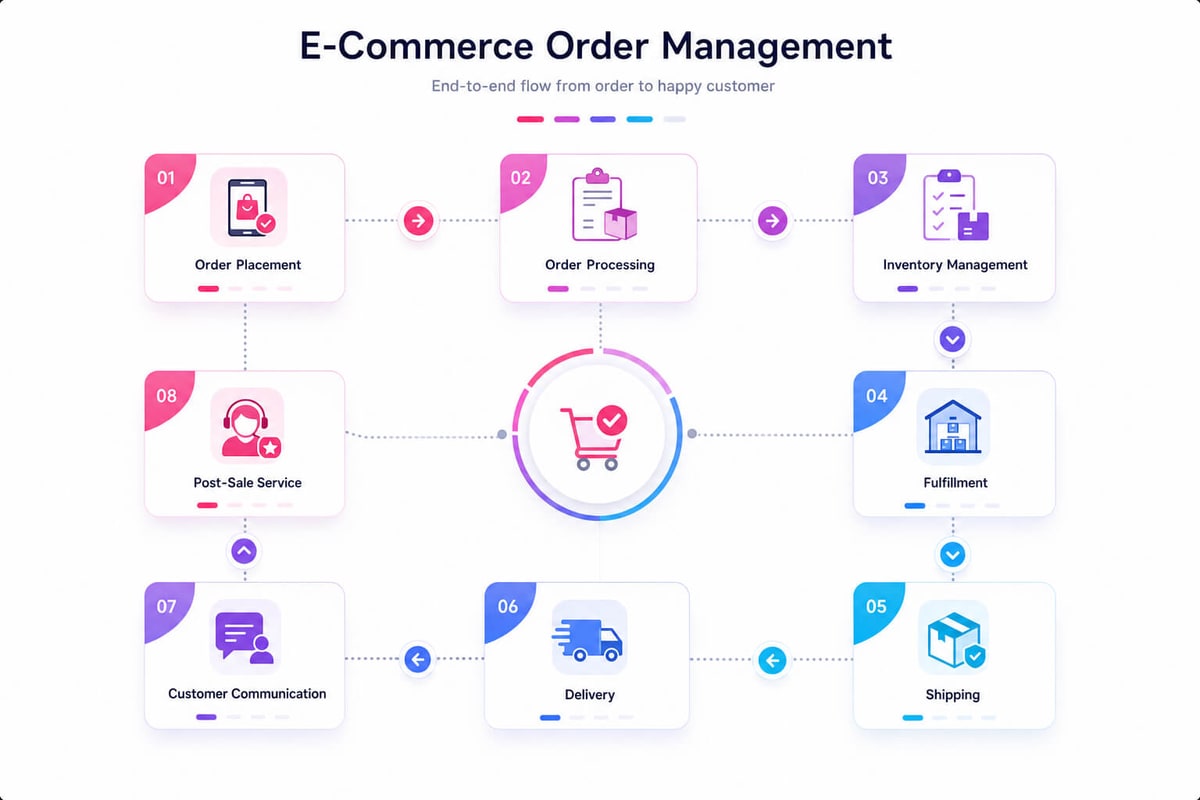
What ecommerce order management means for growing brands
For a growing brand, ecommerce order management means full order control. It links sales channels, stock, pay, fill, and returns. With no shared view, teams rely on sheets and manual notes. Growth shows gaps fast. A big sale can create 500 orders across Shopify, Amazon, and bulk sites. If stock lags one hour, the brand can over-sell and refund. So an ecommerce order management system guards the brand at peak times.
From order capture to control with ecommerce order management
An ecommerce order processing system gives each order a clear path. It logs the order, checks stock, routes work to the right spot, and shares status. Staff sees the same data before pick, pack, ship, or buyer call. Also, the system helps teams handle gaps fast. A fraud check, split ship, or backlog needs quick action. The system shows where the order sits and who acts next.
That control matters when channels grow at different speeds. Markets may need short ship windows. Stores may need stock for local pickup. A strong ecommerce OMS system handles those needs with fewer manual calls. For many brands, the right ecommerce order management system gives the base for omnichannel ecommerce fulfillment.
Why growth changes the need for an ecommerce order management system
However, basic cart tools work at low volume. They take payment and send order data to one site. Growing brands need a broader ecommerce order management system that handles mixed channels and split stock. In fact, the value comes from shared rules and live data. The system routes orders by stock, ship date, margin, or cap. That logic cuts costly moves and late ships.
Also, returns fit the same ops model. A full ecommerce order and shipment management flow links shipped items, return reasons, refund status, and open stock. Finance, service, and fill teams then work from one record. Also, ecommerce order management turns split tasks into one flow. So brands scale without losing control.
Connect Shopify, draw your floor, pick an order - free plan, 7-day full trial, no credit card, no sales call.
How an ecommerce order processing system works
Furthermore, an ecommerce order processing system connects checkout, pay, stock, pick, pack, and ship. It turns each buy into a clear flow. Every step lets data teams check. For growing brands, the system creates one shared record of demand. Teams see the same order status, stock count, buyer notes, and carrier facts.
From checkout to order routing in an ecommerce OMS system
First, the system checks payment and logs order data. It checks stock against live counts, not old sheets. If items sit in many sites, routing rules pick the best spot. Those rules weigh stock, ship speed, cost, and cutoffs. Also, a mature ecommerce OMS system can split orders across sites when one spot lacks stock. That stops delays while keeping each ship tied to one order.
Inventory, fill, and status syncs in ecommerce order management
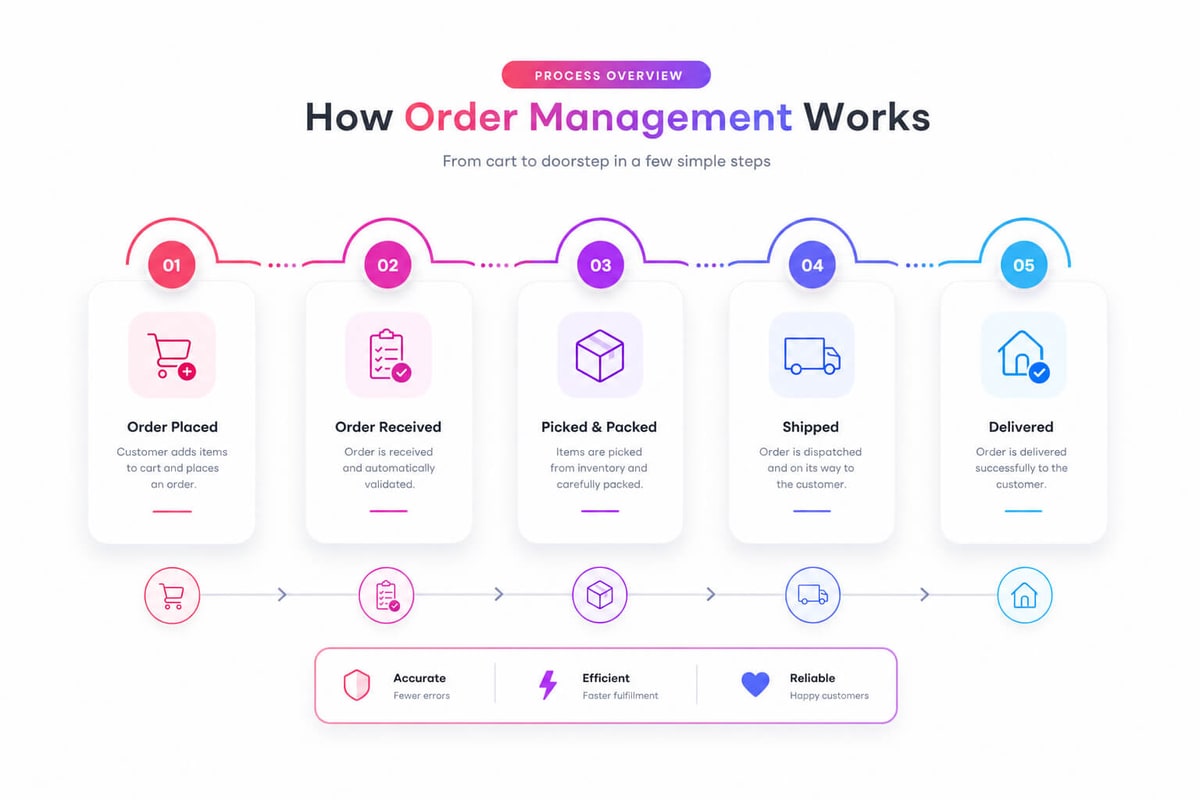
After routing, the ecommerce order management system holds stock for the order. That hold stops stock from selling twice at busy times. The system then sends fill details to the warehouse or partner. Each scan syncs the order record as work moves. Picked, packed, labeled, shipped statuses make a clear trail. This makes ecommerce order and shipment management easier across markets, stores, and brand sites.
Also, buyer syncs come from the same order record. The system sends tracking counts and gap notes as status changes. Fewer manual checks mean fewer missed messages. Also, these controls help shorten cycle times and cut errors. This flow gives brands a clear path toward ecommerce fulfillment automation.
Ecommerce OMS system vs. basic cart tools
However, basic cart tools handle checkout, payment, and simple order records. They work when volume stays low and channels stay few. But order management becomes more key when orders split across stores, markets, and carriers. In fact, a cart logs the sale but rarely manages the full promise. An ecommerce OMS system connects order capture, stock data, routing, fulfillment, and status syncs. That wider view helps teams ship faster with fewer manual checks.
Where cart tools fit vs. an ecommerce OMS system
Cart tools serve the front end of the buy flow. They let buyers add items, pay, and get order emails. That scope fits a small list with one stock spot. The flow stays clear as few gaps exist.
- They support checkout and pay capture
- They store basic order and buyer records
- They may create simple pack slips or email alerts
- They often rely on staff for routing calls
However, problems appear when sales channels grow. A cart may not show true stock across all spots. With no stronger ecommerce management, teams risk over-selling fast items.
When an ecommerce OMS system becomes necessary
A dedicated ecommerce order management system manages work after checkout. It checks stock, fills spots, and syncs order status. It can also send data to site, account, and carrier tools. In fact, this matters when buyers expect fast, clean shipping. An ecommerce order processing system routes orders based on stock, distance, or service level. That logic cuts manual checks and reduces late shipments.
In fact, the biggest gap is in ops control. Ecommerce order and shipment management links each order to the stock and carrier data behind it. That link gives service teams clean answers before buyers ask. Also, growing brands often keep their cart for checkout. They add an ecommerce order management system to control fill behind the scenes. Brands often review fill depth beside the best ecommerce inventory management software.
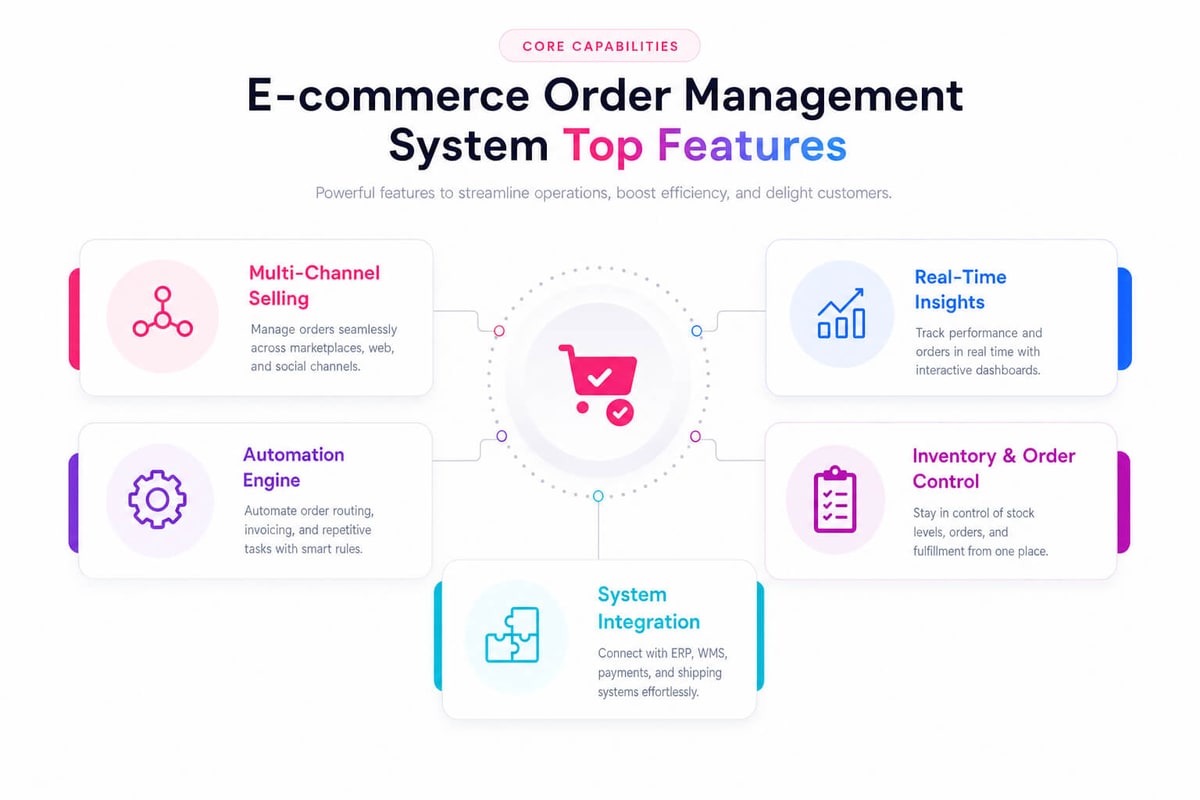
Key features of an ecommerce order management system
Strong ecommerce order management needs clean data moving fast. A modern ecommerce order management system connects orders, stock, pay, and ship in one place. Without these features, teams work from split screens. That slows fill and raises errors at peak times.
Order view and inventory control in ecommerce order management
Strong ecommerce order management starts with one order view. Teams see order status, pay status, stock spot, and buyer data with no switching tools. Also, live stock syncs protect sales channels from over-selling. The system should sync stock across stores, markets, and sites.
Furthermore, smart routing helps each order ship from the best spot. The system compares stock, distance, carrier options, and ship dates. Furthermore, for larger ops, omnichannel warehouse automation supports faster pick, pack, and carrier handoff. Gap alerts also matter. The system should flag pay holds, address issues, and failed carrier syncs before they delay fill.
Workflow auto and buyer syncs for ecommerce order processing
An ecommerce order processing system cuts manual work across repeat tasks. It sends orders to sites, creates pick lists, prints labels, and syncs status. Reliable ecommerce order management also supports clear buyer communication. Auto emails and tracking syncs reduce ‘where is my order’ tickets. They help service teams focus on hard cases.
Also, a strong ecommerce OMS system handles returns and swaps in the same flow. Return rules, refund status, and restock data stay tied to the original order. Reports turn daily order work into useful calls. Together, these controls give teams the clean data they need for multi-channel inventory management.
Ecommerce order and shipment management: checkout to delivery
Order management connects the order promise with the ship result. The flow starts at checkout, then moves through pay, stock hold, pick, pack, carrier pick, and ship sync. Each step needs clean data between systems. A strong ecommerce order processing system keeps orders, stock, and ship facts aligned before warehouse teams touch the order.
Order flow after checkout
First, the system confirms payment and checks open stock. Ecommerce management routes the order to the right spot based on stock, ship cost, and speed. As U.S. ecommerce sales grow, brands need faster order calls across channels. Manual checks create delays when volume rises at peak times. An ecommerce OMS system cuts those delays by applying set rules. It can split orders, flag fraud risk, hold backlog, and send clean pick lists to sites.
Ship control and delivery view in ecommerce order management
In fact, ship control starts when the order reaches the floor. The ecommerce order management system shares pack rules, carrier options, and ship dates in one flow. In fact, carrier pick needs more than the lowest rate. The system compares ship dates, zone costs, pack weight, and past carrier results before labels print. Also, buyers judge the order by the date they see. Ecommerce order and shipment management keeps tracking counts and gap alerts tied to the original order.
Also, returns depend on this link. When the ecommerce order management system stores shipping history, service teams can confirm delivery facts and handle return requests faster. Strong ecommerce order management gives teams one version of truth. These controls also create a clear bridge to warehouse order fulfillment software.
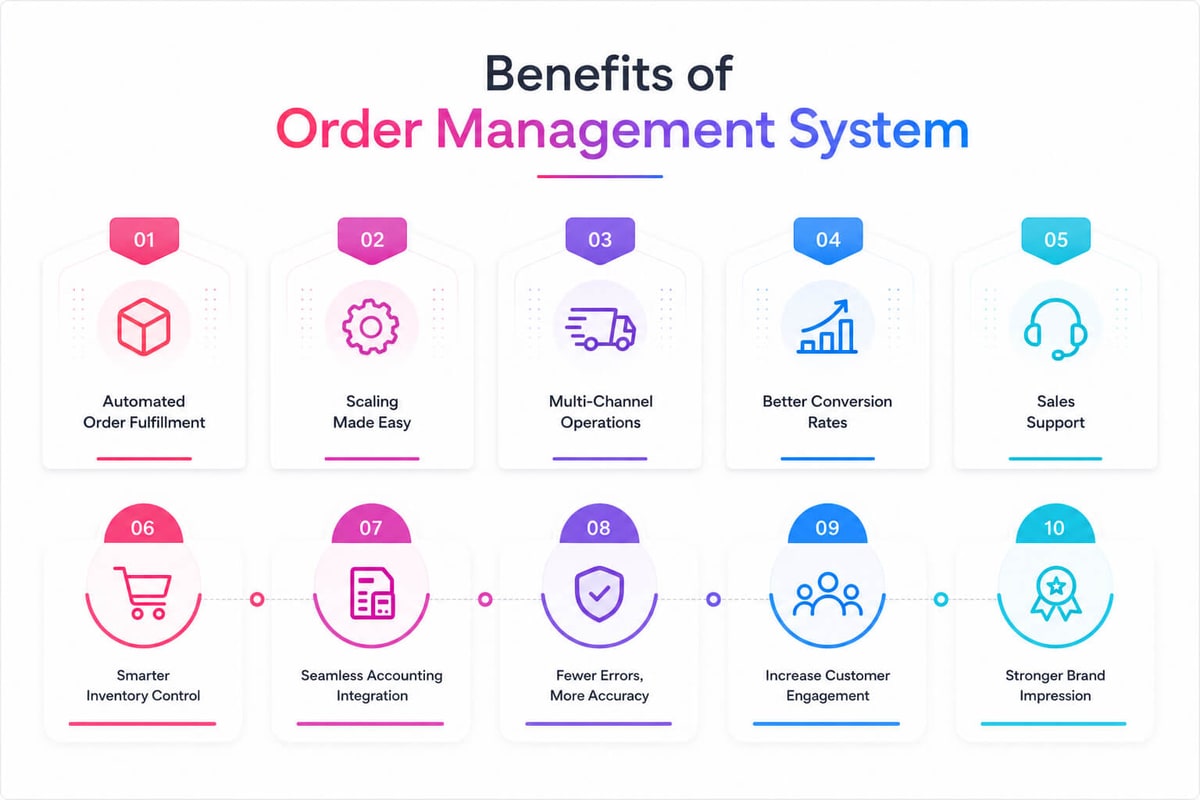
Benefits of ecommerce order management
Ecommerce management gives growing brands a cleaner way to control orders, stock, and ship dates. Teams work from one order record. An ecommerce OMS system cuts manual handoffs between sales, fill, and support teams. So, when each team sees the same order status, fewer questions slow fill.
Faster ops with fewer errors
A strong ecommerce order processing system cuts repeat admin work from daily order flow. It routes orders, syncs stock, and flags gaps before they reach buyers.
- Fill teams pick from live order data, not old sheets
- Support teams answer ship questions with no chasing syncs
- Finance teams match orders, pay, and refunds faster
- Leads spot jams before late ships build up
Furthermore, these gains matter most at peak times. Ecommerce order management helps teams process high volume without adding the same headcount. Also, an ecommerce order management system lifts stock clean data across channels. When stock syncs after each sale, brands cut over-selling and canceled orders.
Better buyer experience after checkout
Ecommerce order and shipment management shapes the buyer’s feel after pay. Clear status syncs, faster ship calls, and clean ship dates cut support tickets. A modern ecommerce order management system helps brands set better promises. So buyers get tracking details sooner and see fewer surprise delays. Returns also become easier to manage. Teams can check the original order, pay, ship, and return reason in one place.
Ecommerce order management creates value as it links daily ops with buyer trust. For many brands, that shared control layer becomes the link between sales growth and order management software. Also, see how warehousing and shipping services can support your fill partners.
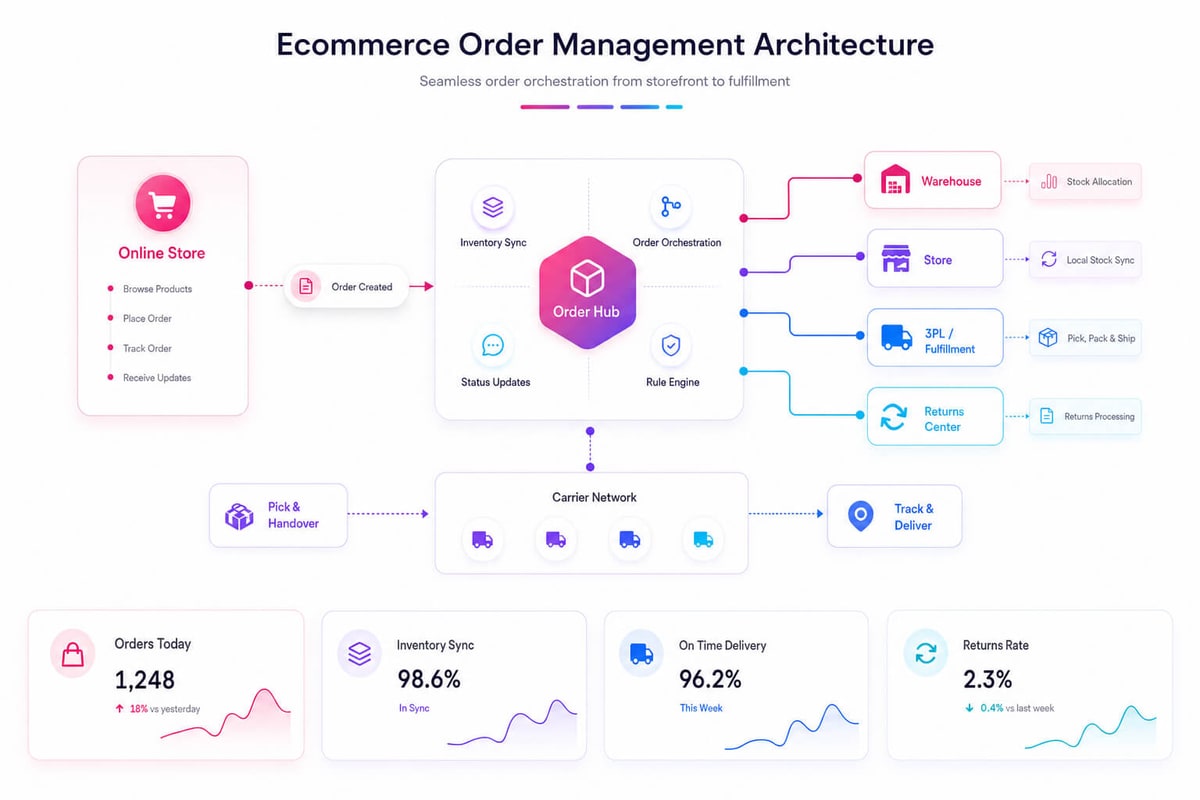
Use cases for ecommerce order management across sales channels
Growing brands rarely sell through one channel. A store may process orders from Shopify, Amazon, TikTok Shop, bulk sites, and in-store pickup. Ecommerce management brings those streams into one queue. So teams spot demand before delays appear. The main value shows up when rules replace manual sorting. An ecommerce OMS system can route orders by stock, ship date, margin, or cap. Staff spend less time checking screens and more time clearing gaps.
Multi-channel retail and market orders
In fact, market sales often create the first pressure point. Amazon may need same-day confirmation while a brand site may allow slower handling. An ecommerce order management system keeps channel rules tied to each order. That cuts missed service levels. Also, ecommerce order management helps teams avoid over-selling. Shared stock syncs across channels after each sale, return, or cancel. This clean data matters when fast-moving items sit in many sites.
- Stores can route buy online, pick up in store orders to nearby stock
- Bulk orders can hold stock with no blocking retail demand
- Service teams can view order status with no switching systems
Fill models, gaps, and cross-border orders
In practice, different fill models create different order paths. For example, drop-ship orders move to vendors. Sub orders may split across future ship dates. A strong ecommerce order processing system tracks each path with no hidden gaps. Also, returns benefit from clean order records. Ecommerce order and shipment management shows whether the item should return to stock or disposal.
Also, cross-border selling adds tax, duty, address, and carrier limits. Ecommerce order management can flag missing customs data before the package reaches the dock. That early signal stops failed labels. For high-volume sellers, the strongest use case combines all channels and fill types. This base can also connect order routing with enterprise parcel shipping software.
How to choose the right ecommerce order management system
The best ecommerce order management system fits how orders move today. It should also support the volume, channels, and rules planned for next year. Growing brands often need more than basic order capture. Strong ecommerce order management connects orders, stock, pay, ship, and returns in one flow.
Match ecommerce order management features to daily ops
In practice, channel mix shapes the system choice. A brand selling on Shopify, Amazon, bulk sites, and stores needs clean order routing. Also, clean stock data matters as much as order intake. A capable ecommerce OMS system shows open stock by spot, then stops over-selling before checkout.
- Multi-channel order capture helps teams manage every sales source
- Stock syncing cuts stock errors across sites and stores
- Order routing sends each order to the best fill point
- Returns control keeps refunds, swaps, and stock syncs aligned
- Reports show late ships, split orders, and margin issues
For many brands, an ecommerce order management system must also connect with account, site, and support tools. These links cut manual entry and remove repeat status checks. Furthermore, see the guide to ecommerce management for a wider ops view.
Assess fit, cost, and support
In practice, a demo should reflect real order flows, not ideal cases. High-volume promos, backlog, split ships, and canceled orders reveal how the system performs under pressure. A mature ecommerce order management setup gives teams clear control over gaps. Staff can see the issue, fix the order, and sync the buyer fast. Also, total cost includes more than license fees. Data moves, links, training, and support can change the budget by a wide margin.
An ecommerce order management system also needs strong vendor support. In fact, fast response times matter when orders stall at peak times. The strongest ecommerce order management choice balances auto with human control. Rules handle routine orders. Staff step in when judgment matters. Good order management also lifts ecommerce order and shipment management across the whole op. That fit turns the system from a software buy into a stronger fulfillment business process.
Implementation, metrics, and ROI
A strong ecommerce OMS system rollout starts with clean data and clear control. Teams gain more from order management when each flow has one clear owner. That structure cuts delays during testing and daily use. The strongest ROI often comes from fewer manual touches. An ecommerce order processing system can remove double entry, cut missed orders, and speed up handoffs.
Rollout steps that cut risk for an ecommerce OMS system
First, the best start is a focused flow check. Strong ecommerce order management depends on clean order, stock, carrier, and return data. Gaps in these areas create most launch problems.
- Map order flow from checkout through ship confirm
- Clean buyer, SKU, stock, and carrier data
- Test each sales channel before full launch
- Train teams on gaps, not only standard orders
- Run old and new flows side by side during testing
Ecommerce order management changes how teams handle gaps. In fact, backlog, address errors, fraud holds, and split ships need clear rules. Also, urgent SKUs need clear rules for time-critical warehouse picking. So clear rules stop staff from solving the same issue twice.
Metrics that prove ecommerce order management ROI
ROI from order management shows in both cost and speed counts. Leaders can track gains weekly after launch. Also, early trends show where more training would help.
- Order cycle time shows how fast orders move from checkout to ship
- Pick clean data tracks errors before they reach buyers
- Labor cost per order reveals savings from fewer manual steps
- Split ship rate shows how stock rules affect margin
- Stock clean data supports better buying and fewer stockouts
An ecommerce order management system should connect these counts to daily work. For example, a lower error rate may cut refunds and tickets. Better ecommerce order and shipment management can also cut rush freight costs. In fact, a mature system creates a clearer view of profit per order. With that base, order management supports faster fill with no hiding the true cost to serve.
Conclusion
Ecommerce order management gives growing brands a clear ops base. It connects orders, stock, pay, pick, pack, ship, and returns. Teams see the same order data. So delays surface sooner. However, a basic cart can take sales. But growth creates pressure. More channels, more SKUs, and tighter ship dates need stronger control. An ecommerce OMS system brings that control into daily work.
What strong ecommerce order management delivers
A well-fit ecommerce order management system cuts manual checks and double entry. It routes orders based on stock, spot, and carrier rules. That structure can cut errors before buyers notice. Reliable order management also guards margin. Teams spot split ships, aging orders, and return trends faster. Those signals help leads change rules before costs rise. Also, ship view matters as much as order capture. Strong ecommerce order and shipment management links tracking events to buyer syncs. Fewer ‘where is my order’ tickets reach support teams.
Your next step
First, the right path starts with a check of current work. Order volume, channel mix, and service goals shape the system choice. A plain map often reveals hidden steps. From there, a brand can compare each ecommerce order processing system against real flows. The best fit handles normal orders, gaps, and returns with clear rules. It also gives staff data they trust when things are busy.
Ecommerce order management works best as an ops system. It helps teams promise cleanly and fill faster. Start by checking the three order issues that create the most delays. Also, brands that want a wider view can explore how ecommerce shipping logistics shapes faster, smarter fill ops.
 Google AI
  OpenAI ChatGPT
 Frequently Asked Questions
How do you implement ecommerce order management software?
Start by mapping your current order flow, from checkout to delivery and returns. Choose an ecommerce order management system that integrates with your sales channels, inventory tools, payment systems, and shipping carriers. Then migrate data carefully, automate key workflows, train your team, and test the process before going live.
How does order fulfillment help manage ecommerce inventory?
Order fulfillment connects sales activity with real-time stock movement. A strong ecommerce order processing system updates inventory as orders are placed, picked, packed, shipped, or returned. This helps prevent overselling, improves replenishment planning, and gives teams better visibility across warehouses, stores, and third-party logistics providers.
When should a business use distributed order management for ecommerce?
Distributed order management is useful when a business sells across multiple channels or fulfills from several locations. It helps route each order to the best warehouse, store, or supplier based on inventory, delivery speed, and cost. This makes ecommerce order management more efficient as order volume and operational complexity grow.
How do ecommerce businesses manage courier delivery for orders?
Ecommerce businesses manage courier delivery by connecting their OMS with shipping carriers and delivery platforms. This supports rate comparison, label creation, tracking updates, and delivery notifications. Effective ecommerce order and shipment management also helps teams handle failed deliveries, returns, and customer service requests more quickly.
How do ecommerce companies manage seasonality in order volumes?
Companies manage seasonal spikes by forecasting demand, increasing inventory, adding fulfillment capacity, and automating order workflows before peak periods. An e-commerce order management system helps prioritize orders, monitor stock, and reduce manual work. With better planning, ecommerce order management can support faster delivery and fewer errors during busy seasons.
How much does poor order management cost ecommerce businesses?
Poor e-commerce order management can lead to stockouts, overselling, late shipments, canceled orders, refunds, and lost customer trust. The total cost varies by business size, but even small error rates can reduce margins and repeat purchases. An ecommerce OMS system helps lower these costs by improving accuracy, visibility, and fulfillment speed.
Sync inventory in real time, manage orders, and run warehouse operations across Amazon, eBay, Etsy, Shopify, and other sales channels. From barcode scanning to organized storage and faster fulfillment, Fiftify helps reduce errors, prevent overselling, and support business growth. Explore our articles for insights on warehouse management, inventory control, and multichannel operations.
You may also like

How to choose an ecommerce marketplace service provider for scalable growth
Learn how an ecommerce marketplace service provider helps businesses launch, manage, and scale a profitable ecommerce marketplace. Platform choices, vendor operations, software tools, management services, costs, and practical selection tips.

Ecommerce software solutions: features, costs and how to choose
Learn how to evaluate ecommerce software solutions for online stores, marketplaces, and retail teams. Essential features, vendor comparisons, implementation tips, and practical ways to choose software that supports growth, operations, and customer experience.

Multi-carrier shipping software: features and how to compare options
How multi carrier shipping software compares rates, prints labels, tracks orders and handles returns, and which features to check before you choose one for your store.