
Best ecommerce inventory management software: features to compare
 Emily Carter
·
· 10 min read
Emily Carter
·
· 10 min read

Most online stores lose sales before customers complain. The site shows stock, but the shelf sits empty. That gap turns marketing spend into wasted work. The best ecommerce inventory management software fixes that gap at the source. It connects orders, stock counts, purchase orders, and returns. Teams stop guessing which number deserves trust.
Inventory problems rarely start with large failures. They start with one skipped update after a busy weekend. Then marketplaces, warehouses, and support teams drift apart.
A spreadsheet can handle fifty orders daily. At five hundred, it turns into detective work. Staff chase missing SKUs instead of shipping orders. This is why many growing businesses adopt inventory management systems that provide real-time visibility and help teams manage inventory more effectively.
What the right platform changes: best ecommerce inventory management software
The right platform does more than count products. It shows stock changes as orders move. Returns, bundles, and supplier delays appear sooner.
The best inventory software for ecommerce matches how the business sells. Also, a single-channel store needs clean stock tracking. A multi-channel seller needs rules for every marketplace. Modern inventory management systems help synchronize data across channels and support a more connected supply chain.
Good software also exposes uncomfortable truths quickly. Slow sellers tie up cash for months. Fast sellers need reorder points before demand spikes. Better visibility helps teams manage inventory proactively rather than reacting to stock issues after they occur.
The platform choice shapes fulfillment, forecasting, and profit. Strong tools match order volume, channel mix, and team habits. Weak tools hide problems until customers find them. The best solutions connect inventory, orders, and the broader supply chain, allowing businesses to manage inventory accurately while scaling operations with reliable inventory management systems.
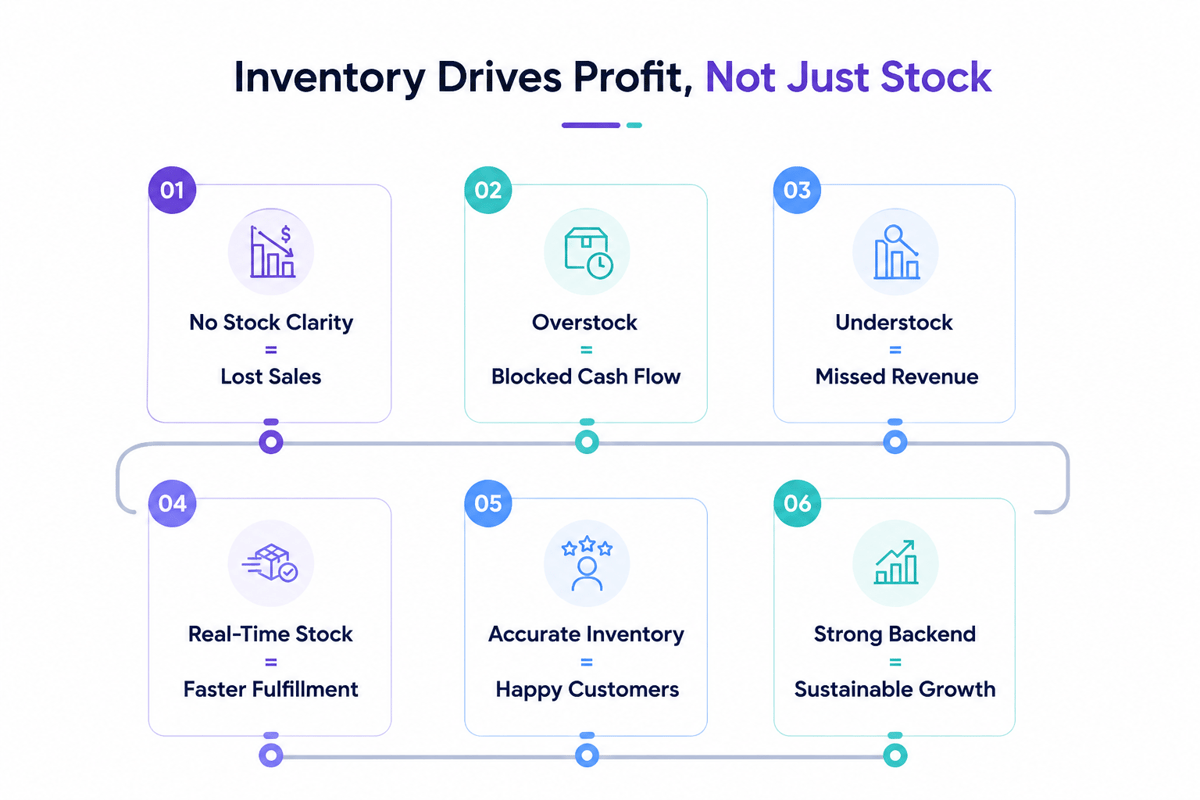
Why the best ecommerce inventory management software matters for growing online stores
Growth often hides inventory problems until sales slow. A store can look healthy while stock data lies. Customers feel the gap before the team does.
Software matters because growth adds friction. More SKUs, channels, suppliers, and returns create daily drift. Spreadsheets rarely survive that level of movement.
Stock errors cost more at scale
Small stock errors feel harmless in early sales. At volume, one wrong count triggers real costs. Oversells lead to refunds, support tickets, and angry reviews.
The warehouse may show ten units available. The shelf may hold only six. That mismatch can break a promotion by lunchtime.
Excess stock hurts in a quieter way. Cash sits in slow items instead of winners. Storage fees grow while margins shrink every month.
Manual tracking breaks under channel growth
Most teams start with simple tools for good reasons. A spreadsheet feels cheap, familiar, and easy to change. Then, marketplace orders start hitting every few minutes.
Manual updates cannot keep pace with live selling. Staff enter late counts after orders have already shipped. The system looks tidy, yet the floor disagrees.
The best inventory software fixes the timing problem. It syncs stock changes as sales, returns, and transfers happen. Buyers see fewer false promises at checkout.
Better inventory control also improves buying decisions. Reorder points come from sales speed, not gut feel. Teams spot dead stock before it eats another season.
Growing stores need one stock truth across every channel. Without it, busy days turn into cleanup days. The right platform turns scattered inventory work into multi-channel inventory management.
Connect Shopify, draw your floor, pick an order - free plan, 7-day full trial, no credit card, no sales call.
Key features to look for in the best inventory software for ecommerce
Feature lists can look impressive and still miss daily pain. The best inventory software fixes the messy moments first. Think oversells, late purchase orders, and hidden dead stock.
A good platform gives clear stock truth across channels. It also shows why the stock changed, not just what changed. That audit trail saves hours during busy weeks.
Real-time stock accuracy
Real-time tracking matters when customers buy from many places. A Shopify order should update Amazon and the warehouse. Delays create phantom stock and angry support tickets.
Look for channel sync that handles edge cases. Bundles, returns, damaged goods, and split shipments test every system. Weak tools count the same item twice.
Barcode scanning also separates strong tools from weak ones. Manual counts feel cheap until errors stack up. One wrong digit can cancel a profitable launch.
Automation that supports buying decisions
The best ecommerce inventory management software should guide replenishment with real sales data. Static reorder points break during seasonal spikes. Smart alerts use velocity, lead time, and supplier delays.
Forecasting also needs clean demand signals. Also, promotions, marketplace fees, and stockouts distort the picture. Good tools let teams adjust forecasts without spreadsheet chaos.
- Low-stock alerts that reflect supplier lead times.
- Purchase order tracking from draft to receipt.
- Batch, lot, or serial tracking when products need traceability.
- Clear landed cost views for true margin checks.
- Simple reporting that shows slow movers quickly.
Reporting should expose decisions, not decorate dashboards. The best report shows cash stuck in the shelves. Another useful view flags products nearing stockout before ads run.
Integrations matter, but depth matters more than logos. A shallow connector moves numbers without useful context. Your inventory platform should connect cleanly with order management software.
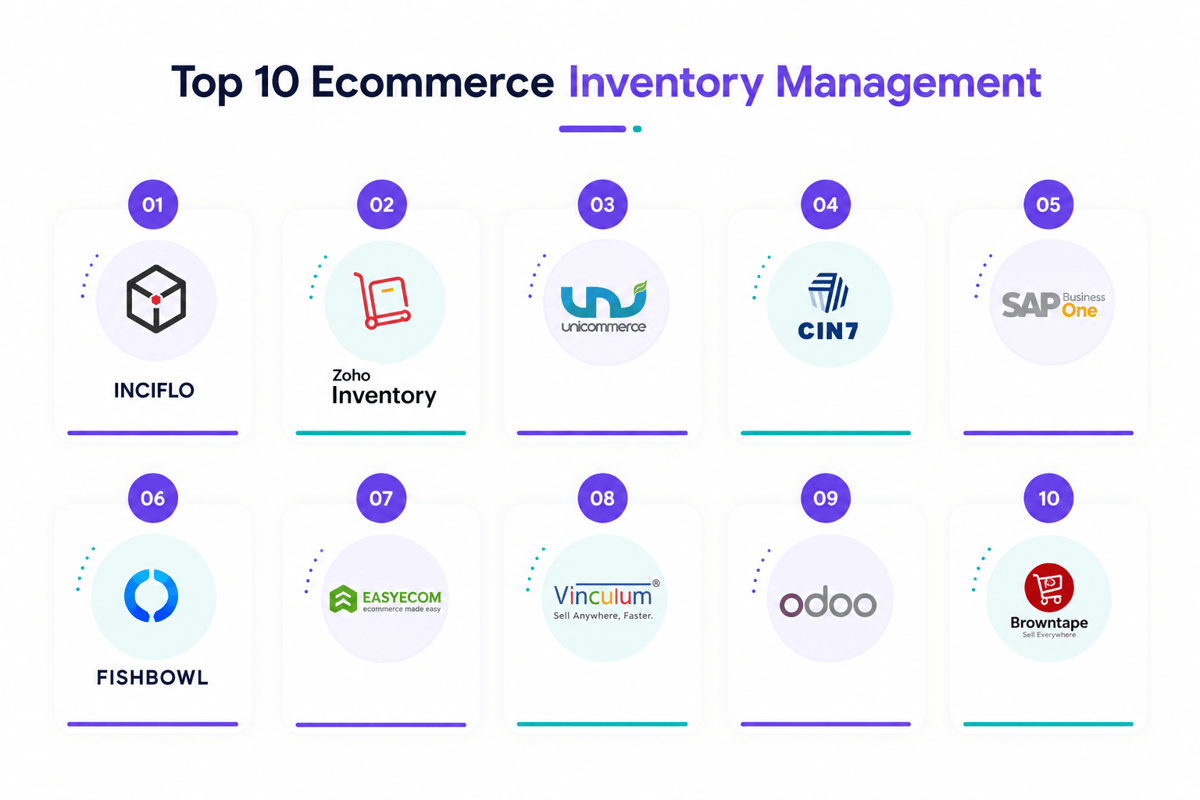
Comparing the best ecommerce inventory management software by business size and sales channels
The best software changes with your operating model. A five-product Shopify store does not need NetSuite. Size matters, but channel mix matters more. One store can feel simple until Amazon enters.
Match the platform to size
Small stores need speed, clean counts, and simple alerts. Tools like Zoho Inventory or Sortly often fit here.
Growing brands need stronger order routing and purchase planning. They also need clean links across warehouses and marketplaces.
Larger teams need controls, permissions, and deeper reporting. A weak setup can hide stock gaps for weeks.
Compare channels before features
A Shopify-only brand can start with lighter software. The risk grows when sales spread across channels.
Amazon, eBay, Walmart, and TikTok Shop all move fast. Slow stock updates create overselling during busy periods.
The best inventory software for ecommerce depends on channel pressure. A marketplace-heavy brand needs faster syncs and stricter rules.
- Physical retail changes the picture again. Point-of-sale data must match warehouse stock every day.
- Subscription brands face another problem. Bundles, kits, and recurring orders can drain parts quietly.
- Many teams buy for future scale too early. They then spend months managing settings instead of stock.
- A better fit reduces manual fixes and late-night checks. Staff trusts the system because it reflects real work.
The right tool matches today’s weakest process. That discipline turns software selection into better inventory tracking.
Inventory problems rarely start with dramatic failures. They start with one wrong count at checkout. Then refunds, split shipments, and support tickets follow.
The best ecommerce inventory management software prevents that chain reaction. It connects stock, orders, and buying decisions. That connection changes how teams fulfill and plan.
Fulfillment that keeps promises
Fast shipping means little when stock data lies. One oversold SKU can turn profit into apology. Real-time inventory tracking closes that gap sooner.
Good software updates stock after every sale. That matters across Shopify, Amazon, wholesale, and stores. Also, without it, teams sell the same unit twice.
The gains show up in daily work.
- Warehouse staff pick from the current stock, not yesterday’s sheet.
- Support teams see delays before customers complain.
- Purchasing teams spot low stock before campaigns launch.
Forecasting that protects margins
Forecasting fails when teams only study sales totals. Sales hide stockouts, late purchase orders, and seasonality. Better inventory data shows demand without the noise.
That detail affects cash faster than expected. Retailers stop buying slow items too late. They also reorder bestsellers after demand has already passed.
With the best inventory software for ecommerce, forecasts reflect real movement. Teams can plan buys around sell-through trends. That keeps cash out of dead stock. Also, profit gains come from fewer hidden leaks.
When inventory software tracks landed cost, margins sharpen. Teams see profit by SKU and channel. That view exposes products that only look successful.
The real benefit appears when fulfillment and finance agree. Inventory stops feeling like a warehouse problem. It becomes the operating layer behind order fulfillment software.
Practical tips for choosing and implementing the best inventory software
The wrong platform rarely fails on day one. It fails during holiday demand, supplier delays, or channel growth. That timing makes the mistake expensive and visible.
Software should fit current habits. Good tools match real work before they change it. If staff need spreadsheets besides it, something broke.
Start with your real workflow
Most teams compare feature lists too early. A better start begins with order flow. Follow one order from checkout to shipment.
That path exposes the hidden problems software must solve. Maybe bundles break counts after every promotion. Maybe Amazon sales update faster than warehouse picks.
Write down the moments where the staff guess. Those guesses cause oversells, rushed buying, and angry emails. Also, the best inventory software for ecommerce removes those guesses first.
Test before you commit
A polished demo can hide painful daily steps. Trial the system with real products and orders. Include returns, backorders, kits, and partial shipments.
Watch how long common tasks take. Count clicks for receiving stock and fixing errors. Small delays turn ugly after 500 orders.
A simple test plan keeps vendors honest.
- Import one month of orders.
- Sync two active sales channels.
- Run a stock count variance report.
- Create a purchase order from demand data.
- Process one return and one exchange.
Clean data matters more than clever settings. Bad SKUs create duplicate products within hours. Wrong supplier lead times break every forecast.
Set one owner for product data. Give that person the power to reject messy imports. Without ownership, cleanup becomes everyone’s side job.
Rollout works best in stages, not all at once. Start with one channel and one warehouse. Expand after staff trusts the numbers.
The best ecommerce inventory management software should reduce work within weeks. If it adds meetings, exports, and manual checks, pause. A careful rollout matters more than any feature list.
Choose the system that fits your busiest normal day. It should handle real volume without heroic workarounds. Growing stores usually reach that point with cloud-based inventory software.
Conclusion
The right platform does more than track stock. It protects cash, orders, and customer trust. The best ecommerce inventory management software fits your current mess.
Also, a smaller store may need clean channel syncing. A growing brand may need demand planning and warehouse rules. Complexity should match the real work.
Choose fit over feature lists
Feature-heavy tools often look safer during demos. Daily use tells a different story. Slow workflows create workarounds, and workarounds break inventory data.
The best inventory software for ecommerce should remove common friction. Teams need accurate counts before polished reports. Buyers need reorder signals before colorful charts.
Good software makes mistakes harder to repeat. It flags stock gaps before ads waste money. It shows dead stock before old units trap cash.
Make the next decision smaller
A final choice feels easier after one test. Run a real order flow through each finalist. Include returns, partial shipments, and supplier delays.
Watch how fast your team finds answers. Confusion during testing becomes a daily drag later. Clear screens and clean syncs save hours weekly.
Also, if the numbers still feel unclear, pause the purchase. Bad stock data makes even good software fail. Clean item names, SKUs, and locations first.
What inventory problem keeps showing up in your store? Share your experience, or list your top vendor question. For a broader buying view, compare these inventory management solutions before you shortlist vendors.
 Google AI
  OpenAI ChatGPT
 Frequently Asked Questions
What is the best inventory management software for ecommerce?
The best choice depends on your store size, sales channels, and fulfillment needs. For many businesses, the best ecommerce inventory management software offers real-time stock tracking, multichannel syncing, low-stock alerts, purchase order management, and integrations with platforms like Shopify, Amazon, WooCommerce, and QuickBooks.
What features should ecommerce inventory management software include?
Good ecommerce inventory software should include real-time inventory updates, order syncing, barcode scanning, demand forecasting, purchase order tools, and reporting. The best inventory software for ecommerce also supports multiple warehouses and sales channels, helping businesses avoid overselling, stockouts, and manual spreadsheet errors.
How does ecommerce inventory management software help prevent overselling?
The best ecommerce inventory management software updates stock levels automatically across every connected sales channel. When a customer buys an item on one platform, inventory counts adjust in real time elsewhere. This helps prevent overselling, improves customer satisfaction, and reduces canceled orders caused by inaccurate stock data.
Is inventory management software worth it for small ecommerce businesses?
Yes, inventory management software can be valuable even for small ecommerce businesses. It saves time, reduces manual errors, and helps owners understand which products are selling fastest. As order volume grows, using the best inventory software for ecommerce can make it easier to scale without losing control of stock levels.
Can ecommerce inventory software integrate with Shopify, Amazon, and WooCommerce?
Most leading inventory platforms integrate with popular ecommerce channels such as Shopify, Amazon, WooCommerce, eBay, and Walmart Marketplace. These integrations allow sellers to manage products, orders, and stock from one system instead of switching between platforms, which improves accuracy and makes daily operations more efficient.
How do I choose the best ecommerce inventory management software for my business?
Start by reviewing your sales channels, warehouse setup, order volume, and budget. Look for software that integrates with your ecommerce platform, supports automation, and provides clear reporting. A free trial or demo can help you compare usability, features, and scalability before committing to a paid plan.
I am an eCommerce expert with a strong focus on marketplaces like Amazon, eBay, and Etsy. Over the past decade, I have helped both startups and $1M+ revenue brands scale their sales through listing optimization, marketplace SEO, and AI-driven strategies. I also share articles and insights about eCommerce growth, marketplace operations, and multichannel selling.
You may also like

Reusable shopping bags: why retailers switch for sustainable packaging
Sustainable packaging is becoming an important part of modern e-commerce and retail. Reusable shopping bags help businesses reduce packaging waste while creating a practical and visible extension of their brand. This article explores why retailers are adopting reusable bags, how bulk and custom options support different business needs, and what to consider when building a more sustainable packaging strategy.
Hardware inventory software vs manual IT asset tracking
Choosing the right hardware inventory software helps teams track devices, control costs, improve compliance, and plan upgrades with confidence. Read on to discover key benefits, use cases, selection criteria, and best practices for smarter IT asset management.
Material inventory software for tracking raw materials in production
Learn how material inventory software helps businesses track raw materials, reduce waste, prevent stockouts, and connect purchasing with production. Benefits, key features, use cases, comparisons, and practical selection tips for teams ready to improve inventory control.