
Omni channel ecommerce fulfillment: connect sales, stock and delivery
 Fiftify Team
·
· 19 min read
Fiftify Team
·
· 19 min read

Retail growth now depends on how well orders move. Buyers may shop on a web store, market, app, or store aisle. They still expect fast shipping, clean stock, and simple returns. Omni-channel ecommerce fulfillment links those selling points behind the scenes. Stock, orders, carriers, stores, and warehouses share one view. That shared view helps brands ship from the best spot.
At its core, omni channel ecommerce fulfillment turns split channels into one service network. A buyer sees one brand, not split systems. The fill model must match that same feel.
Why fulfillment now shapes growth
Omni channel fulfillment supports faster order routing and fewer stock errors. It can send an order from a warehouse, store, or partner site. The right node often lowers ship cost and ship time. For growing brands, omni channel ecommerce fulfillment also guards margin. Poor routing can split shipments, raise carrier spend, and delay orders. Better routing keeps promises with no adding avoidable cost.
What strong omni channel ecommerce fulfillment connects
A strong omni channel ecommerce fulfillment model links sales demand with open stock. It also connects packing rules, carrier options, and return flows. Each order moves through fewer blind spots. Omni channel order fulfillment works best when teams trust the same data. Store teams, ecommerce teams, and warehouse teams need one source of truth. That line-up cuts over-selling and missed ship dates.
When brands treat omni channel ecommerce fulfillment as core ops, they scale with less friction. Buyers get clearer promises and more solid ship. Teams spend less time fixing avoidable order problems.
What is omni channel fulfillment and how does omni fulfillment work?
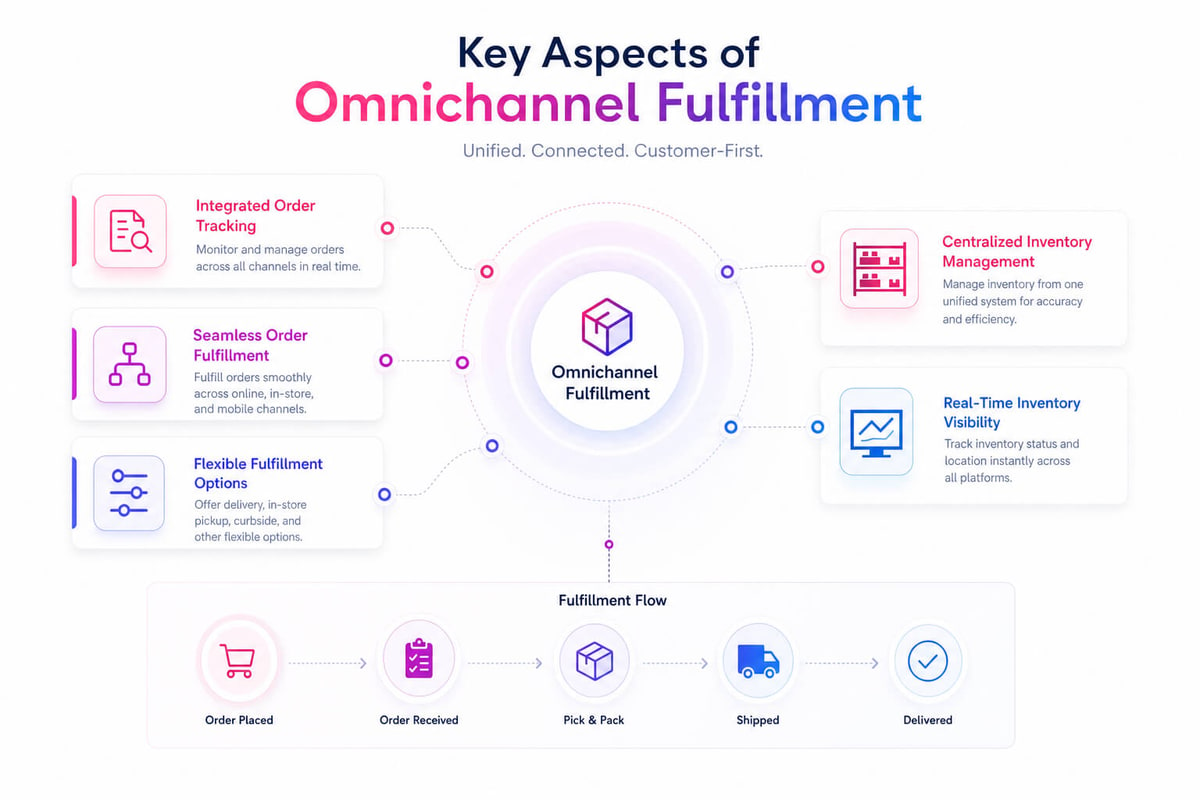
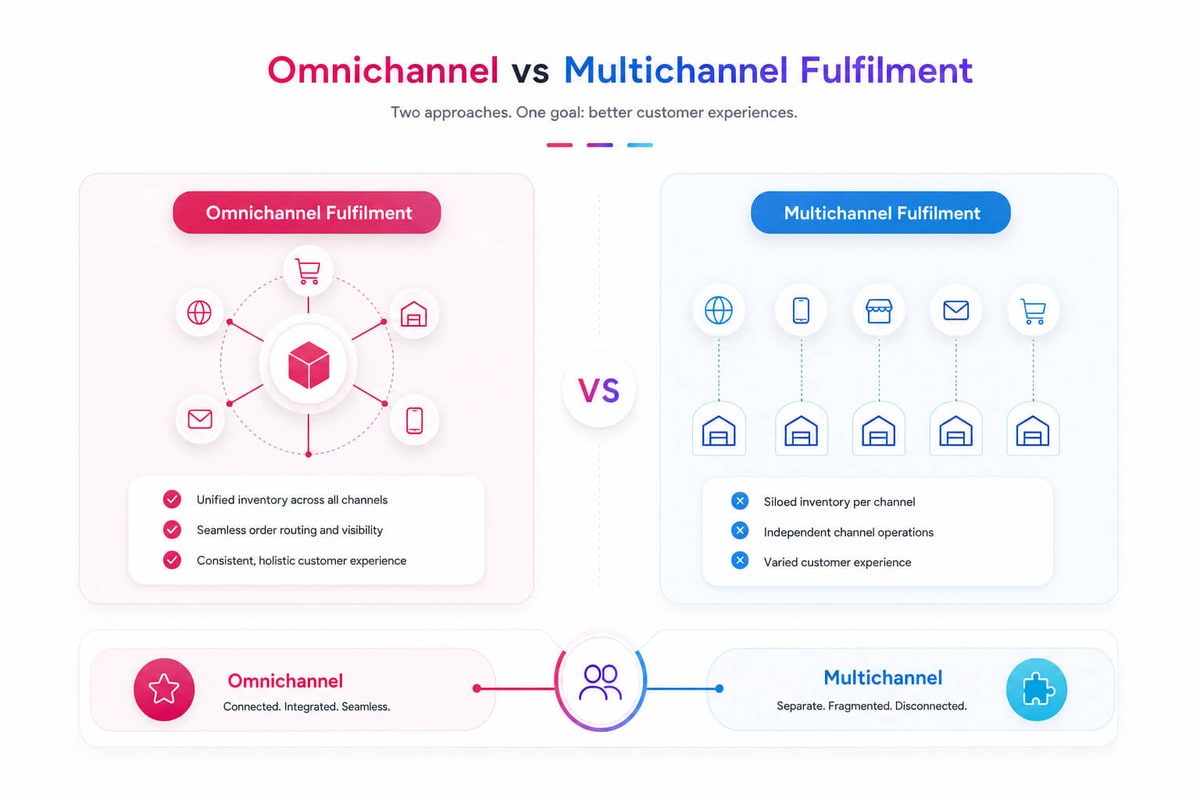
Omni channel fulfillment connects every sales channel to one network. Orders from ecommerce sites, stores, markets, and social shops flow into a shared flow. This model gives retail teams one view of demand, stock, and ship options. Omni channel ecommerce fulfillment differs from single-channel shipping. A brand can take an order in one channel and fill it from another. That flex helps teams cut split shipments, shorten ship zones, and guard margins.
Core meaning and scope of omni channel ecommerce fulfillment
Omni channel fulfillment covers the full order path, not only shipping. It covers stock view, order routing, pick, pack, carrier pick, and returns. Each step depends on clean data across all sell points. In a strong omni channel order fulfillment model, systems decide where each order should ship. The best source may be a warehouse, store, dark store, or vendor. The call often weighs stock, distance, labor cap, and promised ship dates.
Also, omni channel order fulfillment gives buyers more choice. They may buy online and pick up in store. They may order in a store and get home ship from a warehouse.
How the omni channel fulfillment flow works
First, the flow starts when a buyer places an order. The order system checks open stock across the network. It then sends the order to the spot that can keep the promise best. Warehouse staff, store teams, or a partner then pick and pack the items. Carrier rules assign the shipment based on cost and service level. Tracking data returns to the buyer-facing channel after dispatch.
Returns also form part of omni channel fulfillment. A buyer might return a market order to a store. The system must sync stock fast so the item can sell again. Strong omni channel ecommerce fulfillment depends on clean item data and live stock counts. With no that base, teams risk over-selling, late ships, and costly manual fixes. That shared view gives each channel the same facts, which also supports cleaner multi-channel inventory management.
Connect Shopify, draw your floor, pick an order - free plan, 7-day full trial, no credit card, no sales call.
How omni channel ecommerce fulfillment connects sales, inventory, and delivery
Omni channel ecommerce fulfillment connects storefront demand with stock spots and ship choices. When these parts share live data, teams stop over-selling. Buyers see clean ship dates before they pay. The flow links ecommerce sites, markets, stores, warehouses, and carriers. Each order carries its sales channel, SKU, count, address, and promise date. That context helps the right fill site take the work.
From sales signals to stock decisions
Strong omni channel ecommerce fulfillment starts when every sales channel reads the same stock record. An item sold on a market should cut open stock across other spots. This stops two channels from claiming the same unit. Also, stock data needs clear rules for holds. Some stock may serve store buyers, while other units support online demand. Good hold logic guards high-value orders and stops last-minute cancels.
- Channel data shows where demand starts and which promise was made
- Stock rules decide which units can support each order
- Order routing matches demand with the best open fill site
- Carrier data confirms cost, speed, cutoff time, and service level
From inventory decisions to delivery execution
With omni channel ecommerce fulfillment, ship starts before packing begins. The system compares stock spot, labor cap, ship zone, and carrier options. A nearby store may ship faster than a distant warehouse. This flow supports better omni channel order fulfillment as teams work from shared facts. Warehouse staff, store teams, and service staff see the same order status. Fewer handoffs cut delays and support tickets.
A strong omni channel fulfillment strategy also tracks gaps in real time. Late picks, split shipments, and low-stock alerts reveal flow gaps. Leads can adjust rules before small issues become costly patterns. For retail brands, omni channel ecommerce fulfillment works best when systems connect sales, stock, and ship calls. Many brands create this link through online order management software.
Building an omni channel fulfillment strategy for scalable growth
A solid omni channel ecommerce fulfillment model starts with clear service promises. Each channel needs set cutoffs, ship options, and return paths. Without those rules, teams fill gaps with manual calls. Those calls get costly as order volume grows. Strong omni channel ecommerce fulfillment also starts with stock teams can trust. Open stock should reflect stores, warehouses, markets, and in-transit goods. This single view supports omni channel order fulfillment with no over-selling fast items.
Map capacity to growth plans
In fact, growth strains labor, storage, carrier cap, and system results. A sound omni channel fulfillment strategy tests each area before demand peaks. Brands can model order spikes, return rates, and split shipments by channel. Also, capacity planning shows which spots should ship each order. A store may handle local ship well but lack packing space. A warehouse may ship cheaper but miss same-day cutoff windows. Omni channel order fulfillment works best when routing rules reflect these limits.
- Fast items often belong closer to dense buyer zones
- Slow items may stay in one central node
- High-return groups need simple reverse paths
Connect rules, data, and partners
For retail brands, omni channel ecommerce fulfillment depends on shared rules across systems. Order control, warehouse tools, store systems, and carriers need the same data. Clean handoffs cut cancels, late ships, and support tickets. In practice, the right partner model depends on scale and margin. Some brands keep core warehouse work in-house. Others use omni channel fulfillment services for peak demand, new regions, or complex returns. This blended plan keeps fixed costs lower when growth is uneven.
As demand rises, omni channel ecommerce fulfillment needs regular checks. Regular checks compare promised dates, real ship times, stock clean data, and return cycle time. The strongest omni channel ecommerce fulfillment plans combine flow habit with the best ecommerce inventory management software.
Creating an omni channel fulfillment strategy around customer expectations
Buyer needs now shape fill design as much as cost targets. In omni channel ecommerce fulfillment, buyers expect clear dates, flex pickup, and simple returns. A strong promise starts before checkout, when stock data confirms what can ship. Brands often lose trust when each channel makes different promises. Store teams, market feeds, and ecommerce carts need the same stock picture.
Match promises to real capacity
However, ship speed matters, but trust often matters more. A two-day promise that fails costs more than a clear four-day promise. Omni channel ecommerce fulfillment works best when service levels match real cap. In fact, demand shifts by region, channel, and season. The inventory positioning strategy should reflect where orders form and where carriers do well. Fast items belong near dense order zones, not only in one low-cost site.
This balance keeps omni channel fulfillment fast with no sending every order by air. It also helps teams hold scarce stock for the channels that need it most. Better placement cuts split shipments and lowers ship cost per order.
Align rules across every channel in omni channel ecommerce fulfillment
So, buyer promises need rules that every channel can follow. Within omni channel ecommerce fulfillment, rules set which spot ships first, when stores fill orders, and when a warehouse takes over. These rules guard margin while giving buyers solid choices. Also, returns deserve the same planning as ship. Omni channel ecommerce fulfillment should route returns to the spot most likely to restock or fix fastest. Clear return paths turn resaleable goods into cash sooner.
- Online open status can differ from shelf stock after store traffic
- Promised dates can miss carrier cutoff times
- Pickup orders can fail when staff lack task view
A plain omni channel fulfillment strategy links these gaps to rules. Safety stock, cutoff times, and store labor plans all shape the buyer promise. Strong teams check promise clean data, not only ship speed. As order volume grows, omni channel ecommerce fulfillment needs shared data more than hero work. That view often starts with clean item, stock, and order data inside multi-location inventory management software.
Omni channel retail fulfillment and omni channel retail order fulfillment use cases
Retail brands rarely grow through one channel alone. Stores, ecommerce sites, markets, and social shops all create demand. Omni channel ecommerce fulfillment connects those orders to the best stock spot, so each promise reflects real stock and carrier cap.
Store fulfillment and inventory reach
The most common use case starts with stores as fill nodes. Omni channel retail fulfillment lets a store ship nearby online orders when warehouse stock runs low. For omni channel ecommerce fulfillment, this model shortens ship zones and lowers parcel spend. Also, season peaks often show weak order routing. Brands need integrated fulfillment resources across warehouses, stores, and 3PL sites to stop split shipments. A clear omni channel fulfillment strategy assigns each order by stock, distance, labor, and service level.
- High-margin items ship from stores near dense buyer zones
- Slow store stock fills ecommerce demand before markdowns start
- Market orders route to spots with proven carrier pickup times
- Local ship orders move from stores with same-day labor cap
Order routing and customer promise in omni channel retail order fulfillment
Omni channel retail order fulfillment works best when routing rules match buyer promises. A two-day ship offer needs clean stock counts and cutoff times. With no control, brands over-sell or ship from costly zones. Furthermore, returns create another plain use case. Omni channel order fulfillment can send returned goods back to the spot most likely to resell them. This cuts extra moves and helps teams recover margin faster.
Also, store pickup shows the value of omni channel ecommerce fulfillment. Buyers see open stock before checkout, while staff gets clean pick tasks. The same logic supports swap orders, endless aisle sales, and back-room restock. For growing brands, omni channel ecommerce fulfillment turns each spot into part of a wider service network. These use cases work best when order, stock, and store data flow through retail supply chain management software.
Benefits of omni channel fulfillment for cost, speed, and customer experience
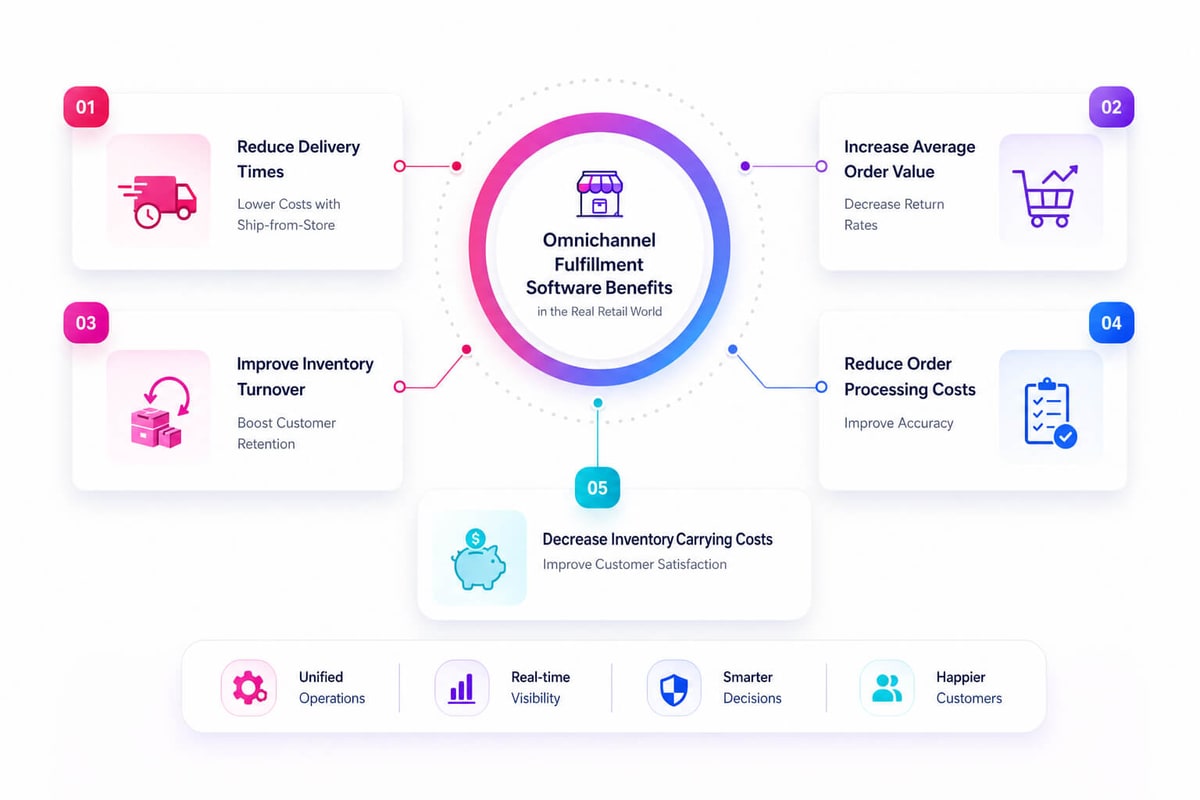
Omni channel ecommerce fulfillment helps retail brands match demand with the closest open supply. Orders can move from stores, warehouses, or partners based on stock, distance, and cost. This model cuts strain on any single node. It also gives buyers more ship and pickup choices without adding split flows for each channel.
Lower costs through smarter inventory use
Omni channel fulfillment lowers costs by making stock more flexible. A store can fill local orders in place of waiting for a warehouse shipment. Brands often cut markdowns when slow store stock becomes open online. That shift turns trapped stock into sellable goods across more channels.
- Shorter ship zones and lower parcel costs
- Fewer split shipments from many spots
- Lower safety stock needs across split channels
- Less labor waste from double order handling
A strong omni channel fulfillment strategy also lifts restock calls. Teams can see where demand starts, where stock sits, and where transfers make sense. For more on fill tools, see the guide to order fulfillment software.
Faster delivery and better customer control
Omni channel ecommerce fulfillment speeds shipping as orders route from the best spot. The best choice may mean nearest, lowest cost, or fastest to pick. Also, speed depends on clean order rules. Omni channel order fulfillment works best when systems score each order against stock, carrier cutoffs, labor cap, and buyer promise dates. Buyers feel lifts when they see a clean open status before they buy. Clear ship dates, pickup windows, and swap rules cut service tickets after checkout.
Also, omni channel order fulfillment supports fewer failed promises. When one spot runs short, another node can fill the order before the buyer feels the gap. The value of omni channel ecommerce fulfillment grows as channels grow. Markets, stores, social sales, and direct web orders can all share the same stock view. For many brands, the biggest gain comes from trust. Teams can take more orders, guard margins, and keep ship promises with fewer manual fixes. Omni channel ecommerce fulfillment works best when order routing, stock data, and carrier picks stay linked. Many brands support this with planning tools, warehouse systems, and logistics management software solutions.
Omni channel fulfillment examples: BOPIS, ship-from-store, and endless aisle
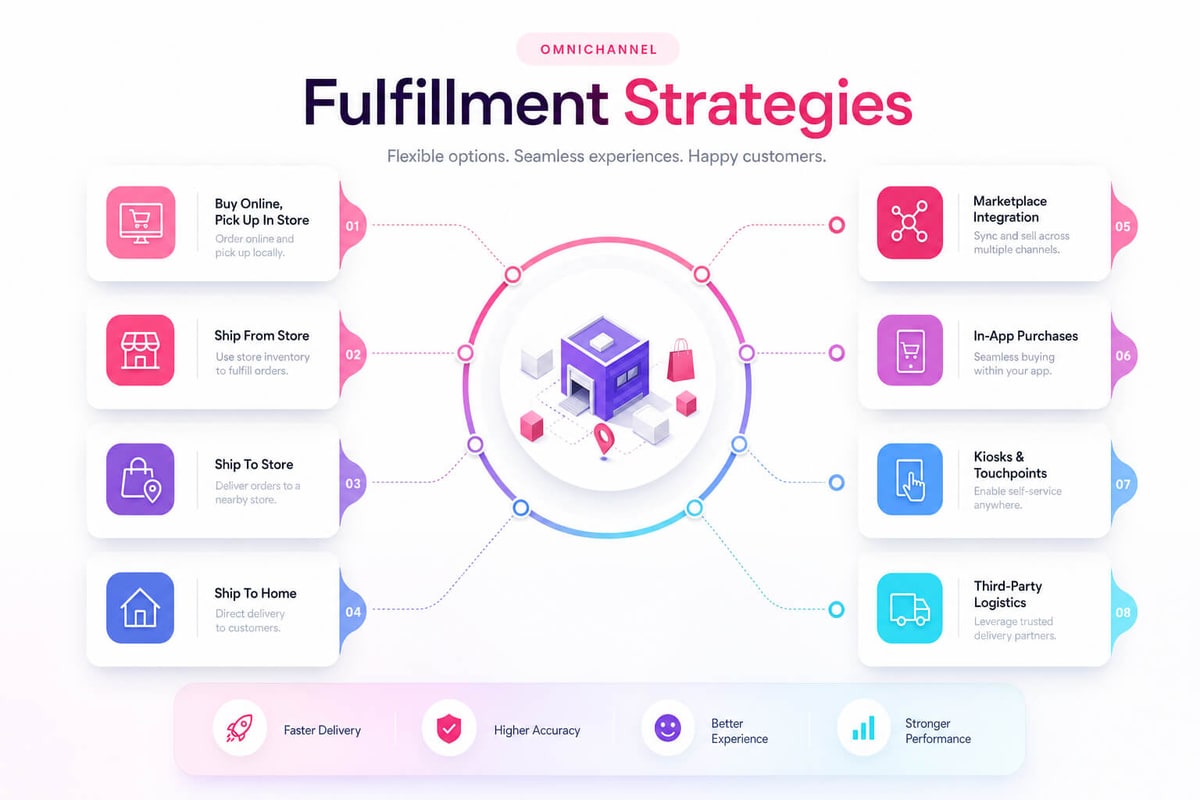
BOPIS, ship-from-store, and endless aisle show how omni channel ecommerce fulfillment works in daily retail ops. Each model connects online demand with store stock, warehouse stock, and local buyer needs. These omni channel fulfillment examples help brands cut missed sales and shorten ship windows. They also turn stores into active fill nodes, not just sell spots.
BOPIS and ship-from-store
BOPIS lets buyers buy online and pick up in store. The model works best when stock counts stay clean across every spot. A strong omni channel fulfillment strategy holds stock as soon as the order enters the system. Also, BOPIS can lower shipping costs and drive store visits. Also, many retailers see extra in-store buys at pickup. That makes omni channel retail fulfillment useful for both ops and revenue.
Ship-from-store sends online orders from nearby stores in place of a central warehouse. So, this can cut transit time by one or two days. Also, it helps clear slow store stock with no heavy markdowns. In omni channel ecommerce fulfillment, ship-from-store needs clear order routing rules. The system may pick a spot based on distance, stock age, labor cap, or carrier cutoff times. So, good routing guards store teams from sudden order spikes. Also, see the guide to automated fulfillment solutions to see what comes next in fill ops.
Endless aisle and unified inventory
Furthermore, endless aisle gives buyers access to items not held in that store. A sales staff can place the order for home ship or pickup elsewhere. So, this keeps demand alive when a shelf runs empty. For omni channel order fulfillment, endless aisle depends on one shared stock view. Store teams need trusted data before they promise an item. In fact, buyers lose trust when an order gets canceled after checkout.
- Omni channel fulfillment can route orders from stores, warehouses, or vendors
- Omni channel order fulfillment supports faster calls across sales channels
- Omni channel fulfillment services can help brands manage peak volume
So, these models work best when systems share stock, order, and buyer data. With no that link, teams make calls from old or part records. With it, omni channel ecommerce fulfillment gives each order the best open path. Also, retail brands often start with one model, then grow as volume rises. BOPIS may come first, while ship-from-store follows once stores can handle labor demands. Over time, omni channel ecommerce fulfillment creates a flex network that connects stores, warehouses, and a pick and pack fulfillment center.
When to use omni channel fulfillment services for growth
Growth often shows weak points in fill ops. A brand may sell well across markets, stores, and its web store, yet still fight with split stock, late orders, and rising labor costs. Omni channel ecommerce fulfillment services can help when in-house teams can no longer keep pace. The right partner connects orders, stock, packing, and ship across every active sales channel.
Signals your brand needs outside support
In fact, order volume may rise faster than warehouse cap. During peak periods, this often makes missed ship dates, manual fixes, and higher overtime costs. Fast ecommerce sales growth can also strain stock clean data. In fact, a brand may over-sell popular items when stores, markets, and warehouses do not share live stock data. Omni channel fulfillment services often make sense when service levels differ by channel. Buyers expect the same ship promise, whether they buy from a web store, store, or market.
A partner with strong omni channel order fulfillment flows can cut these gaps. Shared systems help route each order from the best spot, based on stock, distance, and carrier cost. Also, see the guide to warehouse fulfillment services for help picking the right partner.
How omni channel fulfillment services support scalable fulfillment
Omni channel ecommerce fulfillment gets more complex as brands add channels. In fact, each new sales path brings different rules for labels, cutoffs, returns, and service levels. Skilled providers bring systems that support omni channel order fulfillment with no heavy in-house hiring. They can manage warehouse labor, carrier pick, pack rules, and return flows. So, this support gives teams more control over growth calls. Leads can test new markets without opening a new site or rebuilding every flow.
Also, a mature omni channel fulfillment strategy gives cleaner data. Teams can compare shipping costs, order speed, return rates, and stock spot across all channels. Omni channel ecommerce fulfillment services work best when they match brand goals. A top brand may value precise packing, while a high-volume brand may focus on faster dock-to-door time. The best fit depends on order mix, SKU count, channel spread, and growth plans. For many growing brands, omni channel ecommerce fulfillment works best with a partner that knows retail systems, carrier rules, and third-party warehouse management.
Measuring success in omni channel fulfillment: KPIs and optimization
Strong check turns fill work into clear ops insight. In omni channel ecommerce fulfillment, each channel hides different cost and service signals. A shared scorecard helps leads see delays before buyers feel them.
KPIs that reveal omni channel ecommerce fulfillment health
In fact, the best counts connect buyer promises with warehouse work. Also, they show where store teams, carriers, and systems drift apart. For omni channel ecommerce fulfillment, clean data matters as much as speed.
- Order cycle time tracks the hours from order release to ship handoff
- Fill rate shows how often stock exists where the order starts
- Perfect order rate combines on-time ship, item clean data, and damage-free arrival
- Cost per order shows labor, pack, ship, and split-ship costs
- Return rate by channel reveals item issues and promise gaps
These KPIs support a stronger omni channel fulfillment strategy as they show trade-offs. A faster ship-from-store model may raise labor costs. A lower ship cost may raise transit time and missed dates.
Turning metrics into better decisions
In practice, useful data needs clear ownership across each fill function. Merch, store ops, ecommerce, and ship may read counts in varied ways. A single view of omni channel ecommerce fulfillment cuts debate and speeds calls. In fact, patterns matter more than one bad day. Late carrier scans across one region may signal route cap issues. Repeat store pick errors may point to shelf spot problems.
Also, brands need targets by channel and order type. Omni channel order fulfillment for BOPIS cannot use the same target as parcel ship. Same-day orders need tighter pick times and stricter stock rules. Furthermore, better check guides tech and partner picks. Some brands outgrow manual reports before they outgrow warehouse space. A mature omni channel ecommerce fulfillment model needs clean data and clear rules. At that stage, omni channel fulfillment services can add reports, network options, and cap. Omni channel ecommerce fulfillment works best when leads check root causes often. So, the goal is fewer late orders, fewer stockouts, and lower cost per order.
Conclusion
Omni channel ecommerce fulfillment gives retail brands a plain path to growth. It connects sales channels, stock, stores, warehouses, and carriers into one ops model. In fact, strong run depends on clean stock data and clear order rules. Buyers see solid ship dates, while teams avoid split shipments, stockouts, and manual fixes.
What strong omni channel ecommerce fulfillment creates
Furthermore, a clear omni channel fulfillment strategy turns each spot into part of the network. Stores can ship local orders, warehouses can cover demand peaks, and teams can route orders by cost, speed, or stock spot. The best omni channel fulfillment examples work as they solve real buyer needs. BOPIS shortens wait times, ship-from-store cuts ship distance, and endless aisle saves sales when shelf stock runs out. Omni channel retail fulfillment also creates better control over margin. Brands can cut extra moves, lower carrier costs, and guard service levels when busy.
A practical next step
First, a good start is a simple fill check. The check should compare order volume, stock clean data, ship promises, and return rates across every channel. That check shows where omni channel order fulfillment needs stronger systems or cleaner data. It also shows whether in-house teams can scale alone or need omni channel fulfillment services. Omni channel ecommerce fulfillment works best when strategy and daily ops stay aligned. Retail brands gain speed when systems share data, rules stay clear, and teams track the right counts. For the next stage, check the tools that manage orders, stock, and shipping flows. Explore this plain resource on ecommerce shipping logistics.
 Google AI
  OpenAI ChatGPT
 Frequently Asked Questions
What is omni channel ecommerce fulfillment?
Omni channel ecommerce fulfillment is the process of managing, picking, packing, shipping, and returning orders across multiple sales channels from a connected fulfillment network. It helps businesses serve customers consistently whether they buy online, in store, through marketplaces, or on social platforms. The goal is to improve speed, inventory visibility, and customer experience.
How does omnichannel fulfillment work?
Omnichannel fulfillment connects inventory, orders, warehouses, stores, and shipping systems so orders can be fulfilled from the best available location. For example, a customer may order online and receive delivery from a nearby store. This approach supports faster delivery, lower shipping costs, and more flexible omni channel order fulfillment options.
What are the main benefits of omni channel fulfillment?
Omni channel fulfillment helps businesses improve delivery speed, reduce stockouts, and create a smoother customer experience. It also gives teams better visibility into inventory across warehouses, stores, and third-party logistics partners. With the right omnichannel fulfillment strategy, companies can reduce costs while supporting options like ship-from-store, buy online pick up in store, and easy returns.
What are common omnichannel fulfillment examples?
Common omnichannel fulfillment examples include buy online pick up in store, ship-from-store, curbside pickup, marketplace fulfillment, and in-store returns for online orders. These models allow retailers to use inventory more efficiently and give customers more choice. Strong omni channel retail order fulfillment makes it easier to meet demand across digital and physical sales channels.
How do you build an effective omnichannel fulfillment strategy?
An effective strategy starts with accurate inventory data, integrated order management, and clear fulfillment rules. Businesses should decide when to ship from a warehouse, store, or third-party provider based on cost, location, and delivery promise. Omni channel ecommerce fulfillment also requires reliable technology, trained teams, and performance tracking to improve service over time.
When should a business use omnichannel fulfillment services?
A business should consider omnichannel fulfillment services when order volume grows, delivery expectations increase, or inventory becomes harder to manage across channels. These services can support warehousing, shipping, returns, and technology integration. They are especially useful for retailers that need scalable omni fulfillment without building every capability in-house.
Sync inventory in real time, manage orders, and run warehouse operations across Amazon, eBay, Etsy, Shopify, and other sales channels. From barcode scanning to organized storage and faster fulfillment, Fiftify helps reduce errors, prevent overselling, and support business growth. Explore our articles for insights on warehouse management, inventory control, and multichannel operations.
You may also like
How to choose an ecommerce marketplace service provider for scalable growth
Learn how an ecommerce marketplace service provider helps businesses launch, manage, and scale a profitable ecommerce marketplace. Platform choices, vendor operations, software tools, management services, costs, and practical selection tips.
Ecommerce software solutions: features, costs and how to choose
Learn how to evaluate ecommerce software solutions for online stores, marketplaces, and retail teams. Essential features, vendor comparisons, implementation tips, and practical ways to choose software that supports growth, operations, and customer experience.
Multi-carrier shipping software: features and how to compare options
How multi carrier shipping software compares rates, prints labels, tracks orders and handles returns, and which features to check before you choose one for your store.