
Supply chain management tools: features, use cases and how to choose
 Fiftify Team
·
· 18 min read
Fiftify Team
·
· 18 min read 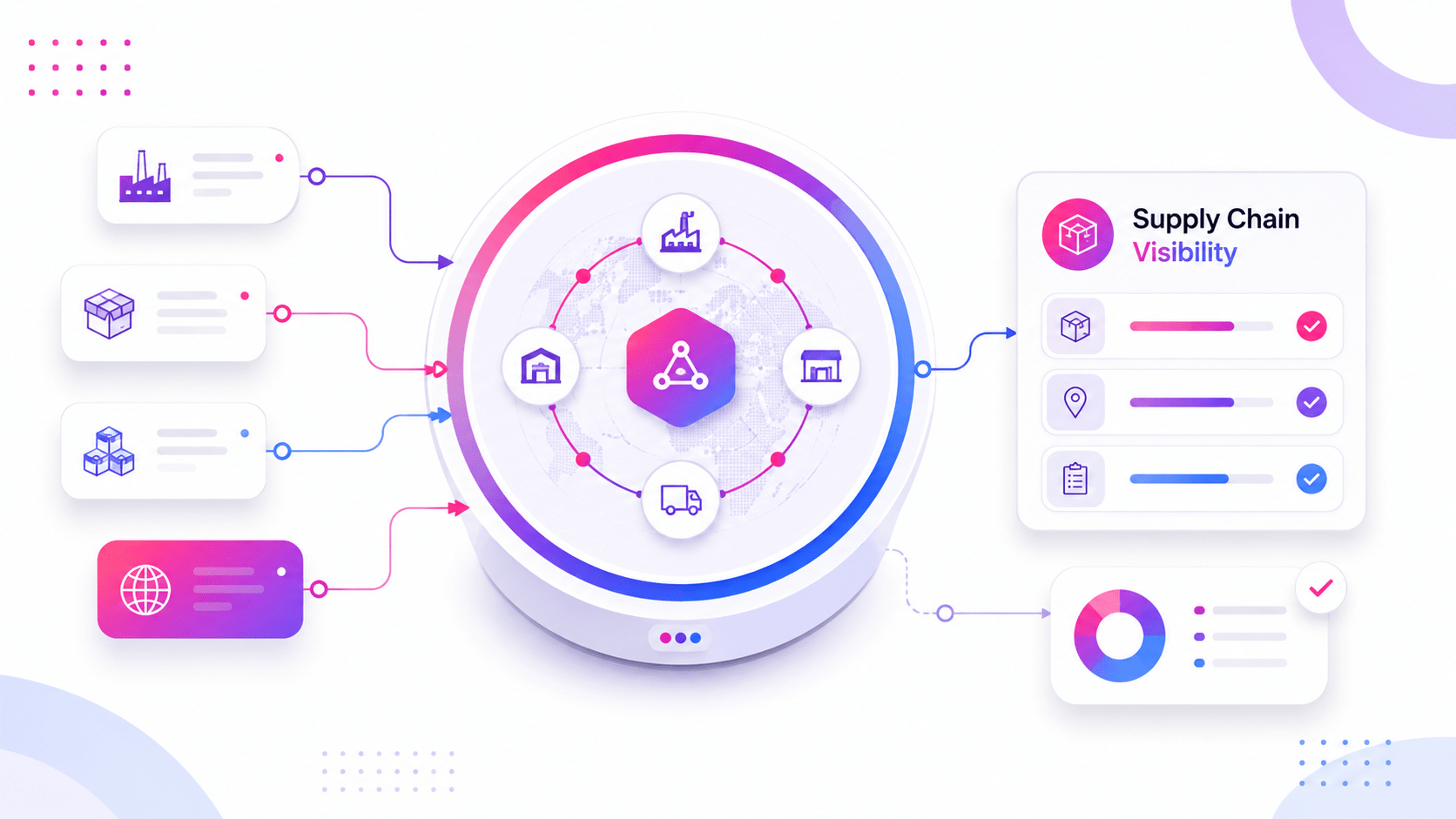
Supply chains now move through more systems, partners, and risks. A late shipment can affect cash flow, production, and customer trust. Supply chain management tools help teams see these issues earlier and respond with better data.
Many businesses still rely on spreadsheets, emails, and disconnected reports. That setup often hides delays until they become expensive. Modern supply chain management solutions connect planning, purchasing, inventory, logistics, and supplier data in one place.
Why software choice matters
The right software does more than store information. It helps teams compare demand, stock levels, supplier lead times, and delivery status. That view can reduce rush orders, excess inventory, and missed delivery dates.
Supply chain management tools also create shared visibility across departments. Finance can see inventory costs earlier. Operations can track supplier risk before production slows. Sales can give customers firmer delivery dates.
Software choice matters because each business runs differently. A distributor may need strong warehouse and order tools. A manufacturer may need deeper planning, supplier, and production controls. The best supply chain management software fits those daily workflows without adding extra steps.
What strong tools connect
Strong supply chain management platforms bring key data into one system. They connect orders, forecasts, inventory, shipments, invoices, and supplier records. This gives teams a clear view of costs and risks.
Supply chain management software for small business can make these processes easier. It helps smaller teams control inventory and orders. It can also reduce manual work.
Retail supply chain management tools support faster decisions. Teams can review open orders and available stock. They can also check carrier status. This helps protect customer satisfaction during delays.
There are different types of supply chain software. Some focus on planning. Others support warehouses, inventory, or transport. The right SCM software depends on business size and needs.
Important supply chain management software features include real time tracking and reporting. Integration is also important. Automation can reduce errors and save time.
Supply chain management tools can reduce waste. They help control working capital and improve product quality. Good software turns supply chain data into better daily decisions.
What are supply chain management tools?
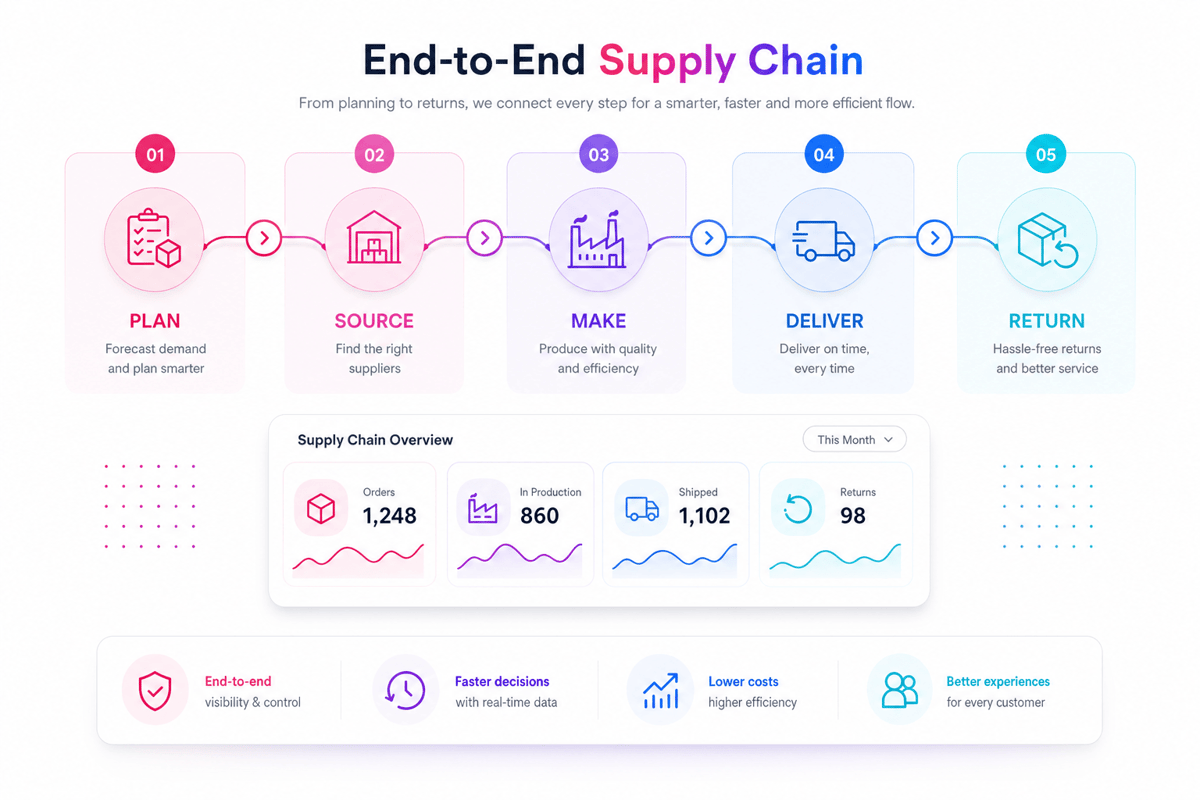
Supply chain management tools are software systems that help companies plan, track, and control goods as they move from suppliers to customers. They connect purchasing, inventory, warehousing, transport, demand planning, and order management in one workflow.
Without these systems, teams often depend on spreadsheets, emails, and manual checks. That creates delays, missed stock signals, and poor cost visibility. Strong supply chain management solutions give teams current data, so they can act before small issues become expensive problems.
Core purpose and daily role
Retail supply chain management tools create a shared view of supply, demand, stock, and shipments. A buyer can see supplier delays, while a warehouse manager sees which orders need priority. Finance can track cost changes without waiting for manual reports.
Most supply chain management platforms support tasks such as purchase planning, inventory control, supplier tracking, and shipment updates. Many also include alerts for low stock, late deliveries, or order exceptions. These alerts help teams respond quickly and avoid repeated follow-up work.
Modern supply management software also improves planning quality. It compares past sales, current orders, and supplier lead times. That helps companies reduce excess stock while still meeting customer demand.
How the software fits operations
Supply chain software solutions usually work across several departments. Sales teams share demand signals, procurement checks supplier capacity, and logistics plans delivery routes. Each team keeps its own role, but the data stays connected.
The best supply chain management software often connects with accounting, ecommerce, warehouse, and transport systems. These links reduce duplicate data entry and cut reporting delays. They also help leaders compare service levels, carrying costs, and supplier performance.
Different supply chain software companies focus on different business needs. Some tools suit manufacturers with complex bills of materials. Others fit distributors, retailers, or companies that manage many warehouses.
Supply chain management tools work best when they match real operating needs, not just feature lists. A growing business may begin with inventory and purchasing control, then add planning, transport, and supplier scorecards over time. Many teams start with connected modules, then move toward platforms integrating warehouse management with ERP systems.
Connect Shopify, draw your floor, pick an order - free plan, 7-day full trial, no credit card, no sales call.
Why businesses need supply chain management solutions
Modern supply chains move through many hands and systems. Email and spreadsheets hide problems until they affect customers. Supply chain management solutions give teams one shared view of orders, stock, suppliers, and shipments.
Supply chain management tools connect planning, purchasing, warehousing, and delivery work. They show which orders need action and where delays may occur. Managers can see late supplier confirmations before they create stock gaps.
Greater visibility across daily operations
Without a shared system, teams often debate whose numbers are correct. A planner may see available stock, while a warehouse shows a shortage. Supply chain management platforms reduce that gap by syncing orders, inventory, shipments, and supplier updates.
Better visibility also changes how teams respond to risk. A late container no longer creates a chain of phone calls. Retail supply chain management tools flag the delay early, so teams can reroute stock or reset delivery promises.
Faster decisions with cleaner data
Good data turns supply chain work from reactive to controlled. Supply chain software solutions collect demand, purchase, and stock data in one place. Buyers can compare supplier performance, while finance can see cash tied up in inventory.
The best systems also reduce manual work. A purchase request can move through set approval rules. A low-stock alert can create a replenishment task. Supply chain management tools remove repeat checks that slow teams down.
Growth often exposes weak processes. More suppliers, channels, and warehouses create more exceptions. The best supply chain management software helps teams handle volume without adding the same headcount. Reliable supply chain management tools give leaders a clearer view of service cost and margin.
Choosing from supply chain software companies becomes easier when the need is clear. Some firms need demand planning first, while others need warehouse control or supplier tracking. Supply chain management tools work best when they connect those needs with order management software.
Core features of the best supply chain management software
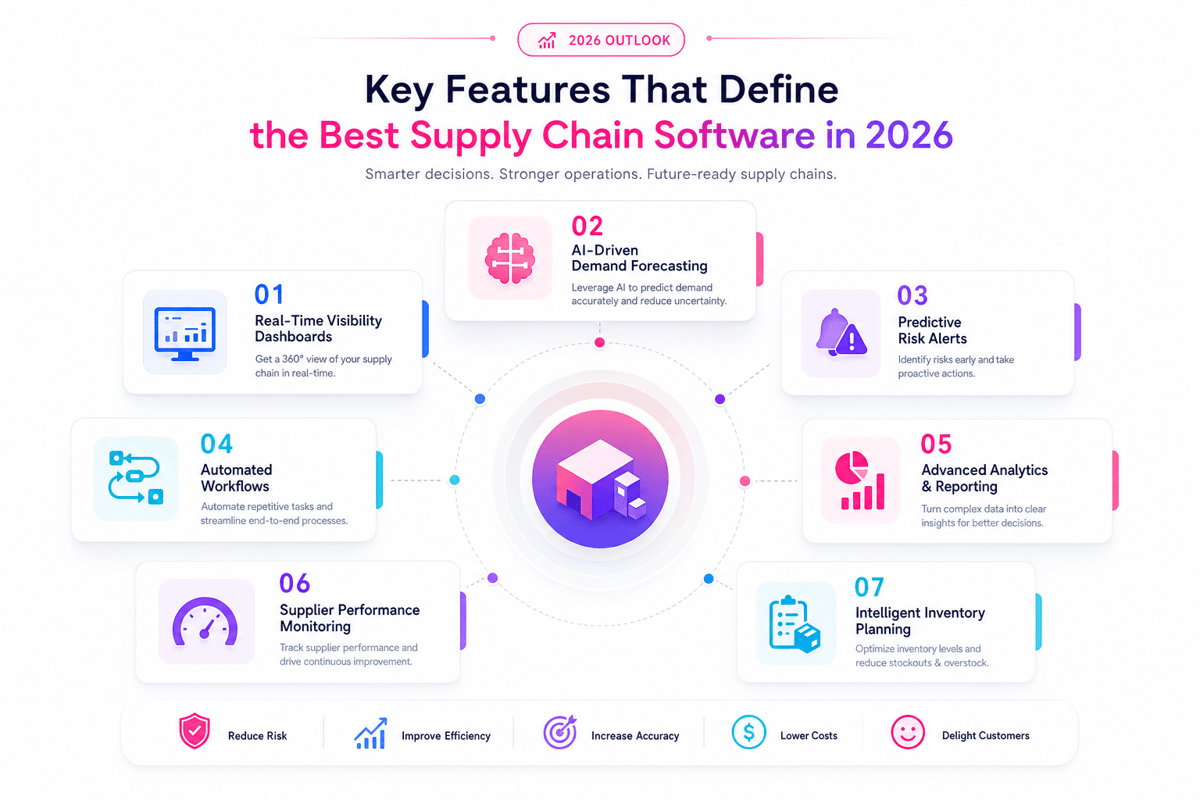
The best systems give teams clear control over orders, stock, suppliers, and demand. Strong supply chain management tools connect these areas through shared data, not separate reports. That shared view helps teams spot delays before they affect customers.
Effective supply chain management solutions also reduce manual work across daily tasks. Teams can replace spreadsheets, email updates, and duplicate entries with one trusted system. This lowers errors and gives leaders faster answers.
Visibility and planning capabilities
Real-time visibility sits at the center of modern supply chain management tools. The software tracks inventory, shipments, orders, and supplier activity as conditions change. Teams can then act on current facts, not old exports.
Demand planning gives buyers and planners a stronger forecast. A Best Supply Chain Management Software review should weigh fit, data quality, and daily user needs. Good planning tools compare sales history, seasonality, and open orders.
Inventory control also shapes the value of supply chain software solutions. The system should flag low stock, excess stock, and slow-moving items. Better alerts help teams avoid stockouts without tying up cash.
Automation and supplier management
Automation helps supply chain management platforms shorten routine workflows. Purchase orders, approvals, replenishment triggers, and shipment updates can move with fewer handoffs. This can remove hours of manual checks each week.
Supplier management features show how vendors perform over time. Strong supply chain management tools track lead times, order accuracy, pricing changes, and missed delivery dates. These records support better buying choices during contract reviews.
Integration also matters because supply chains rarely run in one system. The best supply chain software connects with ERP, ecommerce, accounting, warehouse, and carrier systems. Clean data flow prevents teams from reconciling the same order twice.
Reporting should turn activity into clear decisions. Useful dashboards show margin pressure, late shipments, supplier risk, and inventory gaps. The same connected data also strengthens warehouse planning and order fulfillment software.
Where platforms create wider control
A platform gives leaders a full view across operations. Teams can track demand, supplier risk, stock levels, and shipment status from shared data. This helps reduce delays caused by disconnected spreadsheets and email updates.
Many supply chain management platforms also connect with ERP, warehouse, and transport systems. That connection helps teams spot shortages before they affect orders. It also gives finance and operations the same version of supply data.
Retail supply chain management tools in this category suit companies with several sites, suppliers, or product lines. They support planning decisions that cross departments. A manufacturer, for example, can align material orders with production schedules and carrier capacity.
Where supply management software fits
Supply management software works best when purchasing needs deeper control. It helps teams manage bids, supplier records, contracts, approvals, and spend categories. These features reduce manual checks and create cleaner audit trails.
This type of system may not manage the full physical flow of goods. Instead, it strengthens the commercial side of supply. Procurement teams gain better pricing data, supplier terms, and renewal visibility.
The best supply chain management software may include both platform and procurement features. Some supply chain software companies build broad suites, while others focus on one area. Strong supply chain software solutions make these limits clear during selection.
Supply chain management tools should match the decisions your team makes most often. Broad platforms help when supply, inventory, and logistics must move together. Focused purchasing systems help when sourcing teams need clear procurement insights and analytics.
Top use cases for supply chain software solutions across operations
Modern supply chain management tools support work across planning, sourcing, inventory, fulfillment, and reporting. Each use case connects data that often sits across spreadsheets, emails, and separate systems.
The strongest supply chain software solutions give teams one shared view of demand, stock, supplier status, and order flow. That shared view helps teams act sooner, cut waste, and reduce costly delays.
Planning, procurement, and supplier control
In demand planning, retail supply chain management tools compare sales trends, seasonality, and open orders. Planners can adjust forecasts before stockouts or excess inventory create margin pressure.
Procurement teams use supply management software to track supplier pricing, lead times, contracts, and purchase orders. Better data helps buyers spot late shipments and cost changes early.
Supplier management becomes stronger when teams compare vendor performance over time. Supply chain management solutions can show fill rates, defect levels, and average delivery times by supplier.
Strong supply chain management tools also support risk planning. Teams can model demand spikes, port delays, or supplier shortages before they affect customer orders.
Inventory, fulfillment, and operational visibility
Inventory control remains one of the most common use cases. Supply chain management platforms can track stock across warehouses, stores, vendors, and in-transit shipments.
Fulfillment teams gain value when systems connect orders with available inventory. The best supply chain software can route orders from the right location and reduce split shipments.
Operations leaders also use supply chain management tools to monitor daily performance. Dashboards can show order cycle time, backorders, inventory turns, and freight costs.
Customer service teams benefit from the same operational data. They can answer delivery questions without waiting for warehouse or carrier updates.
For growing companies, these use cases often guide software selection. Strong supply chain management tools connect planning decisions with warehouse execution, which is why many teams also compare the best warehouse management software.
How to compare supply chain software companies
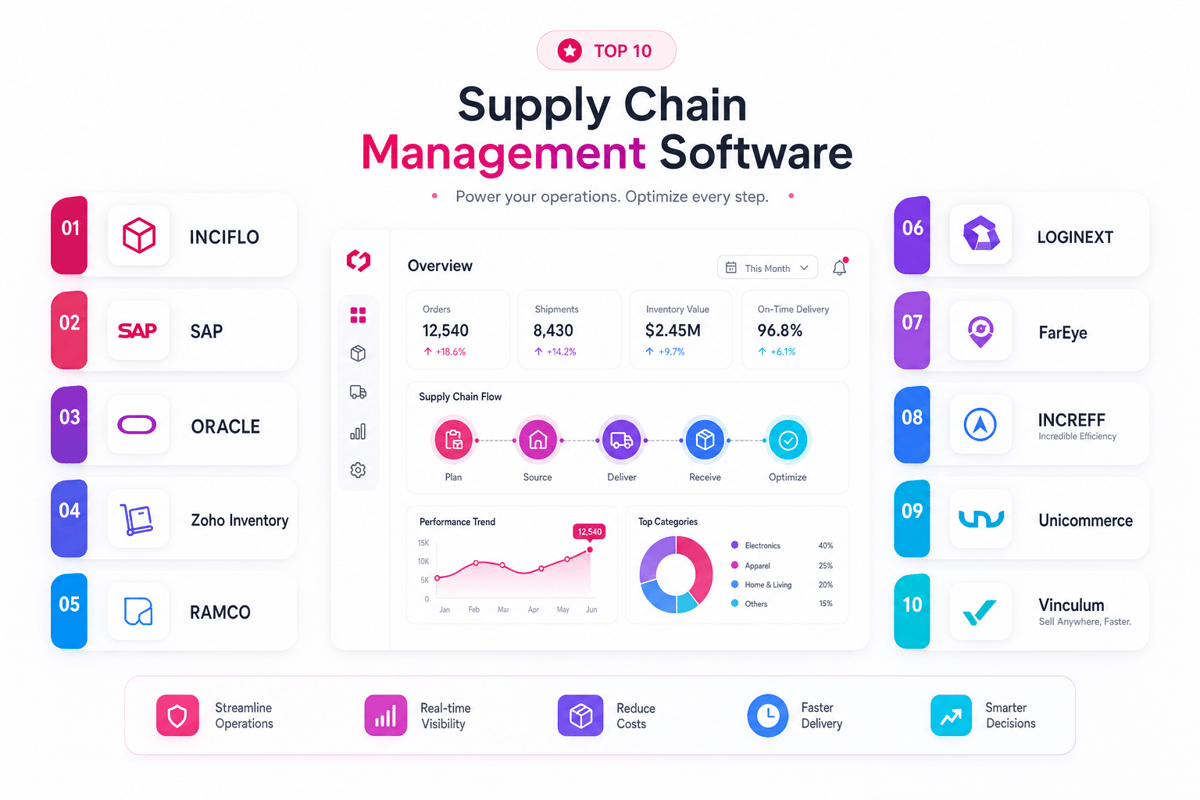
Comparing vendors requires more than feature matching. The strongest supply chain software companies show how their systems perform under daily pressure.
Useful comparisons connect software capability with business risk. Strong retail supply chain management tools reduce late orders, excess stock, and manual rework.
Product fit and workflow depth
A vendor demo should mirror how teams buy, make, store, ship, and return goods. Generic demos hide gaps in order rules, unit conversions, and exception handling. When vendors configure sample workflows, teams see where the system bends.
The right supply chain management tools fit the company’s operating model. A distributor may need lot tracking and fast replenishment. A manufacturer may need production planning, supplier timing, and shop floor visibility.
Reliable supply chain management tools expose exceptions before they spread. Late supplier shipments, stockouts, and demand spikes need clear alerts. The system should help teams act before customers feel the delay.
- Inventory updates appear within minutes, not at day’s end.
- Forecast changes flow into purchasing and production plans.
- Role-based views keep buyers, planners, and managers aligned.
- Reports show root causes, not just summary totals.
Service model and total cost
Strong supply chain management tools depend on the quality of vendor support. The software matters, but the service model shapes results. Slow response times can stall training, data setup, and process changes.
Pricing for retail supply chain management tools deserves close review. License fees rarely show the full cost. Data migration, integrations, support tiers, and user training can change the final budget.
The best supply chain management software often includes clear onboarding plans. Experienced teams from supply chain management software companies understand purchasing, inventory, and logistics constraints. Their guidance helps companies avoid costly setup mistakes.
Comparisons should also weigh integration depth across supply chain management platforms. Modern supply chain software solutions connect with ERP, WMS, ecommerce, and accounting systems. Weak integrations often create duplicate work and reporting gaps.
Reference calls often reveal how vendors behave after the sale. A balanced decision links supply chain management tools with warehouse needs, production plans, and manufacturing inventory management software.
What sets the best supply chain software apart?
The best supply chain software gives teams control without adding friction. It connects planning, purchasing, warehouse work, transport, and finance in one shared view. Strong supply chain management tools separate useful signals from routine noise.
Many supply chain management solutions manage orders and stock. The better systems show why delays happen, where costs rise, and which actions protect margin. That difference matters when teams face tight lead times and shifting demand.
Data quality and decision speed
Good supply chain management tools keep data current across teams. Buyers see supplier changes, warehouse teams see stock movement, and planners see demand shifts. That shared data helps teams decide before problems spread.
The best supply chain management software also turns raw data into clear next steps. Exception alerts highlight late shipments, low stock, or demand spikes. Teams can then focus on orders with real risk.
- Forecasts compare sales trends, lead times, and current stock.
- Dashboards show cost, service levels, and supplier performance.
- Alerts flag problems before missed deliveries affect customers.
Modern supply chain management tools also support stronger audit trails. Each order, approval, and stock adjustment stays tied to a user and time. That record reduces disputes and speeds month-end review.
Fit for growth and daily use
Leading supply chain management platforms work well across sites, roles, and markets. They support more users, more products, and more suppliers without slowing daily work. That flexibility helps growing teams avoid frequent system changes.
Usability sets the top supply chain software companies apart. Clean screens, clear workflows, and role-based access reduce training time. Teams adopt the system faster when it matches real work patterns.
When supply chain management tools connect with ERP, ecommerce, and warehouse systems, data moves with fewer gaps. The best supply chain software solutions reduce manual entry and cut rework. Strong supply management software also supports supplier scorecards and smarter purchasing choices.
Strong supply chain management tools stand out because they scale with operational complexity. For growing networks, that depth matters most when teams need multi-location inventory management software.
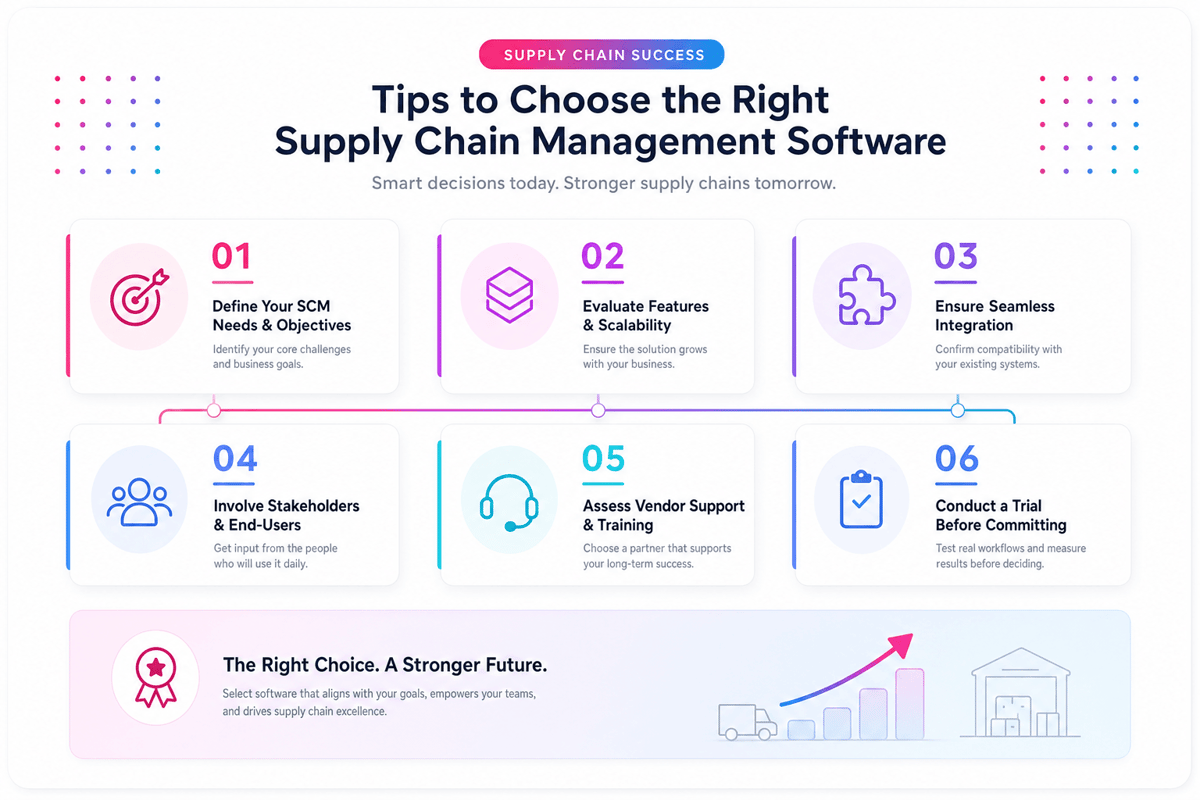
Implementation tips for supply chain management softwares
A successful rollout starts before teams open the new system. Strong plans connect process design, data quality, and user roles. Supply chain management tools work best when each site follows the same core rules.
Many projects stall because teams copy old habits into new software. A better approach maps current work first, then removes slow steps. A phased rollout helps supply chain management tools prove value before wider use.
Prepare data and processes
Clean master data reduces errors in purchasing, planning, and fulfillment. Item codes, supplier records, lead times, and units need close review. Supply chain management tools depend on these fields for accurate alerts and reports.
The rollout team should test common scenarios before launch. Purchase orders, stock transfers, demand changes, and returns reveal hidden gaps. Strong testing shows whether supply chain management platforms match daily work.
- Confirm item, supplier, and location records before migration.
- Test exceptions, not only standard transactions.
- Set approval limits that reflect real decision rights.
- Assign data owners for every critical field.
Build adoption across teams
People adopt new systems faster when training reflects their tasks. Planners need forecast screens, while warehouse teams need receiving flows. Role-based sessions make supply management software feel practical, not abstract.
Cross-functional review helps supply chain management tools reflect real handoffs. Sales, procurement, finance, and operations often define success differently. Shared process rules reduce rework after the system goes live.
Executive support also shapes the rollout. Leaders should track usage, data accuracy, cycle time, and service levels. These measures show whether the best supply chain management software creates value beyond launch.
Vendor support can reduce risk during the first 90 days. Experienced supply chain software companies often provide workflow reviews, test spaces, and issue logs. The right partner helps teams adjust settings without changing every process.
Integration needs the same care as training. Finance, ecommerce, transport, and warehouse systems must exchange clean data. Without reliable links, supply chain management tools create fresh work instead of clearer decisions.
After launch, small reviews keep the system aligned with demand. Managers can compare planned results with actual cycle times each month. Over time, retail supply chain management tools support better planning, fewer stock gaps, and inventory optimization.
How supply chain management software companies support growth
Growth puts pressure on suppliers, stock levels, cash, and service. Modern supply chain management tools give teams a live view of those moving parts. Leaders can spot risk before late orders reach customers.
Software partners support that growth through product depth and service. For growing firms, supply chain management tools must support process change, not only feature lists. This matters when order volume doubles or markets shift fast.
Scalable systems and connected data
Supply chain management software companies support growth by building systems that scale. Cloud products add users, sites, suppliers, and carriers without long rebuilds. A distributor can open a new warehouse and keep the same controls.
Connected data cuts the hidden cost of expansion. When supply chain management tools link purchasing, inventory, transport, and finance, teams stop reconciling separate files. Planners see late parts, while finance tracks landed cost by order.
Many supply chain management platforms include tested links to ERPs, marketplaces, carriers, and 3PLs. These links move order, stock, and shipment data without repeated entry. Fewer manual exports help teams close the day faster.
Expert support and measured improvement
Growth also depends on the quality of vendor support. Leading supply chain software companies bring industry knowledge from similar operations. They help teams choose workflows that fit real constraints.
Providers of the best supply chain management software measure value after launch. They review fill rate, forecast accuracy, dock time, and order cycle time. If stockouts rise, they adjust planning rules before revenue drops.
Supply chain management tools also support new channels and service models. A retailer can add ship-from-store without losing stock accuracy. A manufacturer can compare supplier lead times before taking larger contracts.
Strong supply chain management solutions turn growth into a controlled process. They give leaders clear data, stable workflows, and expert guidance. With the right partner, supply chain management tools reduce risk as demand rises.
Conclusion
The right supply chain management tools connect planning, purchasing, inventory, logistics, and reporting. Strong systems help teams see problems earlier and act with better data. They also reduce manual checks, duplicate entries, and slow approvals.
Good software choices start with business needs, not feature lists. A growing distributor may need tighter inventory control. A manufacturer may need supplier visibility and production planning. The best fit supports current operations while leaving room for growth.
What a strong choice delivers
Effective supply chain management solutions give teams a shared view of orders, stock, suppliers, and shipments. This shared view reduces delays caused by missing data. It also helps managers spot cost changes before they affect margins.
The best supply chain management software fits daily workflows without adding extra work. It connects with accounting, ecommerce, warehouse, and transport systems. Clean data flows reduce rework and support faster decisions.
Reliable supply chain management platforms also improve control across locations. Teams can compare supplier lead times, track order status, and monitor stock risks. These insights help businesses cut waste and protect service levels.
 Google AI
  OpenAI ChatGPT
 Frequently Asked Questions
What are supply chain management tools?
Supply chain management tools are software systems that help businesses plan, track, and optimize the movement of goods, data, and resources. They support tasks such as demand forecasting, inventory control, supplier management, logistics, procurement, and order fulfillment. Modern supply chain management platforms improve visibility, reduce delays, and help teams make faster, data-driven decisions.
How do supply chain planning tools manage international tariffs?
Supply chain planning tools help manage international tariffs by tracking trade regulations, duty rates, landed costs, and country-specific compliance rules. Many supply chain management solutions can model tariff changes before orders are placed, allowing businesses to compare sourcing options, adjust pricing, and reduce cost exposure. This improves planning for global suppliers, shipping routes, and customs requirements.
How can online tools improve military supply chain management?
Online supply chain software solutions can improve military supply chain management by providing real-time visibility into inventory, transportation, maintenance parts, and supplier performance. Secure supply management software helps teams coordinate complex logistics, reduce shortages, and track mission-critical assets. These tools also support forecasting, compliance, and faster communication across distributed units and command centers.
How do you connect supply chain management tools to procurement software?
Supply chain management tools connect to procurement software through APIs, native integrations, data connectors, or enterprise resource planning systems. This allows purchase orders, supplier records, inventory levels, invoices, and shipment updates to sync automatically. Integration reduces manual work, improves spend visibility, and helps procurement and supply chain teams align purchasing decisions with demand and inventory needs.
How can a project management tool support supply chain coordination?
A project management tool supports supply chain coordination by organizing tasks, deadlines, responsibilities, and communication across suppliers, logistics partners, and internal teams. While it may not replace dedicated supply chain management software, it can improve collaboration on product launches, supplier onboarding, risk mitigation, and process improvements. It is most effective when connected to supply chain management platforms.
What are the essential supply chain management software tools?
Essential supply chain management software tools include demand planning, inventory management, warehouse management, transportation management, supplier relationship management, procurement, and analytics solutions. The best supply chain management software depends on business size, industry, integration needs, and global complexity. When comparing supply chain software companies, look for scalability, automation, reporting, user support, and proven implementation experience.
Sync inventory in real time, manage orders, and run warehouse operations across Amazon, eBay, Etsy, Shopify, and other sales channels. From barcode scanning to organized storage and faster fulfillment, Fiftify helps reduce errors, prevent overselling, and support business growth. Explore our articles for insights on warehouse management, inventory control, and multichannel operations.
You may also like

Ecommerce software solutions: features, costs and how to choose
Learn how to evaluate ecommerce software solutions for online stores, marketplaces, and retail teams. Essential features, vendor comparisons, implementation tips, and practical ways to choose software that supports growth, operations, and customer experience.

Multi-carrier shipping software: features and how to compare options
Learn how multi carrier shipping software improves ecommerce fulfillment by comparing rates, automating labels, tracking orders, and simplifying returns. This brief outlines the key benefits, features, use cases, and buying criteria for growing online stores.
Top ecommerce fulfillment companies: what to compare before you sign
Choosing among top ecommerce fulfillment companies can improve delivery speed, inventory accuracy, and customer satisfaction. This brief outlines what business readers should look for, how to compare providers, and when to use U.S.-based fulfillment support.