
Procurement data management: best practices for clean item data
 Emily Carter
·
· 16 min read
Emily Carter
·
· 16 min read

Understanding procurement data management
Effective data management keeps the supply chain running smoothly. Procurement data management helps teams organize purchasing data. Buyers can act faster, spend wisely, and avoid delays.
Teams collect data and store it in one place. They also review prices, contracts, and supplier details. Clean data makes daily work easier.
Clear reports use spend data to show savings and spot spend leaks. They can also flag risky vendors. Procurement item data management keeps item names, SKUs, and units consistent.
Modern data procurement helps teams respond to market changes. Supplier relationship management also gives teams a clearer view of vendor performance, risks, and contract terms.
Inventory management software can extend these insights to stock control. Real time visibility helps teams manage inventory and fulfillment.
Strong procurement data solutions support faster decisions. They give procurement leaders reliable information for planning, sourcing, and negotiations.
Clear data and performance metrics also improve procurement strategies. They support strategic sourcing and align contract and payment terms. Over time, this improves supply chain performance.
The importance of data procurement in modern supply chains
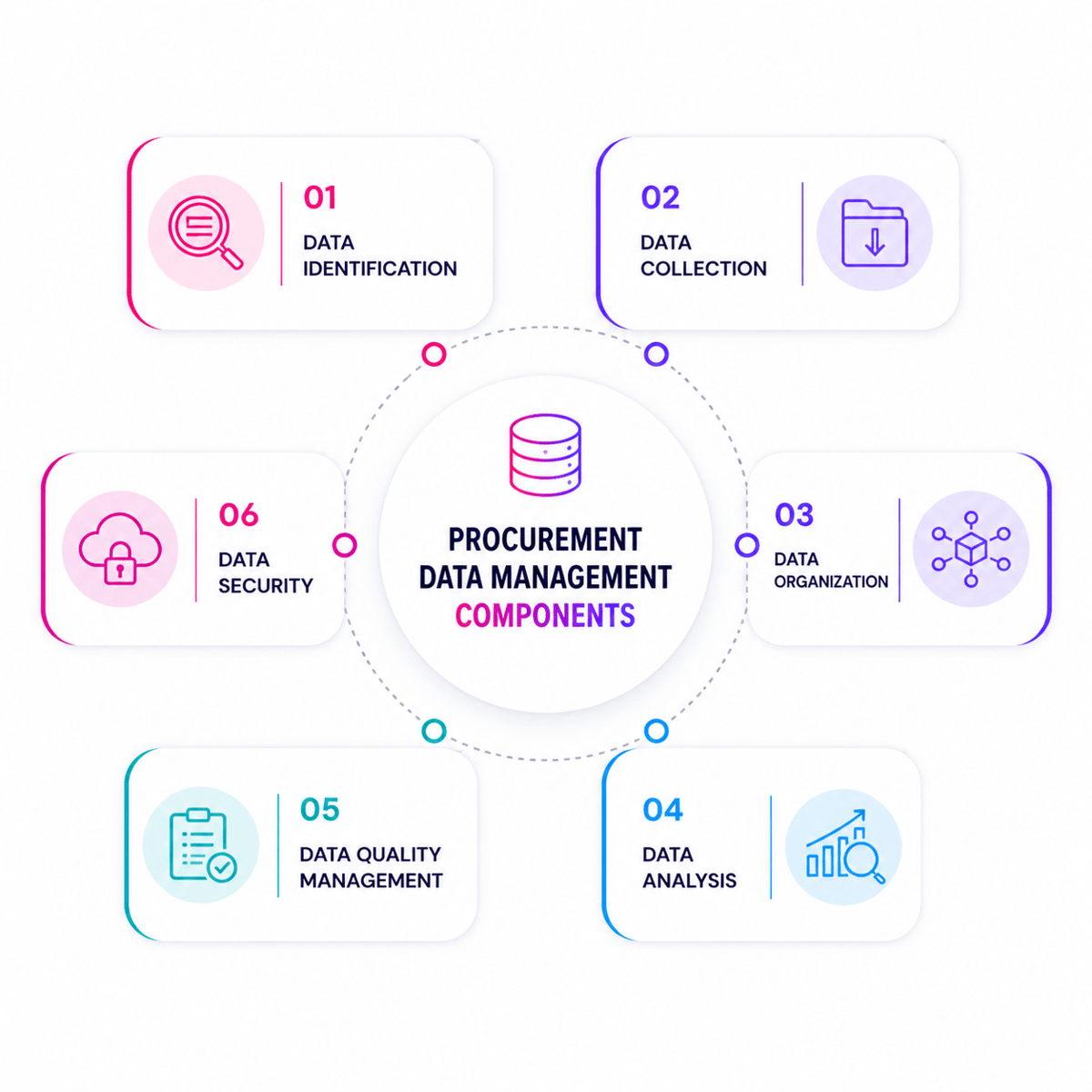
Key components of effective procurement item data management
Strong procurement item data management keeps purchasing steady and predictable. It helps your team use the same trusted item and supplier details every time. As a result, you avoid rework, delays, and wrong orders.
Start with accuracy. Keep item specs, prices, lead times, and supplier contacts up to date. When you review and fix records often, you cut errors and support faster approvals. Next, organize data in a clear way. Use consistent categories and fields so buyers, finance, and operations can find what they need in seconds.
Effective procurement data management also needs shared rules. For example, set standards for part names, units of measure, and supplier IDs. Then connect your tools so data moves with less copying and fewer mistakes. This approach supports better data procurement decisions because teams can compare options with clean, current data.
Here are the most important components of effective procurement data management
-
Run regular audits to find duplicates and missing fields
-
Use templates for consistent data entry and faster onboarding
-
Apply clear naming rules so teams search and match items easily
-
Integrate systems to share updates across purchasing and inventory
-
Use automation to reduce manual entry and prevent common errors
- Track digital purchase orders to control spend and approvals
Finally, protect sensitive supplier data and train staff on the process. When people follow the same steps, your data stays clean and useful for procurement data management at scale.
To extend these data-driven gains downstream, explore how automated fulfillment is reshaping speed, accuracy, and scalability in modern supply chains.
Strong data collection and well-defined performance metrics enable organizations to improve procurement strategies and make more informed decisions across teams. This also supports strategic sourcing by aligning contracts terms and payment terms, while reinforcing the key benefits of data management in procurement.
Building a centralized data management system
A centralized procurement data management system gives your team one trusted place for data. It cuts duplicate entries and improves accuracy. Everyone works from the same current information.
First, review how you collect and store data. Find gaps, duplicate records, and slow handoffs. This helps set priorities for cleanup.
Next, choose tools that connect your key systems. Real-time sync keeps data current. A simple interface also reduces training time. For data procurement across regions, choose tools that support different currencies, tax rules, and supplier formats.
Must-have features of a centralized procurement data management system
- ERP integration
- Flexible scaling
- Role-based access
- Real-time analytics
- Custom reports
- Cloud access
Clear data rules also matter. Define names, units, and required fields for procurement item data management. Assign owners to approve new items and update old records.
Finally, keep improving the process. Gather feedback and track errors. Update workflows when needs change. This supports better decisions over time.
Order management software can also automate approvals, tracking, and reporting. It helps teams make faster and more accurate procurement decisions.
Strong data collection and clear performance metrics improve procurement strategies. They also support strategic sourcing and help teams manage contract terms and payment terms more effectively.
Ensuring data quality, accuracy, and consistency
In procurement data management, high-quality data drives fast, confident decisions. Clean and accurate records reduce delays, prevent rework, and keep orders moving. On the other hand, bad data can trigger price errors, duplicate suppliers, and missed delivery dates.
First, protect accuracy with routine audits. Check key fields like supplier names, item codes, units, and pricing. Then fix issues right away so they do not disrupt your data procurement process.
Next, build consistency. When teams use different formats or skip required fields, everyone wastes time sorting out conflicts. Standard templates, clear naming rules, and required fields keep records easy to search and compare. This also supports procurement item data management across sites and systems.
To keep quality high, use these practices
-
Audit and cleanse data on a set schedule
-
Use shared templates and controlled lists
-
Train staff and refresh skills often
-
Automate checks for missing or out-of-range values
-
Collect feedback and fix root causes
Finally, update policies as tools and teams change. Strong data also improves spend control with accurate tracking, cleaner reports, and better visibility.
To turn this clean, centralized data into smarter decisions, explore how procurement insights and analytics reveal trends, risks, and savings opportunities.
Leveraging data analytics and business intelligence in procurement
In a fast-moving market, analytics helps procurement teams spot trends, plan demand, and buy with confidence. When you pair analytics with strong procurement data management, you reduce guesswork and speed up daily work.
Business intelligence (BI) adds clarity. It turns large data sets into simple dashboards and reports. As a result, teams can track supplier delivery, quality, and pricing in one place. They can also share updates with finance and operations without long email chains.
Key benefits of using analytics and BI in data procurement include
-
More accurate demand forecasting
-
Better tracking of supplier performance
-
Clear insights into cost-saving opportunities
-
Real-time visibility into key procurement metrics
-
Early warnings about risks or supply chain disruptions
Next, use what you learn to clean and standardize item records. This step supports procurement item data management and helps teams compare like-for-like items, avoid duplicates, and control maverick spend. Finally, set clear owners for data rules, and review key metrics on a set schedule so improvements stick.
To extend these data-driven gains into fulfillment, review our guide to sales order software that streamlines order processing and improves accuracy.
In addition, clear performance metrics and consistent data collection enable organizations to refine procurement strategies and make more informed decisions based on real-time insights. This approach also supports strategic sourcing by aligning contract terms and payment terms, while reinforcing the key benefits of data management in procurement.
Integrating procurement data across business systems
Integrating procurement data with other business systems helps teams work faster. It also reduces errors and removes data silos. Strong procurement data management keeps everyone working from the same information.
Marketing procurement data can connect purchasing with campaign plans and budgets. It also helps teams track vendor performance and spending.
ERP, CRM, and supply chain tools benefit from shared data. Buyers, finance, and operations can see the same orders and contracts. They also get access to current supplier information. This helps teams spot issues early.
Main benefits include:
- More accurate data
- Better reports
- Faster workflows
- Less manual work
- Better alignment across teams
- Centralized supplier information
Clear data rules are also important. Teams should define names, fields, and ownership. A master data management framework can keep vendor details, product specs, and pricing consistent.
Finally, a central platform reduces duplicate records. It improves visibility and control. It also makes marketing procurement data easier to use for supplier reviews and planning.
Managing purchase orders through data systems
Data security, compliance, and governance
Keeping procurement data safe is critical. Strong controls protect pricing, contracts, and supplier details. As a result, you reduce fraud, prevent data leaks, and keep work moving.
Compliance matters just as much. Laws such as GDPR and CCPA set clear rules for how you collect, store, and share data. If you ignore them, you risk fines, lost trust, and delays during audits.
That is why governance matters. It defines who owns each dataset, how teams use it, and when they must update it. Good governance also supports procurement item data management by keeping item records consistent across systems.
Accurate supplier information plays a major role in governance programs. Maintaining complete and verified supplier information helps reduce procurement risks and supports compliance efforts.
This approach also improves risk management, supports accurate data analysis, enables better spend analysis, reveals spending patterns, and strengthens overall procurement activities.
To stay secure and compliant, follow these steps:
- Encrypt data during storage and transfer
- Run regular audits to spot gaps and fix them fast
- Document rules, then review and update them often
- Train your team on data laws and safe handling
Next, use role-based access. Give people only what they need, and log key actions. This approach strengthens procurement data management and supports clean data procurement decisions.
It is also important to understand the difference between data management and vendor data management. Data management covers all procurement records and inventory levels. Vendor data management focuses on supplier information and vendor records. Protect both, and align them with your enterprise resource planning (ERP) systems so controls stay consistent.
Best practices for continuous improvement in data management
For stronger procurement data management, follow these best practices
-
Create simple rules for naming, ownership, and approvals, so updates stay consistent
-
Improve teamwork between procurement and IT so fixes ship faster and with fewer errors
-
Stay current with new data procurement tools, and test changes in small pilots before a full rollout
-
Track progress using industry-standard KPIs and benchmarks
Also, train staff regularly. Short sessions help users adopt updates and spot issues early. Set clear goals and review results often. Adjust quickly when needed.
Conclusion: future trends and next steps in procurement data management
The future of procurement data management is driven by smarter tools. AI and machine learning help teams find errors and patterns. They also support faster decisions. This can reduce delays, risk, and manual work.
Cloud tools also make procurement more flexible. They support data procurement across teams and locations. This helps companies react faster to changes in prices, supply, and demand.
Strong security is still important. Access controls and clear data rules help protect sensitive information.
Technology alone cannot fix poor data. Teams need clear standards for names, units, and categories. They also need owners responsible for data quality.
This improves procurement item data management and makes reports more reliable. Connecting data processes to business goals also supports cost control and better supplier performance.
Looking forward, focus on these priorities:
-
Seamless system integration
-
Sustainable procurement practices
-
Use of automated inventory management solutions
-
Real-time analytics and reporting
When you invest in innovation and stay agile, you build a stronger, more resilient process for procurement data management.
 Google AI
  OpenAI ChatGPT
 Frequently Asked Questions
What is procurement data management and why does it matter?
It refers to the process of gathering, organizing, and analyzing data to make better purchasing decisions. This helps reduce costs, streamline operations, and improve supplier performance.
How can small businesses benefit from better item data practices?
Keeping supplier and product data accurate ensures faster order processing, fewer mistakes, and stronger supplier relationships—even for smaller companies with limited resources.
What challenges do companies face when managing procurement-related data?
Common challenges include inconsistent records, lack of system integration, and poor record reliability. These issues can disrupt supply chain visibility and impact decision-making.
Why is centralizing procurement information important?
Centralized systems reduce data duplication, improve accessibility, and support accurate reporting. They provide a single source of truth for all stakeholders across departments.
How does automation improve procurement operations?
Automation speeds up data processing, eliminates repetitive tasks, and ensures timely updates. It helps procurement teams become more efficient while minimizing errors.
Can AI help optimize supply chain decisions?
Yes, AI tools analyze patterns in procurement data to forecast demand, identify cost-saving opportunities, and detect supply chain risks early—allowing for more proactive strategies.
Which tools integrate well with purchasing systems?
ERP software, inventory platforms, and CRM systems often integrate seamlessly with procurement modules. Integration ensures consistent data across your business operations.
What are the best ways to ensure data accuracy?
Use standardized formats, run regular audits, and provide employee training. Automation and validation tools also reduce the risk of manual entry errors.
How does strong data governance impact compliance?
Clear policies around data access, usage, and security help meet industry regulations like GDPR or CCPA. This builds trust and minimizes the risk of non-compliance.
Is it worth investing in analytics for procurement?
Definitely. Analytics uncover insights into spending, supplier performance, and demand trends. These insights support more strategic, data-driven decision-making across procurement.
How does data management improve purchase order processing?
Digital systems automate purchase order creation, approval, and tracking. This reduces processing time, eliminates paperwork, and provides real-time visibility into spending commitments. Automated matching with invoices also improves accuracy and speeds up payments.
I am an eCommerce expert with a strong focus on marketplaces like Amazon, eBay, and Etsy. Over the past decade, I have helped both startups and $1M+ revenue brands scale their sales through listing optimization, marketplace SEO, and AI-driven strategies. I also share articles and insights about eCommerce growth, marketplace operations, and multichannel selling.
You may also like
Enterprise parcel shipping software: what to check before you buy
Choosing the right enterprise parcel shipping software lowers logistics costs, boosts delivery performance, and simplifies complex carrier operations at scale. Explore the essential features, benefits, and selection criteria to optimize your multi-carrier strategy today.

Warehouse order fulfillment software: features and use cases
Warehouse order fulfillment software helps businesses streamline inventory, picking, packing, shipping, and returns from one connected platform. This brief outlines key benefits, features, use cases, and buying criteria for choosing fulfillment software that scales.

Inventory management cloud: how it works and when to switch
An inventory management cloud helps businesses track stock, automate workflows, reduce errors, and make faster decisions from anywhere. Benefits, use cases, selection criteria, and practical steps for adopting cloud-based inventory tools with confidence.