
Online Order Management Software to Streamline Sales, Fulfillment, and Growth
 Fiftify Team
·
· 18 min read
Fiftify Team
·
· 18 min read 
Every sale makes a chain of calls across teams. Sales confirms the promise, stock supports it, and fulfillment delivers it. When those steps run in split tools, small delays spread fast. Online order management software links the full order path from capture to ship. It gives sales, warehouse, finance, and support teams the same order record. That shared view cuts rekeying, missed syncs, and ship surprises.
A modern order management system turns daily moves into clear ops data. So teams spend less time chasing status and more time serving demand.
Why Order Flow Breaks Down
Many growing firms start with sheets, inboxes, and basic order programs. These tools often work at low volume. Problems appear when order count, sales channels, and fill rules grow. A rep may promise stock that already moved. A warehouse team may pack from an old pick list. Support may answer a buyer with no live ship details. Each gap adds cost and slows cash collection.
Order management systems cut these gaps by linking sales orders, stock levels, payments, and ship data. A strong order management platform helps teams see gaps sooner. Also, that view supports faster calls with no extra status meetings.
From Sales Promise to Fulfillment Reality
Online order management software gives structure to daily order work. It captures order details. It checks stock and routes tasks. Status syncs too. The best setup also links ecommerce, market, ERP, and ship tools. An online order management system matters most when orders come from many channels. It keeps web, retail, bulk, and phone orders in one flow. Buyers get clearer ship dates as teams work from live data.
Order tracking software adds another layer of control after release. Teams can see shipped, late, or canceled orders in minutes. That speed helps guard service levels during peak demand. Modern online order management software does more than process deals. It creates a solid ops layer for growth. With the right sales order management software, teams spend less time chasing syncs and more time serving high-margin demand.
What Is Online Order Management Software and Why It Matters
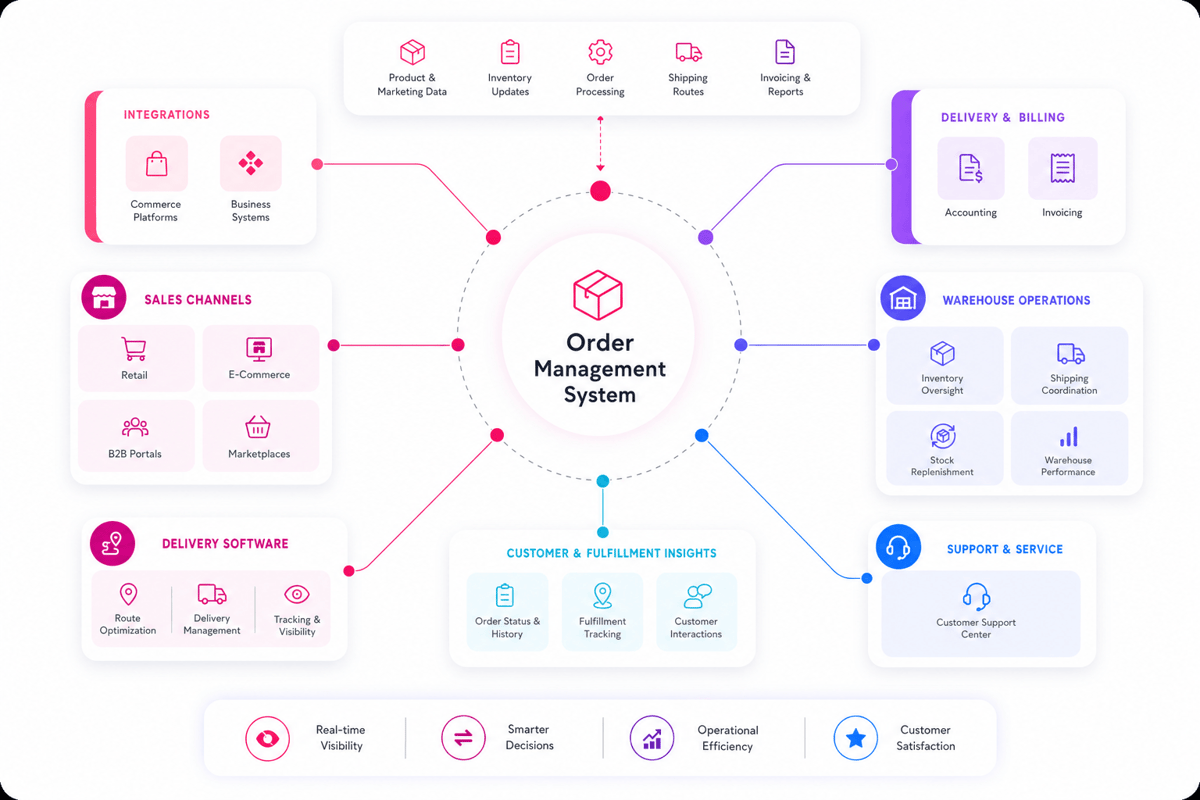
Online order management software is the system that captures, checks, and routes buyer orders. It links sales channels, stock records, payment status, and fill teams in one shared flow. Without that link, staff often manage orders across email, sheets, and split apps. Small delays then turn into missed shipments, double work, and poor stock calls.
What Online Order Management Software Controls
At its core, online order management software turns an order into a controlled flow. Each order moves from entry to sign-off, stock hold, pick, ship, and invoice.
- Order capture from ecommerce, markets, sales teams, and EDI channels
- Stock checks before teams promise goods to buyers
- Routing rules for stores, stores, or vendors
- Status syncs for staff and buyers
- Payment, tax, and invoice records tied to each order
Modern order management systems also cut manual checks. Rules can flag credit holds, backlog, split shipments, or orders that need manager sign-off. For many firms, online order management software replaces sheets that cannot keep pace. Teams gain a live view of what sold, what can ship, and what still needs action.
Why Online Order Management Software Matters for Growth
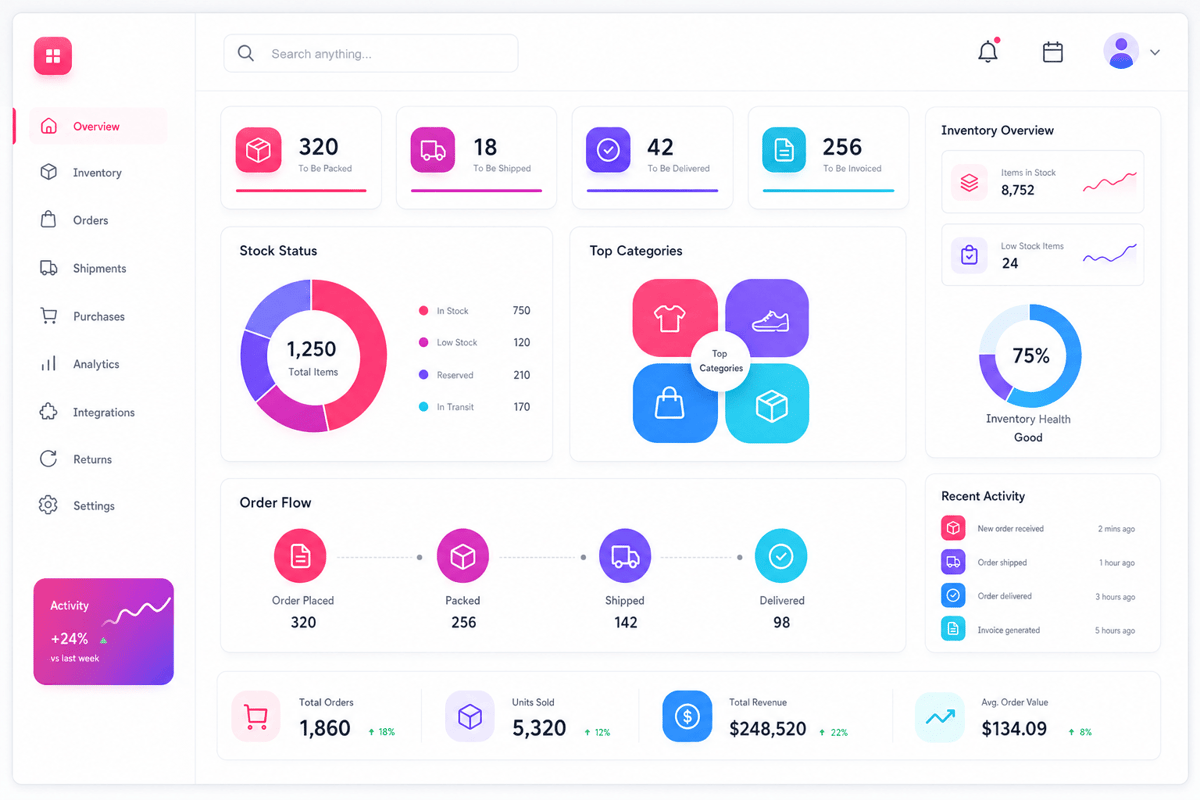
Growth shows weak order flows fast. More channels make more order formats, service promises, and stock clashes. The best order management software gives teams a steady flow across those moving parts. Also, an online order management system helps sales and ops share the same facts. Sales teams can see stock before they confirm ship dates. Warehouse teams can prep work based on approved demand.
A cloud-based order management system supports teams across sites with no local servers. Leaders can check order volume, aging orders, and fill delays from one order management platform. Strong online order management software matters as it guards revenue after the sale. It cuts rework, shortens handoffs, and gives buyers clearer ship syncs. For many teams, that base also shapes the next choice: order fulfillment software. Also, see the guide to maximizing efficiency with order management software.
Connect Shopify, draw your floor, pick an order - free plan, 7-day full trial, no credit card, no sales call.
How Order Management Systems Support the Complete Order Lifecycle
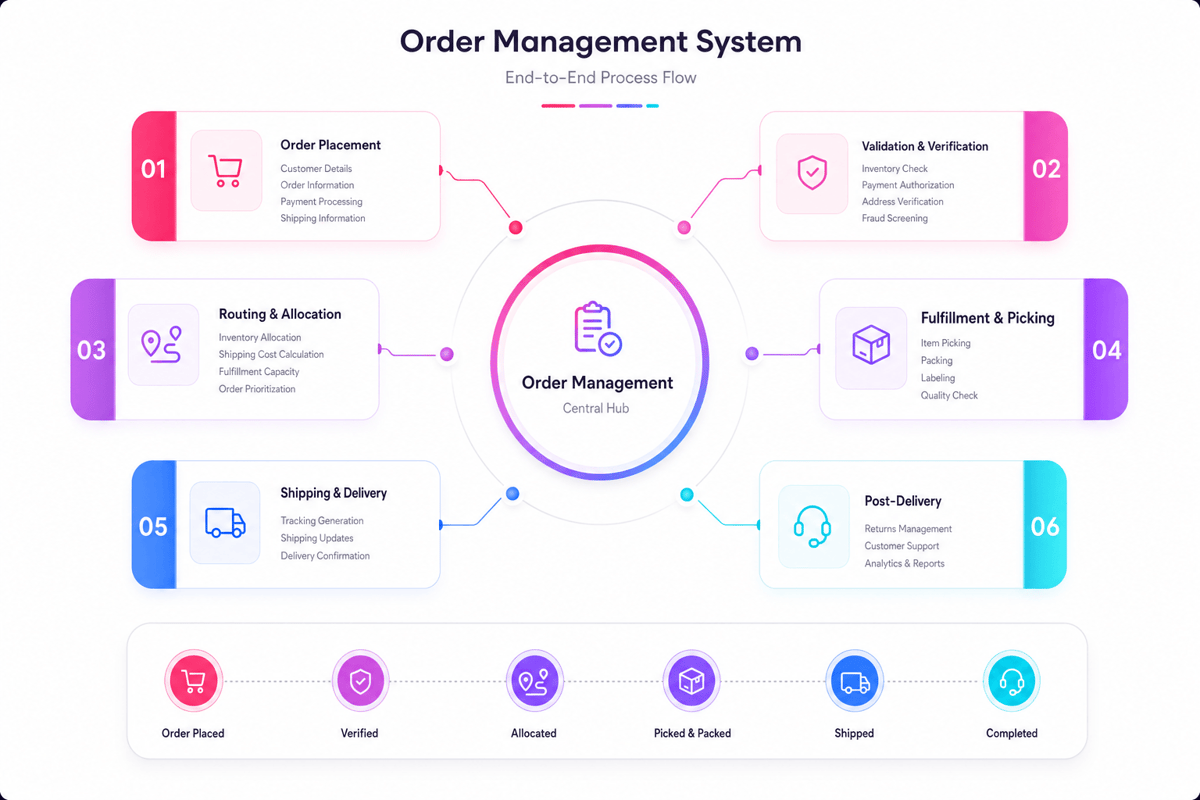
The order path starts when a buyer commits to buy. Online order management software links that moment to payment, stock, fill, ship, and returns. Each team works from the same order record, not split files. Manual handoffs often hide delays until buyers ask for syncs. Order management systems make a shared chain of status changes. Sales, warehouse, finance, and service teams see the same facts.
From Order Capture to Allocation in Online Order Management Software
When a buyer places an order, an online order management system checks key details. It checks buyer data, payment status, tax rules, and ship promises. Clean data at this stage stops costly fixes later. A strong order management platform then matches demand with open stock. In multi-spot networks, distributed order management helps pick the best source based on stock, distance, and service rules. That call can cut split shipments and stop over-sell.
Also, online order management software gives sales teams better control over promises. Reps can confirm open status before making ship dates. Managers can check blocked orders, backlog, and high-value accounts faster.
Fulfillment, Tracking, and Exceptions
After hold, online order management software sends clear work to the right spot. The warehouse, store, vendor, or third-party partner gets the needed details. Pick lists, pack notes, and ship methods stay tied to the order. Order tracking software keeps the order visible after release. Service teams can see whether staff picked, packed, shipped, or delivered the item. Buyers get cleaner answers with no long internal message chains.
Gaps often decide whether the buyer stays happy. When payment fails or stock changes, order management system software flags the issue fast. Teams can reroute items, release backlog, or reach buyers before deadlines slip. Returns and swaps also belong in the path. Sales order management software links the return to the original buy. A cloud-based order management system gives leads one view across channels and spots. The best flows do more than move orders forward. Online order management software makes cleaner handoffs between selling, stock control, and warehouse order fulfillment software.
Key Features to Look for in Online Order Management Software
The strongest systems combine order capture, stock data, fill rules, and reports. Online order management software should give teams one source of truth. Without that shared record, staff often match sheets and messages by hand. Feature depth matters as order volume shows weak handoffs. Well-chosen online order management software guards margins when refunds, split shipments, or backlog rise. The right fit cuts manual checks with no hiding key details.
Core Order and Inventory Controls in Order Management Systems
A solid online order management system captures orders from every sales channel. It links each order to stock, payment, and tax. Buyer data links in too. This helps teams catch errors early. Store work starts with clean data. Clean stock data sits at the center of order management systems. The system shows open, held, and incoming stock by spot. Strong controls matter more as ecommerce sales growth adds channels and faster buyer needs. Live stock syncs help sellers stop over-sell. Updates happen as orders move.
- Order tracking software should show status changes from buy through ship
- Sales order management software should support quotes, sign-offs, price rules, and invoices
- A cloud-based order management system should sync data across stores, stores, and teams
Modern online order management software should also handle order changes after buy. Address edits, part cancels, and swaps need clear controls. A full history helps service teams answer questions with no delays.
Automation, Reporting, and Integration in Online Order Management Software
Online order management software grows more useful when it removes repeated data entry. Rules can route orders by stock level, region, or carrier cutoff. Gap alerts help staff focus on orders that need check. Also, reports should link daily work with financial results. A strong order management platform shows fill rates, cycle times, return causes, and late ships. Effective online order management software turns these signals into faster calls.
Link quality often splits basic order management programs from long-term systems. The software should connect with ecommerce stores, ERP, accounts, ship, and store tools. Clean links cut double records and shorten close cycles. The best order management software also supports user roles and audit trails. Teams can control who changes prices, releases orders, or approves credits. Solid order management system software gives growing firms tighter control across the fulfillment business process.
Benefits of an Order Management Platform for Sales, Inventory, and Fulfillment
An order management platform links sales, stock, and fill data in one place. Teams can see each order status with no chasing syncs across tools. That shared view cuts delays, missed items, and double work. Online order management software gives each team the same source of truth. Sales can confirm stock before promising ship dates. Warehouse teams can pick and pack based on live demand.
Sales and Inventory Alignment With Online Order Management Software
When online order management software links sales work with stock data, teams stop over-sell. Item counts sync as orders move through each stage. This gives sales teams more trust when buyer calls. Also, sales order management software lifts quote-to-cash speed. Approved orders can move straight into fill with no manual re-entry. That shift can remove hours from daily order work.
Strong order management systems also support better buying calls. Managers can spot fast-moving items before shelves run low. Slow items become easier to find before cash gets tied up.
- Fewer backlog from old stock counts
- Faster sales sign-offs for open items
- Cleaner handoffs between sales and store teams
- Better stock planning based on live order demand
Faster Fulfillment With Fewer Errors
With online order management software, fill teams work from clear order details. The system can route orders by spot, stock level, or ship rules. This helps teams cut split shipments and late ships. An online order management system also cuts manual entry across channels. Orders from ecommerce, markets, and sales reps can flow into one queue. Fewer copied fields means fewer wrong addresses and counts. SKU errors drop too.
Order tracking software adds useful view after shipment. Service teams can answer ship questions with no calling the store. Buyers also get cleaner syncs, which cuts support tickets. The right online order management software turns daily order work into a linked flow. For many teams, the next stage connects these gains with multi channel inventory management.
How Order Tracking Software Improves Visibility and Customer Experience
Buyers notice gaps between buy and ship. Order tracking software closes those gaps with clear status syncs, timestamps, and carrier details. Each sync cuts doubt and lowers the need for support calls. Within online order management software, tracking links order status with stock, payment, pick, pack, and ship data. Teams see the same facts in place of checking split systems. That shared view helps them act before small delays turn costly.
Real-Time Status Across Teams
Modern order management systems collect status data from sales channels, stores, and carriers. A single timeline shows where each order stands. Teams can trace delays to stockouts or address errors. Carrier pickups show up too. When online order management software shows these syncs in one view, teams avoid double work. Staff no longer need long email threads to confirm basic order facts.
- Sales teams see promised ship dates before answering buyers
- Warehouse teams see pick, pack, and carrier handoff status
- Support teams see delays before buyers ask for help
A shared timeline also helps leads check patterns. Late ships may point to a carrier issue, not a store problem. Clear data supports better calls with no blame or guesswork.
Customer Updates That Cut Support Load
An online order management system sends status syncs through email, SMS, or buyer portals. Buyers can check progress with no reaching support. This matters most when peak seasons, when ticket volume can rise fast. Also, strong tracking inside online order management software lifts gap handling. If an item misses a cutoff, the system can flag the order early. A early note often guards trust better than a late apology.
As volume grows, online order management software keeps status rules steady across stores and channels. The best order management software turns tracking data into a service edge. Buyers gain trust as every sync matches the real order record. Solid tracking also backs the wider online order management software flow. Clean status data helps leaders compare carriers, spot slow stores, and guard ship promises. That same view also supports stock planning, above all when paired with the best ecommerce inventory management software.
Cloud-Based Order Management System Benefits for Growing Businesses
A cloud-based order management system gives growing teams room to scale with no costly server work. New users and channels join fast. New stores do too. That matters when order volume rises when peak seasons or market growth. Online order management software in the cloud also keeps teams aligned across spots. Sales, warehouse, finance, and service teams see the same order data. Fewer handoffs cut delays, double entries, and missed ship syncs.
Scalability Without Heavy IT Work
Old order management systems often need hardware, upgrades, and internal support. Cloud tools cut that load as the provider manages hosting and system syncs. Teams can focus on orders, not server upkeep. Also, a growing firm may add a new sales channel in weeks. An online order management system can connect ecommerce and markets in one place. Bulk orders join the same queue. That structure helps teams process higher volume with no adding manual steps.
Online order management software also supports remote and split teams. Staff can check orders from approved devices. Stock levels show up too. This access helps leads act before delays affect buyers.
Better Visibility Across Every Sales Channel
Cloud tools make a shared source for order and stock data. An order management platform can show which orders need action, which items run low, and which ships are late. Clear status data cuts guesswork when busy periods. Many growing firms pair cloud systems with order tracking software. Buyers get faster syncs, while service teams avoid repeat carrier checks. Clear tracking can cut ‘where is my order’ tickets by a wide margin.
The best order management software also links with finance, ship, CRM, and ecommerce tools. These links cut manual entry and help teams close orders faster. Strong links make growth easier to manage across channels. For complex sales cycles, cloud-based sales order management software keeps quotes, sign-offs, stock, and fill linked. Order management system software then turns approved demand into clear store work. This shared view also supports better planning across crm and inventory management.
Sales Order Management Software Use Cases Across B2B, Retail, and Ecommerce
Sales order management software supports varied selling models with no forcing one flow on every team. B2B sellers, retailers, and ecommerce brands each face distinct order rules. The right setup reflects those rules, then keeps data steady across channels. Strong order management systems cut manual work where orders get complex. Pricing, stock, ship, and sign-offs stay linked from sale to ship. Teams spend less time fixing records and more time serving buyers.
B2B Sales and Contract Workflows
B2B orders often include custom prices, payment terms, and sign-off paths. Sales order management software captures those details before fill starts. That control helps teams avoid billing errors and late ships. A distributor may sell the same item under several contract prices. Order management system software applies the right price by buyer, region, or account type. Sales reps can quote faster with no checking split sheets. Many B2B firms also manage repeat orders and part ships. Online order management software tracks open counts, backlog, and ship status in one place. Account teams can answer buyer questions with no calling the store.
Retail and Ecommerce Order Flow With Online Order Management Software
Retailers need fast order routing across stores, stores, and online channels. An online order management system can send each order to the best stock spot. This cuts split shipments and guards store stock from over-sell. Ecommerce teams rely on speed and clear status syncs. Order tracking software shares ship progress with buyers after checkout. Fewer ‘where is my order’ asks can cut support volume when peak periods.
Market sellers also need steady item and order records. A unified order management platform links web stores, markets, and fill partners. Orders then follow the same rules, even when demand jumps. A cloud-based order management system suits teams with remote staff or many sites. Managers can check sales orders, stock levels, and gaps from shared dashboards. The best order management software fits the way each firm sells, ships, and serves accounts. Also, see the guide to top sales order software solutions for a wider platform check. It also links order work with finance and stock records as volume grows. This link matters most when teams need business accounting and inventory management software.
How to Choose the Best Online Order Management Software for Your Business
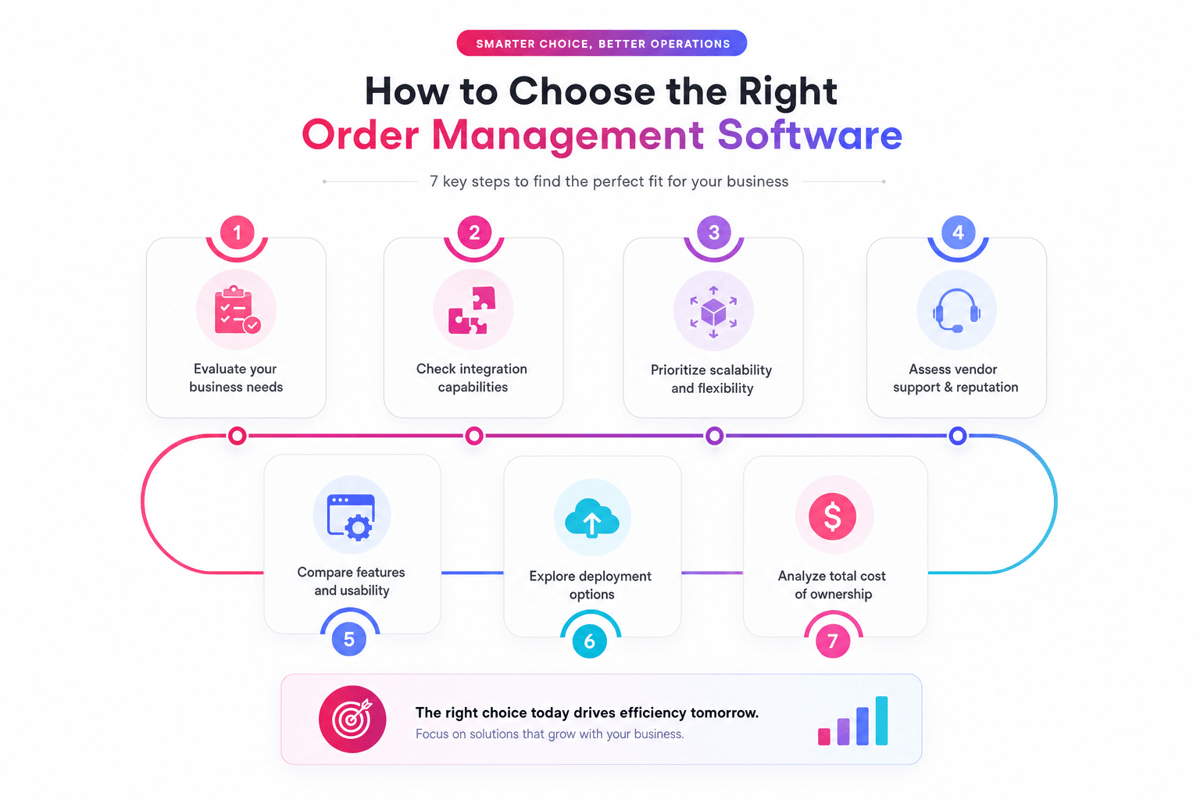
The best order management software fits current flows and future sales plans. A good choice supports order capture, stock syncs, fill rules, returns, and reports with no adding extra manual work. Firm size matters, but flow complexity matters more. A retailer with five sales channels may need stronger routing rules than a larger firm with one direct sales model.
Match Online Order Management Software Features to Daily Workflows
Strong online order management software links sales, warehouse, finance, and service teams. Each team should see the same order status, buyer data, and stock spot. A clear needs list helps compare order management systems with less guesswork. Recent OMS adoption trends also show growing need for live stock and faster return handling. These needs often split basic tools from solid systems.
Feature checks should focus on work that can be measured, not long software menus. Useful pick points often include:
- Order routing across stores, stores, and dropship partners
- Stock syncing across ecommerce, retail, and market channels
- Gap alerts for backlog, payment holds, and ship delays
- Buyer order history with clean status and return details
- Reports that show cycle time, fill rate, and margin impact
Some firms need sales order management software with quoting and sign-offs. Others need an online order management system that links web orders to store tasks. For small business teams, also see our guide to warehouse management for small business.
Assess Scale, Cost, and Support for Online Order Management Software
A cloud-based order management system often suits growing teams. It can support new spots, sales channels, and users with fewer IT delays. Total cost includes licenses, setup, and links. Support and training add to it. The lowest price can turn costly when teams still rely on sheets. Solid order tracking software should cut status calls and manual syncs.
Vendor fit also shapes long-term value. Proven order management system software should connect with ecommerce platforms, ERPs, WMS tools, carriers, and payment systems. The strongest order management platform gives leaders clear data and staff useful tools. Flex order management programs also leave room for flow changes as sales volume grows. Pick works best when leaders compare real flows, not demo cases. The right online order management software supports today’s order volume while getting the firm ready for broader logistics management software solutions.
Conclusion
Online order management software gives growing firms one place to control orders, stock, fill, and buyer syncs. It cuts manual handoffs, stops missed details, and helps teams act from the same order record. The right online order management software links sales channels, stock data, store tasks, ship syncs, and payment status. That link helps teams cut delays, reduce errors, and guard margins as order volume rises.
What Strong Online Order Management Software Delivers
Strong order management systems support the full order path. They cover order capture to ship confirm. They swap split sheets and inbox notes with shared data that teams can trust. Also, a modern order management platform gives leaders a better view of daily work. Teams can see which orders need care, which items run low, and which carriers miss ship targets.
For ecommerce and multi-channel sellers, an online order management system keeps orders aligned across markets, stores, and websites. Paired with order tracking software, it gives buyers clearer ship syncs and fewer reasons to reach support.
Choosing the Right Next Step
The best order management software fits current flows while leaving room for growth. A small firm may need simple routing today. Status syncs come first. A larger op may need advanced rules, store links, and stronger reports. A cloud-based order management system often suits teams that need faster setup and remote access. Many firms also use sales order management software to shorten quote-to-cash. It also cuts billing delays.
Start by checking order volume and channel mix. Fill gaps and service issues come next. Then compare online order management software options against those needs, not feature lists alone. Firms that want faster ship planning can also check ecommerce shipping logistics as the next layer of a stronger order ops.
 Google AI
  OpenAI ChatGPT
 Frequently Asked Questions
What is order management software?
Online order management software is a tool that helps businesses capture, process, track, and fulfill customer orders from one place. It connects sales, inventory, purchasing, shipping, and invoicing workflows so teams can reduce manual work, avoid errors, and improve delivery speed. Many order management systems also provide real-time visibility into order status and stock availability.
What is work order management software?
Work order management software helps teams create, assign, track, and complete service or maintenance tasks. It is commonly used in property management, field service, facilities, and operations. Unlike sales order management software, it focuses on job scheduling, labor, parts, service history, and task completion rather than product sales and fulfillment.
How do you choose order and invoice management software for procurement?
When choosing procurement tools, look for features that support purchase orders, invoice matching, supplier management, approval workflows, and budget controls. A strong order management platform should integrate with accounting, ERP, and inventory systems. Cloud-based access, reporting, automation, and user-friendly dashboards are also important for teams that manage high order volumes.
How can order management software help a business?
Order management software helps businesses improve accuracy, speed, and visibility across the order lifecycle. It can automate order entry, update inventory in real time, route orders to the right warehouse, and provide order tracking software features for customers and staff. This reduces delays, duplicate work, and fulfillment mistakes.
Can order management and fulfillment be handled in one platform?
Yes, many order management systems combine order capture, inventory control, warehouse routing, shipping updates, and fulfillment tracking in one platform. An online order management system can connect ecommerce stores, marketplaces, and internal sales channels, helping businesses manage orders from multiple sources without switching between separate order management programs.
How does order entry software improve inventory management?
Order entry software improves inventory management by updating stock levels as orders are created, changed, or fulfilled. This helps prevent overselling, backorders, and inaccurate purchasing decisions. The best order management software can also trigger reorder alerts, show available inventory across locations, and support better demand planning through real-time reporting.
Sync inventory in real time, manage orders, and run warehouse operations across Amazon, eBay, Etsy, Shopify, and other sales channels. From barcode scanning to organized storage and faster fulfillment, Fiftify helps reduce errors, prevent overselling, and support business growth. Explore our articles for insights on warehouse management, inventory control, and multichannel operations.
You may also like

Multi-Carrier Shipping Software: The Complete Guide to Smarter Ecommerce Shipping
Learn how multi carrier shipping software improves ecommerce fulfillment by comparing rates, automating labels, tracking orders, and simplifying returns. This brief outlines the key benefits, features, use cases, and buying criteria for growing online stores.

Top Ecommerce Fulfillment Companies: How to Choose the Right Partner for Growth
Choosing among top ecommerce fulfillment companies can improve delivery speed, inventory accuracy, and customer satisfaction. This brief outlines what business readers should look for, how to compare providers, and when to use U.S.-based fulfillment support.

Ecommerce Integration: A Practical Guide for Growing Businesses
This article brief outlines a practical guide to ecommerce integration for business readers. It covers platforms, software, ecommerce website integration, webshop integration, key benefits, use cases, selection criteria, implementation tips, and ways to measure long-term value.