
Furniture Inventory Tracking: A Practical Guide to Better Stock Control
 Daniel Brooks
·
· 9 min read
Daniel Brooks
·
· 9 min read

Furniture stock rarely disappears all at once. It leaks through small mistakes every working day. A sales rep sells a sofa before receiving updates. The staging team holds two chairs, while sales sees zero. That is where furniture inventory tracking starts to matter. Good stock control turns guessing into daily confidence.
According to Statista, the global furniture market is expected to generate more than $757 billion in revenue in 2026, increasing the need for accurate furniture inventory tracking across retail and warehouse operations.
Why Furniture Stock Gets Messy
Furniture creates tracking problems that small products avoid. Pieces move slowly, take up space, and carry many details. Color, fabric, finish, size, and condition all matter.
A table may exist in three places at once. The showroom shows one status, the warehouse shows another. Delivery teams often know the real answer first.
Spreadsheets usually look fine during early growth. Then orders rise, returns increase, and locations multiply. Small gaps start causing missed sales and rushed purchases.
What Better Tracking Changes
A strong furniture inventory system gives teams one shared view. Sales can confirm stock before making promises. Warehouse staff can find items without long searches.
The biggest win often comes from fewer surprises. Teams catch low stock before bestsellers vanish. They spot dead inventory before it eats floor space.
Better furniture inventory tracking also protects customer trust. Nobody wants to explain a missing section after payment. Accurate stock data keeps promises closer to reality.
Why Furniture Inventory Tracking Matters for Growing Businesses
Growth exposes weak stock habits faster than any audit. A salesperson sells a sofa that a designer reserved. The mistake looks small until delivery day arrives.
Small teams often catch these misses through memory. Bigger teams lose hours, margin, and customer trust.
Stock Gaps Cost More at Scale
The count says three recliners remain in stock. The floor shows one, and warehouse staff find none.
That gap turns a simple sale into an apology. Delivery teams then rework routes at the last minute. Sales staff start keeping notes outside the system.
Those notes fix one order and break the next. Busy weeks make the damage harder to see. By month-end, nobody trusts the official count.
Clear Counts Protect Cash Flow
Furniture locks cash inside bulky, slow-moving items. One overbought dining set can fill a bay. That space could hold pieces that customers request daily.
A reliable furniture inventory system flags slow movers early. Buyers reduce repeat orders before slow stock traps cash. Managers also spot which ranges earn their space.
Accurate counts make delivery promises safer. Teams stop guessing, and customers stop chasing updates. Growth feels steadier when teams trust furniture inventory tracking.
Connect Shopify, draw your floor, pick an order - free plan, 7-day full trial, no credit card, no sales call.
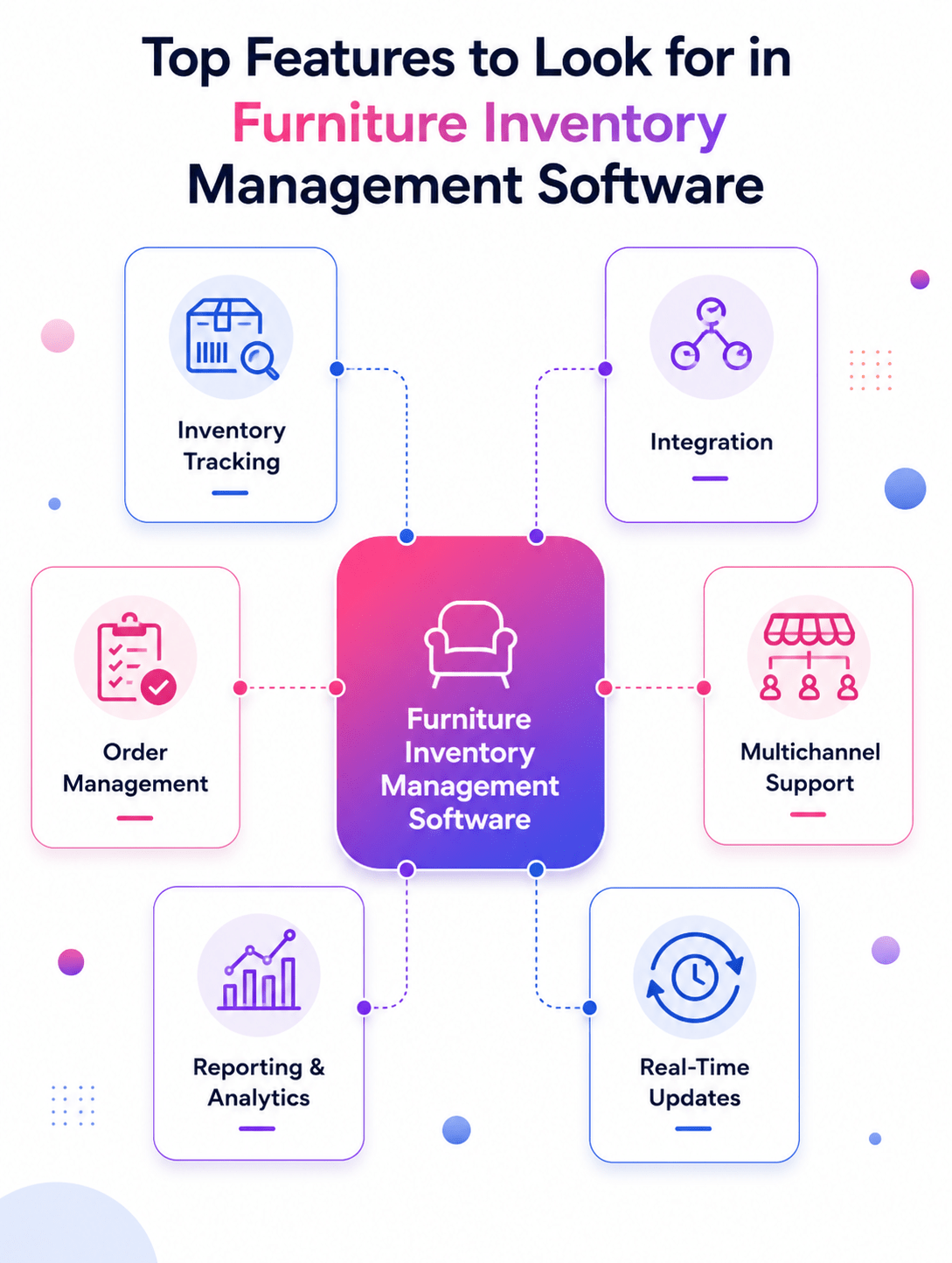
Key Features of a Modern Furniture Inventory System
A good system does more than count chairs. It shows where each piece sits today.
That matters when one sofa looks available online. The delivery team may still find an empty bay. Furniture inventory tracking closes that gap before customers notice.
Stock Data That Matches Reality
Modern tools track each item by SKU, location, and status. Teams see what arrived, sold, moved, or returned. That detail prevents duplicate orders and missed deliveries.
Furniture needs more context than small retail goods. A dining table may have six matching chairs. The system must keep those pieces linked.
Status fields also matter during damage checks. Staff can mark items as reserved, repaired, or staged. Sales teams stop promising stock that cannot ship.
Tools That Fit Daily Work
The best software fits the warehouse floor. Mobile scanning cuts typing errors during receiving and picking. Photo records help teams confirm conditions fast.
Alerts prevent quiet stock problems from growing. Low-stock notices help buyers reorder popular finishes sooner. Aging reports flag slow movers before storage costs climb.
A useful furniture inventory system also connects with sales channels. Storefronts, warehouse records, and delivery teams work from the same counts. The cleanest setup often starts with a barcode inventory system.

Furniture Inventory Tracking: Use Cases Across Retail, Warehouses, and Staging
Most stock mistakes start with a small shortcut. Someone writes “back room” instead of a shelf code.
That note feels harmless during a busy sale. Two days later, three people searched for one chair. Inventory tracking only works when each location tells the same story.
Retail Stock That Matches the Floor
Retail teams deal with fast, visible inventory changes. A customer sits on a floor model, then buys it. Another customer orders the same SKU online that afternoon.
The count may look right inside the system. The store still loses the sale at pickup. Display pieces, holds, repairs, and returns need separate statuses.
A strong furniture inventory system shows what staff can sell today. It also shows what needs cleaning or approval. That split cuts awkward calls after checkout.
Warehouses, Transfers, and Staging Jobs
Warehouses expose every weak spot in stock control. Large items rarely fit neatly in bins or shelves. Teams need zones, rack positions, and transfer logs.
Receiving works better when staff scans items once. The same scan should create the stock record. Manual retyping often creates duplicate SKUs and wrong counts.
Staging teams face a different problem. Items leave for weeks, then return in pieces. One sofa may come back with missing cushions.
Good furniture inventory tracking ties each item to a job. Photos, condition notes, and due dates matter here. They protect billing when damage appears later.
The best setup does one simple thing. It treats every movement as a stock event. That habit becomes much easier with perpetual inventory system software.
Furniture Inventory System vs. Spreadsheets: What to Choose?
Spreadsheets feel safe because everyone understands them. They also hide problems until money has already leaked. That gap matters in furniture inventory tracking.
A sofa is not a packet of screws. It has fabric, finish, size, location, and condition. One wrong cell can send crews across town.
Where Spreadsheets Still Fit
Small teams can manage a short list in sheets. A staging studio with twenty items may stay accurate. The owner often knows every chair by sight.
Sheets also help during early buying tests. New lines change fast, and forms feel slow. A simple tab can track samples and costs.
The trouble starts when more people touch stock. Sales edits one version, while warehouse updates another. Nobody sees the conflict until delivery day.
When a System Pays Off
A furniture inventory system earns its keep through shared truth. Teams scan items, update locations, and flag damage. Managers see available stock before making promises.
The biggest gain usually comes from fewer arguments. A warehouse count no longer depends on memory. Photos and item histories settle disputes quickly.
Consider a retailer with three showrooms. A dining table moves from the warehouse to the floor. A spreadsheet may show both locations as current.
The customer arrives, and the staff searches for hours. A live system closes that gap within minutes. Furniture inventory tracking becomes practical when movement creates records automatically.
The choice comes down to error cost. If mistakes stay rare, sheets may hold longer. If errors delay installs, the software costs less.
Most teams switch after one painful season. Growth exposes every shortcut in the stock process. That choice also prepares the team for retail inventory management software.
Practical Tips to Improve Furniture Inventory Tracking Accuracy
Inventory accuracy usually breaks down during small daily handoffs. A chair moves for staging, but nobody records it. By Friday, the furniture inventory tracking report looks trusted and wrong.
The fix rarely starts with better reports. It starts with cleaner habits at each stock touchpoint. Good data comes from boring rules done daily.
Fix the Moments Where Errors Start
Most errors start before the monthly count begins. They happen during receiving, picking, repairs, returns, and showroom resets. Each move needs one clear owner and a timestamp.
A good furniture inventory system keeps updates close to the work. Mobile scanning beats end-of-day note entry every time. Staff scans the item while the move still feels real.
Count Often, but Count Smarter
Full counts stop work and still miss hidden problems. Cycle counts catch patterns before they become expensive surprises. High-value pieces deserve checks more often than slow movers.
Small sample counts tell you where trust breaks. If beds match but lamps drift weekly, investigate lamps first. A scratched table and a clean table need separate records.
When every site names locations differently, reports lose meaning. Teams with several sites usually need multi-location inventory management software.
Conclusion: Furniture Inventory Tracking
Furniture stock problems rarely start with bad intent. They start with late updates, vague item names, and unchecked returns. Furniture inventory tracking gives those small gaps fewer places to hide.
A good process connects sales, warehouse, delivery, and purchasing. When each team sees the same count, decisions get faster. Fewer customers hear, “Sorry, that item is unavailable.”
Keep the System Close to Reality
The best setup reflects how furniture actually moves. Sofas shift between showrooms, storage, repair, and customer homes. A furniture inventory system must follow every movement.
Spreadsheets can work during the early days. Growth exposes their weak spots very quickly. One missed update can trigger overselling within hours.
Real accuracy comes from simple habits. Scan items when they move, not later. Audit fast-moving pieces before problems reach customers.
Turn Better Furniture Inventory Tracking Into Better Decisions
Clean inventory data changes how teams buy and sell. Buyers avoid duplicate orders, and slow sellers stop piling up. Sales staff can promise dates with more confidence.
The real win comes from trust in the numbers. Managers stop chasing status updates across five places. Teams spend more time moving furniture, not checking records.
If your counts still feel shaky, start with one busy category. Track every movement for two weeks and review the gaps. That small test often reveals the biggest fix.
What part of your stock process causes the most friction? Share your experience, or explore these inventory management solutions before choosing your next system.
 Google AI
  OpenAI ChatGPT
 Frequently Asked Questions
What is furniture inventory tracking?
Furniture inventory tracking is the process of monitoring furniture items, quantities, locations, condition, and movement across a business. It helps companies know what they own, where each item is stored or used, and when items need repair, replacement, or reorder. This improves accuracy and reduces time spent searching for assets.
Why is furniture inventory tracking important for businesses?
Furniture inventory tracking helps businesses prevent lost assets, avoid duplicate purchases, and maintain accurate records. It is especially useful for offices, hotels, rental companies, warehouses, and retailers that manage many furniture items. Better visibility supports budgeting, space planning, maintenance scheduling, and faster decision-making.
What features should a furniture inventory system include?
A good furniture inventory system should include item descriptions, photos, barcodes or QR codes, location tracking, condition status, purchase details, and maintenance history. It should also support reporting, user access controls, and easy updates from mobile devices. These features help teams manage furniture more efficiently and reduce manual errors.
How can businesses track furniture inventory accurately?
Businesses can track furniture inventory accurately by labeling each item, recording key details, and updating records whenever furniture is moved, repaired, sold, or discarded. Regular audits also help confirm that records match actual assets. Using digital tools instead of spreadsheets can improve consistency and make inventory data easier to access.
Who benefits most from a furniture inventory system?
Organizations with multiple locations, large offices, showrooms, warehouses, or rental operations benefit most from a furniture inventory system. Facility managers, operations teams, procurement staff, and finance departments can all use accurate inventory data. It helps them control costs, plan space, manage assets, and respond quickly to business needs.
Can furniture inventory tracking reduce costs?
Yes, effective furniture inventory tracking can reduce costs by preventing unnecessary purchases, lowering replacement expenses, and extending the life of existing assets. It also helps identify underused furniture that can be reassigned instead of buying new items. Accurate records support smarter procurement, maintenance planning, and asset management.
I specialize in building scalable eCommerce systems powered by AI and automation. My work focuses on growing sales across Amazon, eBay, and Etsy through technology integration, data-driven strategies, and performance optimization. I also publish articles and insights about eCommerce technology, warehouse operations, and multichannel growth.
You may also like

Sustainable Packaging in E-Commerce: Why Retailers Are Switching to Reusable Shopping Bags
Sustainable packaging is becoming an important part of modern e-commerce and retail. Reusable shopping bags help businesses reduce packaging waste while creating a practical and visible extension of their brand. This article explores why retailers are adopting reusable bags, how bulk and custom options support different business needs, and what to consider when building a more sustainable packaging strategy.
Hardware Inventory Software: Smarter IT Asset Management
Choosing the right hardware inventory software helps teams track devices, control costs, improve compliance, and plan upgrades with confidence. Read on to discover key benefits, use cases, selection criteria, and best practices for smarter IT asset management.

Material Inventory Software: A Practical Guide to Smarter Stock Control
Learn how material inventory software helps businesses track raw materials, reduce waste, prevent stockouts, and connect purchasing with production. Benefits, key features, use cases, comparisons, and practical selection tips for teams ready to improve inventory control.