
3PL Warehouse Management System Guide: Choosing the Right 3PL WMS for Growth
 Emily Carter
·
· 18 min read
Emily Carter
·
· 18 min read 
A 3PL warehouse management system gives growing logistics firms one place to manage rising complexity. Growth often exposes weak warehouse tools fast. More clients, order channels, billing rules, and service levels create daily pressure. So this system connects stock, receiving, picking, packing, shipping, billing, and client reports.
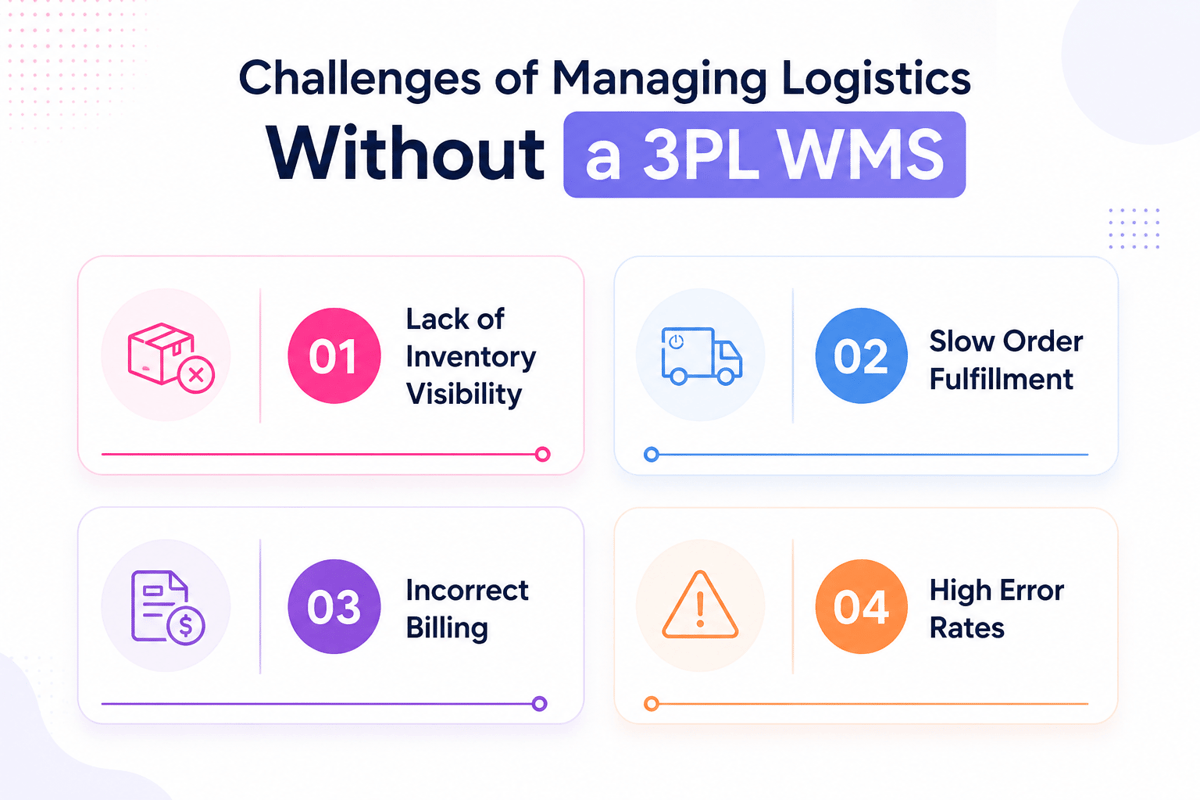
Without the right system, teams rely on sheets and manual checks. That slows order flow and raises costly errors.
Why 3PL Operations Need Specialized Software
A standard warehouse tool often serves one owner and one flow. A 3PL warehouse handles many clients, each with varied rules. So a strong 3PL warehouse management system supports that multi-client model from the start. It tracks stock by client, SKU, spot, lot, and order status.
Furthermore, 3PL warehouse management software helps billing tied to real work. Storage, picks, and returns can feed invoices with less manual work.
Growth Depends on System Fit
Growth creates new needs before a warehouse feels ready. A scalable 3PL warehouse management system helps teams keep pace with no extra admin work.
Many warehouses compare 3PL software solutions after missed shipments or billing gaps appear. Earlier checks help leaders skip process debt as new accounts launch. The right choice depends on order mix, client needs, links, and growth plans. For some teams, cloud-based 3PL software gives faster access and lower IT load. For more on top platform picks, see the best warehouse management software.
What Is a 3PL Warehouse Management System?
A 3PL warehouse management system is software built for outsourced fulfillment ops. It controls stock, orders, labor, billing, and client data in one workspace. Unlike a single-brand WMS, it helps many buyers with varied rules.
Core Purpose in a 3PL Operation
A 3PL warehouse management system gives teams a live view of stock and order status. Staff can see what arrived, where it sits, and when it must ship. Also, clients can track work without calling the warehouse for updates.
The software also ties work to revenue. Many 3PLs bill for receiving, storage, picking, packing, kitting, and returns. Strong 3PL warehouse management software captures those events as work happens, which cuts missed charges.
Furthermore, modern 3PL WMS software tends to link with carts, markets, and accounting tools. These links cut repeat data entry.
How It Differs From Standard WMS
A standard WMS tends to serve one firm, one stock owner, and one report style. A 3PL warehouse management system manages many stock owners at once. It must split stock, rights, files, and billing rules by client.
Some platforms also serve smaller firms that need a plain setup and a clear price. In that case, 3PL software for small businesses may focus on core receiving, picking, shipping, and billing. Larger teams may need cloud-based 3PL software with deeper links and multi-site control. For small firms, see also warehouse management for small business.
The right 3PL warehouse management system becomes the work log for every client tie. It shows what was got, moved, shipped, sent back, and billed. That wider model defines the role of third-party warehouse management.
Connect Shopify, draw your floor, pick an order - free plan, 7-day full trial, no credit card, no sales call.
How 3PL Warehouse Management Software Streamlines Daily Operations
A 3PL warehouse management system gives teams one shared view of work. Orders, stock, labor, and ship data move through one system. That cuts handoffs and limits errors from sheets or email updates.
Daily warehouse work depends on timing and clean data. 3PL warehouse management software links each task to live stock and client rules.
From Receiving to Inventory Control
In fact, receiving sets the tone for the full order cycle. A strong 3PL warehouse system gets item counts, lot data, serial counts, and damage notes at the dock. The system then sends stock to the right bin or zone.
Live stock logs help teams skip costly rework. Staff can see open, held, and on-hold stock with no waiting for a count.
3PL WMS software also helps with varied client rules in one shop. One client may need lot tracking, while another needs kitting or branded packing. The system runs those rules before work reaches the floor.
Faster Picking, Packing, and Shipping
In practice, order flow gets more set when tasks show in the top order. A 3PL warehouse management system can group picks by carrier, zone, order type, or service level. So this helps teams cut walk time and missed cutoffs.
Also, barcode scans check each move as work happens. The system flags wrong items, wrong bins, or short stock before packing. That control cuts mis-ships and protects client margins.
- Wave picking helps teams run high-order volume in batches
- Rate shopping checks carrier picks before label print
- Packing rules guide inserts, box pick, and client branding
- Billing data gets storage, labor, and extra fees
Also, cloud-based 3PL software lifts client access to order status. Clients can check stock levels, ship updates, and gaps with no calling for help. That view cuts plain asks during peak times.
The best systems turn daily warehouse work into clean ops data. Managers can spot late orders, slow zones, and rising labor costs sooner. That control gives growing 3PLs a stronger base for warehouse fulfillment services.
Key Features to Look for in 3PL WMS Software
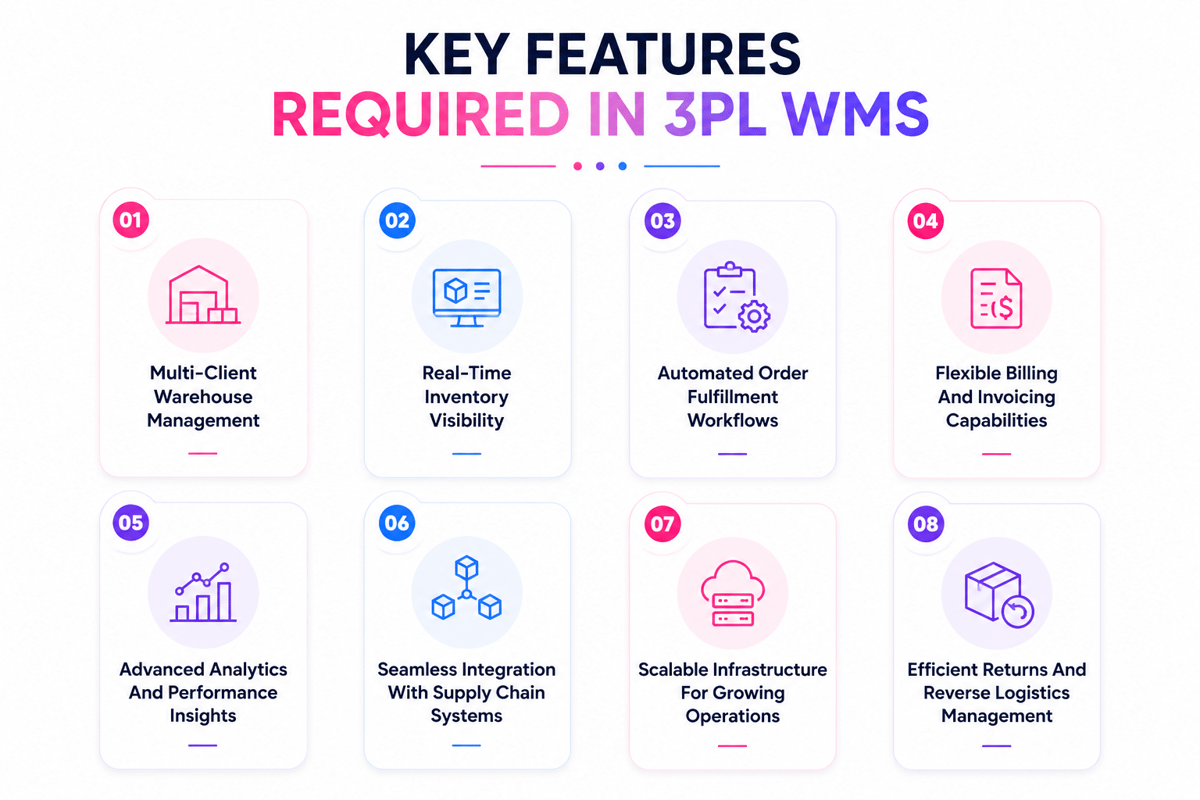
The right tools shape how a warehouse handles growth. A 3PL warehouse management system must help many clients, order rules, and billing models without slowing down daily work.
For growing firms, a 3PL warehouse management system turns warehouse work into clear, usable data. Teams can see stock status, labor needs, and ship gaps before missed orders create client friction.
Inventory, Orders, and Client Control
In short, multi-client stock control sits at the core of 3PL WMS software. The system should split stock by client, lot, serial number, end date, and storage rule.
Order work should handle DTC, bulk, retail, and market flows. A 3PL warehouse management system also needs rule-based pick, pack, and ship logic for each client.
- Real-time stock syncs help teams stop oversells and backorders
- Barcode scans cut manual entry and speed up cycle counts
- Client portals give buyers order status with no extra emails
- Billing tools capture storage, labor, kitting, and special jobs
These tools protect margins as 3PL work changes often. Manual bill sheets miss small fees, and those gaps grow across hundreds of orders.
Integrations, Automation, and Reporting
A modern 3PL warehouse management system needs clean links to sales channels, carriers, ERPs, and accounting tools. Strong links cut double entry and lower delays during peak volume.
Furthermore, automation should help repeat work with no gaps. The system can set pick paths, rate-shop carriers, print labels, and flag orders that need checking.
Reporting matters as clients want proof, not guesses. The best 3PL warehouse management software shows order cycle time, stock clean data, dock work, and ship cost by account. Also, cloud-based 3PL software can help teams onboard new clients with less IT work.
The best tool set links control, speed, and view. A 3PL warehouse management system gives warehouse teams a shared workspace for solid warehousing and shipping services.
3PL Warehouse System vs. Traditional WMS: Key Differences
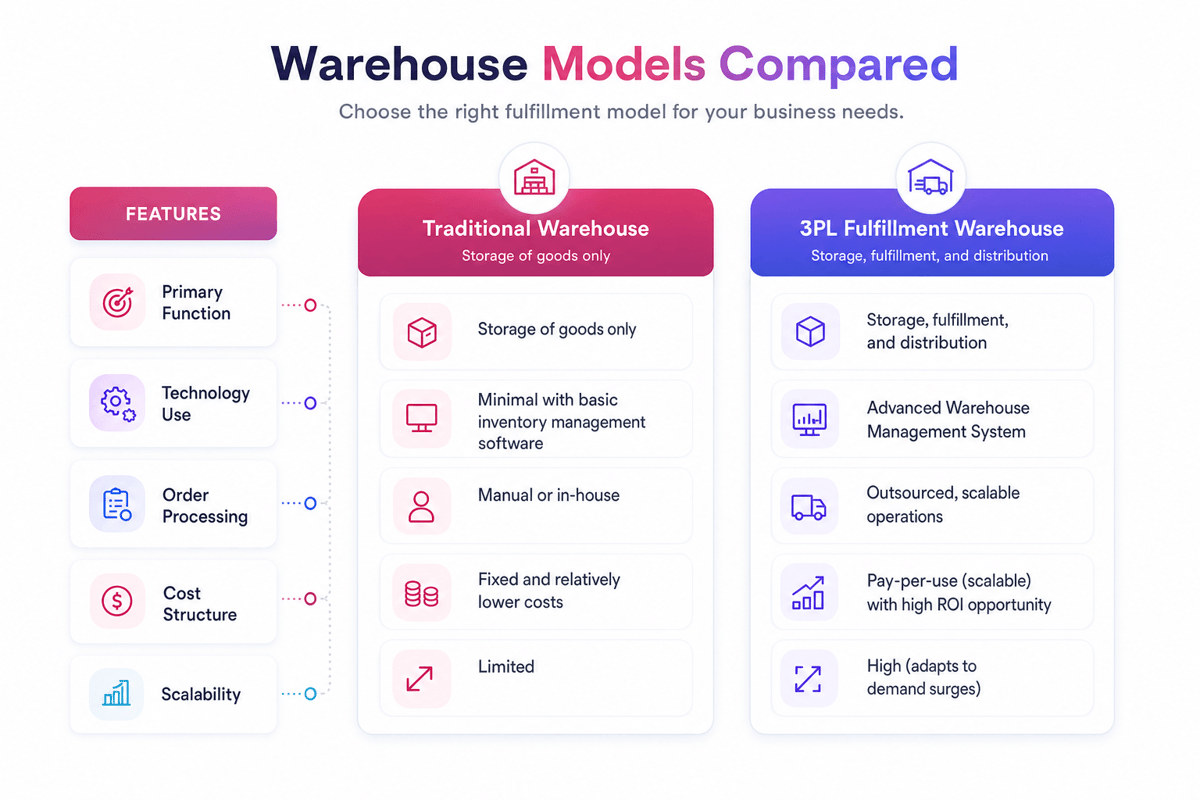
A set WMS tends to serve one firm, one stock owner, and one set of rules. A 3PL warehouse management system must help many clients in the same building. Each client may need varied bill rules, service levels, labels, carriers, and reports.
That gap shifts the system build from the ground up. 3PL warehouse management software must split client data while giving teams one clear work view.
Multi-Client Control and Visibility
A 3PL warehouse system needs strong account-level controls. The system must run varied client models with no mixing of stock or files.
Also, client portals matter more in third-party logistics. Buyers want access to stock levels, order status, ship history, and receipts. A 3PL warehouse management system gives clients a direct view, which cuts email requests and manual report work.
Billing, Rules, and Service Complexity
In fact, billing makes one of the biggest gaps across set systems and 3PL WMS software. A 3PL may charge for storage, receiving, picking, kitting, returns, labels, boxes, and special jobs. The system must catch those events as work happens.
Manual billing slows the month-end close and results in lost revenue. A 3PL warehouse management system can link warehouse work to client fees. That link helps teams bill faster and back each fee with clear logs.
Also, work rules vary by client. Some need lot tracking, serial counts, branded slips, or strict carrier rules. Strong 3PL logistics software runs those rules at the client level, so teams follow the right flow with no extra checks.
Growth adds more push to these gaps. The best 3PL WMS software helps new clients without rebuilding every flow. A 3PL warehouse management system gives operators the ability to scale while protecting each client’s fulfillment business process.
Benefits of 3PL Logistics Software for Warehouses and Clients
3PL logistics software adds value across every fulfillment tie. A 3PL warehouse management system gives warehouse teams clearer work queues, cleaner data, and fewer manual checks.
So, clients gain more trust as they can see orders, stock, and fees. End buyers gain through faster shipping, fewer errors, and better delivery updates.
Warehouse Gains From Better Control
A 3PL warehouse management system helps teams run many clients in one shop. Each client can have its own rules for picking, packing, labels, and billing.
So, that build cuts rework on the warehouse floor. Workers spend less time checking sheets and more time moving orders. Also, 3PL WMS software lifts labor plans. Managers can view order volume by client, service level, and cut-off time.
Client Visibility and Customer Trust
Clients want fast answers with no waiting for email updates. 3PL software solutions give them access to orders, stock, returns, and ship status.
That view cuts service tickets and builds trust. It also helps clients plan deals with no guessing about open stock.
The best 3PL software also links billing to warehouse work. Storage, pick fees, kitting, and returns can flow into bills with fewer fights. End buyers see the result through clean ship promises. A 3PL warehouse management system helps stop delays before they reach the buyer. This shift makes order fulfillment software easier to scale.
How to Choose the Best 3PL Software for Your Fulfillment Model
The right 3PL warehouse management system should match how orders move, not just how stock sits. A parcel-heavy ecommerce shop needs more varied controls than a B2B warehouse shipping pallets to stores.
A strong 3PL warehouse management system links order rules, billing, labor, stock, and carrier work. The best fit cuts manual checks and keeps each client’s flow clear.
Match Software to Order Flow
A retail fulfillment model often needs fast pick, scan-based packing, and clear return work. So 3PL WMS software should help batch picking, rate shopping, branded files, and same-day cutoffs.
B2B fulfillment puts more weight on routing guides, lot tracking, EDI, and rule labels. A 3PL warehouse management system built for these flows helps stop chargebacks and rejected shipments.
Hybrid warehouses need flex rules across clients and channels. 3PL warehouse management software should let teams set varied flows with no building separate steps from scratch.
Evaluate Fit Beyond Features
Feature lists can look alike across many 3PL software solutions. The real gap shows up during receiving, gap handling, billing, and client reports.
The best 3PL software helps the work that makes a profit. Storage fees, pick fees, kitting fees, and special work should flow into billing with no sheet cleanup.
A 3PL warehouse system also needs clean links to carts, markets, carriers, ERPs, and client portals. Strong links cut double entry and help teams skip ship delays.
Cloud-based 3PL software tends to suit growing firms as teams can add users, clients, and spots faster. Smaller firms may still need deep controls, so 3PL software for small businesses should not mean a weak view.
The best 3PL WMS software shows the fulfillment model, client mix, and growth plan. When the 3PL warehouse management system mirrors real warehouse work, it makes a stronger base for ecommerce fulfillment automation.
Comparing 3PL Software Solutions: Use Cases, Integrations, and Scale
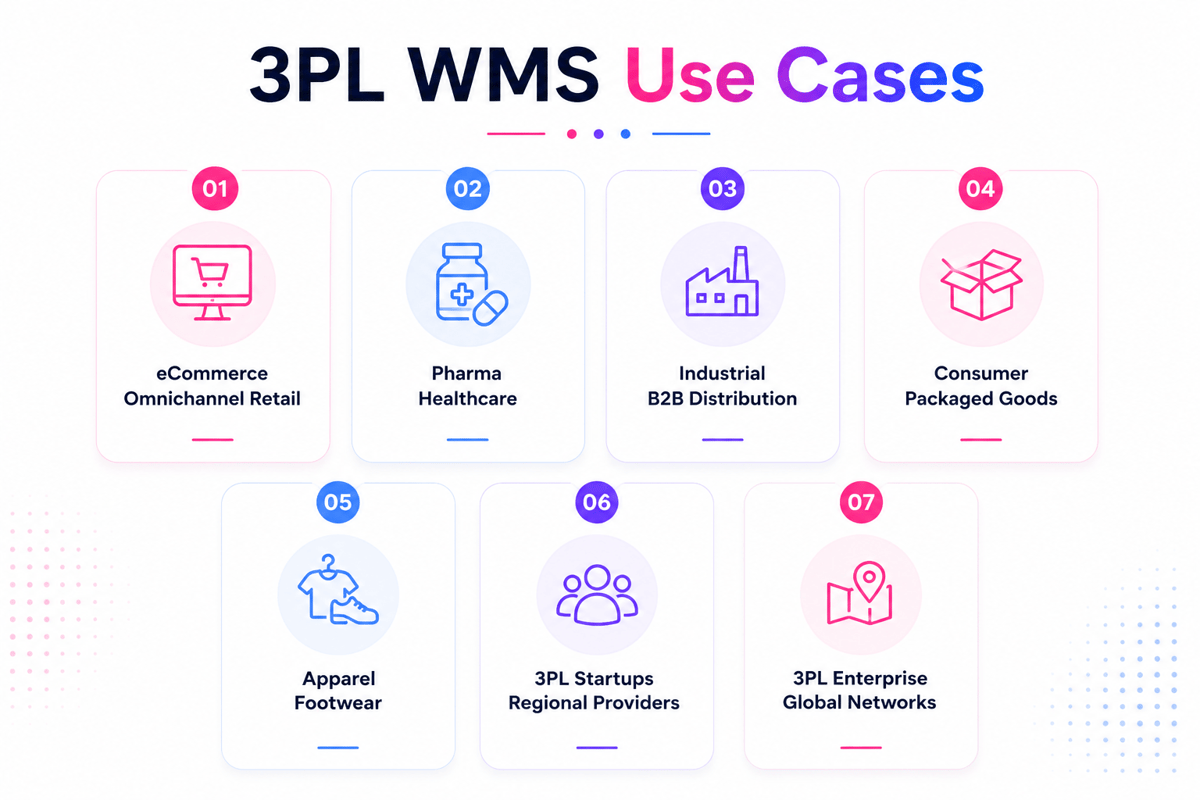
Strong checks start with the warehouse model, not the software brand. A 3PL warehouse management system that fits ecommerce parcels may fight with retail restock, kitting, or B2B pallet shipments.
In fact, use cases matter as each model has varied billing, labor, and reporting needs. The right 3PL warehouse management software helps those needs without forcing staff into manual fixes.
Fit by Fulfillment Model
For example, parcel-focused shops need fast order import and clean return flows. A 3PL warehouse management system for this model should cut touches between order release and label print.
Also, cold storage and rule-bound goods need tighter control. In these cases, 3PL logistics software must track status, spot, end dates, and handling rules with clear logs.
Integration Depth and Growth Capacity
Link quality splits basic tools from scalable 3PL software solutions. A strong 3PL warehouse management system links with carts, markets, carriers, accounting tools, and client portals with no steady file uploads.
Furthermore, API strength affects client onboarding speed. When 3PL WMS software maps orders, stock, and ship updates clean, new clients can launch in days, not weeks.
Scale shows up during peak volume, not during demos. The best 3PL software handles more orders, users, clients, and warehouses with no slowing pick waves or delaying stock updates.
Smaller firms may start with plain tools, then move into wider systems. Cloud-based 3PL software often helps that path as it lowers server costs and speeds up new site setup. The best 3PL WMS software gives operators room to add services with no rebuilding core flows. Teams planning deeper system links often compare platforms integrating warehouse management with ERP systems.
When 3PL Software for Small Businesses Makes Sense
In practice, small 3PLs often start with sheets and manual checks. That setup can work while order volume stays low. A 3PL warehouse management system starts to make sense when manual work creates delays, billing errors, or missed client updates.
In fact, growth tends to show weak points before revenue catches up. More clients bring more rules, labels, rates, and report needs. At that stage, 3PL warehouse management software gives the team one place to manage orders, stock, labor, and client work. A 3PL warehouse management system also helps owners see profit by account, not just total volume.
Signals That Manual Flows Hold Back Growth
3PL software for small businesses makes the most sense when daily work depends on memory. Staff may know where goods sit today, but that knowledge becomes risk when volume rises. Good 3PL WMS software turns those habits into repeat flows.
- Stock counts differ across the warehouse and client reports
- Teams retype order data between sales channels and carriers
- Extra fees get missed during month-end billing
- Clients ask for status updates that staff must check by hand
- New accounts take too long to launch and test
These issues do more than slow the floor. They cut trust with clients and hide true service costs. A 3PL warehouse management system gives small firms tighter control before problems need more labor.
Choosing a Right-Sized Starting Point
Indeed, small teams rarely need the largest platform on day one. The best fit often helps core receiving, putaway, picking, packing, shipping, and billing. A real 3PL warehouse system should match live needs while leaving room for new clients.
Also, cloud systems can cut early IT costs. Many 3PL software solutions use a monthly price and faster setup paths. That model lets a firm test new flows before a larger pledge. For many growing 3PLs, that first step starts with a barcode warehouse management system.
Why Cloud-Based 3PL Software Is Becoming the Preferred Option
Cloud-based 3PL software has gained ground as fulfillment shifts faster. Stores add channels, carriers change rates, and clients want live data. A 3PL warehouse management system in the cloud keeps these moving parts in one shared space.
In contrast, on-site systems tie growth to servers and IT tickets. Cloud systems cut much of that load. Teams sign in through a browser and work from live data.
Lower Cost and Faster Rollouts
So, a cloud model moves spending away from large hardware buys. The monthly price gives leaders a clearer view of the system cost. For new accounts, setup often takes days, not weeks.
This matters for 3PL software for small businesses. Smaller firms can add users, spots, or tools without buying servers. The provider sends syncs to the 3PL warehouse management system with no warehouse downtime.
Better Connectivity Across Clients and Sites
In fact, modern fulfillment depends on clean links across sales channels and warehouses. Cloud-based 3PL software links more easily with markets, carts, carriers, and client systems. Those links cut manual imports and stop double order entry.
A client portal can show stock, order status, and bill details. That view cuts status emails and shortens fight cycles. Strong portals also make 3PL warehouse management software feel more open to clients.
Also, security lifts when vendors run patches and access controls. The best platforms track user work and help with role-based rights. For growing firms, a 3PL warehouse management system often scales more smoothly when the core platform runs in the cloud.
How to Evaluate the Best 3PL WMS Software Before You Buy
The strongest buy flow starts with work proof, not feature lists. A 3PL warehouse management system should match how the warehouse gets, stores, picks, packs, ships, and bills each client.
However, demos often look clean as they follow tidy sample data. Real checks need your orders, rules, carrier mix, and client bill cases. That step shows where a 3PL warehouse management system helps with growth or makes extra work.
Test Fit Against Daily Workflows
So, a good check starts with the warehouse floor. The team can compare live tasks against the flows inside the 3PL WMS software, including receiving, putaway, restock, cycle counts, and returns.
Client depth matters as much as order volume. Per Forbes, 3PLs now need systems that handle change with no long delays. A flex 3PL warehouse management system helps teams add clients, rules, and services with less rework.
- Help for multi-client stock rules and shared warehouse space
- Clean billing for storage, labor, kitting, and special jobs
- Fast order flow across markets, carts, carriers, and ERPs
- Clear screens for client help teams and warehouse leads
- Mobile scans that cut manual entry and pick errors
Validate Costs, Support, and Scale
In practice, price checks work best when they show the full run cost. Plan fees matter, but setup, training, links, devices, and help also affect payback. The best 3PL WMS software cuts manual work enough to offset those costs.
Also, the scale needs a close check before the deal signing. A cloud-based 3PL software model can help growing warehouses add users, spots, and clients with no large hardware costs.
The final pick should show the fulfillment model, not a set scorecard. A 3PL warehouse management system that handles today’s client mix and tomorrow’s growth gives the shop a stronger base. The right 3PL warehouse management software turns software spend into fewer errors, faster billing, and cleaner client reports.
Conclusion
The right 3PL warehouse management system gives growing warehouse control, speed, and clearer client service. It links receiving, storage, picking, packing, shipping, billing, and reports in one shared flow.
Furthermore, strong systems cut hidden costs. A good platform cuts manual entry, limits order errors, and helps teams meet tighter service rules without adding extra labor too soon.
What Matters Most for a 3PL Warehouse Management System
A 3PL warehouse management system should match how the warehouse earns revenue. Multi-client stock, custom bill rules, carrier links, and client portals matter more than broad feature lists. The best fit also depends on order volume and flow mix. Some teams need ecommerce speed, while others need lot tracking or B2B routing rules.
The Best Next Step
So, a short buy flow works best when it starts with warehouse truth. Live pain points, client needs, and growth plans should shape the software shortlist. The best 3PL WMS software proves its value during demos. Real orders, real bill cases, and real gap cases show how the system handles daily push.
3PL software for small businesses can also make sense before ops feel hard. Early system care helps stop messy fixes, weak stock logs, and client report gaps.
Choose 3PL WMS software that helps today’s work and tomorrow’s deals. A scalable 3PL warehouse management system gives leaders better calls before problems reach buyers. Compare your top 3PL software solutions with real warehouse cases before you sign a deal. Related buy calls also gain from a clear view of inventory management solutions.
 Google AI
  OpenAI ChatGPT
 Frequently Asked Questions
What is a 3PL warehouse management system?
A 3PL warehouse management system is software that helps third-party logistics providers manage inventory, orders, receiving, picking, packing, shipping, billing, and customer reporting. Unlike a standard warehouse system, it supports multiple clients, locations, pricing rules, and service-level requirements in one platform.
How does 3PL warehouse management software improve operations?
3PL warehouse management software improves accuracy, speed, and visibility across warehouse operations. It automates tasks such as inventory tracking, order routing, barcode scanning, shipping label creation, and client reporting. This helps reduce manual errors, improve fulfillment times, and give customers real-time access to their stock and order status.
What features should the best 3PL WMS software include?
The best 3PL WMS software should include multi-client inventory management, barcode scanning, order management, billing automation, carrier integrations, reporting dashboards, and customer portals. Cloud-based 3PL software is also valuable because it allows teams and clients to access data from anywhere without managing complex on-premise systems.
Is a 3PL warehouse system suitable for small businesses?
Yes, 3PL software for small businesses can be a cost-effective way to manage growth without adding too much manual work. A scalable 3PL warehouse management system helps smaller logistics providers handle more clients, improve order accuracy, and offer professional reporting while keeping operations organized and efficient.
What is the difference between 3PL WMS software and general warehouse software?
General warehouse software is often built for companies managing their own inventory. 3PL WMS software is designed for logistics providers that manage inventory for multiple clients. It usually includes client-specific billing, separate inventory ownership, customer portals, custom workflows, and reporting tools for each account.
How do you choose the best 3PL software for your business?
To choose the best 3PL software, review your warehouse size, client needs, order volume, integrations, billing requirements, and budget. Look for 3PL software solutions that are easy to use, scalable, and compatible with your ecommerce platforms, carriers, and accounting tools. A demo or trial can help confirm the right fit.
I am an eCommerce expert with a strong focus on marketplaces like Amazon, eBay, and Etsy. Over the past decade, I have helped both startups and $1M+ revenue brands scale their sales through listing optimization, marketplace SEO, and AI-driven strategies. I also share articles and insights about eCommerce growth, marketplace operations, and multichannel selling.
You may also like

Multi-Carrier Shipping Software: The Complete Guide to Smarter Ecommerce Shipping
Learn how multi carrier shipping software improves ecommerce fulfillment by comparing rates, automating labels, tracking orders, and simplifying returns. This brief outlines the key benefits, features, use cases, and buying criteria for growing online stores.

Top Ecommerce Fulfillment Companies: How to Choose the Right Partner for Growth
Choosing among top ecommerce fulfillment companies can improve delivery speed, inventory accuracy, and customer satisfaction. This brief outlines what business readers should look for, how to compare providers, and when to use U.S.-based fulfillment support.
Ecommerce Integration: A Practical Guide for Growing Businesses
This article brief outlines a practical guide to ecommerce integration for business readers. It covers platforms, software, ecommerce website integration, webshop integration, key benefits, use cases, selection criteria, implementation tips, and ways to measure long-term value.