
How to choose an ecommerce marketplace service provider for scalable growth
 Fiftify Team
·
· 16 min read

Scale needs more than more listings. It needs systems that run sellers, orders, payments, and buyer trust. An ecommerce marketplace service provider turns those parts into a clear, repeatable model.
When brands grow fast, an ecommerce marketplace opens new revenue streams. Yet scale can expose weak seller controls and slow list work. The right ecommerce marketplace service provider brings structure before those issues get costly.
What an ecommerce marketplace service provider does
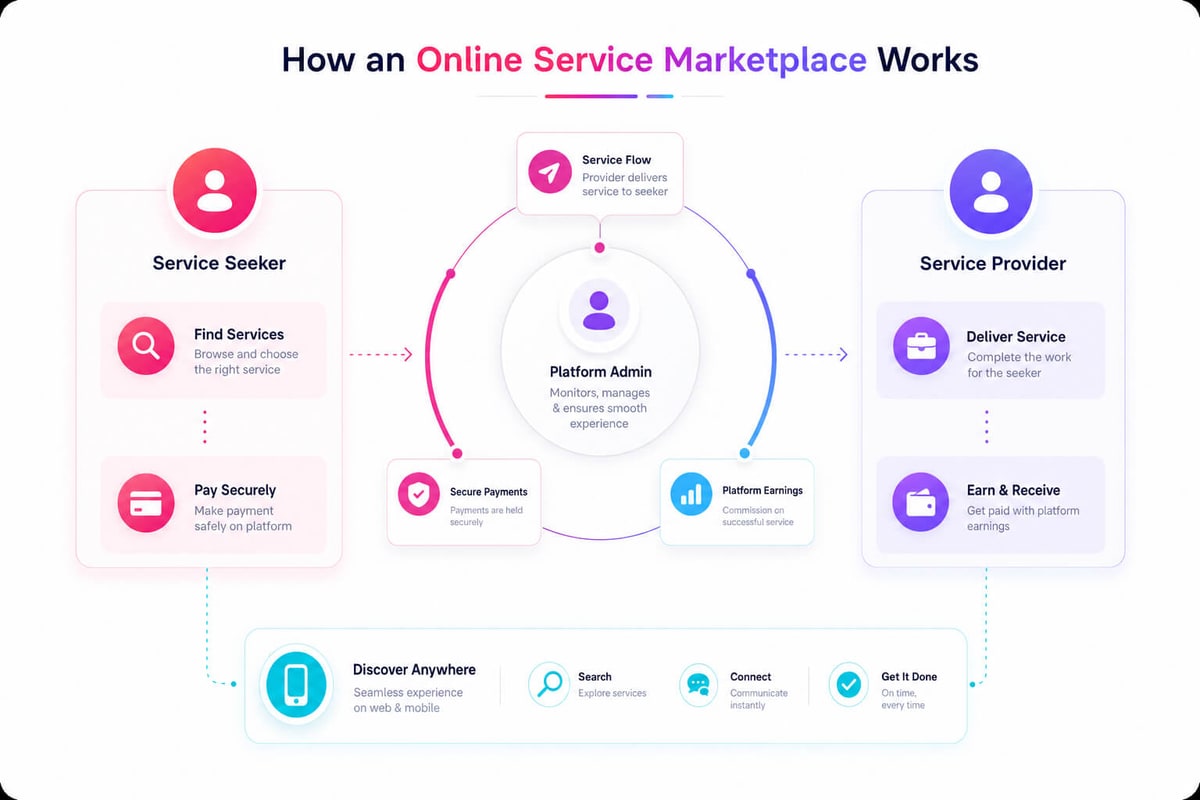
A growing marketplace needs more than a storefront. It needs clear rules, strong workflows, and solid seller control. An ecommerce marketplace service provider helps build that base before scale creates gaps. Here, the provider links brand goals with the right platform. That covers seller setup, list structure, payment flows, order routing, and reports.
Building the core foundation
An ecommerce marketplace service provider often starts with process design. The team maps how products enter the site and how orders move through the system. Tool choice plays a key role too. The right software supports vendor accounts, fee rules, tax settings, and product data controls.
Moreover, a provider helps align teams around daily work. When all teams see the same data, they solve issues faster and waste less time on repeat work.
Supporting sellers and marketplace growth
Strong marketplaces depend on strong seller output. An ecommerce marketplace service provider creates systems for checking, training, and tracking vendors, cutting poor listings, late shipments, and disputes. The provider may manage listing grade and pricing rules too. Clean product data helps buyers compare items with trust and speed.
- Ecommerce marketplace services can support launch planning and seller setup.
- Online marketplace management services can help track order issues and seller response times.
- A solid structure gives buyers a clearer experience.
Indeed, for a growing brand, a strong provider creates order before volume exposes weak processes. Clear ownership across tools, sellers, orders, and data prepares the brand for disciplined how to scale a marketplace.
Why an ecommerce marketplace differs from a standard store
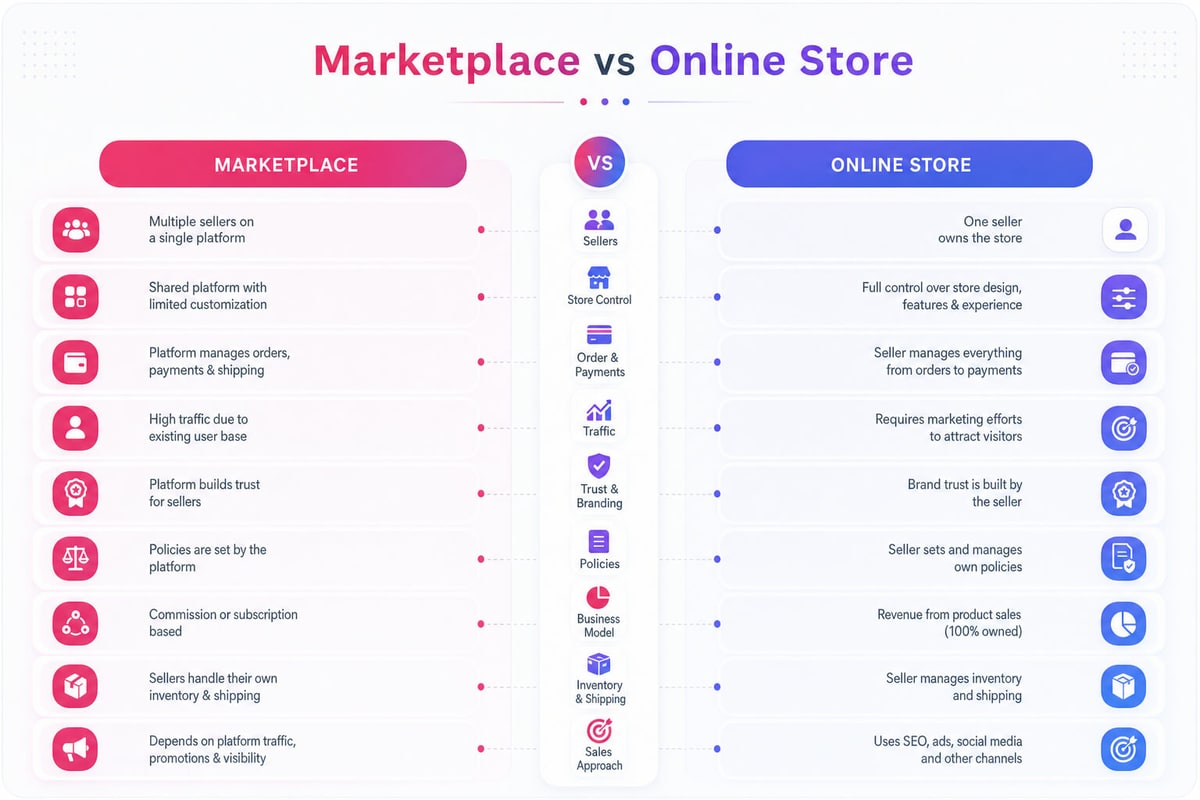
Now, a standard online store sells products from one brand. An ecommerce marketplace connects many sellers with shared buyers. Indeed, that shift changes the model, revenue logic, and risk profile. Yet an ecommerce marketplace service provider helps manage that added layer. Indeed, the provider supports seller workflows, product data, payments, and service rules.
How multi-seller platforms create more complexity
In general, a standard store controls its list, stock, pricing, and shipping work. A marketplace must work with many sellers who each have their own processes. Wider retail ecommerce growth also raises buyer needs for range, speed, and trust. More choice is good, but it can create bad service without clear controls.
So an ecommerce marketplace service provider often defines those controls across the platform. Seller setup, product approval, tax handling, and dispute rules all need structure to work well.
The platform must support many business models
By contrast, a normal store may run on basic cart and checkout tools. Yet ecommerce marketplace software needs features for fees, seller dashboards, split payments, and approval flows. So an ecommerce marketplace service provider connects these needs through process design. That way, the provider supports management services for seller grade, list control, and service tracking.
Still, tools alone rarely solve marketplace growth problems. Marketplaces grow by managing more ties, which makes services more central than basic ecommerce management.
Connect Shopify, draw your floor, pick an order - free plan, 7-day full trial, no credit card, no sales call.
Core features to look for in a marketplace platform partner
A strong marketplace system gives buyers, sellers, and teams clear control. It manages many moving parts without adding needless steps. A skilled ecommerce marketplace service provider can assess these needs against real growth plans. The best systems support daily work and long-term scale. Indeed, they help teams manage listings, orders, payments, and seller rules in one place.
Seller and product tools for catalog control
First, seller tools should make setup fast, clear, and easy to track. A good system captures tax data, brand details, bank records, and approval status. Product management needs strong controls too. Shared list rules, image standards, and pricing fields keep listings clean. A skilled ecommerce marketplace service provider often looks for these controls first.
- List tools keep product data clean across sellers.
- Approval workflows reduce errors before listings go live.
- Seller dashboards show orders, payouts, and policy alerts.
- Stock syncing helps prevent overselling during peak demand.
Otherwise, weak controls create duplicate products, wrong prices, and slow approvals. So strong software keeps those risks visible.
Payments, orders, and daily operations
Now, marketplace payments need more than a basic checkout. The system must split payments, track fees, manage refunds, and support seller payouts. A capable ecommerce marketplace service provider checks how each payment rule works under pressure. Order management should connect buyer updates with seller actions, since buyers expect clear ship status and simple returns.
As a result, reports turn daily work into clear calls. Teams can review seller sales, late shipments, return rates, and product demand. A connected feature set also prepares the brand for reliable ecommerce integration.
Choosing the right ecommerce marketplace software
Now, the right ecommerce marketplace software fits the way revenue, sellers, and buyers interact. A service model for niche brands needs its own tools for a high-volume retail marketplace. So a skilled ecommerce marketplace service provider maps software choices to margin goals, seller count, and order flow. Weak rules create manual work across pricing, payouts, returns, and support.
Match software to your ecommerce marketplace revenue model
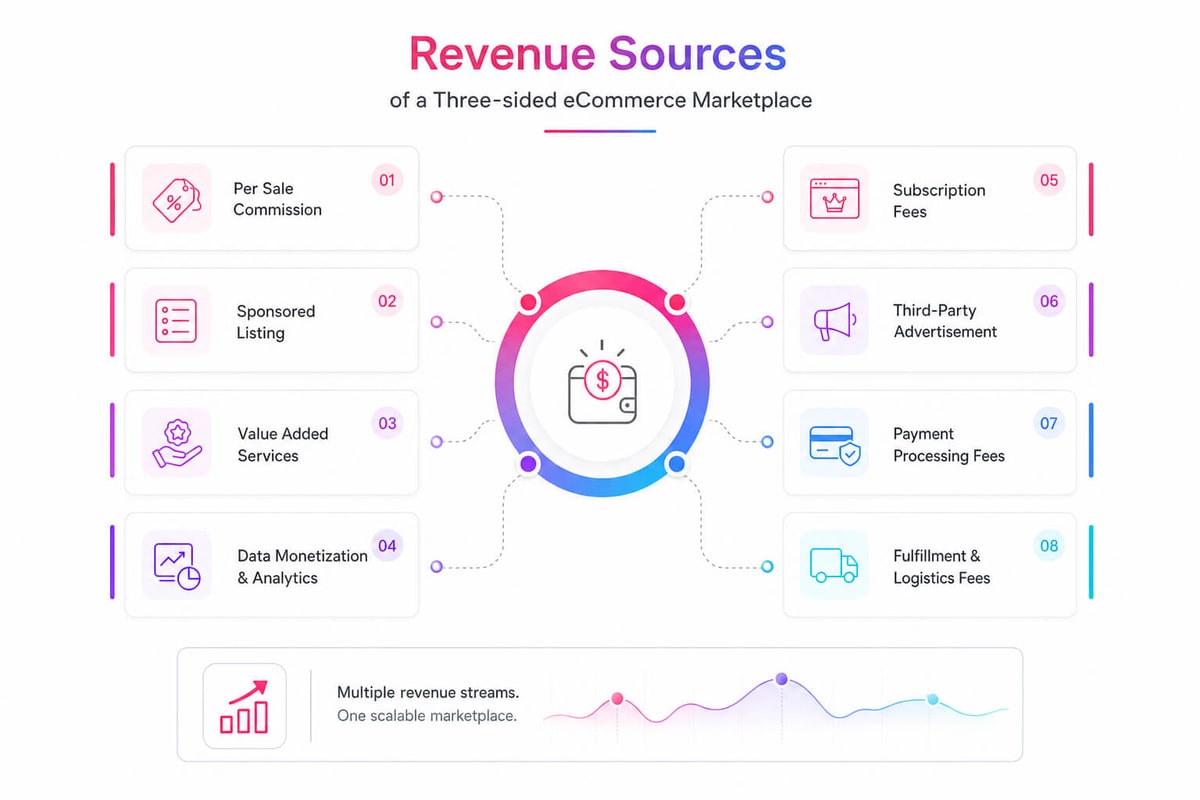
For example, commission-based marketplaces need strong fee rules and clear payout logic. So too, subscription models need billing controls, renewal tracking, and seller access tiers. A formal commerce provider selection process should compare revenue rules, data ownership, and seller controls. The best system reduces exceptions before they reach finance or support teams.
Moreover, an ecommerce marketplace service provider reviews how the software handles taxes, refunds, and split payments, details that affect cash flow and seller trust as order volume grows.
Plan for scale and ecommerce marketplace control
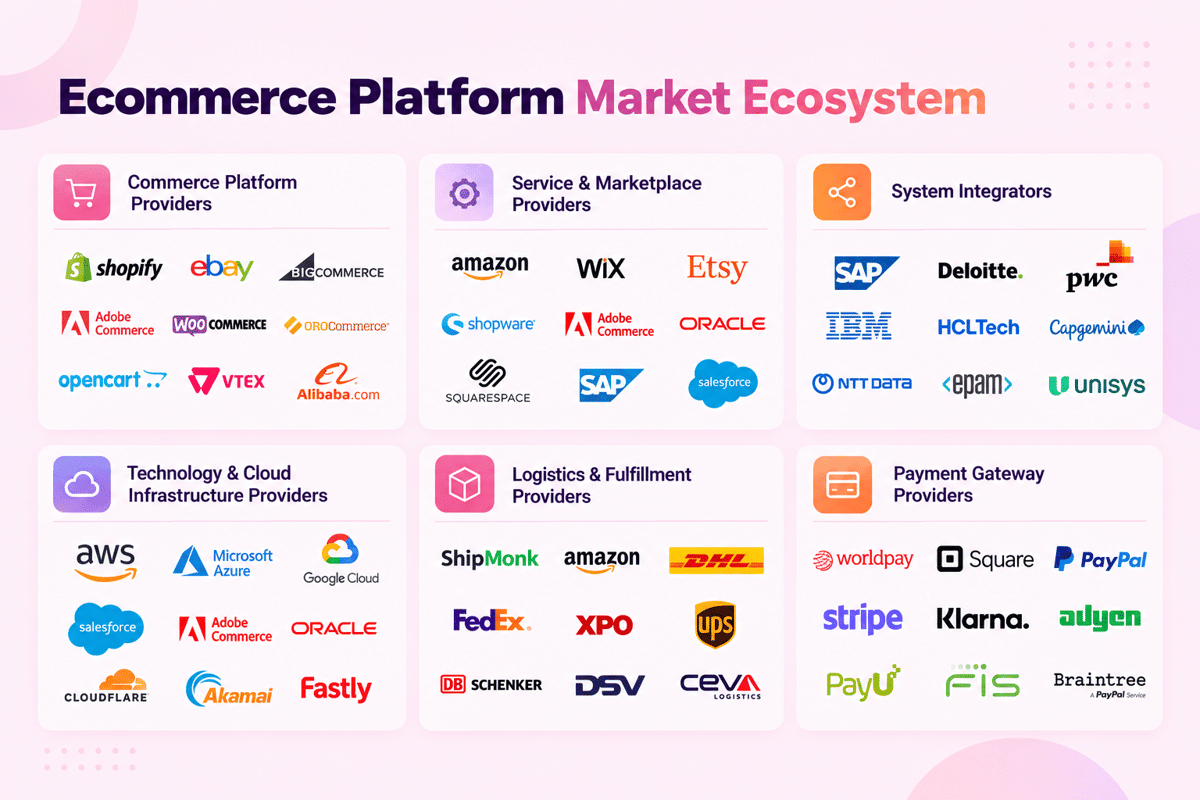
While scaling, a growing ecommerce marketplace needs clear listing rules, seller access, and product approval paths. Without those controls, teams often review each listing by hand. When growth strains the setup, the right platform should connect cleanly with ship, payment, data, and service tools. A skilled ecommerce marketplace service provider can compare hosted software, custom builds, and modular tools.
Still, the strongest choice supports current needs without locking the brand into rigid workflows. That fit also protects service levels when growth strains ecommerce order management.
How a marketplace provider supports sellers and buyers
A strong ecommerce marketplace platform connects seller activity, buyer demand, and back-office work. Each group needs different tools, yet the data must stay aligned. A skilled ecommerce marketplace service provider designs this flow so growth does not create daily friction. Here, the platform acts as the main layer for the full marketplace, managing listings, orders, payments, seller rules, and service records in one place.
Seller and buyer workflows that scale
Sellers need simple tools to add products, manage stock, view orders, and track payouts. Clear dashboards help vendors spot missing content, late shipments, and policy issues. Buyers need accurate search results, clear product data, trusted reviews, and fast checkout. Indeed, these details reduce cart drops and cut support tickets.
So, good ecommerce marketplace software gives both sides the right data at the right time. Sellers see the tasks that affect revenue. Buyers see the details that support clear decisions.
Daily operations and scalable growth
Indeed, teams need more than order records. They need approval paths, dispute logs, return rules, fraud checks, and seller output data. Ecommerce marketplace management services often build on this platform layer, helping teams manage product grade, seller response times, list gaps, and service issues.
So an ecommerce marketplace service provider should connect platform tools with daily work needs. That base becomes critical when growth depends on multi-channel inventory management.
Managing ecommerce vendors: onboarding and performance
Overall, vendor grade shapes the trust buyers place in an ecommerce marketplace. Slow shipping, poor product data, and weak service can hurt the full network. So a skilled ecommerce marketplace service provider builds clear controls before growth creates risk. The right process helps vendors join faster, follow rules, and meet service targets.
Vendor onboarding and compliance for the ecommerce marketplace
Indeed, onboarding works best when each seller follows the same path. A strong system collects tax details, banking data, product feeds, and service policies in one place. Moreover, an ecommerce marketplace service provider can design checks that reduce manual review time, covering brand rights, product limits, pricing rules, and shipping promises.
So, clear rules protect buyers and sellers at scale. They also help the marketplace remove weak listings before they cause refunds, complaints, or payment disputes.
Tracking seller output with an ecommerce marketplace service provider
Yet vendor management does not stop after approval. A strong ecommerce marketplace platform tracks order defects, late shipments, cancellations, return rates, and buyer ratings. Moreover, an ecommerce marketplace service provider helps define fair rules for each seller group. New vendors may need coaching, while mature sellers may need stricter targets.
- Late shipment rates show where ship promises break down.
- Return reasons reveal product data or grade issues.
- Buyer ratings expose service gaps before sales decline.
- Cancellation trends highlight stock and feed problems.
Overall, the best online marketplace management services combine data review with seller support. This approach keeps standards high without treating every issue as a penalty. Furthermore, an ecommerce marketplace service provider helps align vendor rules with fulfillment capacity, supporting faster ship promises across omnichannel ecommerce fulfillment.
Ecommerce marketplace management services vs. in-house teams
Ecommerce marketplace management services can reduce strain on growing teams. They bring process, staffing, and channel knowledge together. An ecommerce marketplace service provider often helps faster than hiring alone. Yet in-house teams give leaders more daily control. They also carry hiring, training, tools, and management costs. The right choice depends on growth rate, seller count, and operating depth.
Where external marketplace management adds value
An ecommerce marketplace service provider brings tested plans for seller support, listings, pricing, and issue tracking. This matters when an ecommerce marketplace grows across many groups. External teams often manage routine work with fewer handoffs, monitoring list gaps, late seller responses, and rule issues.
Furthermore, online marketplace management services help during demand spikes. Seasonal sales, new category launches, and seller migration projects need extra capacity. A lean partner adds trained people without long hiring cycles.
When building an in-house team makes more sense
Still, in-house teams work well when the brand model needs close control. They understand margin goals, customer standards, and seller ties. Such a team may fit a mature ecommerce marketplace platform with stable processes, where the brand can build deep knowledge around its own rules.
So many brands choose a blended model. An ecommerce marketplace service provider handles repeatable tasks, while in-house staff own strategy and seller ties, pairing outside scale with internal calls. Moreover, growth often exposes weak handoffs before weak plans. This balance matters most when order volume rises through ecommerce fulfillment automation.
Using ecommerce marketplace software to improve efficiency
Now, ecommerce marketplace management software gives teams one place to control daily work. Orders, listings, seller data, payments, and disputes move through the same system. A skilled ecommerce marketplace service provider helps connect these workflows without added manual checks. Growing marketplaces often lose time through small handoffs. A seller sends stock updates by email while the finance team waits for payout details. Strong software removes these gaps.
Centralized workflows across teams
Here, a modern marketplace system brings all work into a shared view. Teams can see order status, stock levels, seller tickets, and list changes. So the right ecommerce marketplace service provider sets up workflows around real brand rules. High-risk listings may need review before they go live, while trusted sellers may publish products faster.
Moreover, ecommerce marketplace management services improve how tasks get owned. Each task has an owner, status, and deadline. Managers can spot blocked work before it affects buyers.
Automation that reduces manual work
Indeed, automation works best when it removes repeated admin tasks. Ecommerce marketplace software can sync stock, update prices, route refunds, and flag rule issues. A skilled ecommerce marketplace service provider helps decide which tasks deserve automation first: returns, list checks, and seller sign-offs often create the largest delays.
- Ecommerce vendors receive faster approval when forms, documents, and checks sit in one workflow.
- Teams reduce errors when product, order, and payout data match across systems.
- Managers make faster decisions when dashboards show current sales, refunds, and seller issues.
Yet software alone rarely solves broken processes. A strong ecommerce marketplace service provider maps the work before changing the tools. Teams that connect list, order, and stock data early create a cleaner path toward the best ecommerce inventory management software.
Key ecommerce marketplace services that drive sales and retention
Overall, sales growth depends on more than product range. A strong ecommerce marketplace service provider supports the trust signals, seller controls, and service workflows that keep buyers returning. The best ecommerce marketplace services connect front-end demand with back-end control. Indeed, product data, seller rules, payment flows, and support processes must work as one system.
Ecommerce marketplace services that build buyer confidence
Indeed, buyer trust starts with accurate listings and clear seller standards. A skilled ecommerce marketplace service provider sets rules for titles, images, pricing, ship promises, and return terms. Review systems shape buyer behavior too: verified reviews, seller ratings, and dispute records help shoppers judge risk before purchase.
Furthermore, payment and order protection matter as much as product content. Fraud checks, refund controls, and tracking updates reduce buyer worry.
- Clear product data reduces buyer confusion before checkout.
- Seller ratings make grade easier to compare.
- Fast dispute handling protects buyer trust after purchase.
- Order tracking lowers support requests and shipping complaints.
Ecommerce marketplace services that increase repeat sales
Overall, retention grows when the marketplace learns from buyer actions. Search terms, repeat purchases, returns, and support tickets reveal what buyers value most. A skilled ecommerce marketplace service provider turns those patterns into practical changes. Search and product hints can raise average order value, since the right ecommerce marketplace software connects buyer data with product feeds from many vendors.
Moreover, seller programs protect long-term sales. Ecommerce marketplace management services track cancel rates, late shipments, return reasons, and response times. So a reliable ecommerce marketplace service provider supports loyalty, promotions, and win-back campaigns. For larger brands, online marketplace management services align campaigns across sellers, groups, and regions.
How a marketplace partner helps scale operations
Online marketplace management services give growing brands a repeatable way to manage scale. A skilled ecommerce marketplace service provider connects workflows, seller controls, and channel data, helping teams expand without added manual checks. Growth often strains list rules, pricing workflows, and seller support. A strong ecommerce marketplace service provider turns those moving parts into clear routines teams can follow each day.
Scaling without losing marketplace control
Yet a mature marketplace system needs more than product listings and payment tools. It needs clear rules for seller approvals, order handling, returns, and disputes. Here, the right ecommerce marketplace service provider also reviews where work slows down. Different marketplace operating models require different service levels, fee logic, and seller rules. This insight helps teams fix bottlenecks before growth exposes them.
For many marketplace ecommerce brands, seller grade drives buyer trust. Management teams can track late shipments, return rates, and content gaps.
Turning service data into growth decisions
Online marketplace management services create value through daily pattern review. Support tickets, search terms, and failed orders reveal hidden demand. A capable ecommerce marketplace service provider turns those signals into practical changes. Moreover, better data improves planning across an ecommerce marketplace platform. Teams can see which groups need more sellers or better stock depth, then adjust fee rules, product standards, and promotion timing.
Fulfillment and logistics support for marketplace sellers
When a marketplace grows, fulfillment becomes a key part of seller output. A strong ecommerce marketplace service provider often helps brands connect with the right logistics support to protect ship speed and order accuracy. So, sellers who struggle with fulfillment create delays, returns, and buyer complaints. Indeed, those issues hurt the full marketplace, not just the individual seller.
Dropshipping and distribution models
Indeed, some marketplace sellers use dropshipping to test new products with low risk. Understanding dropshipping business with Amazon and beyond helps brands set the right seller standards and grade controls. When sellers ship directly from suppliers, order accuracy depends on clean data feeds and strict rules. Moreover, an ecommerce marketplace service provider can help define those standards from the start.
Pick, pack, and fulfillment center options
Now, many marketplace sellers rely on fulfillment centers to ship faster and more accurately. A pick and pack fulfillment center improves speed, results, and buyer experience at scale. Marketplace operators who know these models can set better service targets. That knowledge helps when adding sellers who use third-party logistics.
Scalable fulfillment services for ecommerce growth give sellers the tools to handle rising order volume without losing accuracy. Here, an ecommerce marketplace service provider helps marketplace operators set the right fulfillment standards for their seller base. For sellers who work with third-party logistics partners, 3PL ecommerce fulfillment offers a direct path to scaling online orders with lower per-order cost.
Conclusion
Scalable growth starts with a clear model for how work runs. The right ecommerce marketplace service provider connects tools, seller management, data, and daily tasks. A strong partner cuts the gaps between strategy and action. Indeed, that matters when more buyers, orders, and ecommerce vendors enter the brand.
What a strong ecommerce marketplace service provider supports
An effective ecommerce marketplace service provider helps the brand handle growth without slowing down. The best fit depends on your product mix, seller base, order volume, and margin targets. Your ecommerce marketplace platform should support seller setup, list control, payments, reports, and dispute handling. A flexible marketplace system gives teams cleaner data and fewer manual tasks.
Moreover, service depth matters as much as software features. Strong ecommerce marketplace management services help keep sellers active, listings accurate, and service levels on track.
The next step for marketplace growth
First, a brand should assess its current gaps before choosing a provider. Common weak points include slow vendor approval, poor stock sync, weak reporting, and unclear seller rules. So the right provider brings structure to those areas. Better workflows help teams cut delays, resolve issues faster, and protect margins.
Furthermore, many growing brands need connected online marketplace management services. These services align daily tasks with the wider goals of marketplace ecommerce growth. Finally, compare platform strength, service depth, seller support, and reports before signing.
For the next layer of work, review how ecommerce shipping logistics shapes faster ship times and stronger marketplace growth.
 Google AI
 OpenAI ChatGPT
Frequently Asked Questions
Do online ecommerce marketplaces provide self-service options?
Yes, many ecommerce marketplace platforms offer self-service options for sellers, such as product uploads, pricing updates, order tracking, and basic reporting. However, businesses often need expert support for setup, integrations, catalog optimization, and growth strategy. An ecommerce marketplace service provider can help manage these tasks more efficiently and reduce operational errors.
What does an ecommerce marketplace service provider do?
An ecommerce marketplace service provider helps businesses build, manage, and grow an ecommerce marketplace. Services may include marketplace system setup, vendor onboarding, product catalog management, payment integration, order workflows, customer support, and performance reporting. They support both marketplace owners and ecommerce vendors by improving operations and creating a smoother buying and selling experience.
How do I choose the right ecommerce marketplace platform?
Choose an ecommerce marketplace platform based on your business model, budget, vendor needs, scalability, and integration requirements. Look for features such as seller dashboards, secure payments, inventory tools, reporting, mobile responsiveness, and support for multiple ecommerce vendors. The right ecommerce marketplace software should also allow future growth without requiring frequent system changes.
What is included in ecommerce marketplace management services?
Ecommerce marketplace management services usually include vendor onboarding, catalog updates, pricing support, order monitoring, returns coordination, performance analysis, and customer communication. Some providers also offer advertising support, SEO optimization, and marketplace e commerce strategy. These services help marketplace owners maintain quality, improve seller performance, and deliver a reliable customer experience.
Why is ecommerce marketplace management software important?
Ecommerce marketplace management software helps automate daily operations across sellers, products, orders, payments, and reporting. It reduces manual work, improves accuracy, and gives marketplace owners better visibility into performance. A strong marketplace system also supports smoother communication with ecommerce vendors and helps businesses scale their ecommerce marketplace services more efficiently.
When should a business hire an ecommerce marketplace service provider?
A business should consider hiring an ecommerce marketplace service provider when internal teams lack the time, tools, or expertise to manage marketplace operations effectively. This is especially useful during platform launch, vendor growth, system migration, or performance improvement projects. Online marketplace management services can help reduce complexity and support long-term marketplace success.
Sync inventory in real time, manage orders, and run warehouse operations across Amazon, eBay, Etsy, Shopify, and other sales channels. From barcode scanning to organized storage and faster fulfillment, Fiftify helps reduce errors, prevent overselling, and support business growth. Explore our articles for insights on warehouse management, inventory control, and multichannel operations.
You may also like

Ecommerce software solutions: features, costs and how to choose
Learn how to evaluate ecommerce software solutions for online stores, marketplaces, and retail teams. Essential features, vendor comparisons, implementation tips, and practical ways to choose software that supports growth, operations, and customer experience.

Multi-carrier shipping software: features and how to compare options
How multi carrier shipping software compares rates, prints labels, tracks orders and handles returns, and which features to check before you choose one for your store.

Top ecommerce fulfillment companies: what to compare before you sign
How to compare ecommerce fulfillment companies on delivery speed, inventory accuracy and cost, what to ask each provider and when U.S.-based fulfillment support makes sense.