
Best shipping software for ecommerce for every business type
 Emily Carter
·
· 18 min read
Emily Carter
·
· 18 min read

Ship costs can decide whether an order makes money. Rates, labels, tracking, returns, and carrier choices all shape margin. The best shipping software for ecommerce gives teams one place to manage those moving parts. Manual ship work is fine at low volume. But growth shows its weak spots fast. A few extra clicks per order can become hours each week.
So the best shipping software for ecommerce turns those daily tasks into one clean flow. Teams spend less time fixing errors after shipping. As a result, margin, speed, and buyer trust all gain.
Shipping has become a profit lever
Carrier fees change often. Buyers expect clear ship dates. A strong shipping software checks services before teams create labels. That view helps teams avoid costly choices hidden inside routine work. For teams asking what shipping software is, the answer starts with control. It connects stores, carriers, orders, labels, tracking, and returns in one system. In fact, the result is fewer errors and faster handoffs.
What the right platform changes
A weak ship flow creates silent losses. Staff may pick the wrong service or miss a discount. Buyers notice delays before they notice internal effort. Also, the best shipping software for ecommerce cuts those risks through auto and cleaner data. Labels, tracking counts, pack rules, and rate choices move through one flow. Furthermore, choosing the right tool depends on order volume, carrier mix, sales channels, and return needs. The strongest choice supports today’s flow and tomorrow’s growth.
What is shipping software and why it matters
Shipping software connects ecommerce orders with carriers, labels, tracking, and ship rules. It replaces manual carrier portals with one system for parcel calls. The best shipping software for ecommerce pulls order data from stores, markets, and site tools. It then applies rules based on weight, target, service level, and cost.
How shipping software works
A store can route light parcels to one carrier and bulky orders to another. Rising buyer shipping needs also make manual flows harder to defend. Buyers expect fast syncs, clean dates, and clear return paths. Also, strong ecommerce shipping software cuts repeat work across packing, label creation, and tracking emails. It gives teams cleaner data on costs, ship times, and carrier results.
Why online stores need shipping software
Manual shipping may work for a few daily orders. But growth shows gaps in rate shopping, address checks, gap handling, and buyer syncs. The best shipping software for ecommerce helps teams ship faster without adding the same labor. Rules remove common calls from each order. That cuts errors when things are busy. Also, cost control matters as much as speed. The shipping platform can compare carrier rates before label creation. So teams avoid paying more than needed. Furthermore, buyer service teams gain better ship view. Fewer ‘where is my order’ tickets free staff for higher-value work.
The best shipping software for ecommerce becomes more key as order volume, carrier mix, and buyer promises grow. For larger brands, those same controls often point toward enterprise parcel shipping software.
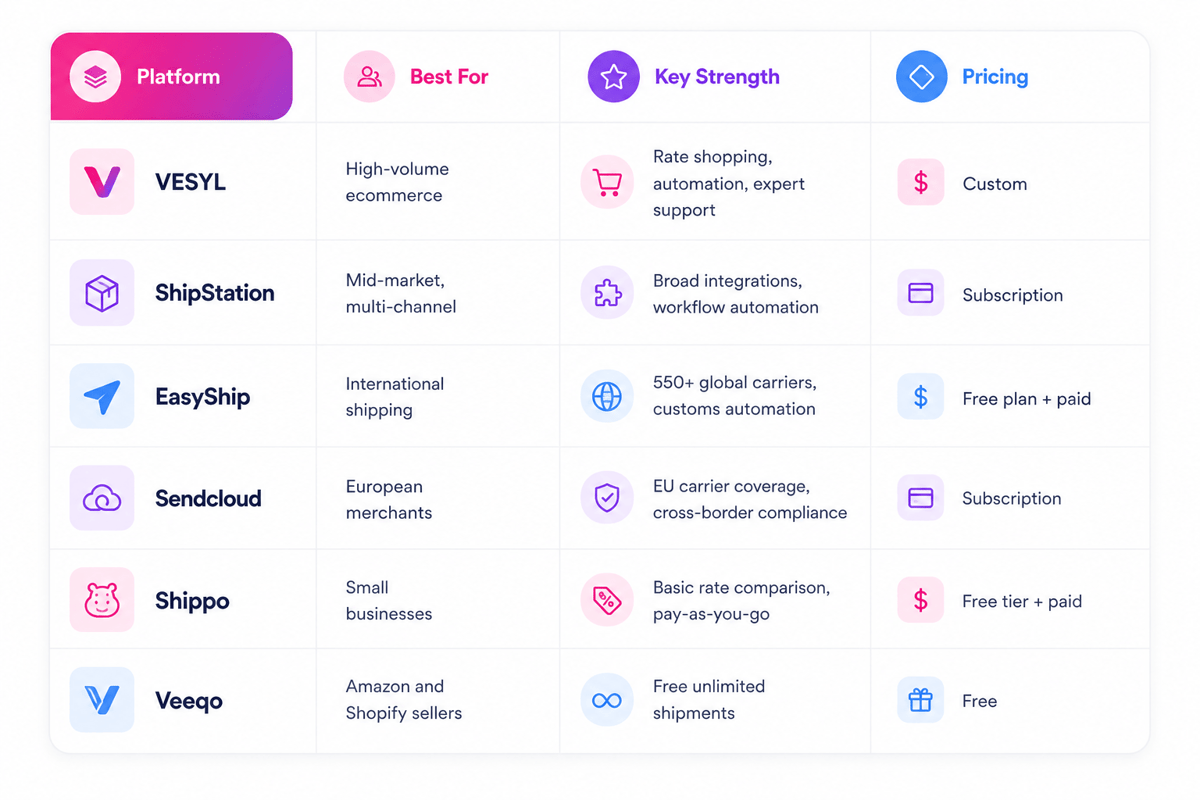
Connect Shopify, draw your floor, pick an order - free plan, 7-day full trial, no credit card, no sales call.
Why the best shipping software for ecommerce improves fulfillment
Fill breaks down when teams manage orders, labels, rates, and tracking in split tools. The best shipping software for ecommerce connects these tasks. So orders move from checkout to carrier pickup with fewer delays. Strong ship systems cut manual work at the busiest point in the order cycle. They help teams print clean labels, pick the right carrier, and send tracking syncs with no switching screens.
Faster order processing with best shipping software
The best shipping software for ecommerce speeds up fulfillment by removing repeat data entry. Order details flow from the store into the ship flow. That lowers the risk of typing errors. Auto also supports clear shipping rules. A store can route light orders to one carrier and large parcels to another. This keeps calls steady at busy times.
- Batch label print cuts clicks for high-volume order days
- Carrier rate check helps teams control ship costs
- Address check catches errors before labels are created
- Tracking syncs cut ‘where is my order’ tickets
Teams asking what is shipping software often focus on labels first. But the bigger value comes from how it links calls, data, and buyer syncs.
Fewer errors across fulfillment
Manual ship work creates small errors that get costly. A wrong address can trigger reship costs, refund requests, and support time. The best shipping software for ecommerce cuts those risks before orders leave the site. Clean fill depends on clean data at each step. The platform checks addresses, applies rules, and stores ship records. Finance teams also gain cleaner cost data by order and carrier. Also, the best shipping software for ecommerce helps stores scale without adding the same labor. More orders can move through the same team as routine calls happen in the system. Buyer communication becomes more reliable too. Buyers get tracking details sooner. Support teams can view ship status fast. So best shipping software for ecommerce builds strength when it connects ship activity with ecommerce order management.
Key features to compare in shipping software for ecommerce
Feature lists can look the same across ship tools. The real gap comes from how each tool handles order volume, carrier rules, tracking data, and gaps. The best shipping software for ecommerce connects these tasks without adding manual work. Teams often start with the question of what shipping software is, then move into flow fit. A strong platform should match current order flow and future growth. It should also cut errors at pack, label creation, and carrier pick.
Carrier access and rate control
Carrier coverage shapes both cost and ship speed. Strong ecommerce shipping software connects with major parcel, freight, and local carriers. That range helps teams compare services with no switching systems. Rate shopping should cover pack size, target, ship date, and service rules. Clear rate data supports margin control during ecommerce sales growth. Finance teams can also check ship spend by carrier, zone, and service level. The best shipping software for ecommerce also supports agreed rates. This matters when brands have private carrier deals. The system should apply those rates at checkout and fulfillment.
Automation, view, and exception handling
Ship rules remove repeat calls from daily work. A platform can assign carriers based on order value, ship date, site spot, or item type. These rules help teams process orders faster at peak times.
- Batch label print for high-volume order days
- Address check before labels are created
- Split ship support for multi-spot stock
- Return label creation tied to order history
- Tracking syncs sent to buyers and support teams
View matters when orders fall outside normal flow. Support teams need ship status, scan history, and carrier notes in one view. Warehouse teams need alerts when labels fail. Also, link depth matters. Basic links may pass order data and print labels. Deeper links sync stock, status, refunds, returns, and ship events. The right platform also gives leaders useful reports. Ship cost per order, late ships, return rates, and carrier results show hidden issues. Together, these features create the base for ecommerce fulfillment automation.
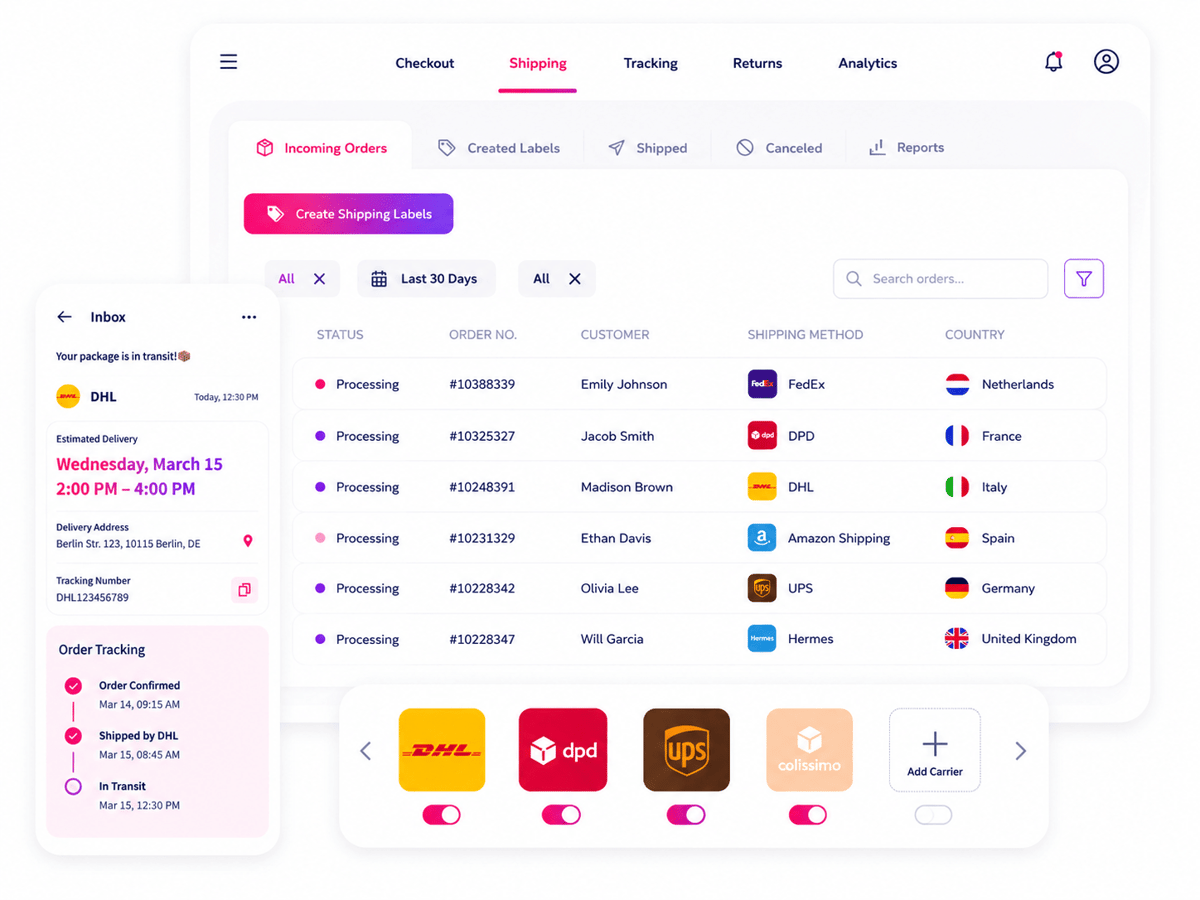
Best shipping software for ecommerce by business size
Business size shapes shipping software needs more than feature lists. A small store may need fast label creation. A larger brand needs routing rules, user controls, and cost reports. The best shipping software for ecommerce matches current order volume with no blocking future growth. It also gives teams clear data before shipping costs cut margin.
Small and growing stores
Small ecommerce teams often start with simple carrier access and label printing. They need tools that link to their store, import orders, and compare rates fast. For leads still asking what shipping software is, this stage gives a clear answer. The software replaces manual copy-and-paste with one place for labels, tracking, and ship status. Teams that also pick and pack in their own warehouse often look at ShipStation alternatives that add guided picking and scan checks before the label prints. The best shipping software for ecommerce helps small teams cut avoidable errors. Address checks, saved pack sizes, and basic auto can stop many late ships. Growth-stage brands often link ship choices to fill ops goals, such as batch pick, carrier mix, and return rules. At this point, shipping software should support repeat work, not one-off fixes.
Mid-market and enterprise needs
Mid-market sellers ship across more channels and spots. They need rules that assign carriers by weight, zone, ship date, or item type. The best shipping software for ecommerce in this tier supports stronger reports. Finance teams can track ship spend by channel, item line, and carrier service. Larger ops need tighter controls across sites and teams. Rights, audit logs, and service rules help cut costly gaps at peak times.
The best shipping software for ecommerce also supports more complex buyer promises. Same-day ship, split ship runs, and global forms need clean data flow between systems. Enterprise brands often value stability as much as speed. The shipping platform should handle high order volume, carrier outages, and season spikes without adding manual work. Business size should guide the short list. As ship volume grows, the right platform should connect carrier choices, site work, and order fill software.
Shipping rates, carrier links, and label auto
Ship costs shape margin, checkout trust, and repeat orders. The best shipping software for ecommerce gives teams live rate options before labels print. That helps stores avoid flat-rate guesses that quietly drain profit. Teams that ask what is shipping software often start with labels. But strong platforms do more than print postage. They link order data, carrier rules, service levels, and tracking details.
Rate shopping and carrier cover in the best shipping software
A strong rate engine compares services across linked carriers. It can weigh price, ship speed, pack size, and target. The best shipping software for ecommerce makes those choices visible before fill begins. Carrier links matter as each carrier has different strengths. One may offer better local rates. Another may handle heavy parcels or global ship runs better. Rate rules also protect margins at busy times. A store can route low-value orders to low-cost services. High-value orders can move through faster, insured options.
Label auto and order flow
Label auto removes repeat typing from the ship desk. Order details flow from the store into the ship platform. The best shipping software for ecommerce then applies preset rules to create clean labels. These rules can assign carriers by weight, zone, item type, or ship date. Some warehouse tools bundle a separate label app, while others build rates in, as our SKUSavvy alternative comparison explains. They can also add cover, sign needs, or special handling. Fewer manual steps cut bad labels, voided postage, and support tickets. Batch print adds value when order volume rises. A team can process hundreds of labels with no opening each order. The best shipping software for ecommerce keeps that speed tied to carrier rules and rate data. Clean carrier data also helps finance and ops teams compare true ship costs. Over time, the best shipping software for ecommerce becomes part of broader logistics management software solutions.
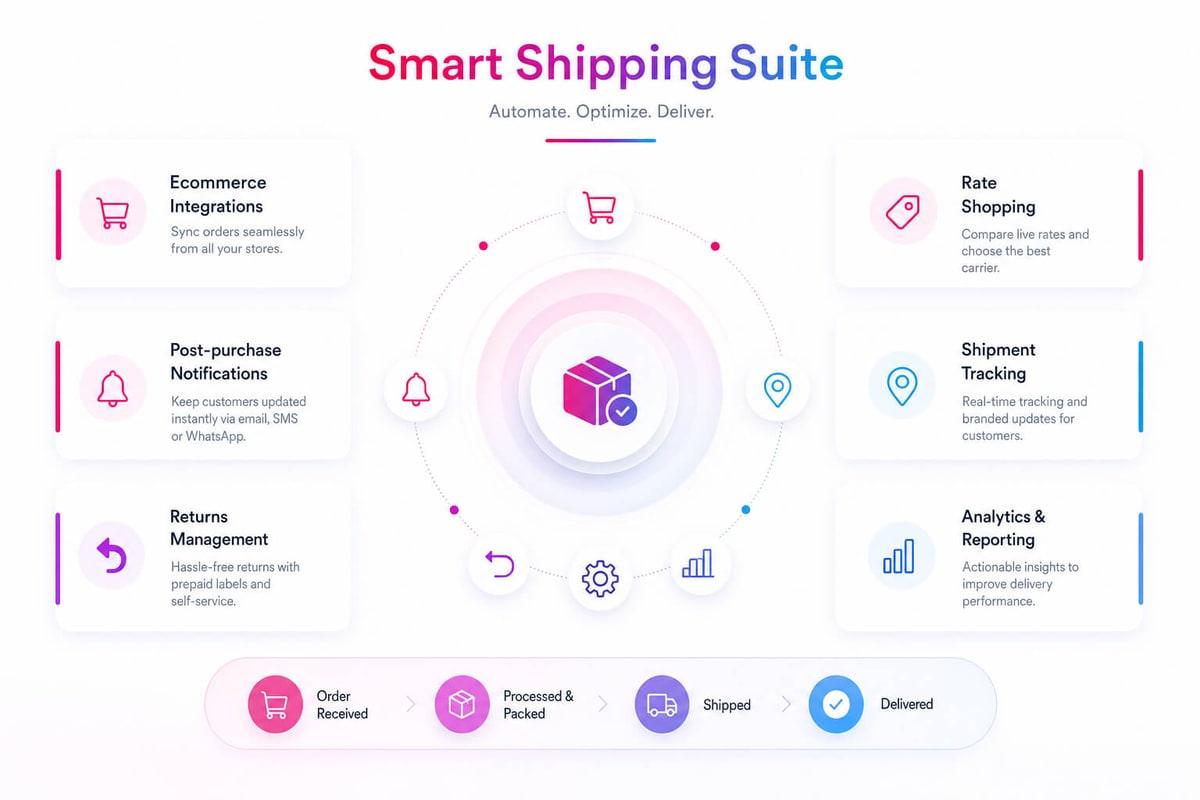
Buyer experience: tracking, returns, and ship updates
Ship affects trust after the buyer clicks buy. The best shipping software for ecommerce keeps buyers informed from label creation through final ship. Clear syncs cut ‘where is my order’ tickets. Support teams gain time for issues that need human judgment.
Tracking that builds buyer trust with shipping software
Modern ship platforms send branded tracking links on their own. Buyers see carrier scans, ship dates, and order details in one place. The best shipping software for ecommerce can trigger messages at key ship events. These include label created, in transit, out for ship, and delivered. Better tracking also helps internal teams act faster. A late scan can flag a delayed order before the buyer asks. When teams ask what shipping software is, tracking gives a clear answer. It links carrier data with buyer syncs and support records.
Returns and ship updates for ecommerce shipping software
Returns shape buyer trust as much as fast shipping. A clear return flow removes confusion and cuts support backlog. The best shipping software for ecommerce can create return labels, rules, and status syncs from one system. Teams can set return windows, approved reasons, and routing logic.
- Buyers get return notes with no waiting for support
- Site teams see inbound returns before packages arrive
- Finance teams can track refunds against goods received
Ship syncs also protect revenue at peak seasons. Early notes help buyers plan for sign needs or missed tries. The best shipping software for ecommerce gives each team the same ship record. Also, strong buyer talk depends on clean order and ship data. These signals also help teams connect ship calls with online order management software.
How to compare pricing, scale, and support
Pricing rarely compares cleanly across ship tools. Each vendor packages labels, users, carriers, and auto differently. The best shipping software for ecommerce makes total cost clear before volume grows. Teams often focus on monthly fees first. Yet label markups, carrier access fees, and return charges can change the real cost. A clear cost model helps finance forecast margin by order type.
Pricing factors that affect margin
A strong pricing check starts with ship volume and carrier mix. Local parcels, global orders, and large items carry different cost patterns. The best shipping software for ecommerce supports those patterns with no hidden fees. Discounted carrier rates matter, but they do not tell the full story. Label auto can save more money than a small rate discount. Fewer manual fixes also cut refunds, reships, and service tickets. Contract terms deserve a close check before a team commits. Some platforms charge more when stores add sites or sales channels. A lower entry price can get costly at peak season.
Scale and support signals for best shipping software
Scale depends on how the platform handles growth under pressure. The system needs to process more orders with no slowing site work. The best shipping software for ecommerce keeps rules, labels, and tracking stable at spikes. Support quality often becomes visible only after a problem appears. Fast help matters when labels fail, or carrier data stops syncing. Response times, support hours, and technical depth all affect uptime. Also, a useful vendor can explain what shipping software is in ops terms. That means clear answers about order flow, rate shopping, tracking data, and returns. Growth plans should shape the final check. New markets, more sites, and higher return volume can strain basic tools. The best shipping software for ecommerce gives teams room to grow with no rebuilding of fulfillment flows. That base supports growth across markets, stores, and omnichannel ecommerce fulfillment.
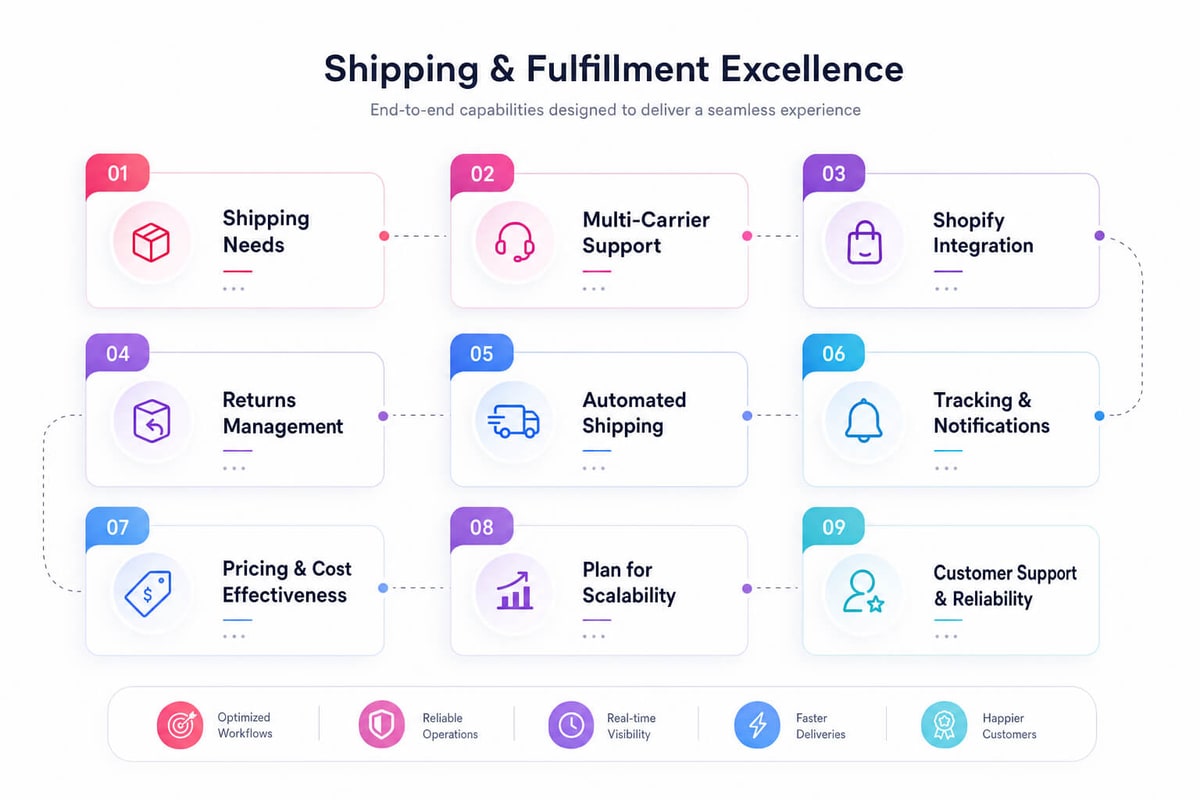
Implementation tips for best shipping software for ecommerce
A smooth rollout starts with shared goals across teams. Marketing cares about ship dates and tracking messages. Ops focuses on labels, carrier rules, and site flow. Finance needs clean cost data before invoices arrive. The best shipping software for ecommerce works best when each team owns clear inputs. Item weights, pack sizes, rate rules, and return reasons need checking. Bad data creates wrong labels and weak margin reports.
Align team roles before launch
Marketing should map the buyer touch points tied to ship. Confirm emails, tracking pages, and return notes affect repeat orders. A missed ship date can cost more than a rate error. Ops gains from testing real order mixes before launch. Include split orders, backlog, bundles, and global ship runs. These tests show where rules fail under normal pressure. Also, finance needs carrier charges tied to order, channel, and SKU data. The best shipping software for ecommerce can expose margin leaks that sheets miss. Extra charges, address fees, and zone changes then become visible.
Build practical checks into the rollout
A short pilot cuts risk before full volume moves over. Teams can compare old and new labels for one week. Rate gaps, service issues, and print problems appear early. Training works better when it matches daily work. Early sessions can answer what shipping software for non-tech teams is. Later sessions can focus on gap handling and reports. The best shipping software for ecommerce should feed clean data into each team’s tools. Marketing can use ship data to refine promises. Ops can track label time and error rates. Finance can check carrier bills with fewer manual steps.
Also, good habits matter as much as good software. Weekly checks keep carrier rules, pack data, and return codes current. The best shipping software for ecommerce supports those habits when teams agree on ownership. That shared view also helps teams decide when software should connect with warehousing and shipping services. Also, see how order management software can extend your ship ops.
Common mistakes to avoid when choosing shipping software
Many ship software problems start before the deal gets signed. Teams often compare carrier discounts first, then find gaps in order routing, returns, or support. The best shipping software for ecommerce fits the full fulfillment flow, not only the label price. A narrow check can create costly trade-offs. Low monthly fees may hide manual work, weak reports, or paid support tiers. The best shipping software for ecommerce should cut total ship cost, not shift work to ops staff.
Choosing shipping software based on price alone
Carrier rates matter, but they tell only part of the story. A cheaper tool may need more clicks per order. That extra work can slow fill at peak sales times. Strong platforms show the full cost of ship calls. They compare postage, extra charges, pack rules, and service levels in one view. The best shipping software for ecommerce helps teams spot margin loss before labels print. Some buyers also miss the cost of failed shipments. Address errors, wrong service picks, and poor return flows add up fast. A clear check should include labor time, refund delays, and reship rates.
- Weak rate shopping can miss cheaper local carrier options
- Poor label rules can create manual edits for every batch
- Limited reports can hide rising extra charge costs
- Slow support can delay ships on high-volume days
Ignoring fit with daily ops
Software that looks strong in a demo can fail in daily work. Real order data often shows missing fields and weak flows. The best shipping software for ecommerce handles normal orders and edge cases with equal care. Link depth deserves close check. A platform should sync orders, stock status, tracking counts, and returns with no double entry. When data moves cleanly, finance and support teams trust the same records. Also, teams need clarity on what is shipping software in their own stack. Some tools only print labels, while others manage rates, rules, returns, and tracking. That gap affects staffing, reports, and service volume.
Scale creates another common blind spot. A system may work for 200 orders per week, then fail at 2,000. The best shipping software for ecommerce supports growth across channels, sites, and carrier services. Vendor support should match the risk level of fill. Slow answers can leave orders stuck after a carrier change. The best shipping software for ecommerce combines stable tools with support that understands ship deadlines.
Conclusion
The best shipping software for ecommerce connects orders, rates, labels, tracking, and returns. It turns shipping from a daily scramble into a controlled flow. Strong tools help teams cut manual entry, reduce carrier errors, and ship faster. A clear choice starts with business needs, not feature lists. Store volume, carrier mix, sales channels, and return rules shape the right fit. The best platform matches today’s flow while giving room for growth.
What the best shipping software for ecommerce should deliver
The best shipping software for ecommerce gives ops teams clean rates before labels print. It helps finance teams track costs by order, channel, and carrier. Marketing teams gain better ship dates, which can lift repeat buys. Good software also protects buyer trust after checkout. Branded tracking pages, clear alerts, and simple return flows cut ‘where is my order’ tickets. These gains often matter more than a small rate discount. Teams that first answer what is shipping software make better choices. The answer should include auto, carrier access, reports, and buyer syncs.
Your next step with ecommerce shipping software
The best shipping software for ecommerce should fit current order flow and future growth. Check three areas before making a final choice: carrier coverage, auto depth, and support quality. These factors show how the platform performs at peak demand.
- Order import should work across every active sales channel
- Rate shopping should compare carriers before labels print
- Tracking should give buyers clear ship status syncs
- Returns should create a simple path for buyers and staff
A final short list should pair software features with clear goals. The best shipping software for ecommerce helps cut pack delays, control ship spend, and protect buyer trust. Choose the platform that supports those results with the least daily friction. For a wider view of ship planning, explore how ecommerce shipping logistics connects software choices with faster ops.
 Google AI
  OpenAI ChatGPT
 Frequently Asked Questions
What is the best ecommerce shipping software for growing brands?
The best option for growing brands is shipping software that supports multiple carriers, automates label creation, syncs with ecommerce platforms, and provides clear tracking updates. Look for tools with discounted rates, batch shipping, returns management, and reporting. The right choice depends on order volume, sales channels, warehouse setup, and customer delivery expectations.
What is the best shipping software for ecommerce?
Best shipping software for ecommerce is software that helps online stores compare carrier rates, print shipping labels, automate fulfillment, and send tracking information to customers. Popular options often integrate with platforms like Shopify, WooCommerce, Amazon, and BigCommerce, making it easier to manage orders from one place while reducing manual work.
What's the best shipping software for ecommerce businesses with multiple sales channels?
For multichannel sellers, the best shipping software for ecommerce should connect all order sources in one dashboard. It should support marketplace orders, website sales, carrier rate shopping, inventory visibility, and automated shipping rules. This helps teams avoid fulfillment errors, save time, and maintain a consistent delivery experience across every channel.
What is shipping software and why do ecommerce businesses need it?
What is shipping software? It is a tool that helps businesses manage shipping tasks such as rate comparison, label printing, tracking updates, and returns. Ecommerce businesses need it because manual shipping can become slow and error-prone as order volume grows. Good software improves efficiency, lowers costs, and creates a better post-purchase experience.
How do I choose the best shipping ecommerce solution for my store?
To choose the best shipping ecommerce solution, start by reviewing your monthly order volume, preferred carriers, fulfillment locations, and ecommerce platform. Compare pricing, automation features, customer support, and integration options. A strong solution should simplify daily operations, reduce shipping costs, and scale as your business grows.
Can shipping software help reduce ecommerce shipping costs?
Yes. Shipping software can reduce costs by comparing carrier rates, applying discounted postage, automating shipping rules, and helping teams choose the most efficient service for each order. It can also lower labor costs by reducing manual data entry and fulfillment mistakes, which is especially valuable for ecommerce brands with increasing order volume.
I am an eCommerce expert with a strong focus on marketplaces like Amazon, eBay, and Etsy. Over the past decade, I have helped both startups and $1M+ revenue brands scale their sales through listing optimization, marketplace SEO, and AI-driven strategies. I also share articles and insights about eCommerce growth, marketplace operations, and multichannel selling.
You may also like

How to choose an ecommerce marketplace service provider for scalable growth
Learn how an ecommerce marketplace service provider helps businesses launch, manage, and scale a profitable ecommerce marketplace. Platform choices, vendor operations, software tools, management services, costs, and practical selection tips.

Ecommerce software solutions: features, costs and how to choose
Learn how to evaluate ecommerce software solutions for online stores, marketplaces, and retail teams. Essential features, vendor comparisons, implementation tips, and practical ways to choose software that supports growth, operations, and customer experience.

Multi-carrier shipping software: features and how to compare options
How multi carrier shipping software compares rates, prints labels, tracks orders and handles returns, and which features to check before you choose one for your store.