
Custom inventory software vs off-the-shelf tools
 Fiftify Team
·
· 10 min read
Fiftify Team
·
· 10 min read
In practice, most stock problems do not start with one big gap. They start with teams trusting the wrong data. A sheet looks calm while shelves run short. That is where custom inventory software earns its place. It closes the gap by matching real work, not fixed screens.
However, generic tools often miss the messy daily details. A tech pulls parts, then logs the move much later. That delay creates false stock levels across the firm. Buying orders too much, or ops stop with no warning.
Per GS1 Global, poor stock data costs firms up to 11% of sales each year. That number makes a strong case for tools that match how stock truly moves.
Why custom inventory software fits better
Custom inventory management software works around real firm rules. It can reflect approvals, storage zones, reorder limits, and asset movement. Also, it matters most when the stock touches many teams. Facilities, maintenance, buying, and finance often need varied views.
A strong custom inventory management solution gives each team clear data. No one has to rebuild reports by hand. Furthermore, customizable inventory management software cuts workarounds. Teams, stop hiding notes in sheets and email threads.
The goal stays plain: fewer stock gaps, cleaner counts, and faster calls. Good custom inventory software should match the work, not fight it.
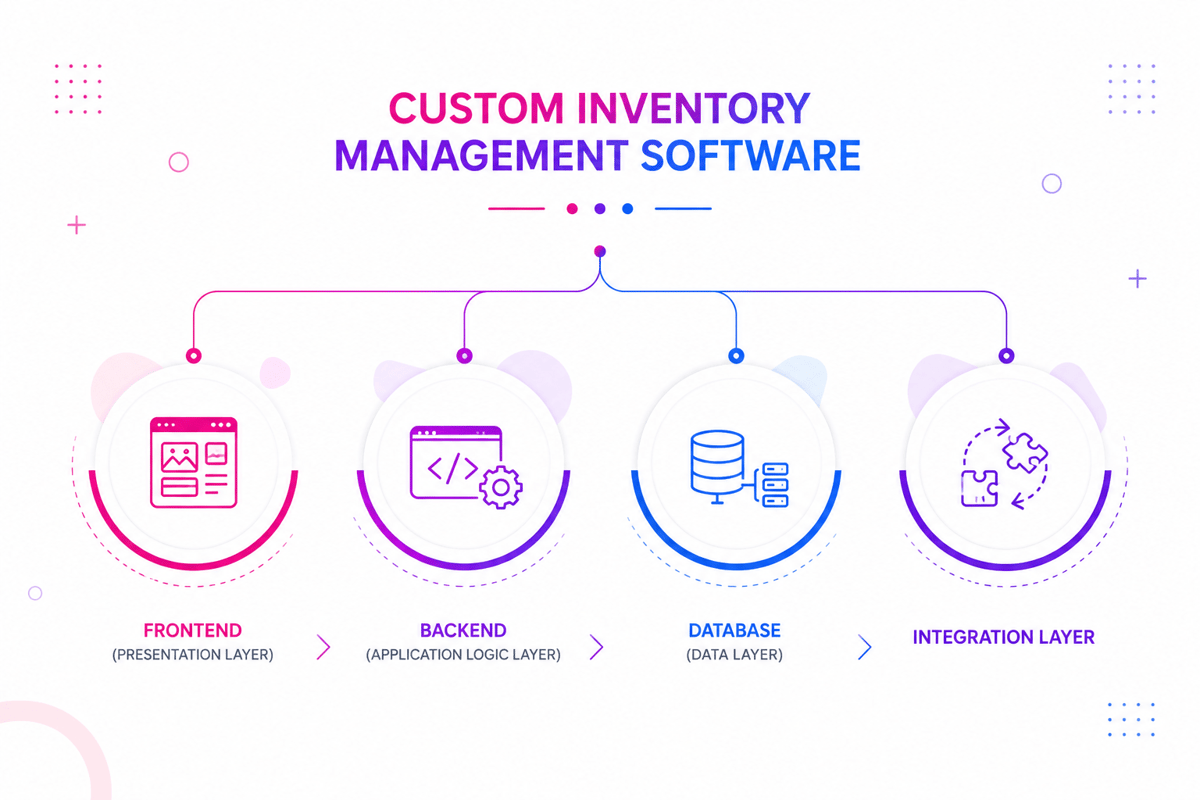
Why businesses choose custom inventory management software
In fact, most firms do not pick custom tools first. They try sheets, add-ons, and low-cost tools first. The pain starts when those tools shape daily work instead of the other way around.
Custom inventory software becomes the right pick when workarounds cost more than the system. The usual trigger is not a big plan shift. In fact, it tends to be a missed order, a failed count, or stock nobody can find.
When standard tools stop matching work
Off-the-shelf systems expect clean flows and tidy spots. Real ops rarely look that neat. A vendor may track pallets, cases, and loaned tools at the same time.
That mix breaks plain item tables fast. Teams then copy data into side sheets. As a result, nobody knows which log tells the truth. Custom inventory management software fits those messy parts directly. It can mirror bins, kits, returns, and approval rules.
What custom inventory software fixes first
The best projects do not start with dashboards. They start with the points where the stock goes dark. Those gaps usually sit across teams and tools:
- Facilities teams need gear status across rooms and sites
- Finance needs clean costs before the month-end closes
- Buying teams need reorder signals before gaps hit
Also, inventory tracking software for facilities can link these needs. Also, one scan can sync spot, status, and owner at once. That change cuts follow-up emails and floor checks. For many firms, that flow starts with a pick-and-pack fulfillment center that needs tighter item-level control.
Custom does not mean building every tool from scratch. A good custom inventory management service reuses proven parts. It only changes what affects daily calls. This also guards growth plans. New warehouses, goods, or rules do not need a full rebuild.
Firms pick custom when clean data needs a proper fit. A custom inventory management solution works best when it reflects real moves. That fit starts with honest inventory management design.
Connect Shopify, draw your floor, pick an order - free plan, 7-day full trial, no credit card, no sales call.
Custom inventory software vs. off-the-shelf tools
Off-the-shelf stock tools look cheaper at first. Then teams bend their work around fixed screens. That trade-off makes hidden labor every week.
Custom inventory software starts from the work already happening. It fits receiving, storage, transfers, audits, and approvals. The difference shows up during messy days.
Where standard tools break down
A packed tool handles plain stock counts well. Problems start when spots, units, or approvals vary. Workarounds move into sheets and side chats.
Off-the-shelf tools also limit flow changes. A new site can show those limits fast. One extra handoff can break a clean flow. In contrast, customizable inventory management software gives teams room to match reality. It can track bins, lots, assets, and service parts. Each rule reflects how stock truly moves.
Where custom inventory management solutions earn their cost
A solid custom inventory management solution also cuts manual checks. Alerts can flag low stock before work stops. Role-based views keep buyers and ops aligned.
- Facilities see stock by room, truck, or cage
- Buying teams see demand before rush orders pile up
- Finance sees shrinkage with no waiting for month-end
The hard part lies in scope control. Custom inventory software should solve the costly gaps first. Nice-to-have screens can wait until usage grows. A packed system can fit plain ops. Custom inventory management fits teams with gaps that cost cash. The right pick depends on flow, risk, and your inventory database.
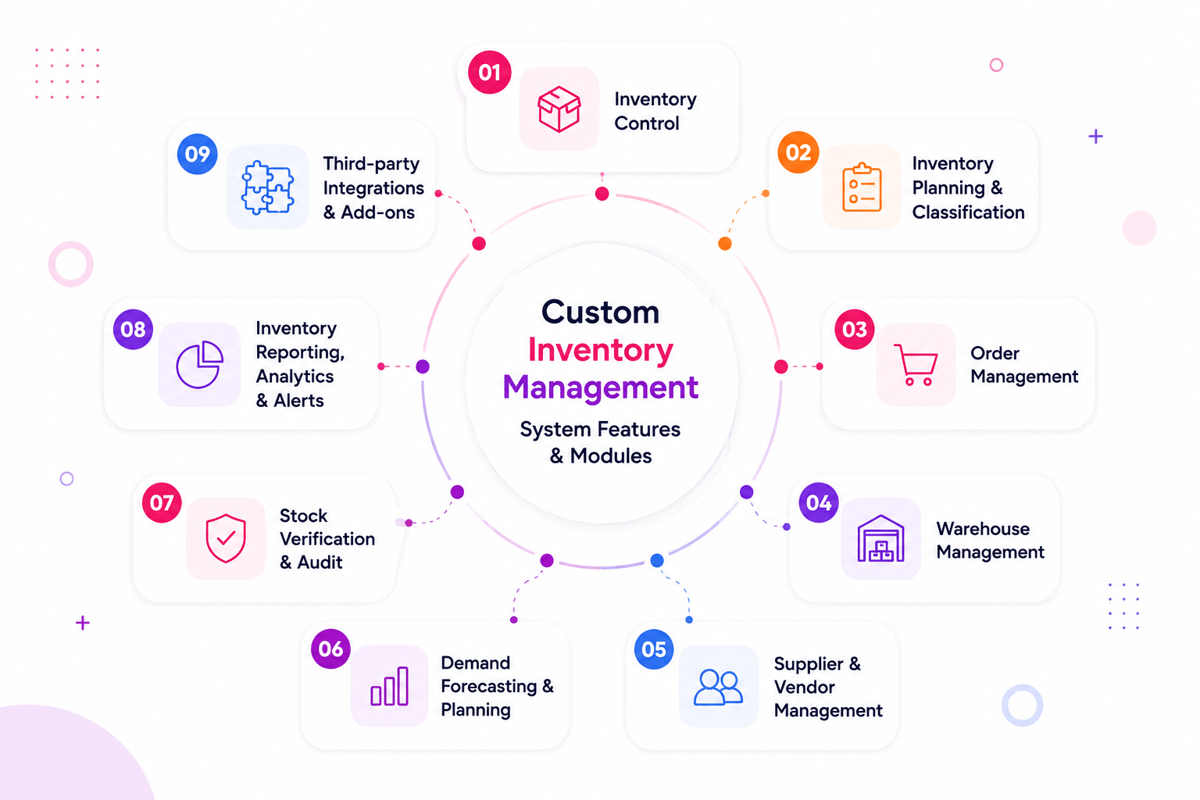
Key features of custom inventory software
Good custom inventory software handles daily friction, not edge cases. Teams need fewer clicks, clearer ownership, and faster fixes. When the system fits the work, people trust it.
Real-time stock control
In fact, clean stock data starts with every move captured fast. Receiving, transfers, picking, returns, and shifts all matter. One missed transfer can break planning for days.
A strong custom inventory management solution gives each spot a clear log. Staff can see item counts, bin spots, and stock status. Managers can spot gaps before buyers place the wrong orders.
- Barcode scanning cuts typing errors during busy shifts
- Lot tracking helps trace recalls with no digging through sheets
- Serial tracking gives high-value assets a clear history
- Mobile access helps floor teams sync counts at once
The screen should show problems, not dress up reports. Low stock, slow stock, and missing items need clear flags. Pretty charts mean little when shelves sit empty. For a wider view of what strong systems include, see the complete guide to inventory management software.
Workflows that match real operations
Every team handles stock with its own habits. A warehouse tracks pallets and bins. A maintenance team cares about parts, tools, and job sites.
That is why customizable inventory management software matters. It can match approval paths, reorder rules, and user roles. Rigid tools push teams back into side sheets. Also, automation works best when it cuts repeat calls. Reorder alerts can follow demand, lead time, and safety stock.
A good custom inventory management service also handles links early. Buying, accounting, sales, and facility tools share the same data. That stops double entry and late month-end fixes. For more on top picks, see the top 5 inventory management software options.
Use cases: inventory tracking software for facilities and operations
Facilities rarely lose stock in one big way. Small misses make the real damage. A tech grabs parts without logging the job.
So, by Friday, the shelf looks fine on screen. The bin tells a different story. Custom inventory software closes that gap for daily ops.
Maintenance, repairs, and spare parts
In practice, maintenance teams need parts before breakdowns become downtime. Generic tools track counts, not work context. Inventory tracking software for facilities links parts to assets.
For example, a pump seal may sit in three closets. With no spot rules, teams reorder too early. With scan-based moves, they find stock first. The best setups log use during the repair. Techs scan the part and close the ticket. Managers see which assets burn through stock fast.
In healthcare and medical settings, lot-level tracking becomes even more important. For these needs, see our guide to free medical device inventory management software.
Multi-site operations and field teams
Ops teams face a different problem. Stock moves across trucks, rooms, and job sites. Sheets break as soon as people get busy.
A custom inventory management solution can match real move patterns. One team may issue kits before each shift. Another may restock vans after done routes.
That flex matters when gaps stop revenue work. Customizable inventory management software can set rules by site. It can also flag missing returns each day. Warehouse teams often chase the wrong metric. Better tracking shows what truly turns.
- Key parts get tighter reorder points
- Slow items move to review queues
- Shared stock gets clear owner rules
However, these rules only work when people trust them. A custom inventory management service should study floor behavior first. Software must fit the work, not the other way around. For a broader view of warehouse tools, see the ultimate guide to warehouse management and inventory software.
That is where custom inventory software proves its value. It links physical stock with daily calls. For many teams, that becomes the base for a perpetual inventory system software.
How to select a custom inventory management service
In practice, the wrong vendor can make stock harder, not easier. A clean demo means little with no messy real data.
A good custom inventory management service starts with your real flow. It watches how teams receive, move, count, and issue stock. That work shows gaps no sales deck can reveal.
Questions that reveal fit
In fact, the best check starts with weekly stock failures. Stock gaps, slow approvals, and double entries all matter. Ask vendors how their custom inventory software handles gaps. Returns, damaged goods, partial shipments, and transfers show weak design.
- Can leads approve stock changes from mobile?
- Can warehouse staff scan items with no network access?
- Can finance trace every shift back to a user?
These answers matter more than dashboard colors. In short, pretty screens fail when teams need fast fixes.
Signals that reduce risk
Also, the right partner asks hard questions early. It checks item codes, spot rules, and approval paths. That detail stops costly rework after launch.
A stronger sign comes from like ops, not broad claims. Inventory tracking software for facilities needs different rules than retail stock tools. Maintenance teams often issue parts before paperwork catches up.
Some vendors sell customizable inventory management software with fixed flows. That mismatch makes workarounds within the first month. Furthermore, a strong team explains trade-offs in plain terms. Real-time tracking may need better Wi-Fi coverage first. Auto reorder points fail when lead times drift.
Price should show discovery, build, testing, help, and training. In fact, missing training usually turns good tools into shelf items. Your custom inventory management solution needs users who trust it. The final pick should feel practical, not just impressive.
Conclusion
In short, stock problems rarely start with one bad count. They grow from small gaps across systems, people, and flows.
Custom inventory software works when it reflects daily reality. The best systems match how teams receive, move, count, and reorder stock. However, off-the-shelf tools often look cheaper at first. The true cost appears later, when teams build workarounds.
A strong custom inventory management solution cuts those hidden steps. It gives teams clean counts, clear alerts, and faster handoffs. For facilities, gaps tend to show during urgent requests. Good inventory tracking software for facilities shows what exists before crews search shelves.
Furthermore, no system holds your ops in place. New sites, vendors, goods, and approval rules keep arriving. That makes customizable inventory management software a safer long-run pick. Teams can add rules without breaking daily work. The right custom inventory management service should challenge weak flows. A good partner asks where counts fail, not where screens belong.
Start with the stock pain that costs the most. Then map the data, handoffs, and calls around it. For a wider look at your options, explore these inventory management solutions.
 Google AI
  OpenAI ChatGPT
 Frequently Asked Questions
What do customers look for in inventory software?
Most customers look for accurate stock tracking, easy reporting, barcode or QR code support, and simple integrations with existing tools. Businesses also value software that matches their workflows instead of forcing process changes. A custom inventory management solution can help teams improve visibility, reduce manual work, and make faster purchasing or fulfillment decisions.
What is custom inventory software?
custom inventory software is a system built or configured around a company’s specific inventory processes, locations, users, and reporting needs. Unlike generic tools, it can support unique workflows such as asset tracking, batch management, reorder rules, approvals, and multi-site operations. This makes it useful for businesses with specialized inventory requirements.
How is custom inventory management software different from off-the-shelf software?
Off-the-shelf software offers standard features for common inventory tasks, while custom inventory management software is designed to fit how a business actually operates. It can include tailored dashboards, role-based access, integrations, and automated alerts. This flexibility often improves adoption because teams can work with familiar processes and fewer manual workarounds.
Which businesses benefit most from custom inventory software?
custom inventory software is useful for manufacturers, distributors, warehouses, healthcare facilities, construction companies, and service businesses with complex stock or asset tracking needs. It is especially valuable when teams manage multiple locations, specialized materials, compliance requirements, or nonstandard workflows that basic inventory tracking software for facilities cannot fully support.
What features should a custom inventory management solution include?
A strong custom inventory management solution should include real-time stock visibility, barcode scanning, reorder alerts, reporting, user permissions, and integration with accounting, ERP, or purchasing systems. Depending on the business, it may also include lot tracking, equipment tracking, mobile access, audit trails, and automated approval workflows to improve accuracy and control.
How much does a custom inventory management service cost?
The cost of a custom inventory management service depends on the number of users, locations, integrations, features, and level of customization required. A simple system may cost less than a complex enterprise platform with advanced automation. Businesses should evaluate cost against expected savings from reduced errors, better stock control, and improved operational efficiency.
Sync inventory in real time, manage orders, and run warehouse operations across Amazon, eBay, Etsy, Shopify, and other sales channels. From barcode scanning to organized storage and faster fulfillment, Fiftify helps reduce errors, prevent overselling, and support business growth. Explore our articles for insights on warehouse management, inventory control, and multichannel operations.
You may also like

Reusable shopping bags: why retailers switch for sustainable packaging
Sustainable packaging is becoming an important part of modern e-commerce and retail. Reusable shopping bags help businesses reduce packaging waste while creating a practical and visible extension of their brand. This article explores why retailers are adopting reusable bags, how bulk and custom options support different business needs, and what to consider when building a more sustainable packaging strategy.
Hardware inventory software vs manual IT asset tracking
Choosing the right hardware inventory software helps teams track devices, control costs, improve compliance, and plan upgrades with confidence. Read on to discover key benefits, use cases, selection criteria, and best practices for smarter IT asset management.
Material inventory software for tracking raw materials in production
Learn how material inventory software helps businesses track raw materials, reduce waste, prevent stockouts, and connect purchasing with production. Benefits, key features, use cases, comparisons, and practical selection tips for teams ready to improve inventory control.